Idaho Controlled Hunt Areas Explained
Trying to figure out Idaho's hunting landscape can feel like you're staring at a tangled ball of yarn, especially when you start diving into the "controlled hunt" units. It's not always obvious what makes these areas different or why they have special rules, leaving many of us scratching our heads and worried about missing out on opportunities. This guide is here to untangle that yarn, explaining exactly what Idaho's controlled hunt areas are, how they work, and how you can navigate them to plan your next successful hunt.
What Exactly Are Idaho Controlled Hunt Areas?
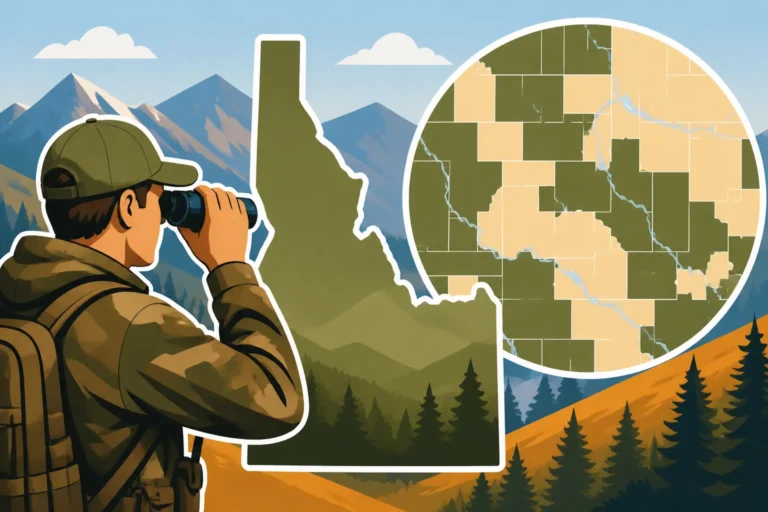
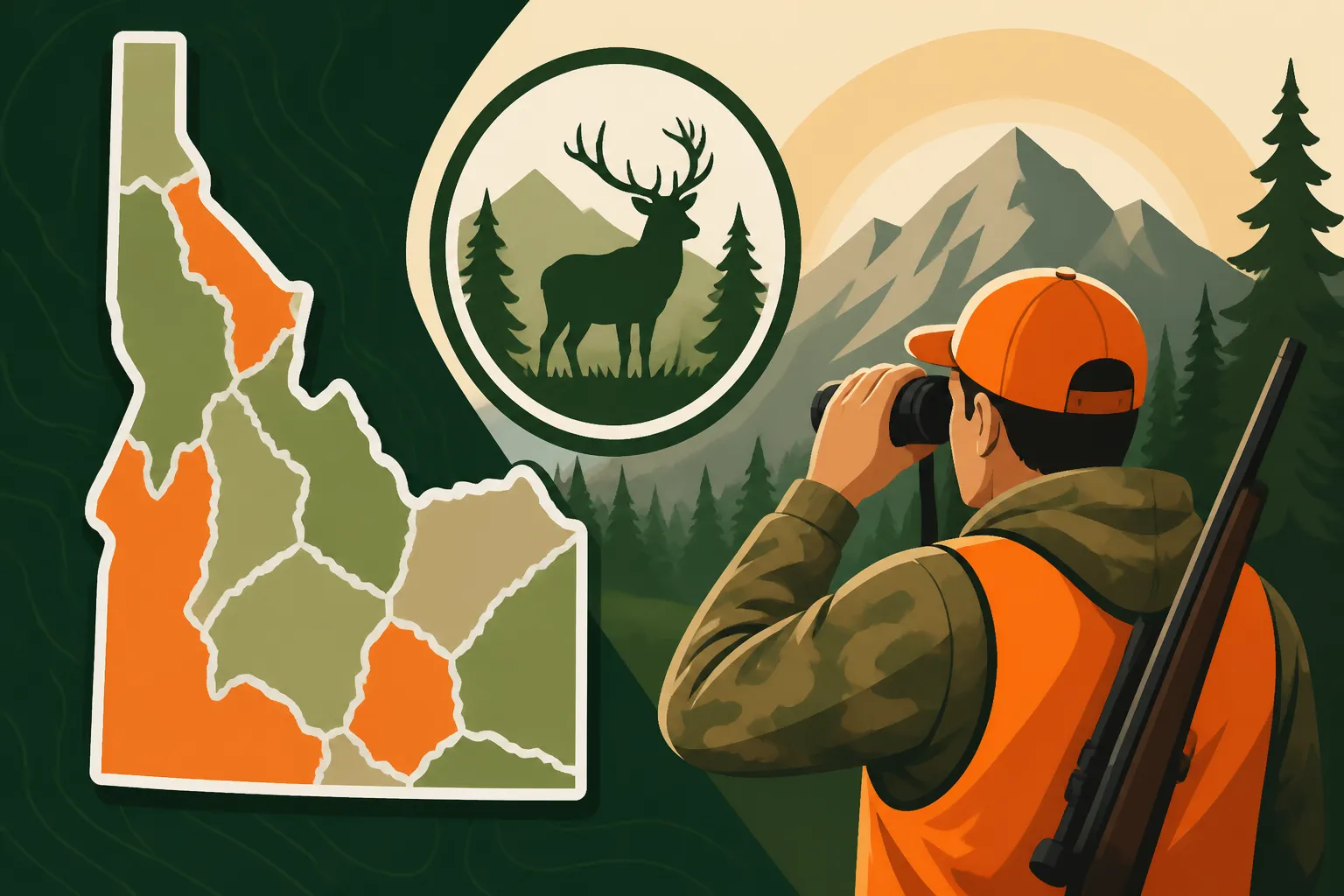
Imagine you're standing in your favorite hunting store, looking at all the different rifles on the rack. Some are readily available, you can pick one up any day. Others are high-demand, limited edition models that require you to put your name in a special lottery just for a chance to buy one. Idaho's general hunt units are a bit like those readily available rifles—you can typically buy a tag over the counter or online as long as they're available, and they cover vast swathes of the state. Controlled hunt areas, however, are those highly sought-after, limited-edition opportunities. They are specific geographical regions, often smaller than general units, where Idaho Fish and Game manages harvest pressure for particular species or specific times of the year by restricting the number of tags available. This isn't just about limiting hunters; it's about carefully balancing wildlife populations with hunter success and experience.
The frustration often sets in when you realize that some of the best opportunities for mature animals or less crowded hunting experiences are locked behind these controlled hunts. It can feel unfair or overly complicated, especially if you're new to Idaho or coming from a state with different systems. But understanding the 'why' behind them helps. It's about sustainability and ensuring quality experiences for generations of hunters.
Differentiating Controlled Hunt Areas from General Units
The biggest difference you'll encounter between a controlled hunt area and a general unit is how you get a tag. For general hunts, assuming you have a valid Idaho hunting license, you can generally purchase a tag for deer, elk, or bear, often right up until the season starts, as long as the quotas for general tags haven't been met. These general tags might allow you to hunt across several broad zones or units for a longer period with various weapon choices. They offer a lot of flexibility and are a great entry point for many hunters, particularly those who prefer less planning or don't want to deal with draw odds.
Controlled hunt tags, on the other hand, are exclusively allocated through a lottery drawing system. You can't just walk into a license vendor and buy one. These hunts are designed for specific species (deer, elk, moose, bighorn sheep, mountain goat, pronghorn, and even some bear or turkey seasons) within very defined boundaries, sometimes for a very specific weapon type, and often for a much shorter season window. The draw system ensures that only a predetermined number of hunters get to participate, which drastically reduces pressure and often leads to higher success rates or opportunities for larger, more mature animals. Think of it as reserving a spot in a prime hunting location months in advance, knowing you'll have a more exclusive experience. You'll definitely want to check out the Idaho Controlled Hunt Calendar, April Through August to understand these application periods.
The "Controlled" Aspect: Why It Matters
The term "controlled" directly refers to the tight management of hunter numbers and harvest. When Idaho Fish and Game establishes a controlled hunt, they've identified a need to precisely manage a specific wildlife population within that particular area. This could be due to several reasons: perhaps the area has prime habitat that needs protection from overharvest, or a specific age class of animals (like mature bull elk) is being targeted for management, or maybe certain species like moose, bighorn sheep, or mountain goat are so rare and valuable that their harvest needs extreme limitation.
For hunters, this "controlled" aspect directly translates to a different kind of hunting experience. While general units can sometimes feel like a crowd on opening weekend, controlled hunts are intentionally designed to spread hunters out and provide a more solitary experience. It means you're less likely to bump into other hunters every time you crest a ridge. It also means that the animals in these areas might be less pressured and more likely to follow their natural patterns, which can be a huge advantage. This level of management is a cornerstone of responsible wildlife conservation, ensuring that these incredible opportunities exist year after year, even if it requires a bit more planning and a dash of luck to draw a tag.
Navigating the Controlled Hunt Application Process
The application process for Idaho's controlled hunts can seem daunting at first, particularly if you're accustomed to simpler, over-the-counter tag sales. It’s a multi-step journey that demands attention to detail and strict adherence to deadlines. Many hunters, myself included, have felt that pang of frustration after realizing they missed a critical application window, essentially sidelining them from some of Idaho's premier hunting opportunities for an entire year. It’s not just about wanting to hunt; it’s about participating in a system designed to distribute limited resources fairly and manage wildlife effectively.
Understanding this process is crucial. It’s a system built on specific timelines and a lottery, meaning that simply wanting to hunt a certain area isn't enough – you need to play by the rules of the draw. This often involves applying months in advance, well before you'd even start thinking about packing your bags for the fall season.
Understanding Application Periods and Deadlines
Idaho's controlled hunt application periods are fixed, and they do not budge. Missing a deadline means you're out of luck for that specific draw, plain and simple. Generally, the main application period for most deer, elk, pronghorn, bear, and turkey controlled hunts opens in the spring, typically April 1st, and closes around early June. However, there are separate, earlier application periods for trophy species like moose, bighorn sheep, and mountain goat, which usually open in late January and close in April. It’s easy to get these mixed up, and trust me, you don't want to find yourself looking at an expired application window for that dream moose tag!
After the initial draw results are posted, usually in July for deer, elk, etc., there's often a second drawing period in August for any tags that weren't claimed or purchased from the first draw. This offers a sliver of hope for those who were unsuccessful or missed the first round, but the tags available in the second drawing are often fewer and for less desirable units. My best advice is to mark your calendar early, set reminders on your phone, and even get a friend to remind you. The Idaho Controlled Hunt Calendar, April Through August is your best friend here, providing exact dates to ensure you don't miss a beat.
Why Drawing a Controlled Tag is Different from General Sales
The fundamental difference lies in scarcity and competition. With general tags, the state typically offers enough tags to meet demand for a broad hunting experience. You buy your The Idaho Nonresident Hunting License Price, then your general elk or deer tag, and you're good to go in open units. Controlled tags, however, are explicitly limited to a set number, often in the hundreds or even just dozens, for an entire hunt area and species. This is where the lottery comes into play.
Unlike some other western states, Idaho operates on a true random lottery system, famously having Idaho Has No Preference Points, and What That Changes. This means every applicant, whether it's their first time applying or their twentieth, theoretically has the same chance of drawing a tag each year. While this can be frustrating for those who have put in for years without success, it's also incredibly appealing because a brand-new hunter has just as much a shot at a coveted tag as a seasoned veteran. This democratic approach to tag allocation ensures fairness, but it also means that drawing a controlled tag is never a guarantee. It's a game of chance, and part of the thrill (and sometimes the heartbreak) of Idaho hunting. When you are looking at draw odds, which you can do using tools like GoHunt, you're not seeing a system that rewards loyalty, but rather a snapshot of how many people applied for how many tags in a given unit.
Key Considerations When Choosing a Controlled Hunt Area
Selecting the right controlled hunt area is a complex decision, one that extends far beyond simply picking a unit with good draw odds. It involves a deep dive into statistics, an honest assessment of your hunting capabilities, and a thorough understanding of the land itself. I’ve seen countless hunters, myself included, make the mistake of chasing a "glamour unit" only to realize the terrain was too rugged, the access too limited, or the specific hunt rules didn't align with their preferred hunting style. It's easy to get caught up in the excitement of a high success rate, but if you can't realistically execute the hunt, that success rate means little.
This section is all about looking before you leap. It’s about doing your homework so that when you do draw that coveted tag, you're set up for success, not disappointment.
Researching Drawing Odds and Success Rates
This is where the rubber meets the road for many applicants. Every controlled hunt in Idaho comes with a set of drawing odds and historical success rates, which are crucial pieces of information. The drawing odds tell you, on average, how difficult it is to actually secure a tag for that specific hunt. If an area has 50 tags and 5,000 applicants, your odds are obviously much lower than an area with 500 tags and 1,000 applicants. While Idaho Has No Preference Points, and What That Changes means every year is a fresh slate, past odds are still your best indicator of future competition.
Success rates, on the other hand, tell you what percentage of hunters who did draw a tag managed to harvest an animal. This is a vital metric that gives you insight into the quality of the hunting experience. A unit might have great drawing odds, but if its success rate is consistently low, it could mean the animals are scarce, particularly wary, or the terrain is incredibly challenging. You can often find these statistics through the Idaho Fish and Game website or platforms like GoHunt, which aggregates this data and often presents it in user-friendly formats. Don't just look at overall success rates; try to drill down into specific hunt types (archery vs. rifle) and specific harvest types (any bull vs. spike-only). Checking Idaho Drawing Odds Before You Apply should be one of your first steps.
Public vs. Private Land Access Within Controlled Areas
Once you've narrowed down your potential units, a critical next step is to understand the land ownership. Idaho boasts vast tracts of public land, including national forests and Bureau of Land Management (BLM) ground, which are open to hunting. Many controlled hunt areas encompass significant portions of this public land, offering ample opportunity. However, some units might be a patchwork of public and private property, and others might be predominantly private. The frustration of drawing a tag only to discover that the majority of the prime habitat is inaccessible behind "No Trespassing" signs is a real one.
This is where detailed mapping tools truly shine. Products like onX Hunt allow you to overlay land ownership data directly onto satellite imagery, showing you exactly where public and private boundaries lie. This can help you identify landlocked public parcels, understand potential access points, and gauge how much huntable public land is actually available in a unit. While Hunting Idaho's National Forests and BLM Ground is generally excellent, remember that access can sometimes be tricky. Always respect private property, and if you plan to hunt private land, secure permission well in advance. Idaho’s Access Yes Opens 328,000 Private Acres in Idaho program can also be a game-changer for finding additional access points on private ground in certain areas, so always check if any Access Yes properties are located within your controlled hunt unit.
Terrain and Species Specifics
Beyond the numbers and land ownership, you need to consider the physical characteristics of the controlled hunt area and how they align with the species you're pursuing and your own physical abilities. Is it steep, rugged, high-elevation country demanding intense physical conditioning and specialized gear for packing out an animal? Or is it flatter, more open sagebrush steppe better suited for glassing vast distances? A unit with amazing elk harvest statistics in the Selway-Bitterroot Wilderness, for example, might sound fantastic, but if you're not prepared for a multi-day pack-in hunt in extremely challenging terrain, it might not be the right choice. The Idaho Hunt Planner Is the Tool to Start With on the Idaho Fish and Game website is an invaluable resource, allowing you to visualize terrain, roads, and other features.
Furthermore, consider the specific behaviors of the species in that particular habitat. Elk in timbered zones behave differently than elk in open sage. Mule deer in high desert canyons require different hunting strategies than whitetails in dense northern Idaho forests. Make sure the hunt area's typical terrain and the species' habits within that terrain match your preferred hunting style and your experience level. Don't forget that many Idaho Elk Zones and the A Tag or B Tag Choice impact not only when you can hunt but also what type of terrain and elk behavior you'll typically encounter, adding another layer to your planning.
Tools and Resources for Scouting Controlled Hunt Areas
In today's hunting world, "scouting" isn't just about boots on the ground anymore. While physical presence in a unit is invaluable, the preliminary work you can do from your computer or phone can save you countless hours and ensure you're focusing your efforts on the most promising areas. For controlled hunts, where your opportunities are limited and hard-won, leveraging every available tool is paramount. It’s the difference between showing up and hoping for the best, and arriving with a solid plan rooted in data and detailed mapping.
Many hunters feel overwhelmed by the sheer volume of information out there, or they stick to old habits, not realizing the powerful resources at their fingertips. But trust me, once you start using these tools, you'll wonder how you ever hunted without them.
Utilizing the Idaho Hunt Planner
The Idaho Fish and Game website hosts an incredible, often underutilized, resource: the Idaho Hunt Planner. This isn't just a list of regulations; it's an interactive map and data hub that provides a wealth of information directly relevant to controlled hunt areas. You can select specific units or hunt numbers and pull up detailed maps showing boundaries, roads, land ownership, and even past harvest statistics for those areas. This is your starting point for understanding a unit's basic layout and historical performance.
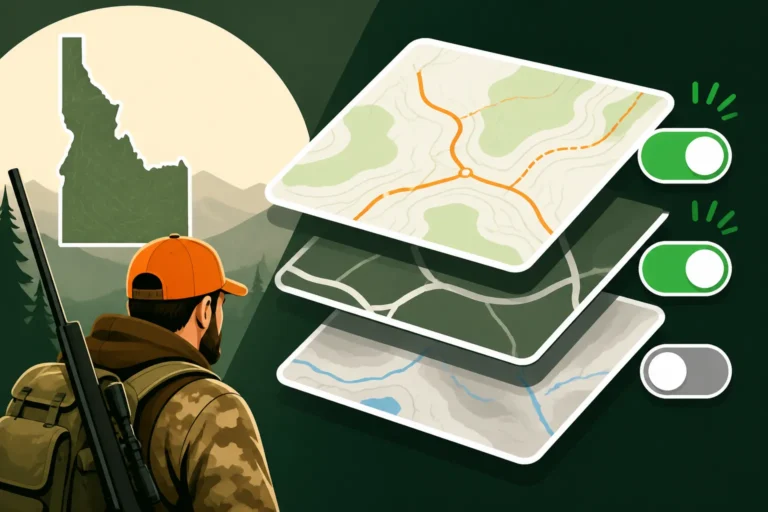
For instance, you can use the planner to see the precise boundaries of your controlled hunt area—something absolutely critical to avoid trespassing or hunting in the wrong zone. You can also layer on information like elevation contours, which immediately gives you a sense of the ruggedness of the terrain. Moreover, the planner links directly to the detailed regulations for each specific controlled hunt, ensuring you're up to date on all weapon restrictions, season dates, and any other rules that apply. It’s an essential tool for Reading an Idaho Controlled Hunt Area Boundary and understanding the finer points of your chosen hunt.
The Power of Mapping Apps (onX Hunt, GoHunt)
Once you've done your initial research with the Idaho Hunt Planner, it's time to dive into the hyper-detailed world of mapping applications. Brands like onX Hunt and GoHunt have revolutionized how hunters scout and navigate. These apps allow you to download offline maps, crucial for areas with no cell service, and provide incredibly granular detail that goes beyond what most government sites offer.
onX Hunt, for example, excels at displaying detailed land ownership boundaries. You can see public land (BLM, Forest Service, State), private land, and even color-coded parcels with landowner names, which can be invaluable if you need to seek permission for access. It also shows roads, trails, wilderness areas, and often includes historical burn areas, timber cuts, and other features that can indicate prime habitat or travel corridors. You can drop waypoints for potential camp spots, water sources, glassing knobs, or areas of historical sign, building a virtual hunting plan long before you ever set foot in the field.
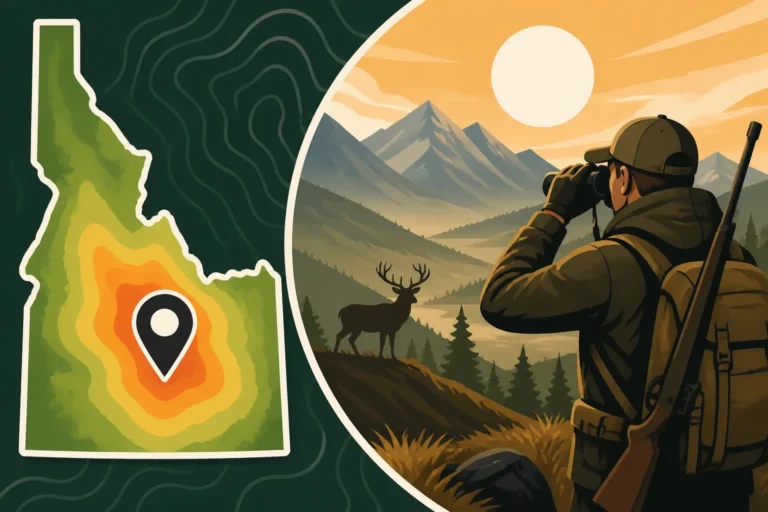
GoHunt offers similar robust mapping features, often integrated with their extensive data library on drawing odds, success rates, and other crucial statistics for specific controlled hunts across western states, including Idaho. They specialize in helping hunters strategize which tags to apply for, making them a fantastic resource for the application phase. By combining these tools, you can not only find the public land available but also identify key features like north-facing slopes for bedding, south-facing slopes for winter feeding, and pinch points where animals might travel. This kind of detailed E-scouting can drastically increase your odds of success once you're on the ground, helping you truly understand the terrain and strategize your approach.
Deciphering Hunt Area Boundaries and Regulations
It’s one thing to look at a map, and another to truly understand the legal ramifications of what you're seeing. Controlled hunt area boundaries are often defined by natural features like rivers, mountain ranges, or roads, but they can also follow less obvious property lines or administrative boundaries. It's your responsibility as a hunter to know precisely where those lines are. Misinterpreting a boundary, even by a few yards, could lead to a violation or hunting in an unauthorized area.
Beyond the geographical boundaries, controlled hunts come with their own specific set of regulations. These can include restrictions on weapon types (e.g., muzzleloader-only, archery-only), sex and age restrictions (e.g., spike-only bull, antlerless deer), and even specific dates that differ from general seasons in adjacent units. Always double-check the current Idaho hunting regulations specifically for your controlled hunt number. What might be legal in one part of Idaho could be strictly prohibited in another, even a neighboring unit. These regulations are designed to manage harvest for a specific purpose within that controlled area, and understanding them perfectly is not just about avoiding trouble, but about participating in the hunt as intended.
Common Pitfalls and How to Avoid Them
Even the most seasoned hunters can stumble when it comes to navigating the intricacies of Idaho's controlled hunt system. The excitement of applying for a coveted tag can sometimes overshadow the diligent work required to ensure everything is done correctly. I've heard countless stories (and admit, I've had my own share of close calls!) of hunters who missed out on opportunities due to preventable errors. These aren't just minor inconveniences; they can mean missing an entire season in a dream area, or worse, facing legal repercussions.
Avoiding these common pitfalls requires a proactive mindset, meticulous record-keeping, and a willingness to double-check everything. It’s about being thorough so your hard-earned draw success isn't undermined by a simple mistake.
Missing Application Deadlines
This is perhaps the most common and most heartbreaking pitfall for controlled hunt applicants. You spend hours researching units, dreaming of that big bull or buck, and then… you forget to submit your application by the deadline. Because Idaho does not have preference points, there's no "making up" for a missed year by building points for future draws. When you miss the deadline, you simply miss the opportunity for that year, and you start fresh with everyone else the following year. This can be especially frustrating if you were hoping to draw a tag in a unit with historically good odds, as the opportunity might not present itself again with the same probability.
To avoid this, treat application deadlines as non-negotiable appointments. Set multiple reminders: on your phone, in your calendar, even ask a hunting buddy to remind you. Many hunters even submit their applications a week or two before the actual deadline, just to create a buffer against unforeseen technical issues or personal emergencies. Don't procrastinate; the small effort of applying early is well worth the peace of mind.
Misinterpreting Area-Specific Rules
Drawing a controlled hunt tag doesn't mean you can just go hunt with any weapon at any time. Each controlled hunt number comes with a specific set of rules that can be incredibly nuanced. For example, a controlled elk hunt might be archery-only for a certain period, then switch to any-weapon for a later portion, or it might be restricted to spike-only bulls or antlerless animals. Many hunters get confused, especially when a controlled hunt unit overlaps with general season units, leading to different rules depending on which specific tag you hold.
You need to pay extremely close attention to the details printed on your tag and in the Idaho Fish and Game regulations specific to your hunt number. Don't assume. If your tag says "Archery Only," then Are Scopes Allowed on Muzzleloader-Only Hunts? or bringing a rifle for that hunt is a definite no-go. Likewise, if it's a "Spike-Only Bull" hunt, even a small 4-point might be illegal to harvest. My recommendation is to print out the specific regulations for your controlled hunt and highlight all key dates, weapon restrictions, and animal restrictions. Keep it with your license and tag in the field.
Overlooking Wilderness Area Restrictions
Idaho is home to some incredible wilderness areas, like the Frank Church-River of No Return Wilderness, Selway-Bitterroot, and Hells Canyon, which often contain prime controlled hunt opportunities. However, hunting in designated wilderness carries specific rules, particularly for nonresidents. A major one to be aware of is that Idaho Forces Nonresidents to Hire a Guide for Wilderness Elk when hunting certain species within these designated areas. This rule applies to elk, bighorn sheep, and mountain goat.
For a nonresident, drawing a coveted controlled elk tag for a wilderness unit can quickly become cost-prohibitive if you haven't budgeted for an outfitter. While species like deer and bear are generally exempt from this specific guide requirement, it's vital to know which species trigger it. Always confirm if your chosen controlled hunt area includes designated wilderness and if the species you are pursuing falls under this guide rule for nonresidents. Overlooking this detail can lead to a very expensive surprise, or force you to abandon a drawn tag. Do your research on Which Idaho Wilderness Areas the Rule Covers to be fully prepared.
| Feature | General Hunt Areas | Controlled Hunt Areas |
|---|---|---|
| Tag Acquisition | Over-the-counter or online sales (first-come) | Lottery drawing only (application required) |
| Tag Numbers | Generally higher, often unlimited until quota | Strictly limited (often few dozen to few hundred) |
| Competition | Can be high, especially on opening weekends | Significantly lower due to limited tags |
| Hunter Density | Can be crowded in accessible areas | Typically much lower, more solitary experience |
| Management Focus | Broad harvest management across large zones | Precise management of specific populations/age classes |
| Draw Odds | Not applicable (purchase, not draw) | Varies from easy to extremely difficult (0.1%) |
| Success Rates | Varies widely, can be lower due to pressure | Often higher due to lower pressure & specific rules |
| Species | Deer, Elk, Bear (general seasons) | Deer, Elk, Moose, Sheep, Goat, Pronghorn, some Bear |
| Season Length | Often longer, more flexible dates | Shorter, very specific date windows |
| Weapon Types | More flexibility (any weapon, archery, muzzleloader) | Often very specific (e.g., archery-only, muzzleloader-only) |
| Planning Needed | Less intensive upfront planning | Intensive research, planning, and application strategy |
Disclaimer
This article is for general informational purposes only and does not constitute professional advice. Laws, prices and regulations vary by location and change over time. Consult a qualified professional for guidance on your specific situation.