Hunting Near Idaho State Parks
It's a common thought for many of us, especially when we're scouting new areas or just enjoying Idaho's incredible scenery: "Could I hunt near that state park?" You see prime habitat, maybe some game trails, and the idea of combining a family camping trip with an early morning hunt can be mighty appealing. But the reality is, Idaho State Parks operate under a very different set of rules than the vast public lands we often frequent, and assuming you can just slip into the woods next to one without explicit knowledge is a mistake that could lead to trouble. This guide is here to untangle the complexities of hunting near Idaho State Parks, helping you understand where you can and cannot venture, and how to stay on the right side of the law.
The General Rule: State Parks Are Not Hunting Grounds
Let's get this out of the way upfront: direct hunting within the boundaries of an Idaho State Park is almost universally prohibited. These aren't just arbitrary rules; they're in place for very good reasons that prioritize public safety and the park's primary mission. It's a fundamental difference in land management that every hunter needs to understand before planning any outing.
Why State Parks Exist
Idaho State Parks are created and maintained for a specific purpose: to provide diverse recreational opportunities, preserve natural and cultural resources, and offer educational experiences for the public. Think about your typical state park experience – families picnicking, hikers enjoying trails, campers setting up their tents, and wildlife viewers hoping to spot a deer or a bird. These activities are largely considered "non-consumptive," meaning they don't involve taking resources like game animals from the environment.
Hunting, by its very nature, is a consumptive activity. While it's a vital tool for wildlife management and a cherished tradition for many, it simply doesn't align with the primary mission of most state parks. The sheer volume of non-hunting recreational users in these areas, often concentrated in relatively small footprints, creates a significant safety concern if hunting were allowed. Imagine trying to navigate a designated hunting area while joggers, dog walkers, and children on bikes are also present. The potential for accidents is far too high, and the state parks are designed to be safe havens for all visitors, regardless of their interests. Their goal is peaceful coexistence and appreciation of nature, not the pursuit of game.
Boundary Lines and Buffer Zones
Understanding where a state park's boundary actually lies is absolutely critical. It’s not always as clear as a paved road or a fence line. Sometimes, the boundary might cut right through a forested area, or follow an old property line that isn't immediately obvious from the ground. Many hunters, myself included, have found themselves in a situation where they thought they were on public land, only to discover later they were too close to or even accidentally on restricted property.
The existence of state parks also naturally creates what many hunters refer to as "buffer zones." While there might not be a formally designated buffer where hunting is illegal outside the park boundary, the sheer presence of the park often impacts hunting in adjacent areas. Non-hunters recreating in the park might venture close to its edges, or game animals might find refuge within the park, making them off-limits for hunters. It's not uncommon for animals to learn these safe havens, especially if they've been pressured.
This is where modern mapping technology becomes your best friend. Tools like onX Hunt are invaluable for clearly defining land ownership. With a land ownership layer turned on, you can see precisely where state park boundaries begin and end, distinguishing them from private property, Bureau of Land Management (BLM) land, or National Forest ground. This visual clarity is essential to avoid any accidental incursions and to plan your hunt responsibly. Always remember, ignorance of a boundary is never an excuse if you're found in violation of hunting regulations. You're responsible for knowing where you are at all times.
Understanding Hunting Near State Parks: Adjacent Public Lands
While the state park itself is generally off-limits for hunting, that doesn't mean your outdoor adventures need to stop there. Often, Idaho State Parks are nestled within or directly adjacent to vast expanses of other public lands where hunting is not only permitted but actively encouraged. The trick is knowing how to identify these areas and understanding the specific regulations that govern them.
National Forest and BLM Land Boundaries
Idaho is incredibly rich in public land, with millions of acres managed by the U.S. Forest Service (National Forests) and the Bureau of Land Management (BLM). It's quite common for a state park to be established in a scenic area that is surrounded by, or shares a border with, these larger federal land designations. For instance, you might have a state park located along a beautiful river canyon, with National Forest lands climbing up the canyon walls or BLM ground stretching out into the high desert plains nearby.
The key takeaway here is that just because you see a state park sign doesn't mean the entire region is a no-hunting zone. Many times, just a stone's throw beyond the state park boundary, you'll find federally managed land that is wide open for hunting, provided you have the appropriate tags and are adhering to all the season dates and regulations. These adjacent lands can offer fantastic opportunities for a variety of species, from deer and elk to upland birds, depending on the habitat and the specific Game Management Unit (GMU) you're in.
When planning a hunt in these areas, it’s not enough to just know you're on public land. You need to understand the nuances. National Forests, for example, often have detailed Motor Vehicle Use Maps (MVUMs) that dictate where you can drive, ride ATVs, or even park. Some roads might be seasonally closed, especially during the fall to protect wildlife or prevent road damage. Similarly, while BLM land is generally open, it can be checkerboarded with private parcels, making accurate navigation paramount. Always be sure to consult Motor Vehicle Use Maps for Forest Ground before heading out.
Identifying Huntable Adjacent Areas
So, how do you pinpoint these huntable areas right next to a state park? It starts with good mapping and thorough research. The first tool I always recommend is The Idaho Hunt Planner Is the Tool to Start With, available through the Idaho Fish and Game website. This interactive map allows you to overlay different layers, including Game Management Unit boundaries, land ownership, and often, even specific regulations for those units. You can zoom in on any state park and see exactly which lands border it.
Once you identify potential public land adjacent to a state park, the next step is to dive into the specific regulations for that GMU. Idaho's regulations can be complex, with different seasons, weapon restrictions, and tag types varying greatly from one unit to the next. What's legal for archery in Unit X might be entirely different for rifle hunting in Unit Y, even if they're right next to each other. Don't assume anything; always check the current regulations. You can find detailed information on Where the Current Idaho Regulations Are Posted.
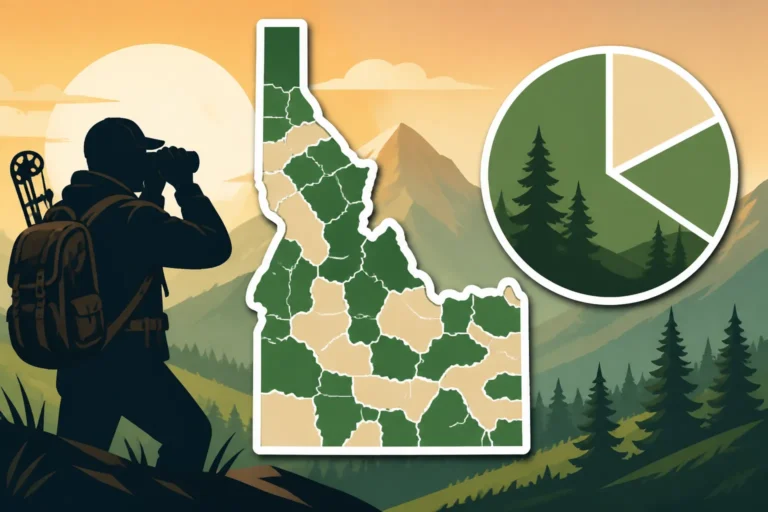
This research also means looking at details like Checking Public Land Percentage by Idaho Unit. If a unit has a high percentage of public land adjacent to a state park, your chances of finding huntable ground are much higher. Conversely, if it's mostly private property, your options might be limited, or require additional steps like securing landowner permission. Utilizing advanced tools from platforms like GoHunt can help you consolidate this information, providing drawing odds, harvest statistics, and public land data all in one place, which is incredibly helpful when comparing different units or planning a trip around a specific state park location.
Navigating Private Land Around State Parks
It's a common scenario in Idaho: you're looking at a map, eyeing a promising patch of timber or sagebrush, and realize it’s private land, often right up against a state park boundary. This can be a frustrating hurdle for hunters, but it’s not always an impenetrable wall. Understanding the rules and etiquette for private land is essential, especially when public land access might be limited or difficult to reach.
Permission is Paramount
Unlike public lands where you generally have the right to hunt (with the proper license and tags, of course), private land requires explicit permission from the landowner. This isn't just a courtesy; it's the law. Trespassing to hunt is a serious offense, and it can sour relationships between landowners and the hunting community as a whole. You might see a beautiful alfalfa field or a brushy draw that looks like prime deer habitat right outside a state park, but without that handshake or written permission, it's off-limits.
The process of getting permission can feel daunting, especially for those new to it. It often involves respectful communication, sometimes a bit of detective work to find out who owns the parcel, and a willingness to accept "no" gracefully. Many landowners are wary of hunters due to past negative experiences, so presenting yourself as responsible, ethical, and respectful of their property can go a long way. Offering to help with chores, sharing some of the harvest, or simply being a good neighbor can sometimes open doors. Keep in mind that securing permission might be even more challenging near state parks, where landowners might already deal with increased public traffic and might prefer to keep their property undisturbed. However, don't let that deter you from trying; all it takes is one "yes." This is where understanding How Idaho Landowner Permission Slips Work can be invaluable – having a clear, written agreement benefits both you and the landowner.
Access Yes Program as an Option
Idaho offers a fantastic program designed to increase public access to private land for hunting and fishing: the Access Yes! program. This initiative involves the Idaho Department of Fish and Game leasing private land or securing easements from landowners, opening these areas to the public for recreational use. While these lands are primarily for big game, some properties might also be open for upland birds or waterfowl. The beauty of Access Yes! is that it clearly identifies these parcels and provides the rules for their use, removing the guesswork and awkward conversations with landowners.
Many of these Access Yes! properties are strategically located to either provide access to otherwise landlocked public ground or to open up prime habitat that was previously inaccessible. While not every state park will have an Access Yes! parcel right next door, it's absolutely worth checking the Idaho Fish and Game website for a map of current Access Yes! locations. You might find a hidden gem of huntable private land that borders a state park, giving you the opportunity to pursue game in close proximity without directly infringing on park rules. The program is designed to be a win-win: landowners receive compensation, and hunters gain valuable access. Always check the specific rules for each Access Yes! parcel, as some may have unique restrictions on vehicle use, dates, or species. You can learn more about The Idaho Access Yes Program Explained to see if it fits into your hunting plans.
Key Considerations for Hunting Near State Parks
Hunting in the vicinity of Idaho State Parks, even on perfectly legal adjacent public or permitted private land, comes with its own set of critical considerations. It's not just about following the letter of the law; it's about being a responsible, ethical hunter who respects all users of our shared outdoor spaces. These considerations are vital for both your safety and the reputation of the hunting community.
Safety First: Respecting Park Users
When you choose to hunt near a state park, you are inherently choosing an area that likely sees more non-hunting public activity than a remote wilderness unit. This means your margin for error, particularly regarding safety, is significantly reduced. The number one priority must always be safety—for yourself, your hunting partners, and especially for any non-hunters who might be recreating nearby.
This means you need to be hyper-aware of your surroundings at all times. Before taking any shot, you must identify your target absolutely positively, and more importantly, know what lies beyond it. Are there hiking trails? Campgrounds? Roads with vehicle traffic? These aren't just theoretical concerns; they are real possibilities when hunting close to populated recreational areas. Always have a safe backstop for your projectile. Consider your shot angles carefully to ensure that an errant shot, or even a ricochet, doesn't travel into an unintended area. It's often best to select stands or hunting positions that give you clear, upward shot angles that send projectiles safely into the ground immediately after hitting your target.
Beyond the immediate safety concerns, consider the perception of your actions. A hunter acting carelessly, even if technically legal, can create a negative image for all hunters. Being mindful, courteous, and respectful of other outdoor enthusiasts—even if they don't understand or agree with hunting—helps foster better relationships and ensures continued access to our hunting grounds. After all, we're all out there to enjoy Idaho's amazing natural resources.
Checking Regulations and Boundary Specifics
I cannot stress this enough: always, always double-check the current regulations for the specific Game Management Unit and any adjacent special areas before you head out. Regulations can change year to year, and what was legal last season might not be this season. Relying on outdated information is a surefire way to find yourself in hot water.
Idaho Fish and Game publishes detailed regulation brochures and updates them regularly. Before embarking on any hunt near a state park, you should download or pick up the latest copy. Pay close attention to unit boundaries, season dates for your chosen species, weapon restrictions, and any specific rules that might apply to areas bordering state parks or other high-use recreational zones. For example, some areas might have restrictions on certain weapon types, or specific hunting hours that differ from general regulations.
Furthermore, make sure you understand every aspect of the unit you plan to hunt, especially when it comes to movement. Are you aware of Idaho's Motorized Hunting Rule Runs August Into December? This rule dictates where you can drive and ride ATVs on public lands. If the public land adjacent to a state park is subject to this rule, understanding it is paramount for legal access and retrieval of game. Using a mapping app like onX Hunt with its public land, private land, and even seasonal road closure layers can give you the most accurate, real-time-ish information to stay compliant. The time spent doing your homework now is far better than the consequences of a violation later. It's all about being prepared and showing respect for the land, the wildlife, and everyone else who enjoys the great Idaho outdoors.
| Feature / Location | Idaho State Parks | Adjacent Public Lands (NF/BLM) | Access Yes! Private Land | Typical Activities | Hunting Legality | Key Rule |
|---|---|---|---|---|---|---|
| Primary Purpose | Recreation, Conservation, Education | Multiple Use (Recreation, Timber, Grazing) | Public Hunting Access through Lease | Hiking, Camping, Boating, Wildlife Viewing, Hunting, Fishing | Generally Prohibited | Respect Boundaries |
| Land Ownership | State of Idaho | Federal (USFS, BLM) | Private (with IDFG Lease) | Varied | Permitted (with proper tags) | Follow Unit Regulations |
| Public Interaction | High Concentration (Non-Hunters) | Moderate to Low (Mixed Users) | Low (Specific Hunter Access) | Often high | Permitted (with proper tags) | Gain Permission |
| Motorized Access | Restricted to Paved Roads/Lots | Varies by MVUMs & Regulations | Varies by Agreement/Map | Varied | Varies | Check MVUMs & Program Rules |
| Required Tools | Maps, Park Regulations | Maps (onX Hunt), IDFG Regs, MVUMs | Maps (IDFG), Program Rules | High to Moderate | Generally Permitted | Check Program Map |
Disclaimer
This article is for general informational purposes only and does not constitute professional advice. Laws, prices and regulations vary by location and change over time. Consult a qualified professional for guidance on your specific situation.