California Bighorns Along the Owyhee
The Owyhee Breaks in Idaho present a formidable, awe-inspiring challenge for any hunter dreaming of pursuing California Bighorn Sheep. This isn't just another hunt; it's an epic journey into some of the most rugged, remote, and visually stunning country Idaho has to offer, demanding meticulous preparation, unwavering persistence, and a good deal of luck to draw one of the state's most coveted tags. This guide will take a deep dive into what makes hunting California Bighorns in the Owyhee such a unique and demanding endeavor, from understanding the sheep themselves to navigating the complex draw system and the unforgiving landscape.
Understanding the California Bighorn in Idaho's Owyhee Country
When we talk about bighorn sheep in Idaho, it's crucial to understand that the Gem State is home to two distinct subspecies: the Rocky Mountain Bighorn and the California Bighorn. While both offer incredible hunting opportunities, they inhabit different regions and present unique challenges. The California Bighorn, in particular, is synonymous with the vast, wild, and incredibly rugged landscape of the Owyhee region, making their pursuit a truly western adventure.
Biology and Distinctive Features
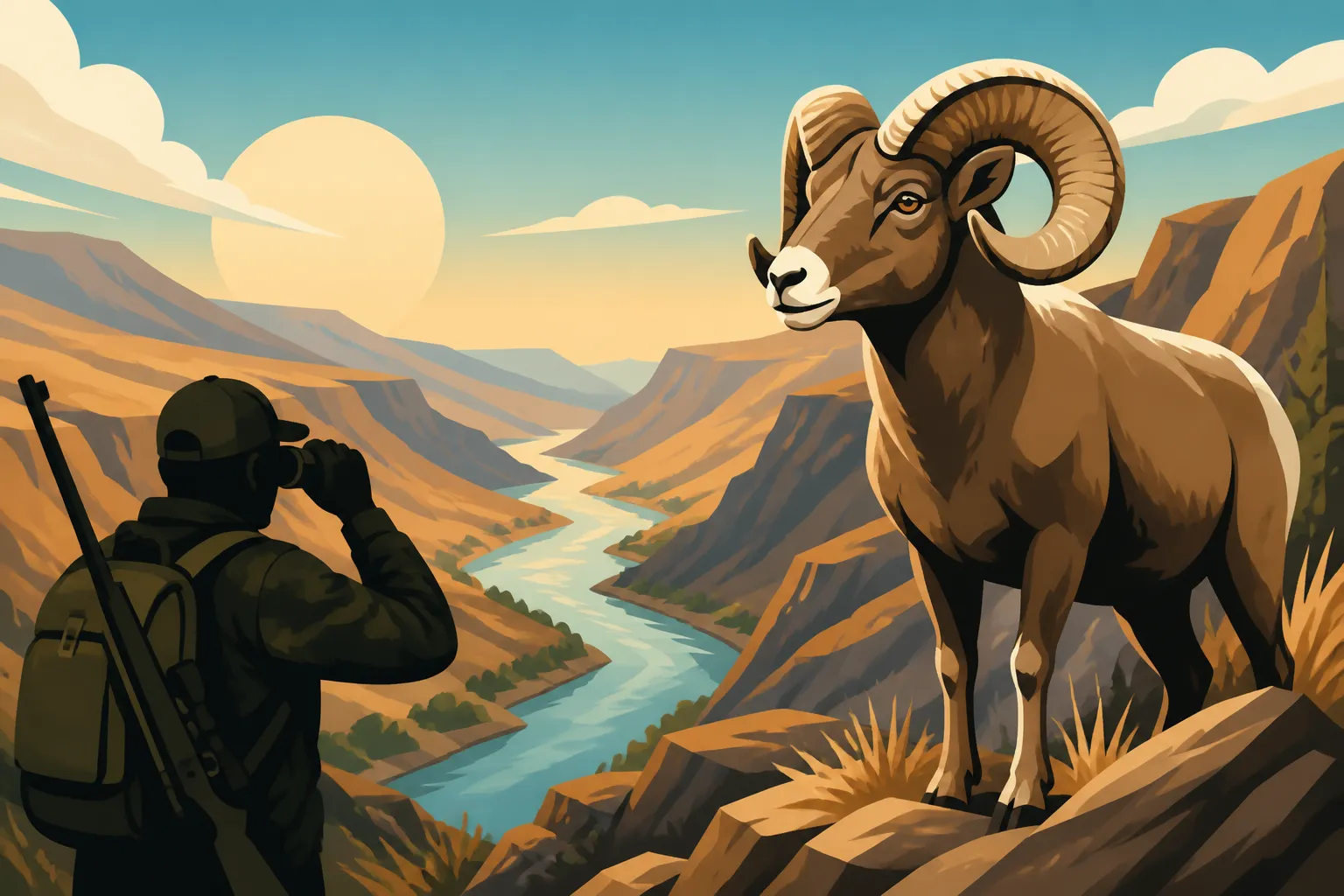
California Bighorns (Ovis canadensis californiana) are a truly magnificent animal, somewhat smaller and often lighter in color than their Rocky Mountain cousins, but no less impressive. Rams typically weigh between 150-220 pounds, with ewes being considerably smaller. Their coats range from a light grayish-brown to a darker, richer chocolate brown, usually with a distinctive white rump patch that acts as a visual signal in steep terrain. Their most striking feature, of course, is the magnificent set of horns on the rams. These horns curl back, then down, and finally forward, forming a tight spiral that can be incredibly thick and heavy, especially on mature animals. While not as massive as some Rocky Mountain bighorn horns, a Owyhee ram's headgear is undeniably impressive and hard-earned.
Biologically, these sheep are perfectly adapted to their harsh environment. They possess incredible eyesight, allowing them to spot predators and potential threats from vast distances across open country. Their cloven hooves have rough, elastic pads that provide exceptional grip on slippery rock faces and steep slopes, enabling them to navigate terrain that would be impassable for most other big game animals. This combination of keen senses and physical prowess makes them incredibly elusive and challenging to approach, especially in the exposed, broken country they call home.
Habitat Preferences in the Owyhee
The Owyhee Breaks are not just any habitat; they are the quintessential California Bighorn country in Idaho. This sprawling, semi-arid region is characterized by deep, basaltic canyons carved by ancient rivers, towering rimrock, sagebrush-covered plateaus, and sparse pockets of juniper and mountain mahogany. These sheep thrive in this "canyonlands" environment, utilizing the broken topography for both escape and foraging. The steep, rocky slopes provide excellent escape routes from predators like mountain lions and coyotes, while the rimrock offers vantage points to scan the surrounding landscape.
During different seasons, their movements might shift slightly to access preferred forage or water sources, but the core reliance on steep, rugged terrain remains constant. They feed on a variety of grasses, forbs, and browse, often moving between the cooler, shaded canyon bottoms and the sun-drenched plateaus. Water, often scarce in the Owyhees, dictates much of their localized movement, drawing them to springs, seeps, or the main rivers themselves. This intimate connection to their specific, harsh environment is what makes finding and hunting them so dependent on understanding the nuances of the Owyhee landscape.
Historical and Current Population Trends
The story of California Bighorn Sheep in Idaho, particularly in the Owyhee region, is one of both challenge and remarkable recovery. Historically, bighorn populations across the West suffered dramatically in the late 19th and early 20th centuries due to overhunting, habitat loss, and devastating disease outbreaks, particularly from domestic sheep. By the mid-20th century, California Bighorns were nearly extirpated from much of their historical range in Idaho.
However, dedicated conservation efforts by Idaho Fish and Game and partner organizations have slowly but steadily brought these populations back. Reintroduction programs, often involving trapping sheep from healthy herds in other states and transplanting them into suitable Owyhee habitats, have been instrumental. Today, while still managed carefully, the California Bighorn populations in the Owyhee are considered stable and even slowly growing in many areas. This success allows for limited, highly regulated hunting opportunities, which in turn generate crucial funds for ongoing conservation work. Understanding these trends, often detailed in annual harvest statistics reports, provides valuable context for the rarity and value of these permits.
The Unique Landscape of the Owyhee Breaks
The Owyhee Breaks are a world unto themselves. This remote, rugged corner of southwestern Idaho, extending into Oregon and Nevada, is characterized by its dramatic canyon systems, vast sagebrush flats, and volcanic formations. For the bighorn hunter, it’s a landscape that tests every ounce of physical and mental fortitude, offering views that are as breathtaking as they are intimidating. It's a place where meticulous planning meets raw, untamed wilderness.
Geographic Overview and Terrain Challenges
Imagine an endless expanse of high desert, suddenly cleaved by ancient rivers and volcanic activity. That's the Owyhee. The Owyhee River, along with its tributaries like the South Fork, Middle Fork, and West Fork, has carved a labyrinth of deep, winding canyons with sheer basaltic walls. Between these canyons lie expansive, rolling plateaus covered in sagebrush and native grasses. The elevation varies, but the key feature is the constant undulation – you're either climbing steeply or descending precariously. There are very few flat spots, and navigating the broken country often means covering significant distances to go a relatively short way as the crow flies.
The terrain presents immense physical demands. Hunters must be prepared for steep ascents and descents, often through loose scree, treacherous talus slopes, and over jagged volcanic rock. The sheer scale of the landscape means glassing can reveal sheep miles away, but reaching them can involve hours of hiking, multiple canyon crossings, and significant elevation changes. Water sources are scarce and often hidden, making hydration a constant concern. This isn't a place for the faint of heart or those who are not in peak physical condition. Planning for this kind of exertion, even before you start your hunt, is absolutely paramount.
Climate and Seasonal Considerations
The Owyhee region experiences an arid, high-desert climate characterized by extreme temperatures and unpredictable weather patterns. Summers are scorching hot, with temperatures often exceeding 100°F, making early-season scouting incredibly challenging and dangerous due to heat and lack of water. Winters can be bitterly cold, with significant snowfall that can make canyon access impossible. Spring and fall offer more moderate temperatures, but even then, sudden thunderstorms, high winds, or unexpected snow can roll in, transforming conditions rapidly.
The bighorn hunting season typically falls in the late summer and early fall, usually from August into October. While the early part of the season can still be very warm, the later weeks bring cooler temperatures, which are generally more favorable for rigorous hiking. However, this also means shorter daylight hours and the increased possibility of inclement weather. Hunters need to be prepared for everything from dusty, hot conditions to freezing rain or snow, often within the same week. Layered clothing, robust rain gear, and a solid understanding of weather patterns are not just recommended, they're survival necessities here.
Access and Public Land Considerations
Access to the Owyhee Breaks is a significant challenge in itself. Much of the region is managed by the Bureau of Land Management (BLM), offering vast tracts of public land, but getting into these remote areas often requires high-clearance 4×4 vehicles, and sometimes even long treks on foot from the nearest passable road. Many "roads" are little more than two-track trails, becoming impassable in wet conditions. Beyond the established roads, Idaho's motorized hunting rule keeps you on the road, meaning you'll be hoofing it once you get to the end of a passable route.
Private land is also present, often interspersed with public parcels, particularly around the fringes and near ranches. Always be vigilant about land boundaries and respect private property. Tools like the Idaho Hunt Planner are invaluable for identifying land ownership and planning your approach. Some areas may also have seasonal road closures to protect sensitive wildlife winter range or due to poor road conditions, adding another layer of complexity to access planning. Hunters often rely on horses or mules to pack into the deepest parts of the Owyhee, or they commit to significant foot mileage with heavy packs to reach undisturbed country.
Drawing a California Bighorn Tag: The Ultimate Challenge
For many, the dream of hunting a California Bighorn in the Owyhee begins and often ends at the draw. These tags are among the most difficult to acquire in North America, making the application process itself a significant, multi-year undertaking for most hopeful hunters. It's not just about applying; it's about understanding the system, setting realistic expectations, and maybe, just maybe, getting lucky.
Controlled Hunt System Explained
Idaho manages its bighorn sheep hunts, including those for California Bighorns in the Owyhee, through a highly restrictive controlled hunt system. This isn't a general season where you can simply purchase a tag over the counter. Instead, hunters must apply during specific application periods, usually in the spring, for a limited number of tags allocated to specific units or hunt areas. The number of tags is incredibly small, often only one or two per hunt area, reflecting the fragile nature of bighorn populations and the goal of sustainable management.
The system is designed to distribute these rare opportunities fairly among a large pool of applicants. Unlike some other western states, Idaho has no preference point or bonus point system. This means that every applicant, regardless of how many years they've applied unsuccessfully, has an equal chance of drawing a tag each year. While this can be frustrating for those with many years of applications, it also means that a first-time applicant truly has the same odds as someone who's been applying for decades. It's a pure lottery, and that's both its charm and its heartbreak.
Odds and Application Strategies
Let's be blunt: the odds of drawing a California Bighorn tag in the Owyhee are astronomically low. We're talking single-digit percentages, often less than 1%. For many of the most coveted hunts, the odds can be even lower. This reality means that applying is a long-term strategy, a test of patience, and an exercise in managing expectations. Many hunters apply for decades without ever drawing a bighorn tag.
Despite the long odds, there are still strategies to consider, though they won't guarantee success. Some hunters might focus on units with slightly higher tag allocations, if such a difference exists, or consider applying for ewe tags if they become available and the primary goal is simply to hunt bighorn sheep, rather than a trophy ram. Resources like GoHunt provide valuable insights into historical draw odds and application trends, which can help inform your choices. While GoHunt can't change the lottery nature, it empowers you with data to make the most informed decision possible each year when you submit your application. It's also vital to ensure you meet all eligibility requirements and submit your application correctly and on time, as a single error can disqualify you from the draw. You can also explore checking Idaho drawing odds before you apply to gauge your chances.
Once-in-a-Lifetime Rule and Its Implications
A critical aspect of Idaho bighorn sheep hunting, which adds to the prestige and rarity of these tags, is the "once-in-a-lifetime" rule. This regulation means that if you are fortunate enough to successfully harvest a bighorn sheep ram in Idaho, you are generally ineligible to ever hunt that subspecies again in the state. So, if you draw and harvest a California Bighorn ram from the Owyhee, you cannot apply for another California Bighorn ram tag in Idaho for the rest of your life.
However, there's a nuance: Idaho counts Rocky Mountain and California Bighorns separately. This means if you harvest a California Bighorn ram, you could potentially still apply for a Rocky Mountain Bighorn ram tag in the future, and vice-versa. This distinction is vital for long-term planning for those rare hunters who dream of harvesting both subspecies. The once-in-a-lifetime rule underscores the value of each tag and the importance of making the most of the opportunity should you ever be drawn. It elevates the hunt to a truly singular experience, a culmination of years of dreaming and applying.
Hunting Strategies for Owyhee Bighorns
Once the impossible happens and you actually draw a California Bighorn tag for the Owyhee, the real work begins. This is not a hunt where you can just show up and expect success. It requires meticulous preparation, advanced scouting, and a physical and mental toughness equal to the terrain itself.
Scouting the Steep Terrain
Scouting for Owyhee bighorns needs to start long before the season opener, ideally months in advance, or even the year prior if possible. Given the vastness and ruggedness of the Owyhee Breaks, e-scouting is an absolutely indispensable first step. Utilize satellite imagery, topo maps, and tools like the Idaho Hunt Planner to identify potential sheep habitat: steep, rocky slopes, rimrock formations, and areas with good visibility and escape cover. Look for benches, saddles, and draws that sheep might use for travel or bedding. Also, crucially, identify water sources, as these will often concentrate sheep activity, especially during the warmer months.
Once you have some areas identified, boots on the ground scouting is critical. This means hiking, and lots of it. Focus on gaining high vantage points where you can use high-quality optics – powerful binoculars and spotting scopes – to meticulously glass vast expanses of country. This "glassing" technique is the cornerstone of western sheep hunting. Spend hours systematically scanning every rock, shadow, and patch of cover. Bighorns blend incredibly well with their surroundings, so patience is key. You're not just looking for a whole sheep; you're looking for a patch of white, a flick of an ear, or the glint of a horn. Remember, you might need optics power for Idaho's long canyon sightlines to pick out sheep at extreme distances. Look for sheep sign, too: droppings, rubs on rocks, and distinct sheep trails that wind through otherwise impassable terrain.
Gear and Physical Preparation
Hunting California Bighorns in the Owyhee is arguably one of the most physically demanding hunts in North America. There's no way around it: you must be in excellent physical condition. Start a rigorous training regimen months, if not a year, beforehand. This should include cardiovascular endurance (hiking with a weighted pack, trail running), strength training (especially legs and core), and hill training. Simulate the conditions you'll face by hiking steep, uneven terrain with a heavy pack – aim for 40-50 pounds – covering miles each day.
Your gear list will be extensive and specialized. A lightweight yet durable backpack capable of carrying several days' worth of supplies (and meat, should you be successful) is essential. High-quality boots, broken in and comfortable for extreme mileage and terrain, are non-negotiable. Layered clothing suitable for extreme temperature swings is also critical. Beyond the basics, think about specialized tools:
- Optics: As mentioned, powerful binoculars (10x-15x) and a high-magnification spotting scope (20x-60x or higher) on a sturdy tripod are paramount.
- Navigation: A GPS device with pre-loaded maps and a reliable satellite communication device (like a Garmin inReach or Zoleo) are crucial for safety in such remote country.
- Water: Given the scarcity of water, a reliable filtration system and the capacity to carry multiple liters of water are essential.
- Shelter: A lightweight, durable tent or bivy sack if you plan on spike camping.
- Weapon: A rifle chambered in a flat-shooting, accurate caliber (like a .270 Win, 7mm Rem Mag, .300 Win Mag) with quality optics and ammunition is typical. Practice shooting at extended ranges and from awkward field positions.
It’s not just physical conditioning for Idaho backcountry; it’s mental conditioning too, preparing for discomfort and sustained effort.
Stalking and Shot Placement
The stalk for a Owyhee bighorn is often the most challenging and exhilarating part of the hunt. After hours of glassing, you've finally spotted a ram you want to pursue. Now, the real chess match begins. Bighorns have incredible eyesight and are acutely aware of their surroundings. Your primary goal is to use the terrain – canyons, ridges, draws, and sparse vegetation – to stay out of sight and out of the wind.
This can mean long, circuitous routes that take hours, often forcing you to climb up and down multiple drainages to simply get within a mile of the sheep. Pay meticulous attention to wind direction, as sheep have a keen sense of smell. Move slowly, deliberately, and quietly. Every step should be planned. Once you get within what you deem ethical shooting range, usually 300-500 yards given the open country and often steep angles, take your time to set up for a stable shot. This often means using a backpack, shooting sticks, or the terrain itself as a rest.
Shot placement on a bighorn is critical. Their bone structure is dense, and a precise shot is necessary for a quick, humane kill. Aim for the vital triangle behind the shoulder, slightly low. Remember that angles can be deceiving in steep terrain, so practice shooting uphill and downhill. After the shot, be prepared for a difficult retrieve. Bighorns often fall in the most inaccessible places, meaning a steep, arduous pack out over incredibly challenging ground. Field dressing and carcass transport rules explained will be critical here, along with meat salvage requirements for big game.
Conservation Efforts and Management
The very existence of California Bighorn Sheep in the Owyhee, let alone the opportunity to hunt them, is a testament to sustained and often challenging conservation efforts. Idaho Fish and Game plays a crucial role in managing these populations, but they face significant hurdles, and the hunting community is an essential partner in overcoming them.
Idaho Fish and Game's Role
Idaho Fish and Game (IDFG) is the primary agency responsible for the management and conservation of California Bighorn Sheep within the state. Their work is comprehensive, encompassing research, habitat improvement, disease monitoring, and population surveys. IDFG biologists regularly conduct aerial surveys to estimate herd sizes, lamb recruitment rates, and ram-to-ewe ratios, which are vital for setting appropriate hunting quotas. This data-driven approach ensures that hunting opportunities are sustainable and do not negatively impact the long-term health of the population.
Beyond population monitoring, IDFG is actively involved in habitat restoration projects in the Owyhee. This might include prescribed burns to improve forage quality, water development projects to ensure access to critical hydration sources, or efforts to reduce invasive species. They also manage transplantation programs, moving sheep from healthy, established herds to augment smaller populations or re-establish them in historical ranges. These efforts are costly and labor-intensive, highlighting the importance of revenue generated through tag sales and conservation organizations.
Threats to Bighorn Populations
Despite the dedicated efforts, California Bighorn Sheep populations in the Owyhee still face significant threats. The most devastating and persistent threat is disease, particularly respiratory diseases like pneumonia, often introduced by contact with domestic sheep. A single disease outbreak can decimate a bighorn herd, sometimes wiping out over 80% of the population, including lambs and adults, in a very short period. This is why maintaining separation between wild and domestic sheep is a critical management concern.
Other threats include habitat fragmentation and loss, though in the vast Owyhee, this is less pronounced than in more developed areas. Predation, primarily from mountain lions, can also impact bighorn numbers, especially on lambs. While a natural part of the ecosystem, intense localized predation can sometimes warrant management intervention. Climate change and prolonged drought conditions can also reduce forage and water availability, stressing populations and making them more susceptible to disease. It's a constant balancing act to ensure these majestic animals can thrive in an increasingly complex world.
Hunter's Role in Conservation
For the incredibly fortunate few who draw a California Bighorn tag, and for the thousands who apply annually, the hunting community's role in bighorn conservation cannot be overstated. The financial contribution from bighorn sheep tag sales, often costing thousands of dollars for non-residents (or substantial application fees for residents), directly funds IDFG's research, management, and habitat improvement programs. Without this funding, many conservation initiatives simply wouldn't be possible.
Beyond financial contributions, hunters are often the eyes and ears on the ground. Ethical hunters are stewards of the resource, reporting sick animals, observing population dynamics, and advocating for sound wildlife management policies. Participating in organizations like the Wild Sheep Foundation also provides another avenue for support, with their mission focused solely on putting and keeping wild sheep on the mountain. Pursuing a California Bighorn in the Owyhee is more than just a hunt; it's an immersive experience that connects you directly to the ongoing narrative of wildlife conservation in the West, reminding us all of the privilege and responsibility we hold.
Comparative Table: California Bighorn vs. Rocky Mountain Bighorn
To better understand the nuances between Idaho's two bighorn subspecies, here's a quick comparison of key characteristics relevant to hunters and observers.
| Feature | California Bighorn | Rocky Mountain Bighorn |
|---|---|---|
| Scientific Name | Ovis canadensis californiana | Ovis canadensis canadensis |
| Typical Range | Southwestern Idaho (Owyhee), Oregon, Washington | Central/Northern Idaho, Montana, Wyoming, Colorado |
| Size (Rams) | Generally smaller (150-220 lbs) | Larger (175-300+ lbs) |
| Coat Color | Lighter, grayish-brown to tan, distinctive white rump patch | Darker, chocolate brown to grayish-brown, white rump patch |
| Horn Shape | Tighter curl, often flaring less outwards, tips usually below jawline | Larger, heavier, wider curl, often flaring out, tips may extend past jawline |
| Habitat | Arid, basaltic canyonlands, sagebrush plateaus | Rugged mountains, alpine zones, timbered slopes |
| Draw Difficulty | Extremely high in Idaho | Extremely high in Idaho |
| Once-in-a-Lifetime | Subspecies-specific: harvesting one allows applying for the other subspecies | Subspecies-specific: harvesting one allows applying for the other subspecies |
Disclaimer
The information provided in this article is for general guidance and informational purposes only. Hunting regulations and seasons are subject to change. Always consult the most current Idaho Fish and Game regulations and official resources before planning any hunting trip. It is your responsibility to understand and comply with all applicable laws and regulations.