Idaho Elk Zones Explained
Navigating Idaho's elk hunting regulations can feel like trying to untangle a stubborn knot in your favorite piece of rope, especially when you first dive into the maze of zones and tag types. Many hunters, myself included, have spent countless hours poring over maps and rulebooks, scratching their heads and wondering exactly what they're getting into. This guide is here to unravel that complexity, giving you a clear, realistic understanding of Idaho's elk zones, so you can confidently plan your next hunt without the usual headaches.
Understanding Idaho's Elk Zone Management System
Idaho's elk management system is designed to provide diverse hunting opportunities while maintaining healthy elk populations across the state's incredibly varied landscapes. It's a structured approach, but it can be a bit opaque if you're not familiar with its nuances. Breaking it down helps a lot.
Distinguishing Zones from Game Management Units (GMUs)
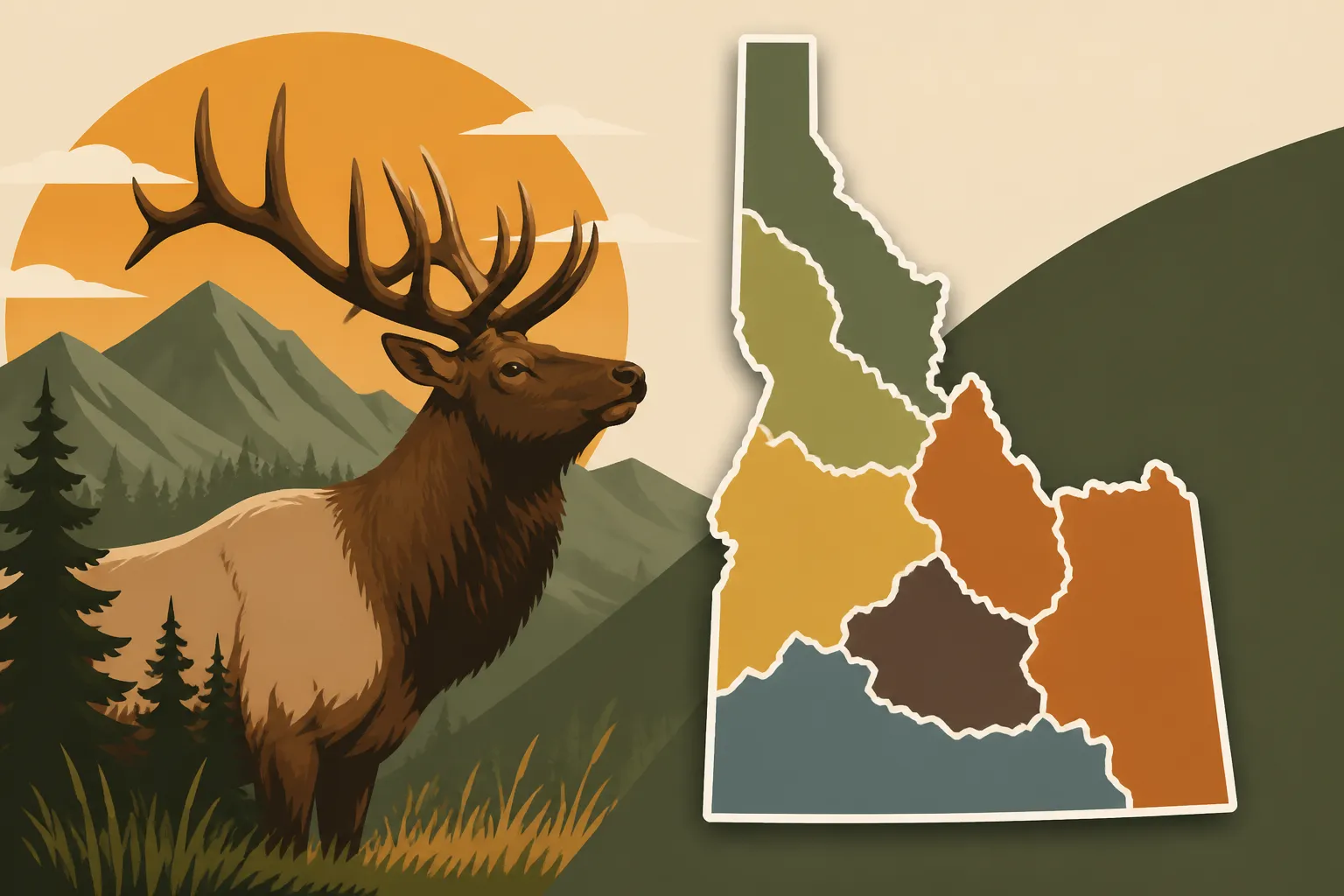
First things first, let's clear up the difference between an "Elk Zone" and a "Game Management Unit" (GMU). Think of Elk Zones as the big picture, broad strokes that cover large geographical areas of the state. Idaho has 29 distinct Elk Zones, each with its own specific regulations, season dates, and tag types designed to manage the elk herds within that region. These zones are the primary regulatory boundaries you'll be dealing with when selecting your elk tag.
Now, nested within these larger Elk Zones are the Game Management Units, or GMUs. These are smaller, more precise geographical subdivisions. There are 99 GMUs across Idaho, and they're used for managing specific species, setting harvest quotas, and gathering detailed biological data. So, while you'll buy a tag for an Elk Zone, you'll often hunt within specific GMUs inside that zone. This tiered approach allows Idaho Fish and Game to manage elk populations effectively at both a macro and micro level. It’s important because certain rules, like Idaho's motorized hunting rule keeps you on the road, might apply to specific GMUs, or even parts of them, within a broader zone. You always need to check the most granular level of regulation for your chosen hunting area.
The Fundamental Difference Between A and B Tags
Once you understand zones and GMUs, the next crucial piece of the puzzle is the A Tag versus B Tag system. This is where many hunters get tripped up, and honestly, it’s a system unique to Idaho that takes a little getting used to. Essentially, within most general elk zones, you'll have the choice between an "A Tag" and a "B Tag." This choice dictates when you can hunt and, often, what weapon you can primarily use during the earlier parts of the season.
An A Tag generally favors archery and muzzleloader hunters by providing earlier season dates. Typically, these seasons kick off in late August or early September, giving bowhunters a fantastic opportunity to chase bugling bulls during the rut. If you're passionate about getting up close and personal, perhaps even experiencing Bugling Elk in Idaho's Timbered Zones, an A Tag is often your go-to. However, while A Tags open earlier for archery and muzzleloader, they often have later, shorter general rifle seasons or may be limited to spike-only bulls, as detailed in rules like Spike-Only Bull Rules Inside Idaho A Tag Seasons. This means if you want to hunt with a rifle under an A tag, your options might be more restricted or later in the fall.
On the flip side, a B Tag is generally more geared towards the centerfire rifle crowd, with later general rifle seasons that often run from mid-October through November. While B Tags also offer archery and muzzleloader opportunities, those seasons usually overlap with or occur slightly later than the A Tag archery dates. If you’re planning a traditional rifle hunt, especially if you’re hoping for an "any-bull" opportunity, a B Tag is usually what you'll be looking for. It's really about aligning your preferred weapon and hunting timeline with the tag type. For a deeper dive, you can explore specific details like What an Idaho A Tag Buys You and What an Idaho B Tag Buys You.
Navigating General Elk Zones: Your Open Season Opportunity
Idaho is renowned for its general elk hunting opportunities, meaning many zones allow you to purchase a tag without having to go through a complex drawing process. This accessibility is a huge draw for many, but it also comes with its own set of considerations.
The Concept of General Tags and Their Availability
General tags in Idaho are exactly what they sound like: generally available. For most of Idaho's 29 elk zones, you can simply purchase a tag over-the-counter, or online, during the sale period. This is fantastic news for hunters who don't want to deal with the uncertainty and often multi-year waiting game of controlled draws common in other Western states. This ease of access means more hunters can experience Idaho's incredible landscapes and elk populations.
The vastness of these general zones means you'll find an incredible diversity of terrain. From the dense, dark timber of northern Idaho to the rugged, sagebrush-covered breaks of the central and southern regions, each general zone offers a unique hunting experience. While the tags themselves are readily available, the actual hunting success depends heavily on your research, preparation, and willingness to get off the beaten path. These tags provide a lot of flexibility, but with that comes the challenge of navigating potentially higher hunter numbers and finding areas where elk aren't constantly pressured.
Strategic Considerations for General Zone Hunters
When you're looking at general zones, your strategy becomes paramount. Because tags are more widely available, these areas can see significant hunter pressure, especially during opening weekends and in easily accessible locations. This means you need to be smart about where and how you hunt. Researching specific GMUs within your chosen general zone is crucial. Tools like the official The Idaho Hunt Planner Is the Tool to Start With are invaluable for this. You can look at historical harvest statistics, public land percentages, and even road access maps.
Many seasoned hunters and outfitters use platforms like GoHunt to dive even deeper into the data. These resources can help you analyze trends, understand migration patterns, and identify areas that might hold elk but receive less pressure due to difficult access or less obvious terrain features. For instance, some zones might have high overall harvest numbers, but a closer look might reveal that a significant portion of that harvest comes from a few specific, hard-to-reach pockets. This kind of detailed analysis can help you find your sweet spot within a general zone. Success in these areas often boils down to doing your homework, being willing to hike, and having a plan for reading the landscape.
Deciphering Idaho's Capped Elk Zones
While many of Idaho's elk zones offer general tags, there's a different category that operates under stricter limitations: the Capped Elk Zones. These zones are designed to manage hunter density and often offer a different kind of hunting experience.
The Mechanics of Capped Zone Tag Allocation
Capped zones are Idaho's way of controlling hunter numbers in specific, often high-demand or sensitive elk areas. Unlike general zones where tags are widely available, capped zones have a finite number of tags allocated for both A and B tag options. Once that predetermined number of tags is sold, that's it—no more tags are issued for that zone for that season. This system ensures that the elk populations in these zones aren't over-pressured and that the quality of the hunting experience is maintained.
The critical distinction is the sales process. Tags for capped zones are sold on a first-come, first-served basis, and they often sell out incredibly fast—sometimes within minutes or hours of going on sale. This creates a competitive rush, especially for desirable zones known for good elk numbers or accessible terrain. You really have to be ready right when sales open, often on a specific date in late spring or early summer, to have a chance. This is a stark contrast to the readily available general tags, as highlighted by the common phenomenon that Capped Elk Zones Sell Out While General Tags Sit. If you're hoping for a capped zone tag, mark your calendar and set multiple alarms!
The Unique Challenges and Rewards of Hunting Capped Zones
The primary challenge of hunting a capped zone is, of course, getting a tag in the first place. It requires diligence, fast internet, and sometimes a bit of luck to be one of the fortunate few who snag one before they're gone. This often means deciding on your zone well in advance and being prepared to commit. However, for those who do secure a tag, the rewards can be significant.
Generally, capped zones experience lower hunter density. With fewer people in the woods, elk behavior can be more natural, and the overall hunting experience can feel more remote and less pressured. This can translate into better opportunities to locate and stalk elk, and potentially, a higher chance of encountering mature animals. While success is never guaranteed, the reduced competition often makes the effort of acquiring a capped tag feel worthwhile. It's a trade-off: higher effort to secure the tag, but potentially a higher-quality experience in the field once you have it.
Choosing Your Idaho Elk Adventure: Zone Selection Strategies
Deciding which Idaho elk zone to hunt is a deeply personal choice that should align with your hunting style, experience level, and physical capabilities. It's not just about where the elk are, but where you will be most successful and enjoy the hunt.
Aligning Zone Characteristics with Your Hunting Goals
Before you even start looking at maps, sit down and honestly assess what kind of hunt you're looking for. Are you an archery purist dreaming of calling in a bull during the peak of the rut? Then you'll likely be eyeing zones with good early archery A Tag opportunities, perhaps in timbered country where calling is effective. The specific regulations regarding A Tags Favor Archery and Muzzleloader Hunters will be critical for your planning. If your heart is set on a classic rifle hunt in mid-fall, covering ground with optics, then a B Tag in a zone known for its rifle success might be more appropriate, understanding that B Tags Favor the Centerfire Rifle Crowd.
Consider the terrain you prefer. Do you thrive in the dense, silent timber, or do you prefer to use your optics to pick apart distant hillsides in more open country? Some zones are a mix, but many lean one way or the other. For instance, if you relish the challenge of navigating thick forests and trying to pinpoint bugles, zones like the Selway or Clearwater might appeal. If you prefer to cover vast distances with your binoculars, glassing open hillsides and draws, then a zone like Island Park or some of the southern regions might be more up your alley, offering excellent opportunities for Glassing Idaho Breaks for Mule Deer. Don't forget to think about your physical condition. Idaho elk hunting can be incredibly demanding, whether you're climbing steep mountains or packing out an animal for miles. Choose a zone that matches your ability to physically pursue elk.
Leveraging Official and Third-Party Resources for Informed Decisions
Once you have a clearer picture of your ideal hunt, it's time to dive into the research. The Idaho Fish and Game website is your first and most authoritative stop. Their online hunt planner is incredibly robust and allows you to filter by species, weapon, and even specific units within zones. This tool lets you look at past harvest statistics, drawing odds (for controlled hunts, though Idaho generally doesn't have preference points, so Why First-Time Applicants Have Even Odds in Idaho), and public land percentages. Understanding How Idaho Elk Zones Are Laid Out is key here.
Beyond official channels, a wealth of third-party resources can significantly enhance your research. Platforms like GoHunt offer advanced filtering, mapping layers, and insights into specific units and zones that can reveal crucial details about herd numbers, access points, and historical success rates. They can even provide satellite imagery with public land overlays, helping you identify potential hunting areas, escape routes for elk, and hidden pockets that might receive less pressure. Combining these resources allows you to make a truly informed decision, weighing the pros and cons of different zones against your personal hunting preferences and expectations.
Practical Implications of Your Chosen Elk Zone
The zone you ultimately select isn't just a name on a tag; it’s a framework that will profoundly impact every aspect of your hunt, from how you access the area to what you can realistically expect from elk behavior. Ignoring these practical implications can lead to frustration and a less-than-ideal experience.
Understanding Access and Terrain Challenges
Idaho is a state of incredible topographical diversity. One zone might encompass vast expanses of roadless wilderness, while another is a mosaic of public and private land with numerous logging roads. Your chosen zone's terrain will dictate your hunting style, the gear you need, and your physical preparation. For example, if you opt for a remote, high-country zone, you might be looking at multi-day pack trips, requiring specialized lightweight gear and serious physical conditioning. You'll need to study Motor Vehicle Use Maps (MVUMs) religiously, as Idaho's motorized hunting rule keeps you on the road and prohibits off-road travel, even to retrieve game in many areas.
In contrast, zones with more road access might allow for day hunts from a truck camp, but this convenience often means more hunters. The mix of public and private land is also a critical consideration. Some zones, particularly in southeastern Idaho, have a checkerboard pattern of land ownership, making access to public parcels challenging without crossing private land (which requires explicit permission). It's crucial to use mapping apps with land ownership layers, like those provided by GoHunt, to navigate these complex areas legally and ethically. Never assume access; always verify it.
Expectations for Elk Behavior and Hunter Pressure
Elk are incredibly adaptable, but they are also acutely sensitive to human pressure. The level of hunter density in your chosen zone will significantly influence elk behavior. In easily accessible, high-pressure general zones, elk quickly learn to become nocturnal or retreat into the thickest, nastiest cover as soon as the season opens. They become ghost-like, requiring intense effort, quiet movement, and often a willingness to hunt in places other hunters avoid.
Conversely, in lower-pressure capped zones or remote wilderness areas, elk might be more visible during daylight hours and more responsive to calling. However, this doesn't mean they're "easy." It just means their daily patterns might be less disrupted by constant human presence. Understanding when the elk rut actually peaks out west is also key, as their behavior changes dramatically. If you're hunting during the early archery season, you might find active bugles, but by late rifle season, they'll likely be focused on feeding and recovering from the rut, making them harder to locate. Always tailor your tactics to the specific zone, its typical pressure, and the time of year you're hunting.
Examples of Idaho's Diverse Elk Zones
Idaho's elk zones offer a smorgasbord of hunting experiences, each with its unique flavor of terrain, elk populations, and challenges. Let's look at a few examples to illustrate this diversity.
The Panhandle Zone
Head up to the very northern tip of Idaho, and you'll find yourself in the Panhandle Zone. This area is characterized by dense, often incredibly wet timber, steep mountains, and a lot of rainfall. It's classic thick-woods elk hunting. The visibility can be low, making long-range glassing nearly impossible in many areas. Here, success often hinges on still-hunting through the timber, moving slowly and quietly, or setting up in strategic pinch points and using calling tactics.
Elk in the Panhandle are adept at melting into the dense cover, making them tough to find. However, this zone is also known for its strong whitetail deer populations, and you'll often find both species sharing the same habitat. Bears are also prevalent. The challenge here is less about finding elk—they're there—and more about navigating the thick undergrowth and getting a clear shot. It's a hunt that demands patience and a keen sense of the woods, rather than long-range optics.
The Salmon Zone
Move south-central into the heart of Idaho's backcountry, and you encounter the vast Salmon Zone. This zone is defined by its rugged, expansive mountains, deep canyons carved by the Salmon River, and a significant portion of designated wilderness. This is where you'll find truly remote, physically demanding hunts. Elk densities might not be as high as in some agricultural-fringe zones, but the trophy potential can be excellent for those willing to put in the effort.
Hunting the Salmon Zone often involves multi-day pack trips, either on foot or with horses. Glassing vast canyons, identifying migratory routes, and executing long stalks are common strategies here. Access can be limited, with many areas requiring significant hiking or even flying into backcountry airstrips. It's a true wilderness experience that rewards self-sufficiency, robust gear, and top-tier physical conditioning. Think of it as an adventure where the hunt is as much about the journey into the wild as it is about harvesting an animal.
The Island Park Zone
Shifting to southeastern Idaho, the Island Park Zone presents a different set of opportunities. This high-plateau country, sitting close to the Yellowstone ecosystem, features a mix of timbered ridges, open sagebrush parks, and marshy lowlands. Elk often move between these habitat types depending on the time of year and hunting pressure.
Hunting here can involve a blend of calling in timbered areas and spot-and-stalk tactics across more open ground. It's often highly dependent on early season snows, which can push elk down from higher elevations or concentrate them in specific areas. Challenges can include rapidly changing weather, managing proximity to other hunters (especially early in the season), and navigating areas with mixed public and private land ownership. Platforms like GoHunt become incredibly useful here to discern public access routes and avoid unintentional trespassing on parcels near agricultural areas. This zone offers a classic Western big game feel but requires adaptability to its unique mix of habitat and weather patterns.
General vs. Capped Zones, A vs. B Tags at a Glance
To simplify the choice, here's a quick comparison of the main differences you'll encounter when selecting your Idaho elk tag:
| Feature | General Elk Zones (Most Common) | Capped Elk Zones (Specific Areas) |
|---|---|---|
| Tag Availability | Generally available over-the-counter or online throughout the season (unless quota is met). | Limited number of tags; sold first-come, first-served; often sell out very quickly on sale day. |
| Hunter Density | Can be moderate to high, especially in accessible areas and during opening weeks. | Generally lower hunter density due to limited tags. |
| Competition | Higher competition for elk, especially pressured animals. | Lower direct competition in the field once tag is secured. |
| Planning Effort | Focus on e-scouting, physical scouting for unpressured areas; more flexible if plans change. | High effort to secure tag; more certainty of lower pressure once tag is acquired. |
| Hunting Experience | Diverse, from remote backcountry to road-accessible areas; requires adapting to pressure. | Often a more remote or exclusive feel, potentially more natural elk behavior. |
A Tag vs. B Tag within a Zone:
| Feature | A Tag (Often Archery/Muzzleloader Focused) | B Tag (Often Rifle Focused) |
|---|---|---|
| Season Timing | Earlier seasons, typically late August/September for archery and muzzleloader. | Later seasons, often mid-October/November for general rifle; some earlier archery/muzzleloader. |
| Weapon Preference | Favors archery and muzzleloader hunters for prime rut opportunities. | Favors centerfire rifle hunters for later-season opportunities. |
| Rifle Opportunity | Rifle seasons may be shorter, later, or have antler restrictions (e.g., spike-only). | Rifle seasons often more expansive, with "any-bull" opportunities more common. |
| Rut Access | Provides best access to the peak of the elk rut for calling. | May have archery/muzzleloader in rut, but rifle seasons are generally post-rut. |
Disclaimer
Please remember that hunting regulations, season dates, and tag availability can change. Always consult the official Idaho Fish and Game website or the most current hunting regulations brochure before planning and executing any hunt. This guide is intended for informational purposes only.