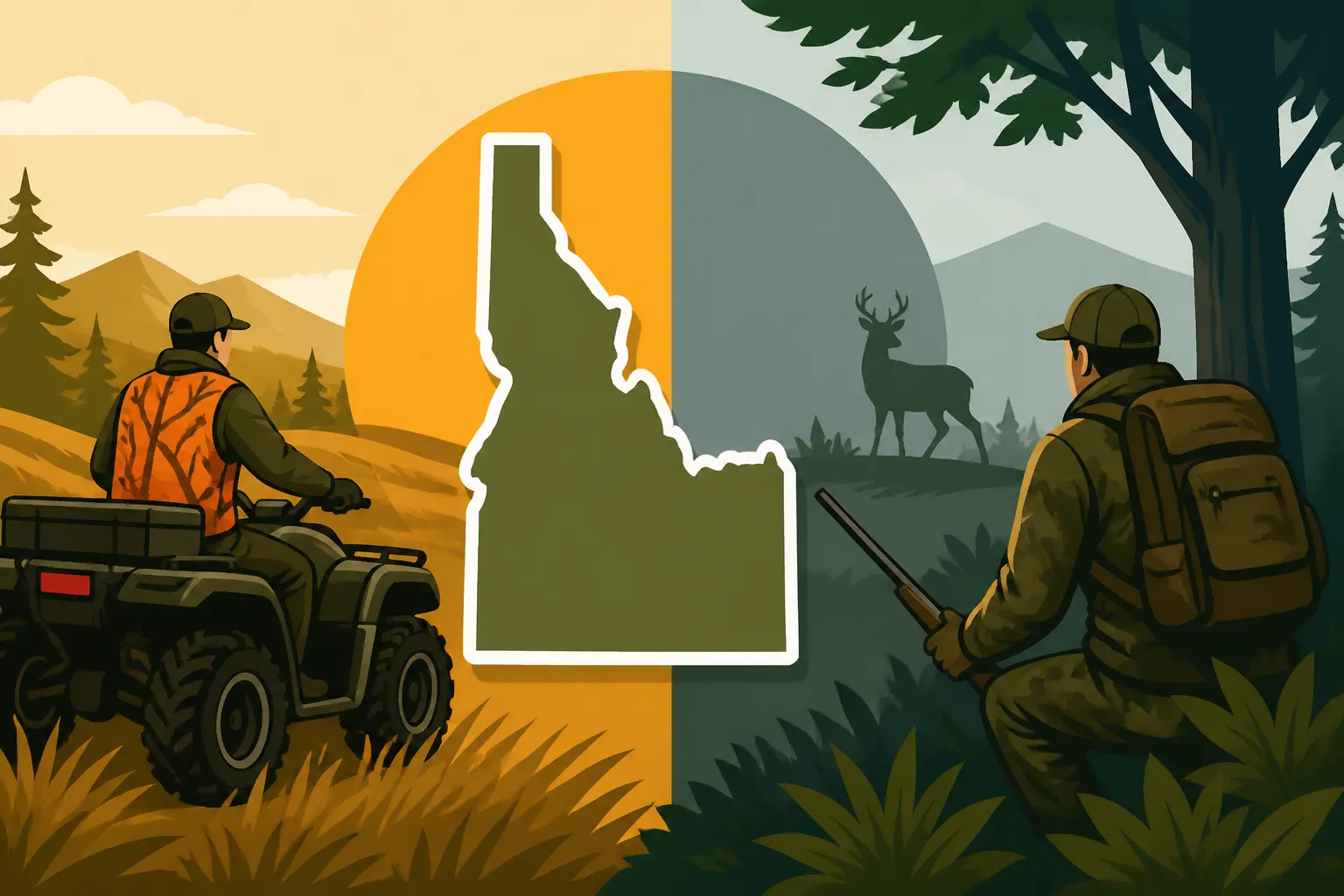
When Idaho’s Motorized Hunting Rule Applies
It's incredibly frustrating when you're out in the Idaho backcountry, focused on your hunt, and suddenly you're unsure if driving your ATV down a particular two-track is legal or if retrieving your downed game means breaking a rule. The motorized hunting rule in Idaho can feel a bit like a minefield if you don't fully understand its nuances, leaving many hunters anxious about unknowingly committing a violation. This guide is here to untangle the complexities of Idaho's motorized hunting rule, covering when and where it applies, what it means for game retrieval, and how to ensure you stay on the right side of the law while enjoying Idaho's incredible hunting opportunities.
Understanding Idaho's Core Motorized Hunting Rule
The fundamental principle behind Idaho's motorized hunting rule is quite straightforward, but its application can be anything but. At its heart, the rule aims to limit the impact of vehicles on wildlife, habitat, and the hunting experience, ensuring fair chase and protecting the integrity of our wild spaces. Essentially, it boils down to this: most motorized vehicle use during hunting seasons is restricted to established, maintained roads. It's not just about what you can drive, but where you can drive it, and when.
What Constitutes a Motorized Vehicle?
When we talk about "motorized vehicles" in the context of hunting rules, it's a broad definition. This isn't just about your pickup truck. It includes ATVs, UTVs (side-by-sides), motorcycles, snowmobiles, and even electric bicycles (e-bikes) in many situations. The key is that it's powered by a motor. While e-bikes are a newer addition to the conversation, Idaho law generally treats them the same as other motorized vehicles when it comes to off-road travel in hunting areas, especially on designated trails or routes. It's crucial to check the most current regulations, as technology evolves, so do the rules to manage its impact on wildlife.
Why These Rules Are in Place
You might wonder why Idaho Fish and Game bothers with such detailed restrictions. It's not to make your life harder, I promise. These rules are primarily designed for wildlife conservation and to preserve the quality of the hunting experience. Unrestricted motorized travel can lead to habitat degradation, increased game disturbance, and diminished fair chase opportunities. Imagine trying to stalk a wary mule deer buck only to have another hunter drive an ATV right through the basin you're working. The rules also reduce conflicts between different user groups—hunters, hikers, horseback riders—all sharing the same public lands. They are a critical part of how Idaho manages its vast and precious public land resources, especially in units where game animals are particularly sensitive to pressure.
Where and When Idaho's Motorized Rule Applies
This is where many hunters get tripped up because the rule isn't uniform across the entire state or all seasons. It's highly specific to particular game management units (GMUs), types of roads, and timeframes. Ignorance of these specifics is no excuse, and can lead to hefty fines, or even the loss of your hunting privileges.
Designated Roads and Trails
The core of the rule states that motorized vehicles are generally restricted to established roads or motorized trails that are open to vehicular travel. But what exactly counts as an "established road" or "motorized trail"? This is where mapping tools and careful scouting become your best friends.
- Established Roads: These are typically roads that have been constructed and maintained for vehicle use, often depicted on Forest Service, BLM, or county maps. They usually have a visible roadbed, are designed for public travel, and are not just a faint two-track left by occasional use.
- Motorized Trails: These are trails specifically designated and signed for motorized recreation, which might be narrower than roads and intended for ATVs, UTVs, or motorcycles.
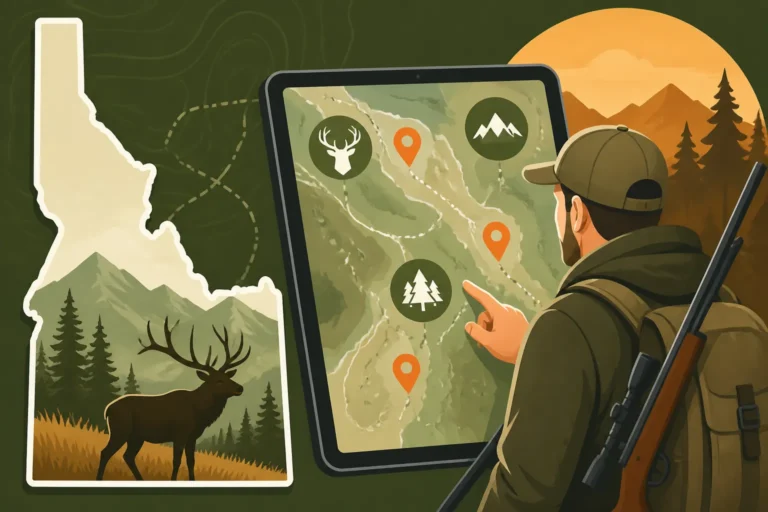
The critical distinction is that merely being a "track" or a "path" in the woods doesn't automatically make it an established road or legal motorized trail. If it's not clearly marked or shown on an official motor vehicle use map (MVUM), assume it's off-limits for motorized travel. Many hunters find tools like GoHunt invaluable for overlaying public land maps with motorized travel routes, helping to quickly identify legal access points and restrictions before they ever leave home. This kind of e-scouting an Idaho unit before the season starts can save you a lot of headaches and potential violations.
Specific Unit Regulations and Timeframes
Idaho Fish and Game doesn't apply a blanket motorized rule to every single unit year-round. Instead, these regulations are often tied to specific game management units and particular hunting seasons. For instance, some units might have stricter motorized restrictions during early archery seasons to minimize disturbance, while others might open up more access during later rifle seasons. It’s imperative to check the current Idaho Big Game Regulations for the specific unit you plan to hunt. These regulations will detail when Idaho's motorized hunting rule is enforced and which units carry a motorized hunting rule.
Let's look at an example: Unit 39, a popular hunting unit, might have different motorized access rules than, say, Unit 12 in the Panhandle. It’s not enough to know the general rule; you need to dig into the specifics for your chosen hunting area. The Idaho Fish and Game website's hunt planner is an excellent resource for this, allowing you to zoom into specific areas and review unit-specific rules. Additionally, the U.S. Forest Service and BLM offices provide Motor Vehicle Use Maps (MVUMs) that are the official source for legal routes on federal lands. These maps explicitly show what counts as an established roadway for motorized travel.
Idaho's Motorized Hunting Rule in Wildlife Management Areas
Wildlife Management Areas (WMAs) are areas managed by Idaho Fish and Game specifically for wildlife and habitat. Because of their primary purpose, WMAs often have even more stringent regulations regarding motorized vehicle use than general public lands. It's common for WMAs to limit vehicles to very few, clearly marked access roads, with extensive areas designated as non-motorized only. Understanding the Motorized Rules on Idaho Wildlife Management Areas is critical if you plan to hunt these valuable habitats. Always double-check the specific rules for any WMA you intend to visit, as they can vary greatly and are often designed to minimize human disturbance to resident wildlife populations, especially during sensitive periods like migration or calving.
The Challenging Scenario of Retrieving Downed Game
This is arguably the most contentious and frustrating aspect of Idaho's motorized hunting rule for many hunters: the restriction on using motorized vehicles to retrieve downed game. It's a scenario that plays out in many hunters' minds: you've made a great shot, your animal is down, but it's 800 yards off the established road in steep, rugged country. Your first instinct is to grab the ATV and go get it, but Idaho law explicitly prohibits driving off established roads to retrieve game.
Why You Cannot Drive Off Road to Retrieve Game
The rule against driving off road to retrieve downed game, including when you can drive off road to retrieve an elk, is a tough pill to swallow for many. You've successfully harvested an animal, and now you're faced with an arduous pack-out, knowing your ATV is sitting idly by. However, the reasoning behind this rule is sound:
- Preventing Abuse: Allowing off-road travel for game retrieval could easily be abused, leading to unauthorized road creation, habitat destruction, and unchecked access to remote areas under the guise of "retrieval."
- Fair Chase and Conservation: The physical effort of retrieving an animal is part of the hunting experience and the responsibility that comes with a harvest. It encourages hunters to consider the terrain and their capabilities before taking a shot, promoting ethical hunting practices and reducing the likelihood of wounded animals being left behind due to difficult terrain.
- Minimizing Impact: Even a single ATV trip off-road can compact soil, damage vegetation, spread noxious weeds, and disturb other wildlife or hunters. Multiply that by hundreds or thousands of hunters, and the impact becomes significant.
So, while it feels incredibly counterintuitive when you have a quartered animal ready to be hauled, the rule stands. You need to be prepared to pack out your game, whether it's a deer, elk, or bear, using muscle power, game carts, or pack animals.
Planning for Game Retrieval
Given this strict rule, planning your hunt needs to include a realistic assessment of game retrieval.
- Shot Placement and Proximity to Roads: When you're considering a shot, especially on a large animal like an elk, it's wise to think about the recovery. Can you realistically pack that animal out from where it might fall? This doesn't mean you shouldn't take a shot that's within your ethical limits, but it does mean being prepared for the effort.
- Gear for Packing Out: Invest in good quality game bags, a sturdy frame pack, and perhaps a game cart if the terrain allows for it on designated trails or roads. Knowing how to efficiently quarter an animal in the field is also a crucial skill.
- Teamwork: Hunting with a partner or a small group can significantly ease the burden of retrieval. More hands make lighter work, especially in Idaho's rugged mountains.
- Scouting for Access: During your E-Scouting an Idaho Unit Before the Season, pay close attention to the road networks and how they relate to potential hunting areas. Identify trails or drainages that might offer the easiest (though still non-motorized) path back to an established road. Using tools like GoHunt's mapping features can help you visualize these access routes and potential pack-out distances.
Navigating the Rules: Compliance and Consequences
Understanding the rules is one thing; consistently complying with them is another. The vastness of Idaho's public lands means that you often won't see a conservation officer around every bend. However, that doesn't mean the rules aren't enforced, and the penalties can be significant.
Penalties for Breaking the Motorized Rule
Violating Idaho's motorized hunting rule is not a minor infraction. Penalties for breaking the motorized rule can include substantial fines, confiscation of your vehicle, and even suspension of your hunting license. The specific penalty often depends on the severity of the violation, whether it's a first offense, and the discretion of the enforcing officer and the courts. For example, creating new unauthorized routes or causing significant resource damage will likely incur harsher penalties than a momentary lapse in judgment on an existing but closed road.
It's also worth remembering that other hunters can, and often do, report violations. Hunters are often the fiercest advocates for ethical behavior and conservation, and they won't hesitate to report someone they see abusing motorized access.
Essential Tools for Staying Compliant
To avoid unintentional violations, proactive preparation is key.
- Idaho Fish and Game Regulations: This is your bible. Always carry a copy (physical or digital) of the most current Idaho Big Game Regulations, and read the sections pertaining to motorized vehicle use for your specific hunting unit.
- Motor Vehicle Use Maps (MVUMs): For federal lands (Forest Service and BLM), MVUMs are the official word. These maps indicate which roads and trails are open to motorized vehicles, what types of vehicles are allowed, and any seasonal restrictions. They are usually available for free at local ranger districts or BLM offices, and many are available digitally. When using mapping apps like GoHunt, ensure that you're referencing accurate and up-to-date MVUM data. These applications often have layers that show which roads qualify under Idaho's motorized rule and what counts as an established roadway.
- GPS and Mapping Apps: Modern GPS devices and smartphone apps (like GoHunt, onX Hunt, or Garmin BaseCamp) with detailed land ownership and road/trail layers are indispensable. They can show you precisely where you are in relation to established roads, private property, and non-motorized areas. Using onX Layers for Idaho Public Land can provide real-time information to help you navigate legally.
- Common Sense and Respect: When in doubt, err on the side of caution. If a track looks unused, unmaintained, or leads into an obviously sensitive area, it's probably not a legal route for motorized travel. Respect the land, respect the wildlife, and respect other users. Driving Off Established Roads Is Prohibited in Idaho for a reason.
Table: Motorized Vehicle Use Guidelines in Idaho Hunting Zones
To help clarify some of the nuances, here's a general table outlining motorized use guidelines. Always refer to the official Idaho Fish and Game Regulations and specific MVUMs for your chosen unit, as rules can vary.
| Scenario | General Rule for Motorized Vehicles | Key Considerations |
|---|---|---|
| Established Public Roads | Generally allowed, unless otherwise posted or seasonally closed. | These are maintained county, state, or federal roads. Stay on the road. |
| Designated Motorized Trails | Allowed for specific vehicle types (ATV, UTV, motorcycle) as posted. | Check signs and MVUMs for permissible vehicle types and seasonal access. Trails are typically narrower than roads. |
| Non-Motorized Trails/Areas | Strictly Prohibited. Foot traffic, horses, or bicycles (non-e-bike) only. | These areas are often managed for solitude and minimal human impact on wildlife. Violations here carry significant penalties. |
| Off-Road Travel (General) | Strictly Prohibited unless specifically designated. | This includes driving through fields, timber, or creating new tracks. This is the core of "Driving Off Established Roads Is Prohibited in Idaho." |
| Game Retrieval Off-Road | Strictly Prohibited. You cannot drive off an established road to retrieve downed game. | This applies even if your animal is just a short distance from the road. Be prepared to pack out by hand, pack animal, or game cart. This is why you cannot drive off road to retrieve game. |
| Private Land | Permitted only with express permission from the landowner. | Even with permission, be aware of damage to property. State motorized rules may still apply if it's open to public access, but landowner rules take precedence on their property. |
| Idaho Wildlife Management Areas (WMAs) | Highly restricted; often limited to a few main access roads. Many areas are non-motorized. | Check specific WMA regulations carefully. Motorized Rules on Idaho Wildlife Management Areas are usually stricter than general public land. |
| Wilderness Areas | Strictly Prohibited. Mechanized travel of any kind (including bicycles) is generally forbidden. | These are designated areas for primitive recreation. No motorized vehicles, no chainsaws, no bicycles. |
Staying informed and making responsible choices is paramount to a successful and legal hunting trip in Idaho. The effort put into understanding these regulations before you head out into the field will pay dividends in peace of mind and help you avoid unnecessary trouble.
Disclaimer
Please note: The information provided in this article is intended for general guidance and informational purposes only. Idaho hunting regulations are subject to change. It is the hunter's responsibility to consult the most current Idaho Fish and Game regulations and any applicable federal, state, or local laws before engaging in any hunting activities. Always verify specific rules and boundaries for your hunting unit, especially regarding motorized vehicle use, with official sources such as the Idaho Department of Fish and Game and the managing land agency (e.g., U.S. Forest Service, Bureau of Land Management) before your hunt.