Are Drones Legal for Scouting in Idaho?
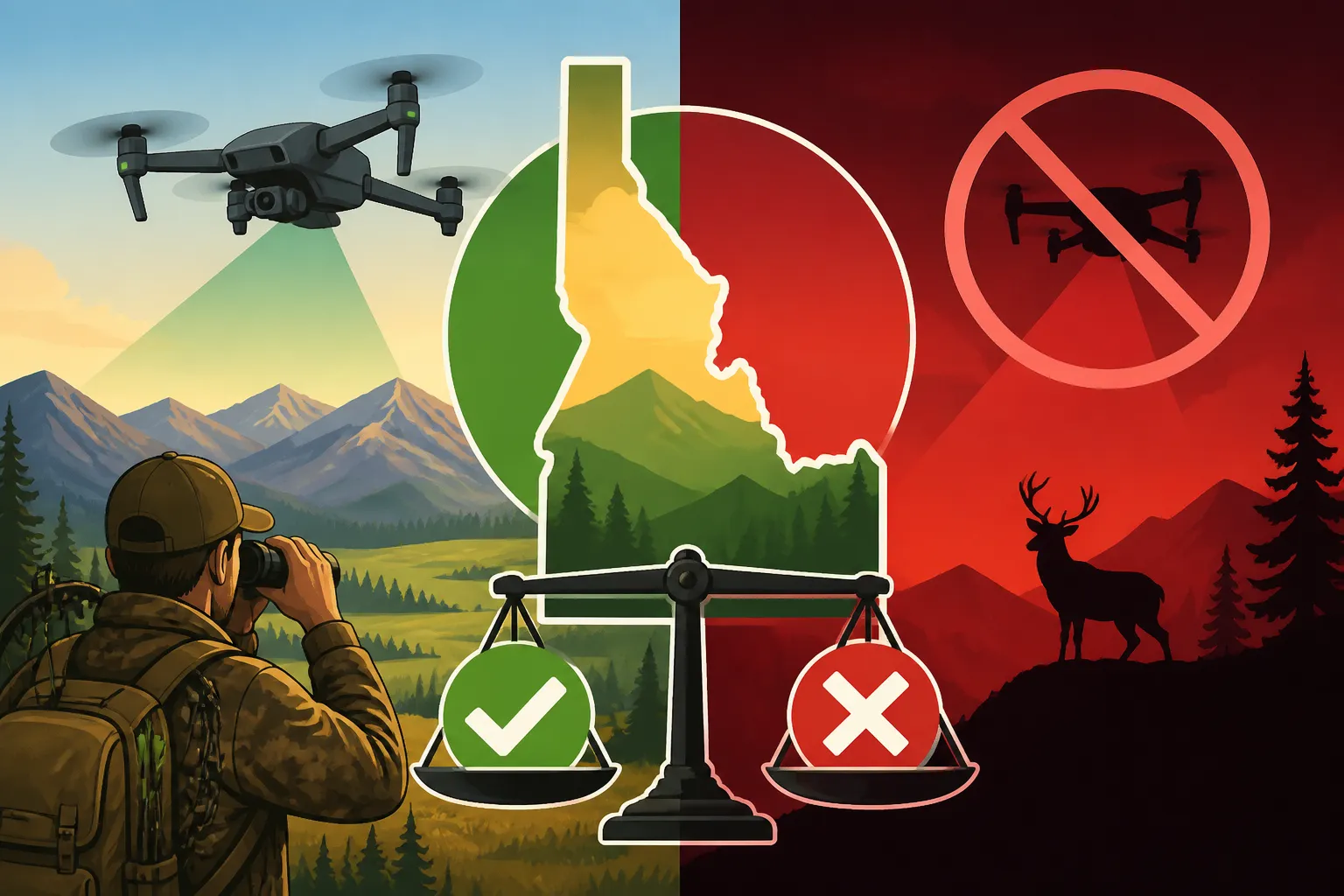
It’s a brand-new era for hunting, and with incredible technology like drones becoming more accessible, it’s completely understandable why so many hunters wonder if they can use these aerial tools to gain an advantage in the field. The truth is, the rules around drones and hunting in Idaho can be a real head-scratcher, creating a lot of confusion and a genuine fear of inadvertently breaking the law. This guide is here to clear up that confusion, diving deep into Idaho's regulations and exploring legal, ethical ways to scout, so you can hunt confidently without risking your license.
The Core Rule: Drones and Hunting in Idaho
Navigating the world of hunting regulations can sometimes feel like trying to read ancient hieroglyphs, especially when new technology enters the picture. Drones are a prime example. While they’re incredible for photography, filming, and even some commercial applications, their use in hunting, especially for scouting, is a very different beast, largely restricted by federal and state law.
Federal Regulations and Idaho's Stance
First off, let’s talk about the big picture. The Federal Aviation Administration (FAA) governs all airspace in the United States, including where and how drones can fly. This means there are baseline rules about operating drones safely and legally, regardless of whether you're using them for hunting or not. You need to understand things like flight restrictions near airports, altitude limits, and the requirement to maintain visual line of sight. However, when it comes to hunting, states like Idaho layer on their own specific prohibitions that often go beyond just air safety.
Idaho, like many other states, has taken a pretty clear stance on drones and hunting: they are generally not allowed as an aid. The Idaho Department of Fish and Game (IDFG) regulations are designed to uphold the principle of fair chase, meaning hunters should pursue game using traditional methods that give the animal a reasonable chance of escape. Using a drone fundamentally changes that dynamic. The core of Idaho's rule is simple: you cannot use any aircraft, including drones, to spot, locate, or harass wildlife for the purpose of hunting. This prohibition extends to flying over an area where you intend to hunt, even if you’re not actively carrying a weapon or physically pursuing game at that very moment. It's about preventing an unfair advantage that technology could provide.
What "Aid in Hunting" Truly Means for Drones
This is where things can get a bit murky for hunters trying to do the right thing. The term "aid in hunting" is broad, and for drones, it covers a lot of ground. It's not just about flying a drone directly over an elk herd to pinpoint their location right before you pull the trigger. It encompasses any use of a drone that gives you an unfair advantage in locating or pursuing game.
Imagine this scenario: you're trying to figure out if there's a good travel corridor through a particular canyon, or if a certain bench holds deer. Traditionally, you'd hike in, glass the area, maybe put out trail cameras, and learn the terrain over time. If you instead fly a drone over that canyon, capturing real-time video of deer trails, water sources, or even bedded animals, that's absolutely considered aiding in hunting. Even if you don't hunt that day, the information you gathered directly from the drone flight is considered an illegal advantage.
Let's break down some hypothetical examples to really illustrate the point:
- Clearly Illegal: You fly a drone over a ridge and spot a nice bull elk bedded down. You then land the drone, grab your rifle, and hike towards that bull's location. This is a direct violation, as the drone was used to locate the animal for the purpose of hunting.
- Also Illegal (Less Obvious): You fly a drone over an entire mountain side a week before your season opens. You're not armed, you're just "scouting." However, during that flight, you identify a cluster of deer in a specific drainage that you wouldn't have known about otherwise. Even though you don't act on it immediately, that information was gathered illegally to aid your upcoming hunt. The intent to use that information for hunting is key.
- Legal Use (Generally): Using a drone to scout for a shed antler hunt is generally permissible, as shed hunting is typically not regulated under big game hunting statutes. However, even here, you'd need to ensure you're not disturbing wildlife or violating private property rights.
The critical takeaway is that if the drone is being used to gather information about game animal location, movement, or habitat in a way that directly contributes to your ability to find or kill that animal, it falls under "aiding in hunting" and is prohibited. It's designed to keep the playing field level, emphasizing boots on the ground and skill over technology.
Penalties for Illegal Drone Use
Breaking hunting laws, especially those concerning fair chase and illegal aids, can carry some pretty serious consequences in Idaho. It's not just a slap on the wrist; these violations can significantly impact your hunting privileges and your wallet.
If you're caught using a drone illegally to aid in hunting, you could face:
- Significant Fines: These are often several hundred to several thousand dollars, depending on the severity of the violation and whether it's a first offense.
- License Revocation: This is a major concern for any dedicated hunter. Illegal drone use can lead to the suspension or outright revocation of your Idaho hunting license, often for multiple years. This revocation can also be recognized by other states through interstate wildlife compacts, meaning you might lose your hunting privileges across a wide range of jurisdictions.
- Confiscation of Equipment: Your drone, and potentially other hunting equipment, could be confiscated by Idaho Fish and Game officers. That's a costly loss on top of fines and license suspension.
- Criminal Charges: In some egregious cases, especially if combined with other violations or harassment of wildlife, the charges could escalate to a misdemeanor or even a felony, leading to jail time.
The IDFG takes these regulations very seriously, and for good reason. They are committed to protecting wildlife populations and ensuring ethical hunting practices. It’s far better to err on the side of caution and fully understand the rules than to face these kinds of penalties.
Scouting Without Running Afoul of the Law
So, if drones are mostly out of the picture for scouting, how do you gain that crucial intelligence on the landscape and the animals within it? Thankfully, there are plenty of legal, highly effective methods that have been honed over generations of hunting, now enhanced by modern technology that doesn't fly.
Traditional and Legal E-Scouting Alternatives
Modern hunters have a wealth of resources at their fingertips that don't involve drone flight and are perfectly legal for pre-season scouting. These tools allow you to virtually "walk" the terrain, identify key features, and develop a solid game plan long before you ever set foot in the field.
- Topographic Maps: The foundation of all good scouting. Understanding contour lines, elevation changes, and terrain features is critical. You can learn where animals might bed, travel, or seek water just by studying the lay of the land.
- Satellite Imagery: Tools like Google Earth are invaluable. You can zoom in on potential bedding areas, identify thick timber, find hidden meadows, and trace game trails. Many hunters also use specialized hunting apps such as GoHunt's mapping features. These tools often come with public and private land boundaries, making it easier to ensure you're staying on legal ground. You can learn more about how to maximize these tools by exploring articles like E-Scouting an Idaho Unit Before the Season and Using onX Layers for Idaho Public Land.
- Harvest Statistics and Unit Reports: The IDFG publishes incredible data. Diving into Reading an Idaho Harvest Statistics Report can give you insights into success rates, species densities, and preferred hunting methods in specific Game Management Units. This helps you narrow down your focus to areas with good potential. You can also leverage resources like The Idaho Hunt Planner Is the Tool to Start With to dig into specific unit information.
- Reading a Land Ownership Layer Correctly: This is crucial for planning your access and ensuring you're not trespassing. Understanding whether a piece of ground is public (National Forest, BLM, State Land) or private is paramount.
- Trail Cameras: While there are rules around their placement (especially on public land), trail cameras are an excellent, legal way to monitor game movement and patterns without disturbing animals directly. Just be sure to check Trail Camera Rules on Idaho Public Land before you deploy them.
- Boots on the Ground: Nothing, absolutely nothing, replaces physically exploring the area. Hiking, glassing, and finding fresh sign like tracks, scat, and rubs will always be the best way to understand an area. This is where you connect with the land and truly learn.
These methods, when combined, provide a comprehensive picture of your hunting area, allowing you to develop a strategic plan that respects fair chase principles and keeps you on the right side of the law.
The Distinction Between Scouting and Hunting
It might seem like a semantic game, but the distinction between "scouting" and "hunting" is incredibly important when it comes to technology like drones. For many traditional forms of scouting, like looking at maps or using binoculars, the line is pretty clear. With drones, that line becomes incredibly blurry, making it dangerous to assume good intentions are enough.
Idaho's regulations don't just prohibit the act of killing an animal with the aid of a drone; they prohibit the use of a drone to spot or locate game animals or their habitat for the purpose of hunting. This means that even if you fly a drone days or weeks before the season, if the intent is to gather information that will directly aid your hunt, it's considered illegal.
Think of it this way: "scouting" generally involves gathering information about terrain, access points, water sources, and general animal presence using legal means. "Hunting" involves the pursuit and taking of game. When a drone is used, the act of "scouting" can very quickly transform into "aiding in hunting" because of the real-time, aerial perspective it provides. It offers a level of surveillance that bypasses the traditional challenges of locating game by foot and glass.
The IDFG defines hunting broadly to include "pursuing, capturing, shooting, or killing any wildlife, or attempting to do so." If your drone activity contributes to any part of that definition, even in an preparatory way, you're likely violating the rules. This is why most wildlife agencies take such a hard line on drones – the potential for immediate and direct aid to hunting is simply too high, regardless of whether a weapon is present during the drone flight.
| Use Case | Legality in Idaho (for hunting) | Explanation |
|---|---|---|
| Spotting/locating big game animals | Illegal | Prohibited to use any aircraft, including drones, to spot or locate wildlife for hunting. |
| Identifying game trails/bedding areas | Illegal (if aiding hunt) | If used to gather specific info about animal movement/habitat for an upcoming hunt, it's illegal. |
| Filming personal hunting trip | Legal (with strict caveats) | Can be legal if drone is not used to spot/locate game and follows all FAA/state rules. Highly risky, often mistaken for illegal aiding. |
| Scouting for shed antlers | Generally Legal (check local rules) | Shed hunting is typically not under big game hunting regulations, but avoid disturbing wildlife. |
| General land reconnaissance (no game focus) | Legal (with strict caveats) | Legal if solely for general terrain analysis, property lines, etc., with no intent to aid hunting. |
| Harassing/driving wildlife | Illegal | Prohibited and unethical under all circumstances. |
Ethical Considerations and the Spirit of Fair Chase
Beyond the letter of the law, there's a deeper discussion to be had about the ethics of using technology like drones in hunting. The hunting community often operates on a foundation of "fair chase" – a principle that ensures hunters don't take unfair advantage of the animals they pursue. Drones challenge this principle in several significant ways.
Maintaining Fair Chase Principles
Fair chase is more than just a rule; it's a philosophy that guides ethical hunting. It emphasizes respect for the animal, the challenge of the hunt, and the skills of the hunter. When you introduce a drone into the equation, you introduce a technology that can effectively eliminate many of the traditional challenges of hunting.
Imagine a hunter spending days hiking, glassing, reading sign, and slowly piecing together where an elk might be. This requires patience, physical endurance, and a deep understanding of the animal and its habitat. Now, compare that to a hunter who can send a drone up, sweep hundreds of acres in minutes, and get an aerial view that instantly reveals animal locations, escape routes, and hidden features. This instant, pervasive surveillance fundamentally changes the nature of the challenge.
The argument isn't necessarily against all technology; we use powerful optics, GPS, and rangefinders. But drones represent a quantum leap in information gathering that many argue tips the scales too far in the hunter's favor, making the chase less "fair." It shifts the emphasis from woodsmanship and skill to technological advantage, which can diminish the sense of accomplishment and the very essence of what makes hunting a revered tradition. The hunting community generally prides itself on self-regulation and maintaining a high ethical standard, and the widespread use of drones in hunting could easily erode public perception of hunters as ethical conservationists.
Impact on Wildlife and Other Hunters
Beyond the ethical considerations of fair chase, drones also raise concerns about their potential impact on wildlife and the experience of other outdoor users. These aren't minor issues; they get to the heart of respecting the wild places we cherish.
- Wildlife Disturbance: Drones, especially those that are noisy or fly too low, can cause significant stress to wildlife. The whirring sound and unfamiliar overhead movement can alarm animals, causing them to flush from bedding areas, alter their feeding patterns, or even abandon crucial winter range. For animals already under stress from harsh weather or hunting pressure, this added disturbance can be detrimental. Imagine the impact on nesting birds, vulnerable fawns, or elk trying to conserve energy in deep snow. It's a direct intrusion into their natural environment.
- Disruption to Other Hunters and Outdoor Enthusiasts: Picture yourself deep in the Idaho backcountry, having hiked miles away from roads to find peace and solitude. You're trying to still-hunt through a timber stand, listening for the subtle sounds of elk, when suddenly, a drone starts buzzing overhead. This noise and visual intrusion can shatter the wilderness experience for others. It can spook game for miles around, ruining another hunter's stalk or a photographer's chance at a shot. Public land is a shared resource, and the actions of one drone operator can negatively impact many others seeking different experiences. Articles like Idaho's Motorized Hunting Rule Keeps You on the Road highlight how Idaho generally tries to minimize human impacts on remote areas, and drones, even when technically allowed for non-hunting purposes, can still conflict with the spirit of those rules.
While some drone pilots are mindful and respectful, the potential for widespread disturbance and conflict is a major reason why wildlife agencies are cautious and often prohibitive about their use in conjunction with hunting.
Looking Ahead: The Future of Drones in Hunting
The world of technology moves at lightning speed, and hunting regulations, while slower, do adapt. Understanding where things stand today and what to expect tomorrow is crucial for staying legal and ethical.
Evolving Regulations and Technology
It’s a safe bet that drone technology will only continue to advance, with quieter models, longer flight times, and more sophisticated cameras. As these capabilities evolve, so too will the conversation around their use in outdoor activities, including hunting. Wildlife agencies are constantly monitoring new technologies and their potential impacts on wildlife management, fair chase, and public perception.
While the current stance in Idaho is quite clear on drones as an "aid in hunting," it's not impossible that specific niches might open up in the future, perhaps for recovery of downed game in extremely difficult terrain (with strict permits) or for specific research purposes. However, the core principle of fair chase is deeply ingrained, and it’s unlikely that drones will ever become a widespread tool for active scouting or hunting in a way that gives an immediate, unfair advantage. Organizations like GoHunt are great resources because they actively track changes in regulations across states, helping hunters stay informed. They are often among the first to report on new legislation or clarifications from state agencies regarding hunting technology.
Hunters need to be prepared for regulations to change, potentially becoming even more restrictive if drone misuse becomes a pervasive issue, or perhaps clarifying acceptable non-hunting uses. The key is to never assume that because a new technology exists, it's automatically legal for hunting applications.
The Hunter's Responsibility to Stay Informed
Ultimately, the onus is on each individual hunter to know and abide by the law. Ignorance of the regulations is never an acceptable excuse, and the penalties for violations are substantial. This isn't just about avoiding a fine; it's about upholding the integrity of hunting and protecting the resource for future generations.
Here's how you can make sure you're always up to date:
- Read the Current Idaho Fish and Game Regulations Annually: Every year, before you even consider applying for tags or heading out, thoroughly read the latest IDFG regulations. Pay special attention to the general rules section and any specific prohibitions regarding technology, motorized vehicles, or aircraft. The rules can be found on the IDFG website.
- Consult the IDFG Directly: If you have any doubt whatsoever about a specific scenario or the legality of a particular action, contact the Idaho Fish and Game directly. You can call their licensing phone line or visit a regional office. Getting clarification straight from the source is always the best approach. Don't rely on forum discussions or "a guy who knows a guy."
- Stay Engaged with Reputable Hunting Resources: Follow official IDFG news releases and educational materials. Trusted hunting publications and online platforms like GoHunt that regularly cover regulatory updates can also be valuable resources.
By taking these steps, you can ensure you're hunting legally and ethically, preserving the spirit of fair chase, and contributing positively to the perception of hunters in Idaho.
Disclaimer
Please remember that hunting regulations can change, and interpretations may vary. This article provides general information and should not be considered legal advice. Always consult the most current Idaho Fish and Game regulations or contact the IDFG directly for precise, up-to-date legal requirements before engaging in any hunting activities.