Why You Cannot Drive to Retrieve Downed Game
It’s a situation every hunter eventually faces: you’ve put in the time, made the shot, and your quarry is finally down. That surge of adrenaline and accomplishment is incredible, but quickly, a new reality sets in. How do you get that animal, whether it’s a big mule deer or a massive bull elk, from where it fell to your truck? The thought of just driving your vehicle a little further, straight to the downed game, is tempting, especially when you’re miles from the nearest established road. But in Idaho, that seemingly simple solution is a strict no-go. This guide will walk you through Idaho's motorized hunting rules, explaining exactly why driving off-road to retrieve downed game is prohibited, what those regulations mean for you, and how to plan for a successful, ethical, and legal pack-out.
The Unyielding Rule: No Driving Off Road for Downed Game Retrieval
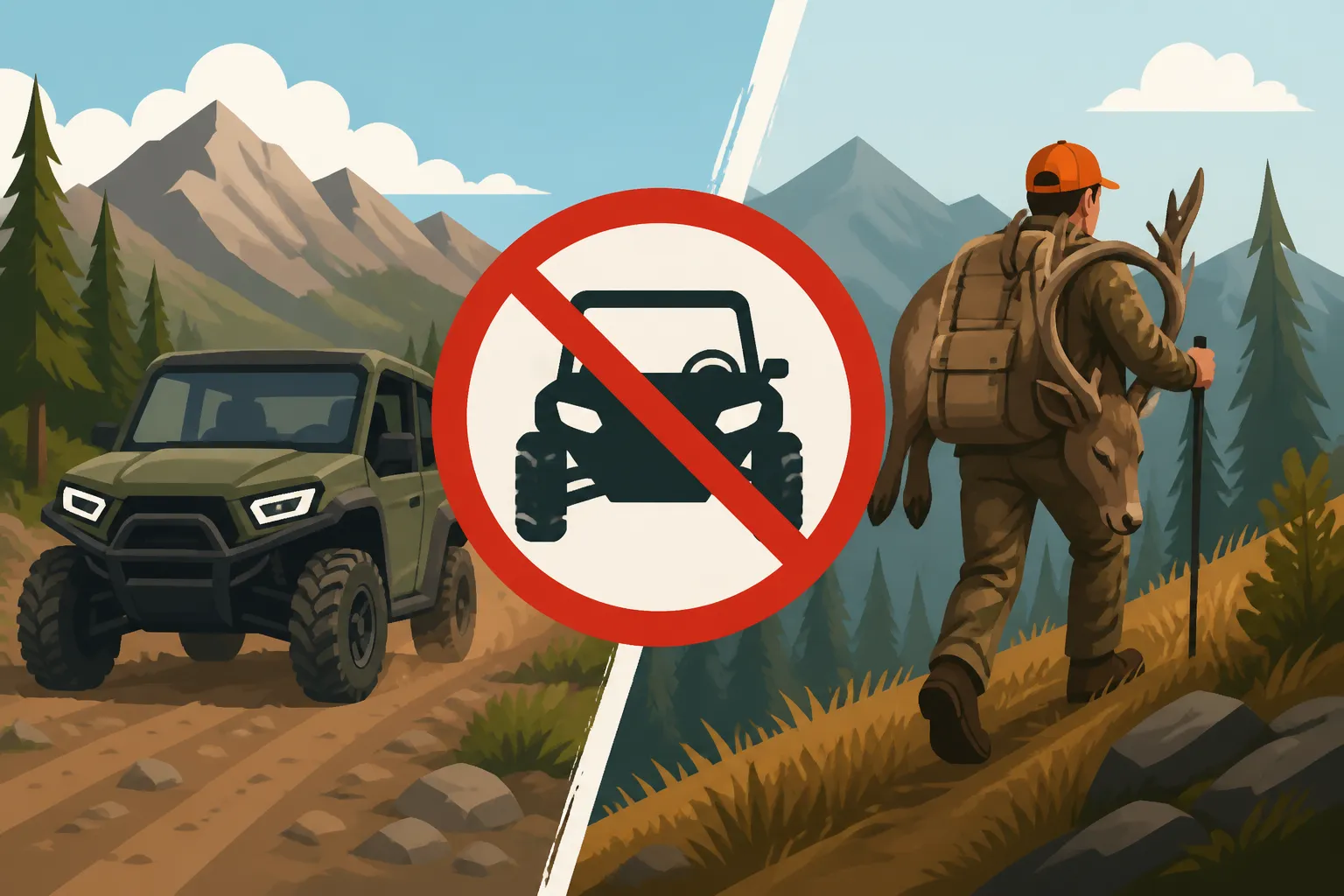
Let's cut right to the chase: Idaho Fish and Game regulations are exceptionally clear on this point. Once you've harvested an animal, you cannot simply drive your truck, ATV, UTV, or any other motorized vehicle off an established road to retrieve it. This rule is a cornerstone of Idaho's conservation efforts and fair chase principles, and it's something every hunter, resident or nonresident, needs to understand deeply before heading into the field.
The Hard and Fast Regulation
The Idaho Fish and Game Commission has implemented rules explicitly prohibiting the use of motorized vehicles off established roads or trails for the purpose of hunting, pursuing, or retrieving game animals. This isn't just a suggestion; it's a regulation that carries serious weight. The intent is to protect the delicate ecosystems that Idaho's wildlife depends on and to maintain a certain level of challenge and ethics in the hunt.
Imagine this scenario: you've tracked a mature bull elk for hours through dense timber and across steep ridges. Finally, you get your shot, and the bull drops in a hidden ravine, a mile from the nearest gravel road. Your legs are burning, your pack is heavy, and the thought of packing out hundreds of pounds of meat is daunting. It's in moments like these that the temptation to "just drive a little bit" can be overwhelming. You might have seen faint tracks or a barely visible two-track leading in that general direction, and it seems like an obvious solution. However, that two-track, unless explicitly designated as a motorized trail open to your vehicle type, is not an "established road" in the eyes of the law. You're legally obligated to make that trek on foot, or with approved pack stock, to get your animal out. This rule, known as the "Idaho's Motorized Hunting Rule Runs August Into December", has specific timelines and applications that hunters must be aware of throughout the hunting season.
This rule applies universally across almost all public lands in Idaho—National Forests, Bureau of Land Management (BLM) lands, and most state lands. While there might be exceptions on specific private lands with landowner permission (which we'll touch on later), for the vast majority of Idaho's hunting opportunities, you simply cannot drive to your downed game if it means leaving a designated, open roadway.
What "Retrieve Downed Game" Really Means
The term "retrieve downed game" might sound simple, but it covers a broad spectrum of actions. It means the entire process of getting your animal from where it fell to a location where it can be legally transported. This includes, but isn't limited to:
- Driving directly to the animal: This is the most obvious violation.
- Driving part of the way off-road: Even if you only drive a few hundred yards off a main road onto a primitive track to shorten your pack-out, if that track isn't a designated motorized route, you're breaking the rule.
- Using a motorized vehicle to haul quarters: Once the animal is field-dressed and quartered, you still cannot use an ATV, UTV, or other motorized vehicle off a legal road to bring those quarters out. The retrieval process itself must adhere to the motorized vehicle rules.
It's also important to understand that this rule isn't limited to big game like elk or moose. It applies to all species for which motorized off-road retrieval is deemed inappropriate or harmful to the environment. Whether it's a deer, bear, or even smaller game if you're attempting to drive off-road to retrieve it, the regulation holds. The spirit of the law is to minimize habitat disturbance, prevent erosion, and ensure a fair chase experience for all hunters. This means accepting the full challenge of the hunt, including the strenuous effort of getting your animal out of the woods under your own power, or with the aid of approved pack animals.
Deciphering "Established Roads" and "Motorized Vehicles"
Understanding what Idaho defines as an "established road" and what counts as a "motorized vehicle" is absolutely critical. Many violations stem from misunderstandings or assumptions about these terms. What looks like a road to one person might be considered an illegal off-road trail by wildlife enforcement.
Defining "Established Roadways"
This is where things can get a bit nuanced, and it's where most hunters can inadvertently run into trouble. An "established road" in Idaho, for the purpose of motorized vehicle use and game retrieval, generally refers to:
- Paved or Maintained Gravel Roads: These are clear-cut. Think county roads, state highways, or well-maintained Forest Service or BLM roads that appear on official maps and are clearly designed for vehicle traffic.
- Designated Motorized Trails: These are trails explicitly marked for motorized vehicle use, often found on Forest Service Motor Vehicle Use Maps (MVUMs) or BLM travel management plans. These are not just any two-track you find in the woods. They are signed, maintained for specific vehicle types (e.g., ATVs, motorcycles), and clearly identified on official maps as open.
What typically does not count as an established roadway for off-road retrieval includes:
- Game Trails or Old Logging Skids: These are natural paths or remnants of past logging activity that are not maintained for public vehicle use. While they might look like faint roads, they are not.
- Primitive Two-Tracks Not on Official Maps: Many areas have old tracks from past resource extraction or informal use. If it's not on an MVUM or a clearly marked map as a motorized route, assume it's not a legal road for off-road travel.
- Frozen Lakes or River Beds: While they might provide a seemingly flat surface, driving on them is generally prohibited and can have significant environmental impacts and safety risks.
The best way to know which roads and trails are legal for motorized use is to consult official maps. The U.S. Forest Service provides Motor Vehicle Use Maps (MVUMs) for all National Forests, which are the definitive source for legal motorized travel. Similarly, BLM field offices can provide travel management plans. Using a tool like GoHunt's mapping features can also layer these official designations onto your hunting unit, giving you real-time information on permissible routes. Ignoring these resources and relying on guesswork can lead to serious consequences. For a deeper dive into discerning legal roads from illegal paths, check out our guide on "Which Roads Count Under the Motorized Rule".
What Qualifies as a "Motorized Vehicle"
Idaho's regulations cast a wide net when defining "motorized vehicle" in the context of hunting. It's not just about your pickup truck. Generally, a "motorized vehicle" includes any vehicle that relies on a motor for propulsion. This specifically covers:
- Full-Size Vehicles: Cars, trucks, SUVs.
- Off-Highway Vehicles (OHVs): This category is broad and includes All-Terrain Vehicles (ATVs), Utility Terrain Vehicles (UTVs or "side-by-sides"), and off-road motorcycles.
- E-Bikes (Electric Bicycles): This is a growing area of confusion. While e-bikes might feel like bicycles, if they have a motor that assists or propels them, Idaho Fish and Game often classifies them as motorized vehicles. This means they are subject to the same motorized travel rules as ATVs. Hunters often assume e-bikes can go where regular bicycles can, but this is frequently not the case on public lands managed by federal agencies like the Forest Service and BLM, especially regarding trails not designated for motorized use.
The key takeaway is that if it has an engine or a motor, and it allows you to travel faster or with less effort than walking, it's likely considered a motorized vehicle. If you're wondering about a specific vehicle type, always err on the side of caution and consult the Idaho Fish and Game regulations or contact a local conservation officer. The broader intent of the rule, as explained in "Idaho's Motorized Hunting Rule Keeps You on the Road", is to prevent hunters from using mechanical advantage to access areas not intended for vehicular traffic, thereby preserving the wild character of the land and the integrity of the hunt.
The Rationale Behind Idaho's Motorized Hunting Rules
It's easy to feel frustrated by these rules, especially when you're staring down a long, grueling pack-out. Many hunters might think, "What's the harm in just driving a little ways to get my animal?" But Idaho's Fish and Game Commission doesn't create these regulations arbitrarily. They are rooted deeply in scientific wildlife management principles and a commitment to preserving the heritage of fair chase hunting.
Wildlife Conservation and Habitat Protection
The primary driver behind restricting off-road vehicle use is the protection of Idaho's incredible wildlife and their habitats. Our wild lands are fragile ecosystems, and uncontrolled motorized travel can wreak havoc in several ways:
- Habitat Degradation: Driving off designated roads churns up soil, damages vegetation, and creates new, unintended trails. This directly impacts the food sources, bedding areas, and cover that animals like elk, deer, and bear rely on. When vehicles create ruts, they can also change water drainage patterns, leading to erosion and sedimentation in streams, which impacts fish and other aquatic life.
- Wildlife Disturbance: The presence and noise of motorized vehicles can stress wildlife, pushing them out of crucial feeding and bedding areas. This is especially problematic during sensitive times, such as winter when animals are trying to conserve energy, or during calving/fawning seasons. Constantly being pushed around by vehicles can lead to lower reproductive success and increased mortality rates.
- Spread of Invasive Species: Vehicles can inadvertently transport seeds of invasive plant species from one area to another. These non-native plants can outcompete native forage, reducing the quality of habitat for game animals.
- Increased Access to Remote Areas: While it might seem convenient for hunters, widespread off-road access can fragment wildlife habitat and put additional pressure on remote, sensitive areas that traditionally served as refugia for wildlife. This is why strict adherence to "Idaho's Motorized Hunting Rule and Where It Applies" is so vital for overall wildlife health. The long-term health of the herds depends on limiting human disturbance in critical areas.
Idaho has made a conscious choice to prioritize the health of its ecosystems over convenience for hunters. This ensures that future generations will have the same, if not better, opportunities to experience truly wild hunting.
Fair Chase and Ethical Hunting Practices
Beyond environmental concerns, Idaho's motorized hunting rules are deeply intertwined with the concept of "fair chase." Fair chase is a fundamental principle in ethical hunting, meaning that the hunter does not have an improper or unfair advantage over the hunted animal. It speaks to the integrity of the hunt and the respect shown to the wildlife.
- Maintaining Challenge and Skill: Hunting, especially for big game in rugged Idaho terrain, is meant to be a challenging endeavor that tests a hunter's skill, endurance, and woodsmanship. Being able to drive directly to a downed animal, regardless of how remote, removes a significant portion of that challenge and the physical effort required. The pack-out, however grueling, is an integral part of the overall experience and a testament to the hunter's commitment.
- Equal Opportunity: By limiting motorized retrieval, Idaho helps ensure a more level playing field for all hunters. It prevents those with specialized off-road vehicles from having a distinct advantage in retrieving game from difficult-to-access areas, thus promoting a more traditional and equitable hunting experience.
- Public Perception: The hunting community understands that it operates under public scrutiny. Ethical behavior, including respecting wildlife and habitat, is crucial for maintaining a positive public image of hunting. Widespread off-road driving for game retrieval could easily be perceived negatively by non-hunters, leading to erosion of public support for hunting.
- Respect for the Animal: The effort involved in a tough pack-out, especially for large animals like elk, is often seen as a final act of respect for the animal and the successful hunt. It reinforces the value of the game and the hard work required to bring it home. The commitment you demonstrate in getting an animal out under your own power, or with the help of pack animals, speaks volumes about your dedication to the principles of fair chase. Using resources like "The Idaho Hunt Planner Is the Tool to Start With" can help hunters identify areas where challenging, fair chase opportunities are abundant, without the temptation of motorized shortcuts.
Navigating the Practical Implications for Hunters
Understanding the rule is one thing; living with its practical implications is another. Hunters often grapple with the reality of a hard pack-out, and it requires significant preparation and a shift in mindset.
The Reality of Packing Out Game
Let's be honest, packing out a deer or, even more so, an elk, is arguably the hardest part of the hunt. It’s physically demanding, time-consuming, and can be dangerous if not approached correctly. A mature bull elk can weigh upwards of 700-1000 pounds on the hoof. Even after field dressing, you're looking at hundreds of pounds of meat, bone, and hide that needs to be moved.
- Physical Conditioning: This rule makes it abundantly clear: physical fitness isn't just a bonus for Idaho hunting; it's a necessity. You need to be prepared to make multiple trips with heavy loads over uneven, steep, and often brushy terrain. Training for this, long before the season opens, is paramount. Think hiking with a weighted pack, stair climbing, and strength training. There’s a reason discussions around "Packing an Elk Out of Steep Country Alone" are so common – it’s a monumental task.
- Quartering and Field Care: Knowing how to quickly and efficiently field dress and quarter an animal is vital. This reduces weight and allows you to cool the meat quickly, preventing spoilage, especially in warmer early-season hunts. Investing in good game bags is non-negotiable for keeping meat clean and protected from insects.
- Time Management: A pack-out is rarely a quick affair. Depending on the distance, terrain, and size of the animal, it can take hours or even multiple days. Factor this into your hunt planning, especially if you're hunting late in the day or far from camp. You might need to make a plan for overnighting with meat, which requires its own set of gear and safety considerations.
- Teamwork: If possible, hunt with a partner or a team. An extra set of hands and a strong back can make all the difference, cutting retrieval time significantly and making the process safer. Even one additional person can lighten each load considerably.
The sense of accomplishment after successfully packing an animal out of rugged country is immense, but it demands respect for the process and thorough preparation.
Scouting for Access and Retrieval Routes
The time to think about retrieving your downed game isn't after you've shot it; it's during your pre-season scouting and hunt planning. This proactive approach can save you immense grief and ensure you stay within the law.
- Map Study: Before you even leave home, spend extensive time with topographic maps, Forest Service MVUMs, and aerial imagery. Identify legal access points (established roads, designated motorized trails) in your chosen hunting unit. Look for natural terrain features that could aid or hinder a pack-out, such as saddles, drainages, benches, or game trails that lead towards known roads.
- E-Scouting Tools: Modern digital mapping applications are invaluable here. Tools like GoHunt provide powerful layering options that can show land ownership, public land boundaries, roads, trails, and terrain features. You can essentially perform a virtual pack-out from various points in your hunting unit to the nearest legal access. Use these layers to identify potential routes, estimate distances, and gauge elevation changes.
- On-the-Ground Reconnaissance: Nothing beats boots on the ground. If possible, scout your chosen area in person before the season. Hike potential pack-out routes, noting water sources, heavy brush, fallen timber, or steep pitches. This helps you understand the real challenges and adjust your strategy. You'll want to read the terrain carefully, as discussed in "Reading Terrain Before You Pick a Camp", to find the most efficient and least taxing path.
- Identifying "No-Go" Zones: Equally important is identifying areas where retrieval would be exceptionally difficult or impossible without violating the rules. This might be a deep canyon with no legal access for miles, or an area riddled with private land where you lack permission. Knowing these areas in advance can influence where you choose to hunt. Using layers like those available through GoHunt or by exploring "Using onX Layers for Idaho Public Land" can help identify these potential issues, allowing you to avoid problematic areas or plan accordingly.
By putting in the effort during the scouting phase, you turn a potential nightmare into a manageable, albeit still challenging, part of the hunt.
Steering Clear of Trouble: Consequences of Violating the Motorized Rule
Disregarding Idaho's motorized hunting rules, especially concerning game retrieval, is not just frowned upon; it carries significant legal and personal repercussions. Conservation officers take these violations very seriously, as they directly undermine wildlife management efforts and ethical hunting practices.
Fines and Penalties
If you're caught driving off-road to retrieve downed game, you can expect a citation and a substantial fine. The exact amount can vary based on the severity of the offense, whether it's a first-time violation, and the extent of habitat damage. However, you should prepare for:
- Monetary Fines: These can range from hundreds to thousands of dollars. The cost of a fine will almost certainly outweigh any perceived convenience gained by breaking the rule.
- Court Costs and Fees: In addition to the fine, you'll likely incur court costs and administrative fees, further adding to the expense.
- Restitution for Damages: If your off-road travel resulted in significant habitat damage (e.g., deep ruts, destruction of sensitive vegetation), you might be ordered to pay restitution to cover the cost of restoration. This can be substantial, particularly in environmentally sensitive areas.
These financial penalties are designed to be a strong deterrent, making it clear that illegal off-road activity is not tolerated. It’s far cheaper, and certainly more ethical, to invest in good pack gear or hire a packer than to pay a poaching fine.
Loss of Hunting Privileges
Perhaps even more impactful than the financial penalties is the potential loss of your hunting privileges. Idaho, like many states, participates in the Interstate Wildlife Violator Compact. A conviction for a serious wildlife violation in Idaho can lead to the suspension or revocation of your hunting, fishing, and trapping licenses not only in Idaho but also in all other member states of the compact.
- Suspension or Revocation: Depending on the nature and severity of the offense, your Idaho hunting license could be suspended for a period of time, or even permanently revoked. This means you wouldn't be able to hunt in Idaho for years, or ever again.
- Impact on Future Applications: Even if your license isn't revoked, a violation on your record could negatively impact your ability to draw tags or participate in special hunts in the future, both in Idaho and other states.
- Damage to Reputation: Beyond legal ramifications, there's the damage to your reputation within the hunting community. Ethical hunters have little tolerance for those who violate fair chase principles or damage public lands.
These consequences serve as a powerful reminder that hunting is a privilege, not a right. Adhering to the rules, even when difficult, is essential for preserving that privilege for yourself and for the wider hunting community. The frustration of a tough pack-out pales in comparison to the regret of losing the ability to hunt altogether.
Proactive Planning for Ethical Game Retrieval
Since driving to your downed game is generally out of the question, smart hunters prepare for the pack-out long before the trigger is pulled. It's all about planning, preparation, and having the right tools and mindset.
Essential Gear for Game Retrieval
Having the right gear won't make the pack-out easy, but it will make it significantly more efficient, safe, and clean. Don't skimp on these items:
- Sharp Knives and a Bone Saw: Multiple sharp knives (fixed blade preferred) and a quality bone saw (or a sturdy saw blade on a multi-tool) are essential for efficient field dressing and quartering. Consider a knife sharpener to keep your blades honed.
- Game Bags: These are non-negotiable. High-quality, breathable game bags protect your meat from dirt, leaves, insects, and birds. They allow the meat to cool while keeping it clean. Invest in several large bags.
- Rubber or Nitrile Gloves: For hygiene and cleanliness during field dressing.
- Pack Frame or Large Hunting Backpack: A sturdy pack frame or a large internal/external frame hunting backpack capable of carrying heavy, awkward loads is critical. Ensure it fits well and can be adjusted for heavy weight. Brands like Kifaru, Mystery Ranch, or EXO Mtn Gear are popular for their robustness.
- Tarp or Ground Cloth: A lightweight tarp can be invaluable for keeping meat clean while working on the ground, especially in wet or muddy conditions.
- Rope or Cordage: Useful for hanging quarters to cool, securing loads, or dragging small game.
- First-Aid Kit: Accidents happen, especially when working with sharp knives and heavy loads in remote areas. A well-stocked first-aid kit is crucial.
- Water and Snacks: Staying hydrated and fueled during the pack-out is vital for maintaining energy and preventing cramps or exhaustion.
- Headlamp/Flashlight: If your pack-out extends into the evening, hands-free lighting is a must.
This gear list represents a significant investment, but it’s an investment in successful, ethical hunting. Having to leave meat behind due to improper retrieval methods or lack of gear is a waste of a valuable resource and an ethical failing.
E-Scouting and Planning for the Pack Out
As mentioned earlier, your pack-out plan should be well-established before you ever step foot in the woods. Modern e-scouting tools make this easier than ever.
- Digital Mapping Applications: Platforms like GoHunt are game-changers. Use them to:
- Layer public and private land boundaries: Crucial for knowing where you can and cannot legally retrieve game, especially if your animal ends up near a property line.
- Identify roads and trails: Use MVUM and other official layers to highlight legal motorized routes and non-motorized trails.
- Analyze terrain: Study elevation contours to find saddles, ridges, or gradual slopes that might offer easier routes. Avoid steep, brushy draws if at all possible. This links directly to the advice in "Reading Terrain Before You Pick a Camp".
- Mark potential kill zones and retrieval routes: Even before the hunt, you can drop pins on the map in areas you plan to hunt, then draw hypothetical lines to the nearest legal access point. This gives you a realistic idea of the effort required.
- Measure distances and elevation gain/loss: Get accurate measurements of how far you might need to carry meat and how much vertical you'll encounter.
- Contingency Planning: What if it rains? What if you get an animal down late in the day? What if you're hunting alone? Think through these scenarios and have backup plans. This might mean carrying emergency shelter, extra food, or having a satellite communication device to call for help if needed.
- Water Sources: Identify potential water sources along your planned routes, especially for longer pack-outs. Staying hydrated is paramount.
By leveraging these tools and thinking proactively, you transform the daunting task of game retrieval into a well-researched and manageable phase of your hunt.
Utilizing Human Power or Pack Stock
Since motorized vehicles are largely out, you'll need to rely on alternative methods for getting your game out of the Idaho backcountry.
- Human Power (DIY): This is the most common method. It involves quartering the animal and carrying it out in pieces on your back. For a large elk, this typically means 4-6 trips with heavy loads, often 60-100+ pounds per trip, depending on individual strength and terrain. This is where physical conditioning and a good pack frame truly shine. Hunting with partners makes this significantly more efficient, allowing you to split loads and reduce the number of trips.
- Pack Animals: If you're venturing deep into designated wilderness areas or extremely remote backcountry, pack horses or mules are a traditional and highly effective solution. They can carry substantially heavier loads than a human and navigate rugged terrain with surprising agility. However, using pack animals requires specialized knowledge, equipment, and experience. You'll need to understand how to load them, handle them in various terrain, and care for them in the backcountry. For those interested in this method, it's worth reviewing "Pack Stock Rules Inside Designated Wilderness" as many of those considerations apply more broadly to using stock in backcountry areas.
- Hiring a Packer or Outfitter for Retrieval: For those who prefer not to manage pack animals themselves, or for hunters with physical limitations, hiring a professional packer or an outfitter for a "drop camp" service can be an excellent option.
- Packer Services: A packer can meet you at a designated trailhead or legal access point, pack your harvested animal out using their stock, and even help you field dress and quarter it if pre-arranged. This can be a significant investment but can turn a multi-day ordeal into a single, manageable operation.
- Drop Camps: Some outfitters offer "drop camp" services, where they pack you and your gear into a remote camp location, leave you to hunt on your own, and then return on a pre-scheduled date to pack you and any harvested game back out. This is a popular option for hunters seeking a backcountry experience without the burden of owning and managing pack stock. You can learn more about these services in "Drop Camps in Idaho's Backcountry". While a fully guided hunt may seem like a large expense, as explored in "What a Guided Idaho Elk Hunt Costs", many of these services often include game retrieval, taking a massive logistical burden off your shoulders.
Choosing the right retrieval method depends on your physical capabilities, budget, the remoteness of your hunt, and your comfort level with different equipment and animals. Regardless of your choice, remember that the preparation for the pack-out is just as important as the preparation for the shot.
Disclaimer
Please remember that hunting regulations, seasons, and rules can change. Always consult the most current Idaho Fish and Game regulations and official agency maps (such as US Forest Service Motor Vehicle Use Maps) before planning and undertaking any hunting trip. This article is intended for informational purposes only and should not be considered legal advice.