Satellite Communication From a Backcountry Camp
Stepping into Idaho's vast backcountry is an incredible privilege, offering solitude and unparalleled hunting opportunities. But let's be realistic: that feeling of blissful isolation quickly turns to genuine anxiety when you realize your phone is nothing more than an expensive paperweight. Whether it's a minor mishap like a sprained ankle miles from the trailhead or a full-blown emergency, staying connected isn't just a luxury; it's a critical safety measure. This guide will walk you through the world of satellite communication, helping you understand how these vital devices work and how to seamlessly integrate them into your Idaho hunting adventures, ensuring peace of mind for you and your loved ones.
Why Satellite Communication is Essential in Idaho's Backcountry
The sheer scale of Idaho's wilderness is breathtaking, but it also means vast tracts of land are utterly devoid of cell service. While that might sound appealing for truly disconnecting, it also means you're on your own if something goes sideways. Relying on a wing and a prayer, or hoping another hunter stumbles upon you, just isn't a responsible approach when you're deep in the Selway-Bitterroot or the Frank Church.
The Reality of No Cell Service in Remote Areas
Anyone who has hunted Idaho's more remote units knows the frustration. You drive miles down a Forest Service road, then hike even further, watching your cell signal steadily drop from a single bar to "No Service." It’s not just the deep canyons and timbered drainages; even high ridges, seemingly perfect for a signal, can be dead zones due to distance from towers or terrain blocking line-of-sight. This isn't just an inconvenience; it can be a significant hazard. Imagine twisting an ankle a few miles in, or having your hunting partner fall ill, and realizing you have no way to call for help. The seconds, or even hours, you might spend trying to get to a service area could be critical in an emergency. This is where satellite communication steps in, bridging that vast gap where terrestrial networks simply don't reach.
Peace of Mind for You and Your Loved Ones
Beyond pure emergency scenarios, having a satellite communicator brings an immense sense of peace for everyone involved. Your family back home, whether they're seasoned outdoors folks or not, worries. Knowing that you can send a simple "I'm okay" message, even if it's just once a day, can alleviate a lot of stress for them. This isn't about being coddled; it's about mutual respect and responsibility. Imagine being overdue for a check-in, and your family has no way of knowing if you're fine but just delayed, or if you're truly in trouble. A quick message, even if you just tag your location, removes that uncertainty. This communication also allows for non-emergency updates, like letting your partner know you'll be a few hours late returning to camp because you're tracking an animal, preventing unnecessary worry or even a premature search party.
Handling Unexpected Situations Beyond Immediate Danger
Satellite devices aren't just for life-or-death emergencies. The Idaho backcountry can throw a lot of curveballs. Maybe a sudden, severe storm rolls in, and you need to let your camp know you're hunkering down and won't be back until it passes. Perhaps your vehicle breaks down miles from anywhere, and you need to arrange for a tow without having to hike out for hours. Or perhaps you tagged out early and need to coordinate an earlier pickup with your outfitter, who might be using a service like BookYourHunt to manage their bookings. These are all situations where a satellite communicator prevents minor inconveniences from escalating into bigger problems. It gives you agency and control, even when you're far from civilization. Thinking through scenarios like these is a key part of your Physical Conditioning for Idaho Backcountry prep.
Types of Satellite Communicators for Wilderness Trips
When you start looking into satellite communication, you'll quickly discover there isn't a one-size-fits-all solution. Each type of device serves a slightly different purpose and comes with its own set of capabilities and limitations. Understanding these distinctions is crucial for selecting the right tool for your specific hunting style and needs in Idaho.
Satellite Messengers: Two-Way Text and SOS Capabilities
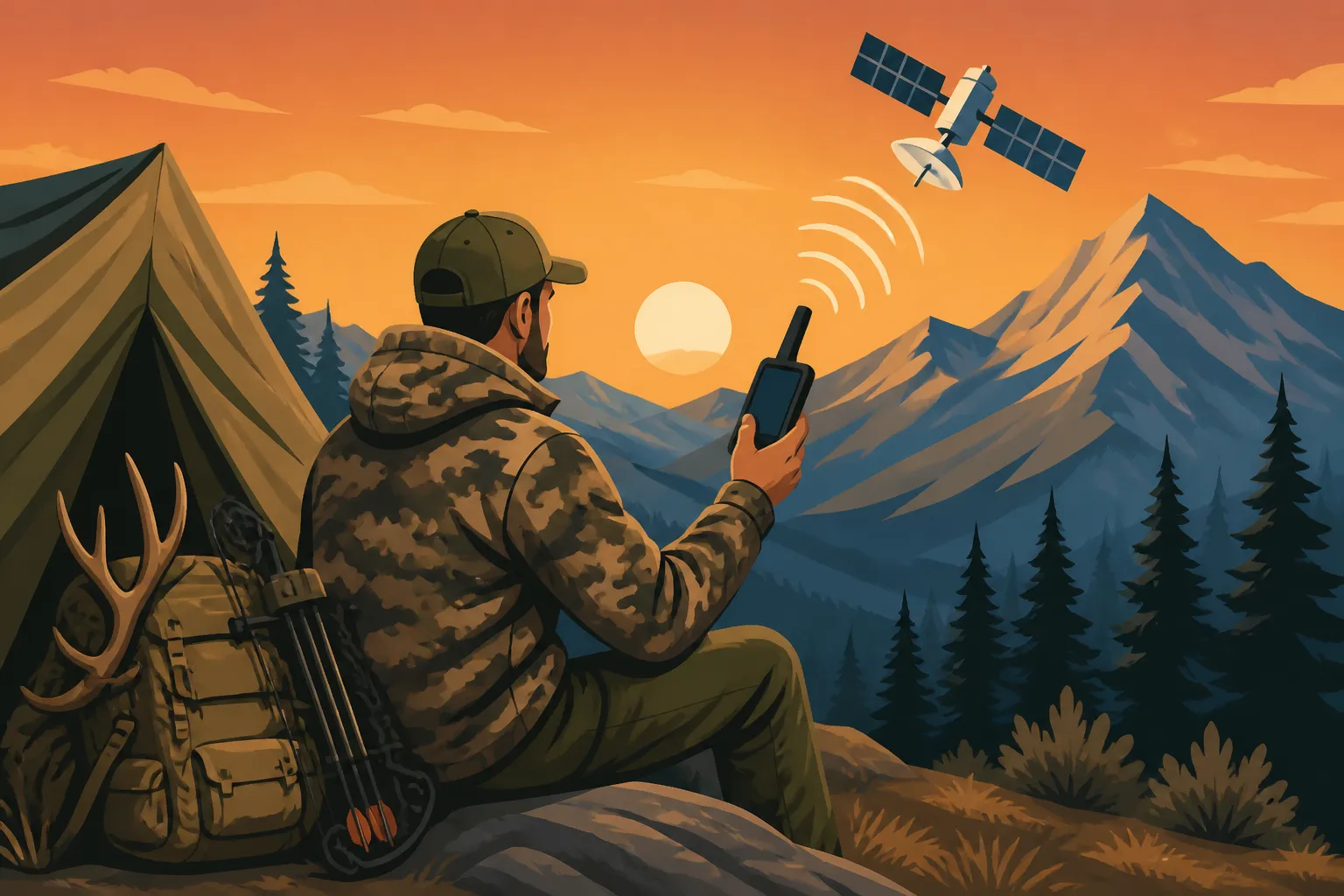
For most backcountry hunters, a satellite messenger is the sweet spot. Devices like those from Garmin inReach or Zoleo connect to constellations of low-earth orbit satellites, allowing you to send and receive text messages from virtually anywhere on the planet. This two-way communication is a game-changer. You can check in with family, communicate with hunting partners, or send detailed information to emergency services if you activate the SOS feature. Many also include GPS tracking, allowing loved ones to follow your progress online, and some even offer basic mapping capabilities. The SOS feature usually connects you directly to a 24/7 monitoring center, which can dispatch local search and rescue, making it an invaluable tool for any Wilderness First Aid on a Guided Hunt scenario. The messaging function can be surprisingly useful for coordinating during a hunt, perhaps confirming a rendezvous point or relaying observations about game movement if you're hunting within range of each other.
Satellite Phones: Voice Communication from Anywhere
If your primary need is actual voice conversation from the most remote corners of Idaho, a satellite phone is what you're after. These devices connect to larger, geostationary satellites, providing a direct voice link. Think of it as a cell phone, but with global coverage and a more robust connection for voice calls. They are generally more expensive to buy and operate than satellite messengers, and the connection can sometimes be less reliable in dense timber or deep canyons where a clear line of sight to the satellite is obstructed. For the average hunter, a sat phone might be overkill unless your trip involves truly critical, ongoing communication, or you're leading a large group where quick, detailed verbal instructions are paramount. They are often favored by expedition leaders, remote researchers, or professional organizations operating in extreme environments.
Emergency Only PLBs: One-Way Distress Signals
Personal Locator Beacons (PLBs) are the most basic form of satellite emergency communication. These small, rugged devices are designed for one purpose: to send a distress signal with your GPS location to government-operated search and rescue services (like the Air Force Rescue Coordination Center in the US) via the Cospas-Sarsat satellite system. They are strictly one-way communication – you can send an SOS, but you won't receive a confirmation message or be able to communicate details of your emergency. While they are highly reliable for triggering a rescue, their lack of two-way communication means responders arrive with less information about your situation, which can delay appropriate aid. PLBs typically require no subscription fees after purchase, as their monitoring is government-funded, making them a budget-friendly option for those who only want a "break glass in case of emergency" device, but it's important to understand their limitations compared to two-way messengers.
| Feature | Satellite Messenger (e.g., inReach) | Satellite Phone (e.g., Iridium, Inmarsat) | Personal Locator Beacon (PLB) |
|---|---|---|---|
| Primary Function | 2-way text, SOS, tracking | 2-way voice, text (limited) | 1-way SOS signal |
| Cost (Device) | Moderate | High | Low to Moderate |
| Subscription | Required (monthly/annual) | Required (monthly/annual, minutes) | Generally None (after purchase) |
| Connectivity | Global text, generally reliable | Global voice, can be affected by terrain | Global, highly reliable for SOS |
| Key Advantage | Versatile communication, peace of mind | Direct voice contact, real-time updates | Ultimate emergency reliability, no recurring cost |
| Key Limitation | Texting can be slow | Expensive, bulky, voice quality varies | No confirmation, no details to SAR |
| Best For | Most backcountry hunters, trekkers, general outdoor enthusiasts | Expeditions, remote professionals, critical voice comms | "Last resort" emergency backup, minimal interaction needs |
Planning for Communication: Messages, Check-ins, and Emergency Protocols
Having a satellite communicator is only half the battle. The other, equally crucial half is having a clear plan for how and when you'll use it. This isn't just about knowing where the SOS button is; it's about establishing protocols with your hunting partners and family, ensuring everyone is on the same page. Without a solid plan, even the best device can become a source of confusion rather than clarity in a critical situation. This kind of preparation is as important as understanding Reading an Idaho Controlled Hunt Area Boundary before you even leave home.
Pre-Trip Planning and Communication Protocols
Before you ever step foot into the backcountry, sit down with your hunting partners and the folks back home. Discuss a communication schedule: how often will you check in? What message will you send? A simple "All good at camp" once a day might be sufficient. Establish specific times for check-ins, perhaps morning and evening, and what the protocol is if a check-in is missed. Is it an immediate concern, or do they wait a set number of hours before escalating? Designate a primary contact person who will receive all messages and serve as the hub of communication. This person needs to be reliable, understand the plan, and know who to contact if an emergency arises. Go over things like how to interpret your GPS coordinates if you send them. Websites like GoHunt often have tools that can help you scout a unit and identify potential communication challenges beforehand, so you can tailor your plan to the specific terrain.
What an SOS Button Triggers and How to Respond
It's tempting to think of the SOS button as a magic bullet, but it's more nuanced than that. When you activate it, most modern satellite messengers connect to a private, 24/7 monitoring center. These centers are staffed by professionals who will attempt to communicate with you via your device to understand the nature of your emergency. This is why two-way messaging is so valuable; you can relay critical details like "Sprained ankle, can't walk, need medical, grid coordinates are…" or "Lost, disoriented, need navigational assistance." They will then coordinate with the appropriate local search and rescue teams, whether that's the county sheriff, Forest Service, or state Fish and Game. It's vital to only press this button for genuine emergencies where you need immediate professional help. False alarms can tie up critical resources and potentially incur costs. Once activated, leave the device on and in a clear view of the sky, and be prepared to respond to messages from the monitoring center. Knowing what to expect when you trigger the SOS is a key part of your How Outfitters Plan Emergency Evacuations strategy, even if you're not on a guided hunt.
Maximizing Battery Life and Ensuring Reliable Operation
Satellite devices, while robust, are still electronics with batteries. Maximizing their life in the backcountry is paramount. Turn off features like continuous tracking if you don't need them constantly. Only turn the device on when you intend to send a message or check for incoming ones. Cold weather significantly drains batteries faster, so keep the device insulated and close to your body if possible. Bring a reliable portable power bank or a small solar charger, especially on longer trips into areas like Hunting the Frank Church River of No Return where resupply isn't an option. Test your charging setup at home before you leave. Also, ensure your device has a clear view of the sky when sending or receiving messages; dense timber, steep canyon walls, or being inside a tent can block the satellite signal. Practicing sending a few test messages before your trip will help you understand how long it takes to acquire a signal in various conditions and how to hold the device for optimal performance. Remember that even something as simple as Camping on Forest Ground During Hunting Season needs careful consideration of power management.
Choosing the Right Satellite Device and Service Plan
With several great options on the market, picking the right satellite communicator can feel a bit overwhelming. It's not just about the device itself, but also the service plan that makes it functional. Matching these to your specific Idaho hunting needs and budget is the final step in ensuring you're well-equipped for your next adventure.
Feature Comparison: Two-Way Messaging vs. Voice and Mapping
When evaluating devices, consider what features are non-negotiable for your hunting style. For most Idaho hunters venturing into areas Where Idaho's Best Public Land Access Actually Is but cell service isn't, two-way text messaging is paramount. This allows for clear, verifiable communication with both emergency services and your contacts. Some devices also offer robust mapping capabilities, allowing you to navigate and leave breadcrumb trails, sometimes integrating with apps like onX Hunt. If you're a serious backcountry navigator, these integrated mapping features might be worth the extra cost. Voice communication, offered by satellite phones, is typically reserved for those who truly need to have conversations rather than just send messages. For hunters operating in teams or those with specific logistical needs, the ability to have a verbal chat can be very useful, but it comes at a higher price point for both the device and the service. Assess how often you genuinely need each feature.
Understanding Subscription Plans and Monitoring Services
The device itself is a one-time purchase, but the satellite service operates on a subscription model. These plans vary widely, often offering monthly or annual options, different tiers of message allowances, and varying levels of SOS monitoring. Some plans offer unlimited messaging, while others charge per message after a certain threshold. For a typical hunting season, a seasonal plan might make sense if you only hunt a few weeks a year. If you're out year-round hiking, fishing, and scouting, an annual plan with rollover messages might be more economical. Crucially, pay attention to the SOS monitoring service included. Most reputable satellite messenger brands partner with professional monitoring centers that are highly experienced in coordinating global search and rescue. Understand what happens when you press that button, and confirm if there are any additional fees associated with a rescue, though generally, the actual SAR effort in the US is not charged to the individual. When you look at What a Guided Idaho Elk Hunt Costs, remember that outfitters typically factor in their own communication infrastructure, but for DIY trips, this cost is on you.
Durability, Ease of Use, and Real-World Reliability
Idaho's rugged terrain demands durable gear, and your satellite communicator is no exception. Look for devices that are waterproof, dustproof, and can withstand accidental drops. Battery life is also a huge consideration, especially if you're undertaking extended trips involving Packing an Elk Out of Steep Country Alone. Consider how easy the device is to operate with gloves on, or under stress. Can you quickly access the SOS function? Is the screen readable in bright sunlight or low light? Read reviews from other hunters and outdoor enthusiasts; their real-world experiences can provide invaluable insight into a device's reliability in challenging conditions. A device with a steep learning curve might be frustrating when you're trying to send a crucial message. Simplicity and intuitive design are often best when you're cold, tired, or under pressure in the field. Ultimately, the best device is one you're confident using and that you trust to perform when it matters most. For instance, reputable brands mentioned by services like BookYourHunt or GoHunt are usually well-vetted by the outdoor community for their reliability.
Disclaimer
This article is for general informational purposes only and does not constitute professional advice. Laws, prices and regulations vary by location and change over time. Consult a qualified professional for guidance on your specific situation.