What Ranch Access Typically Costs
The dream of wide-open spaces, fewer hunters, and perhaps a better chance at a mature animal often leads folks to consider private ranch access here in Idaho. But let's be honest, the thought of paying for access on top of your tags and gear can feel like stepping into the unknown, leaving many wondering, "What exactly am I going to pay for, and what am I getting for my money?" This guide is here to unravel the layers of private land hunting costs in Idaho, explaining the different types of arrangements and what factors drive those prices, so you can make an informed decision for your next hunt.
Understanding the Spectrum of Private Land Access Fees
When you start looking at private ranch access for hunting in Idaho, it's not a one-size-fits-all situation. The costs can vary dramatically, much like the landscape itself, from a simple handshake agreement with a small fee to a substantial investment in a high-quality, exclusive experience. It really comes down to how much the landowner is offering and what you, as a hunter, are looking to gain.
Day Fees vs. Seasonal Leases: The Short-Term vs. Long-Term Investment
One of the first distinctions you'll encounter is between paying for a single day of access versus committing to a longer-term seasonal lease. These two options cater to very different hunting styles and budgets.
Imagine you're driving through southern Idaho, maybe down around the Owyhee country, and you spot a handwritten sign by a rancher offering access for coyotes or perhaps even upland birds for a "day fee." This kind of arrangement is typically the lowest cost entry point. It grants you permission to hunt a specific property for a defined period, usually a single day, or perhaps a weekend. These fees are great for quick trips, target specific small game opportunities, or when you're just passing through and want to stretch your legs on some promising ground. The landowner isn't offering much beyond the permission itself, and you're usually responsible for navigating the property, finding game, and all aspects of your hunt. While less common for big game due to the higher stakes and longer commitment often required, it's a solid option for those looking for a low-commitment experience.
On the other end of the spectrum, we have seasonal leases. These are far more common for big game hunting, especially for species like deer and elk. A seasonal lease means you're securing exclusive or semi-exclusive hunting rights to a piece of private property for an entire hunting season, or sometimes even a full year. This is a much more substantial investment and commitment, often costing significantly more than a day fee, but it offers immense value in return. With a lease, you gain repeated access, often the ability to scout prior to the season, and the peace of mind that comes from knowing you won't be competing with a parade of other hunters. This level of access is what many hunters crave when public land feels too crowded or draw odds for prime units are perpetually stacked against them. You might coordinate this directly with a rancher or through specialized booking services.
Influencing Factors on Ranch Access Costs
The price tag on private ranch access isn't pulled out of thin air. Several key factors weigh heavily on what a landowner or outfitter charges. Understanding these can help you gauge if an asking price is fair for what's being offered.
First up is the species you're targeting. Elk and trophy mule deer access will almost always command a higher price than, say, a pheasant hunt or a coyote expedition. This is simply a matter of demand and perceived trophy value. Idaho has incredible opportunities for Mule Deer Across Idaho's High Desert and Breaks and Elk Are Why Most Hunters Come to Idaho, making access to these animals highly sought after. If the ranch is known for holding a healthy population of these animals, especially those with significant antler growth potential, the price will reflect that. Whitetail deer in the northern panhandle might have a different price structure than an elk hunt in the central mountains, simply due to varying market demands and species popularity.
Then there's the trophy quality and potential of the animals on the property. A ranch with a proven track record of producing large, mature bucks or bulls, often backed by years of careful management, will naturally be more expensive. Landowners might invest in habitat improvement, manage grazing, and restrict harvest to ensure a robust population of older, bigger animals. This isn't just about a random chance; it's about consistent opportunity. Hunters are often willing to pay a premium for a genuine chance at a Boone and Crockett-class animal, rather than slogging through public land hoping to stumble upon one.
Acreage and exclusivity also play a massive role. Is it a small, 100-acre parcel, or a sprawling 10,000-acre working ranch? And how many hunters will have access at any given time? If you're guaranteed to be the only hunter on several thousand acres for an entire week, that exclusivity will drive the price up. Conversely, if the landowner is selling day passes to multiple hunters simultaneously, the individual cost will be lower, but your hunting experience will be less private. The ideal scenario for many is sole access to a large, unpressured tract of land, and that comes with a significant premium.
Finally, consider the location and habitat. A ranch that borders a prime national forest unit, sits on critical winter range, or provides a natural funnel for migrating animals is inherently more valuable. Ranches in easily accessible areas, with good road systems, might be priced differently than those deep in the backcountry requiring special equipment to reach. The quality of the habitat – diverse forage, water sources, bedding cover – directly impacts the game populations and their behavior, which in turn influences access fees. You might also want to consult resources like E-Scouting an Idaho Unit Before the Season to get a feel for the terrain, even on private land, to better understand its hunting potential.
Breaking Down the Types of Private Land Arrangements
Beyond the simple day fee versus seasonal lease, there are several distinct categories of private land hunting arrangements, each with its own cost structure and level of service. It's crucial to understand these distinctions so you know exactly what you're paying for.
Simple Trespass Fees or Access Permits
This is often the most basic and stripped-down form of private land access. A simple trespass fee, or what some might call an access permit, essentially grants you legal permission to be on the landowner's property for hunting purposes. This isn't usually tied to a specific animal or a trophy fee; it's just about being allowed to cross the fence.
Sometimes, a rancher might charge a nominal fee for walking across their property to access landlocked public ground. This is purely for the right of passage. More commonly, though, for hunting specific animals, a trespass fee means the landowner is giving you permission to hunt a designated area of their property. They aren't providing guidance, lodging, meals, or even showing you where the animals are. Your success depends entirely on your own skills, scouting, and hunting effort. You're paying for the opportunity, not the outcome. These fees can range from a few hundred dollars for a specific species like deer for a few days to perhaps a couple of thousand for a solid week of elk hunting opportunity on a large ranch.
The critical thing with this type of arrangement is clarity. Always ensure you have a clear understanding of the boundaries, any rules specific to the property (like weapon restrictions, vehicle use, or antler point restrictions), and the duration of your access. A written Idaho Landowner Permission Slips Work is absolutely essential, even for seemingly informal arrangements. This helps protect both you and the landowner.
Self-Guided or Semi-Guided Ranch Hunts
Stepping up from a basic trespass fee, self-guided or semi-guided ranch hunts offer a bit more support, though still place most of the hunting responsibility on your shoulders. These arrangements are popular for hunters who want the advantages of private land but prefer to handle the actual hunting themselves, without a dedicated guide looking over their shoulder constantly.
In a self-guided ranch hunt, the landowner or property manager provides access to the land, often clarifies boundaries, and might offer some general information about recent game sightings or areas they've seen animals. They might also provide a map of the property. Beyond that, you're on your own. You're responsible for your own camp setup (if camping is allowed), food, transportation on the property, tracking, field dressing, and game retrieval. This is essentially a "DIY" hunt on private ground. The costs for these hunts can vary widely based on the factors we discussed earlier – species, trophy potential, acreage, and exclusivity. You might find these opportunities advertised on platforms like BookYourHunt.com, where landowners connect directly with hunters seeking such access.
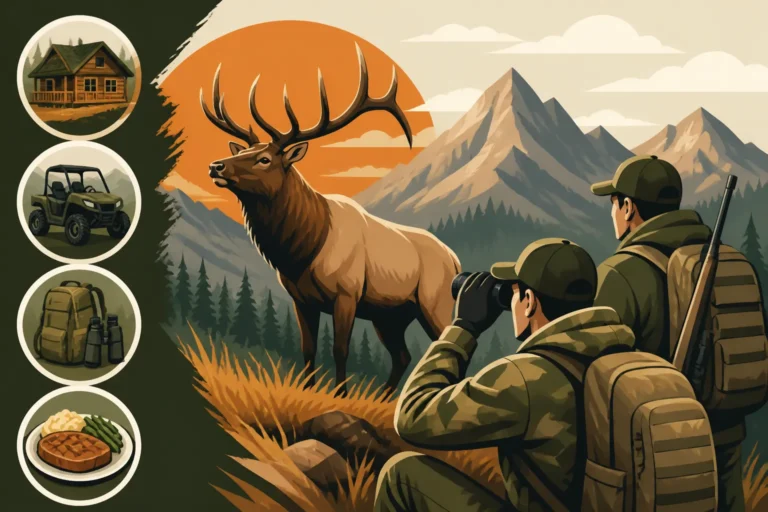
A semi-guided hunt adds a layer of assistance. This could mean the landowner provides basic lodging (like a cabin or bunkhouse), might drop you off at a trailhead, or perhaps assists with game retrieval once an animal is down. They might offer more detailed insights into animal patterns or prime hunting spots based on their intimate knowledge of the property. However, they aren't actively hunting with you or making tactical decisions during the hunt itself. They are there to facilitate, not to guide in the traditional sense. These hunts usually fall in the mid-range of private land costs, a step below a fully guided experience but more comprehensive than a simple access fee. When considering a semi-guided hunt, ask explicit questions about what "semi-guided" entails – every rancher defines it a little differently. Make sure to clarify these points, much like you would if Vetting an Idaho Outfitter Before You Send a Deposit.
Landowner Tags and Outfitter Partnerships
For some of the most sought-after private land experiences, especially for prime big game, you'll often encounter arrangements that involve landowner tags or partnerships with licensed outfitters. These hunts usually represent the highest investment but also offer the most value in terms of opportunity and services.
In Idaho, there are programs like the Landowner Appreciation Program Tags in Idaho that allocate a certain number of tags to landowners as an incentive for providing habitat or access. These tags are a huge asset, as they often bypass the public draw system, effectively guaranteeing a tag for a specific unit and species. When a landowner has these tags, they often partner with a licensed outfitter to market and conduct hunts on their property. This arrangement means you're not just paying for access; you're often getting a guaranteed tag, professional guiding services, lodging, meals, and full support for your hunt, from scouting to game care.
The cost of these hunts can be substantial, reflecting the value of a guaranteed tag, the quality of the hunting experience, and the comprehensive services provided by the outfitter. It truly blurs the line between a traditional guided hunt and private land access, as you're getting the best of both worlds: exclusive access to prime private ground with the expertise of a professional outfitter. These hunts are often advertised by the outfitters themselves, highlighting their private land access as a key advantage. You'll still need to secure The Idaho Nonresident Hunting License Price and pay for The Nonresident Deer Tag Price Before License (or elk, or whatever species) unless the outfitter explicitly states these are included as part of a bundled price, which is rare.
Navigating the Costs: What to Expect and How to Budget
Alright, let's talk about the dollars and cents, or rather, the shape of those dollars and cents, because we can't give you exact figures here. The cost of private ranch access in Idaho can swing wildly based on all the factors we've discussed, but knowing what general range to expect and what questions to ask is crucial for budgeting.
The "Shape" of the Price Tag
So, what are we talking about here, generally speaking? For a basic, single-day access fee for small game or predator hunting on private land, you might be looking at a couple of hundred bucks. This is the entry-level cost, offering minimal services beyond the legal right to be there.
If you're eyeing big game, such as a self-guided deer hunt for a few days, those costs typically start in the low thousands. For a quality, self-guided elk or trophy mule deer hunt on a substantial private ranch for a week-long season, you're usually looking at several thousand dollars. When you add the guarantee of a landowner tag, or comprehensive guided services through an outfitter partnership on prime private ground, the cost can easily climb into the upper single-digit or even low double-digit thousands, reflecting the premium opportunity and extensive support.
The key takeaway is that private land access is an investment. It's often chosen by hunters seeking a higher quality experience, better odds, or a specific trophy animal they might not find on public ground. Always check the current market rates by contacting landowners or outfitters directly, as prices can fluctuate with demand and the specific offerings.
Hidden Costs and What to Clarify
One of the biggest pitfalls in budgeting for any hunt, especially on private land, is getting blindsided by hidden costs. The advertised price for ranch access is often just the beginning. It's imperative to get every detail in writing and ask clarifying questions upfront.
Here's a list of things that are frequently not included in the base access fee and should be specifically asked about:
- Idaho Hunting License and Tags: Your state hunting license and species-specific tags are almost always separate costs that you'll need to purchase through the Idaho Fish and Game department.
- Meals and Lodging: Unless explicitly stated as part of a semi-guided or outfitter package, assume you're responsible for your own food and accommodation. This might mean camping on the property (if allowed) or staying in a nearby town.
- Game Retrieval: Will the landowner assist with retrieving a downed animal, especially a large one like an elk? Or are you fully responsible for packing it out yourself? This is a huge consideration, particularly in rugged Idaho terrain.
- Field Dressing and Processing: Who handles the initial field dressing? And what about getting your animal to a butcher? These are almost always on the hunter, but it's worth confirming if any local recommendations or basic facilities are available.
- Caping and Trophy Care: If you harvest a trophy, are there facilities or services for caping the hide or preparing the skull?
- Transportation on Property: Is vehicle access allowed to all hunting areas? Or is it walk-in only past a certain point? Understanding Idaho's Motorized Hunting Rule Keeps You on the Road is important, even on private land, as some landowners may mirror these restrictions for land management.
- Taxes and Gratuities: Don't forget sales tax, if applicable, and gratuities for any staff who provide services. Just like with a traditional guide, knowing How Much to Tip a Hunting Guide is important.
- Deposit and Cancellation Terms: Understand the deposit required and, critically, what happens if you need to cancel or if the hunt is impacted by unforeseen circumstances. Some outfitters or landowners might have policies around Idaho Tag Refund and Exchange Policy or what happens If You Miss the Idaho Deadline for tag purchase that could impact your hunt.
Get a clear, written contract or agreement that spells out exactly what's included and what isn't. This transparency will save you headaches and unexpected expenses later on. Think of it like a business transaction, because it is.
Finding Opportunities and Vetting Landowners
So, you're ready to explore private land access. Where do you even begin?
One of the most effective ways to find opportunities is through online platforms specifically designed to connect hunters with landowners. Services like BookYourHunt.com have emerged as popular marketplaces where landowners can list their properties and the types of hunts they offer. These platforms often provide details about the acreage, species available, services included, and the general price range. Another useful tool many hunters already utilize for public land is GoHunt, which can also help in identifying general areas or adjacent public land that might influence private land values.
Beyond online resources, local connections are invaluable. Word-of-mouth among fellow hunters, or even stopping in at local sporting goods stores or cafes in rural Idaho towns, can sometimes lead to direct landowner contacts. Don't be afraid to ask around politely; you never know who might have a parcel of land they'd consider opening up.
Once you find a potential opportunity, vetting the landowner or outfitter is crucial. Ask for references from past hunters. Look at photos of past successful hunts from the property to get a realistic idea of the quality of game. Inquire about the history of the property's hunting pressure and management practices. A responsible landowner will be happy to share this information and answer all your questions thoroughly, much like a reputable outfitter would. You want to ensure the landowner is experienced in these types of arrangements and can clearly articulate the rules and expectations.
Maximizing Your Investment in Private Ranch Access
Spending your hard-earned money on private land access means you're looking for an exceptional hunting experience. To truly get the most out of that investment, it's not just about the upfront cost, but also about how you prepare and behave throughout the process.
Preparation is Key: Beyond the Initial Payment
Just because you've paid for access doesn't mean the work is done. In fact, that's when the real preparation begins. If the agreement allows, scouting the property before the season starts can be incredibly valuable. Understanding the terrain, game trails, water sources, and bedding areas will give you a massive advantage. Use mapping apps and satellite imagery, just as you would for public land, to learn the lay of the land.
Physical conditioning is another often-overlooked aspect. Idaho's landscape can be incredibly rugged, whether you're navigating the steep river breaks or the dense timber. Even on private land, you might be covering significant distances on foot or climbing steep hillsides. Being in good physical shape will allow you to hunt harder, safer, and enjoy the experience more fully. Don't underestimate the effort required, especially if you're targeting elk.
Finally, thoroughly understanding and respecting the property rules is non-negotiable. Landowners open their gates to hunters based on trust. Know where you can and cannot go, vehicle restrictions, camp locations, and any specific harvest criteria (e.g., antler point restrictions, specific bucks only). Violating these rules not only jeopardizes your hunt but can also ruin opportunities for other hunters in the future.
Building Relationships for Future Access
Hunting on private land isn't just a transaction; it's an opportunity to build a relationship. Being a respectful, responsible hunter can pay dividends for years to come.
Always leave the property better than you found it. Pack out all your trash, avoid damaging fences or infrastructure, and close all gates. If you use a game camera, make sure you know Trail Camera Rules on Idaho Public Land and apply similar respect to private property. Offer to lend a hand if you see a small chore the landowner is tackling, like gathering firewood or patching a fence (if appropriate and safe to do so). A small gesture of goodwill can go a long way.
Communicate clearly and express gratitude. A simple thank-you note or a small token of appreciation after the hunt can make a lasting impression. Landowners often open their property because they are passionate about hunting themselves and want to share the experience, or simply appreciate the extra income. By being an exemplary guest, you significantly increase your chances of being invited back, potentially even at a favorable rate, or securing future access when others might be turned away. Remember, positive relationships are the bedrock of long-term private land hunting opportunities.
| Access Type | General Cost "Shape" | Typical Inclusions | Typical Exclusions | Best For |
|---|---|---|---|---|
| Simple Day/Trespass | Lowest (e.g., ~$100s) | Permission to access designated property for a period | License, tags, lodging, meals, guide, retrieval | Hunters seeking minimal cost, small game, predator hunting |
| Self-Guided Ranch | Mid-range (e.g., ~$1000s) | Property access, boundaries, general intel, maps | License, tags, lodging, meals, guide, full retrieval | Independent big game hunters wanting private land advantage |
| Semi-Guided Ranch | Upper Mid-range (e.g., ~$1000s) | Access, maps, general intel, maybe basic lodging/retrieval assistance | License, tags, full guide, meals | Hunters wanting some support without full guiding cost |
| Outfitter w/ LAP Tags | Highest (e.g., ~$10,000s+) | Guaranteed tag, guided services, lodging, meals, retrieval, access | License, taxes, gratuities, processing | Hunters seeking premium, high-success, all-inclusive big game hunt |
Disclaimer
This article is for general informational purposes only and does not constitute professional advice. Laws, prices and regulations vary by location and change over time. Consult a qualified professional for guidance on your specific situation.