Red Flags When Booking a Hunt
There's nothing quite like the excitement of planning an Idaho hunting adventure. The visions of vast mountains, deep timber, and that dream animal fill your thoughts, and booking an outfitter often feels like the final, thrilling step. But let's be honest, the process can also be riddled with anxiety, especially with the horror stories you hear about botched hunts, lost deposits, and outfitters who vanish into thin air. This guide is here to equip you with the knowledge to spot those critical "red flags" early, protecting your hard-earned money, precious time, and the integrity of your hunting experience when vetting potential outfitters in Idaho.
The Lure of a Good Deal vs. The Reality Check
We all love a good deal, right? Especially when it comes to something as significant as a big game hunt. But in the world of guided hunts, a price that seems too good to be true often is exactly that. It's crucial to approach these "bargains" with a healthy dose of skepticism, especially when compared to typical market rates for quality hunts in Idaho.
Prices That Seem Too Good to Be True
Imagine you're scrolling through hunt listings, comparing prices for an Idaho elk hunt. You see several outfitters charging similar rates, perhaps in the mid-to-high four figures or even five figures for a quality, fully-guided experience. Then, suddenly, one pops up that's significantly cheaper – maybe half the price or less. Your first thought might be, "Score! What a deal!" But pump the brakes for a moment. Reputable outfitters have substantial overhead: maintaining horses or vehicles, paying experienced guides, obtaining insurance, securing permits, providing food, fuel, and often, quality gear for their clients. Cutting corners on these essentials is how a price gets artificially low.
When an outfitter offers a price that drastically undercuts the competition, it's a huge red flag. This often signals that they might be operating on a shoestring budget, which could translate to less experienced guides, poor equipment, insufficient food, or even a lack of proper licensing and insurance. You might find yourself arriving at camp only to discover the tents are threadbare, the horses are ill-kept, or the "experienced guide" is someone who just started last week. The dream of a comfortable, well-supported hunt quickly evaporates when you realize the "deal" you got actually means sacrificing safety, comfort, and ultimately, your chances of success. It's a classic case of getting what you pay for, and in hunting, paying too little can cost you far more than just money – it can ruin your entire adventure.
Lack of Transparency on Costs
Another subtle but significant red flag is an outfitter's reluctance or inability to provide a clear, itemized breakdown of costs. You send an inquiry, get a quote, and it just states a lump sum for the "hunt package." When you start asking for details – "What exactly is included?", "Are there any additional fees?", "What about licensing and tags?" – a good outfitter will provide a comprehensive answer, often with a detailed document. A less reputable one might become vague, deflect, or simply state that "everything is covered" without specifying.
This lack of transparency can lead to a host of unexpected charges once you're already committed or, worse, already in the field. Imagine booking what you thought was an all-inclusive elk hunt, only to arrive and be informed that the "trophy fee" for an animal of a certain size is extra, or that pack-out fees are separate, or that a camp cook costs more. These surprises can quickly inflate your total expenditure, turning that initial "bargain" into a financial nightmare. A reputable outfitter will be upfront about all potential costs, including those outside their direct services like taxidermy, meat processing, travel, and licensing. They'll even recommend where to find current tag prices and application fees, helping you budget accurately from the start. If you feel like you're pulling teeth just to get a clear picture of what you're paying for, consider it a serious warning.
Communication Breakdown: A Warning Sign
Communication is the bedrock of any successful relationship, and that's especially true when you're entrusting someone with your hunting adventure. How an outfitter communicates with you before you even send a deposit can tell you a lot about how they'll operate during your actual hunt.
Unresponsive or Vague Communication
You reach out to an outfitter, excited about the possibility of booking a hunt. You send an email or leave a voicemail. Days go by, then a week, with no response. Or perhaps you get a very brief, generic reply that doesn't really answer your specific questions. This pattern of unresponsiveness or vague communication is a huge red flag. It often indicates disorganization, a lack of professional courtesy, or that the outfitter simply isn't prioritizing client inquiries. If they can't manage timely and clear communication during the booking phase, how will they handle important details or unforeseen issues once you're out in the backcountry?
Think about it: during a hunt, you rely on your outfitter and guides for crucial information, logistical updates, and often, for clear directions and safety instructions. If they're difficult to get a hold of or unclear in their initial dealings, you could face serious frustrations down the line. You might have questions about gear lists, travel arrangements, Booking an Idaho Hunt Around the Draw Calendar, or even potential changes to your itinerary. An outfitter who consistently gives you the runaround, provides evasive answers, or simply disappears for extended periods before you've even committed is likely to continue that behavior when it matters most. They should be eager to build a relationship, answer your questions thoroughly, and instill confidence in their operation.
Over-the-Top Promises and Guarantees
We all want a successful hunt, and it's natural for outfitters to highlight their strong track record. However, when an outfitter starts making promises that sound too good to be true, or flat-out guarantees a kill, it's time to be very cautious. Hunting is inherently unpredictable; it involves wild animals, changing weather, and varying conditions that are beyond anyone's complete control. While a reputable outfitter will discuss their Outfitter Success Rates in Idaho based on past seasons, they will never guarantee you'll harvest an animal.
Expressions like "100% shot opportunity," "guaranteed kill," or "we always fill our tags" are classic red flags. These kinds of guarantees are often unethical and, frankly, unrealistic. They might indicate an outfitter who is willing to cut corners, engage in questionable practices, or simply misrepresent the reality of hunting to secure a booking. They could also imply that the "hunt" might be more like a trip to a high-fence preserve, which isn't what most ethical hunters are seeking in Idaho's vast public lands. A legitimate outfitter understands the challenge and beauty of fair chase hunting and will focus on providing a high-quality experience, maximizing your opportunities, and ensuring your safety, rather than making impossible promises about a guaranteed animal.
Outfitter and Guide Credentials Under Scrutiny
Idaho has specific regulations governing hunting outfitters and guides to protect both clients and the state's natural resources. It's not enough for someone to just "say" they're an outfitter; they need to prove it.
Unverified Licenses and Permits
This is perhaps one of the most critical red flags. In Idaho, outfitters and guides are regulated by the Idaho Outfitters and Guides Licensing Board (IOGLB). Every licensed outfitter must carry specific permits and insurance. If an outfitter cannot readily provide proof of their current license, or if their license number doesn't check out when you perform an independent verification, you've hit a major roadblock. Operating without a valid license means they're likely uninsured, operating illegally, and offering no recourse if something goes wrong.
Checking an outfitter's license is a straightforward process, and it's something every hunter should do before sending any money. You can contact The Idaho Outfitters and Guides Licensing Board Explained directly or visit their website to Verifying an Idaho Outfitter License. If the outfitter becomes defensive, evasive, or downright refuses to provide their license information, walk away immediately. It's simply not worth the risk. Imagine being deep in the backcountry with an unlicensed operation—if an accident occurs or legal issues arise, you could be left completely stranded and unprotected. Reputable outfitters proudly display their credentials and understand that clients need this assurance.
Inexperienced or Unqualified Guides
While an outfitter holds the primary license, it's the guides who are on the ground with you, making crucial decisions, ensuring your safety, and putting you in a position to harvest an animal. A red flag arises if an outfitter uses guides who lack sufficient experience, either in general guiding or specifically in the area you'll be hunting and for the species you're pursuing. You'll want to ask Questions to Ask an Idaho Outfitter about their guides' experience.
Idaho even has specific requirements, such as The Ten-Day Experience Requirement Idaho Guides Meet, which ensures guides have adequate time in the field. Ask the outfitter about the specific guide you'll be hunting with. How long have they worked for this outfitter? How much experience do they have with elk in steep timber, or mule deer in the sagebrush breaks, or whatever your chosen hunt entails? A good guide should know the area like the back of their hand, understand animal behavior, be proficient in first aid, and demonstrate excellent bushcraft skills. If the outfitter is vague about their guides' qualifications, or if you get the impression that their guides are simply warm bodies with a pulse, it's a cause for concern. Your guide is your lifeline and your best asset in the field; don't settle for anything less than qualified and experienced.
Customer Feedback and References: The Unvarnished Truth
In today's interconnected world, past client experiences are a goldmine of information. How an outfitter handles references and reviews can be a major indicator of their reliability and the quality of their service.
Absence of Legitimate References
Any reputable outfitter will be able and willing to provide you with a list of recent references—past clients you can call and speak with directly. If an outfitter balks at this request, claims they don't have any, or offers only a few outdated contacts, that's a significant red flag. They might be trying to hide a pattern of dissatisfied clients or a lack of real experience. Don't just settle for a list; actually call those references. Ask them detailed questions about their hunt, the outfitter's communication, the quality of the guides, the camp conditions, and any unexpected issues.
Be wary if the references sound overly rehearsed or eerily similar. This could be a sign of fabricated references. Also, if they only provide references for clients who harvested a trophy animal, ask for contacts from clients who might not have harvested, to get a sense of the "experience" regardless of success. A truly ethical outfitter knows that the overall hunting experience, including hospitality, safety, and effort, is just as important as the outcome. The absence of solid, verifiable references makes it impossible to get an unbiased third-party perspective on what you can expect, leaving you to take a blind leap of faith.
Consistently Negative or Non-Existent Reviews
Beyond direct references, online reviews and forums offer a broader look at an outfitter's reputation. While you can often find outfitters listed on platforms like BookYourHunt, it's important to look for patterns. A few isolated negative reviews might just be from a disgruntled client or someone with unrealistic expectations, but a consistent stream of complaints about the same issues (e.g., poor communication, bad food, inexperienced guides, safety concerns, or hidden costs) should set off alarm bells. Similarly, an outfitter with no online presence or reviews at all, especially one claiming to have been in business for years, is suspicious.
However, don't just blindly trust all reviews. Be cautious of reviews that are excessively gushy and generic, especially if they use similar phrasing or appear to be posted by brand new accounts. These can sometimes be fake. A healthy mix of positive, neutral, and constructive feedback tends to be more realistic. Use resources like hunting forums, social media groups, and review sites to dig deeper. If you find multiple instances of hunters who've had to file a complaint against an Idaho outfitter with the IOGLB, that's a definitive sign to steer clear. GoHunt and similar platforms also provide valuable community insights and resources that can help you cross-reference information. Remember, an outfitter's reputation is built over time through consistent positive experiences; a lack thereof, or a history of negative feedback, means you're taking a significant gamble.
Contractual Concerns and Financial Red Flags
The contract and payment structure are the legal backbone of your hunt. Any issues here can have serious financial and logistical consequences, making them critical red flags to identify.
Vague or Non-Existent Contracts
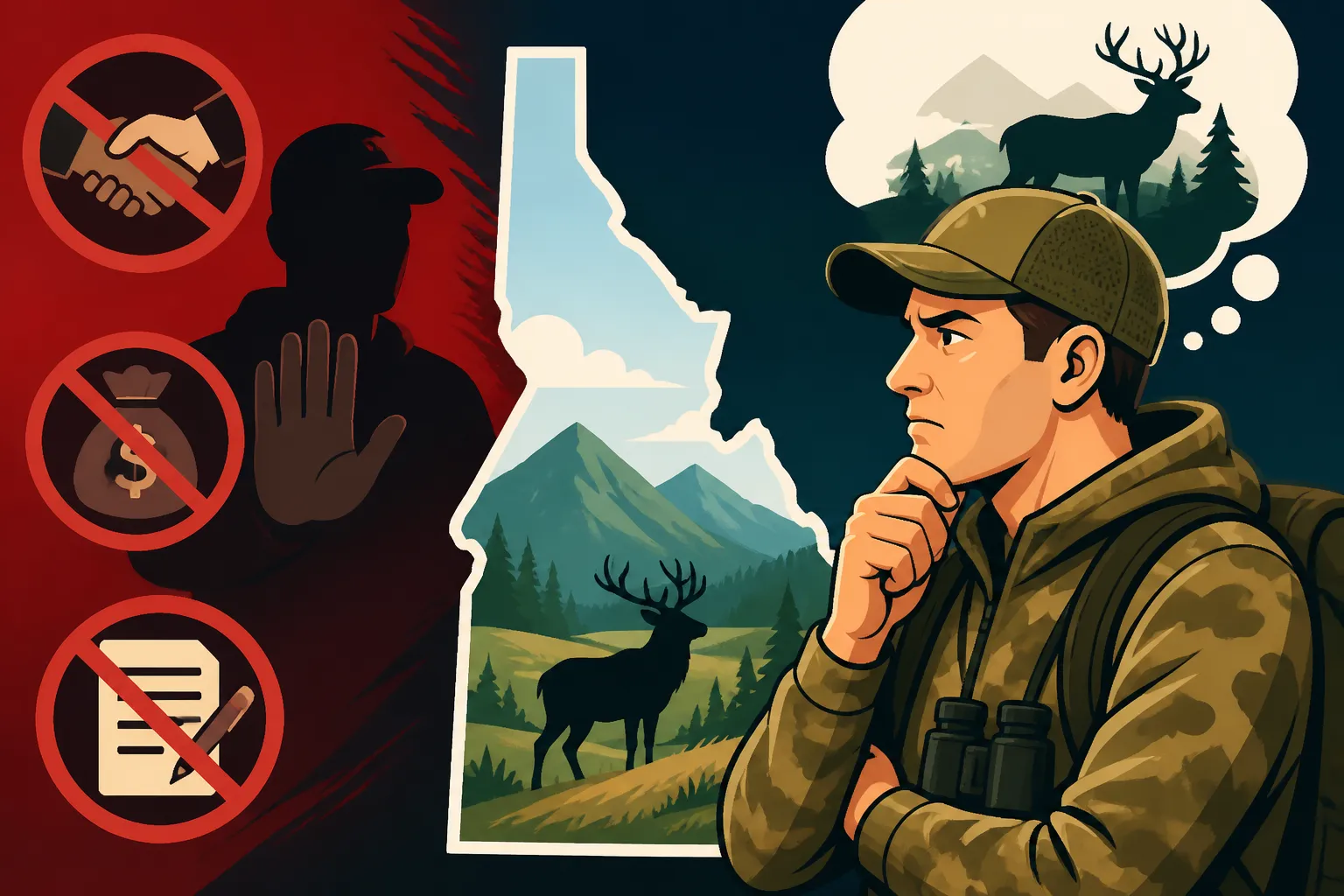
A solid, legally binding contract is essential for any guided hunt. This document should clearly outline the services provided, the total cost, payment schedules, cancellation policies, liability waivers, and other crucial terms. If an outfitter tries to operate on a handshake agreement, or presents a contract that is vague, incomplete, or filled with ambiguous language, consider it a major red flag. This lack of clear documentation leaves you vulnerable to misunderstandings, unexpected charges, and no legal recourse if the outfitter fails to deliver on their promises.
A comprehensive contract should detail everything from the duration of the hunt, the species targeted, the number of guides per hunter, and the specific geographic area of the hunt. It should also clarify what happens in case of injury, lost gear, or emergency. For example, Contract Clauses Worth Reading Closely will often address things like inclement weather, unexpected changes to regulations, or what provisions are made if you have to leave the hunt early. If an outfitter insists on minimal paperwork or a "just trust me" approach, politely decline and find someone who values clear, written agreements. This isn't just about protecting yourself; it’s about dealing with a professional operation.
Demanding Large Upfront Payments or Cash Only
While it's standard practice for outfitters to require a deposit to secure your booking, the amount and method of payment can reveal a lot. A common red flag is an outfitter demanding the full payment upfront, especially many months in advance, or insisting on cash-only payments. Reputable outfitters typically require a deposit (often 25-50% of the total cost), with the balance due closer to the hunt date. This staggered payment schedule provides a measure of security for both parties and allows you to confirm details before committing all your funds.
Insisting on cash-only payments is also highly suspect. Cash transactions leave no paper trail, making it incredibly difficult to dispute charges, prove payment, or seek a refund if the outfitter fails to deliver or disappears. It can also indicate an attempt to evade taxes or operate outside legal financial channels. Always use traceable payment methods like checks, credit cards, or bank transfers. Be especially wary if they ask you to wire money directly to a personal account rather than a business account. Always refer to Deposits and Cancellation Terms carefully outlined in the contract. While some flexibility may exist, an outfitter who demands unusual payment terms or an unreasonable upfront sum is signaling that they might not be trustworthy.
Logistical and Operational Warning Signs
Beyond the paperwork and initial conversations, the practicalities of the hunt itself can present red flags. These often become apparent as you get closer to your hunt date and start asking more specific questions.
Unclear Hunt Logistics and Itinerary
As your hunt date approaches, you should have a very clear understanding of the logistics. This includes details like meeting points, transportation to and from the hunting area, camp setup, daily schedules, food arrangements, and gear requirements. If an outfitter remains vague about these specifics, or if their plans seem disorganized and constantly shifting, it's a significant red flag. A well-run operation has these details ironed out well in advance and can communicate them clearly.
For instance, if you're booking an archery elk hunt in September, you should know exactly where you're meeting, how you're getting to camp, what type of camp it will be (wall tent, cabin, spike camp), what kind of food will be provided, and what a typical hunting day will look like. Questions like "What time do we leave camp?", "What's the plan for packing out an animal?", or "Do I need to bring my own sleeping bag?" should elicit clear, concise answers. If you're met with "We'll figure it out," or conflicting information, it suggests a lack of planning and professionalism. This could lead to wasted time, confusion in the field, and a general sense of unease during your trip.
Lack of Safety Protocols or Emergency Plans
Hunting, especially in Idaho's rugged backcountry, carries inherent risks. A professional outfitter prioritizes client safety above all else and has clear protocols in place for emergencies. A major red flag is an outfitter who downplays safety concerns, has no clear emergency plan, or seems ill-equipped to handle medical issues or other backcountry mishaps. You should feel confident that your outfitter and guides are prepared for the unexpected.
This means asking about their first aid certifications, their communication methods in areas without cell service (e.g., satellite phones, inReach devices like mentioned in Satellite Communication From a Backcountry Camp), and their plan for medical evacuations. What happens if a hunter gets injured? What's the protocol for encountering dangerous wildlife, like grizzlies in some Idaho units? Do they have a plan for lost hunters? If an outfitter dismisses these questions or can't provide confident, detailed answers, it indicates a serious lapse in their operational planning. Your safety should never be an afterthought, and an outfitter who isn't transparent or prepared for emergencies is not one you should trust with your hunt.
Summary Table: Green Flags vs. Red Flags
| Aspect | Green Flag (Good Sign) | Red Flag (Warning Sign) |
|---|---|---|
| Pricing | Clear, itemized costs; aligns with market rates; no hidden fees | Unusually low prices; vague pricing; unexpected add-on costs |
| Communication | Prompt, detailed, professional; transparent answers | Slow, generic, evasive; over-the-top guarantees |
| Credentials | Easily provides verified license/permit info; experienced guides | No verifiable license; defensive about credentials; unqualified guides |
| References/Reviews | Provides current references; balanced online reviews; positive patterns | No references; only outdated references; consistent negative reviews |
| Contract | Detailed, comprehensive, legally sound; fair terms | Vague, incomplete, or no contract; "handshake" agreements |
| Payment | Standard deposit & balance schedule; traceable methods | Demands full upfront payment; cash-only; personal account transfers |
| Logistics | Clear, organized itinerary; detailed gear lists; thorough safety plan | Vague on details; constantly changing plans; no clear safety protocols |
Disclaimer
This article is for general informational purposes only and does not constitute professional advice. Laws, prices and regulations vary by location and change over time. Consult a qualified professional for guidance on your specific situation.