Idaho Badger and Skunk Hunting Rules
Many hunters in Idaho are passionate about big game—elk, deer, and bear often dominate the conversation. But what about the smaller, often overlooked creatures that populate our landscapes, like badgers and skunks? While they might not be the focus of a coveted draw, understanding the rules and approaches for hunting these species is crucial for any responsible outdoors enthusiast. This guide will walk you through Idaho's specific regulations for hunting badgers and skunks, delve into their habitats, and offer practical advice for those looking to pursue them.
Understanding Idaho's Badgers and Skunks from a Hunter's Perspective
Before you even think about heading afield, it's really helpful to know who you're looking for. Badgers and skunks aren't as widely known as some of our other game species, but they play important roles in Idaho's ecosystems. Knowing a bit about their habits and appearances can make all the difference when you're out there.
Identifying Badgers and Their Behavior
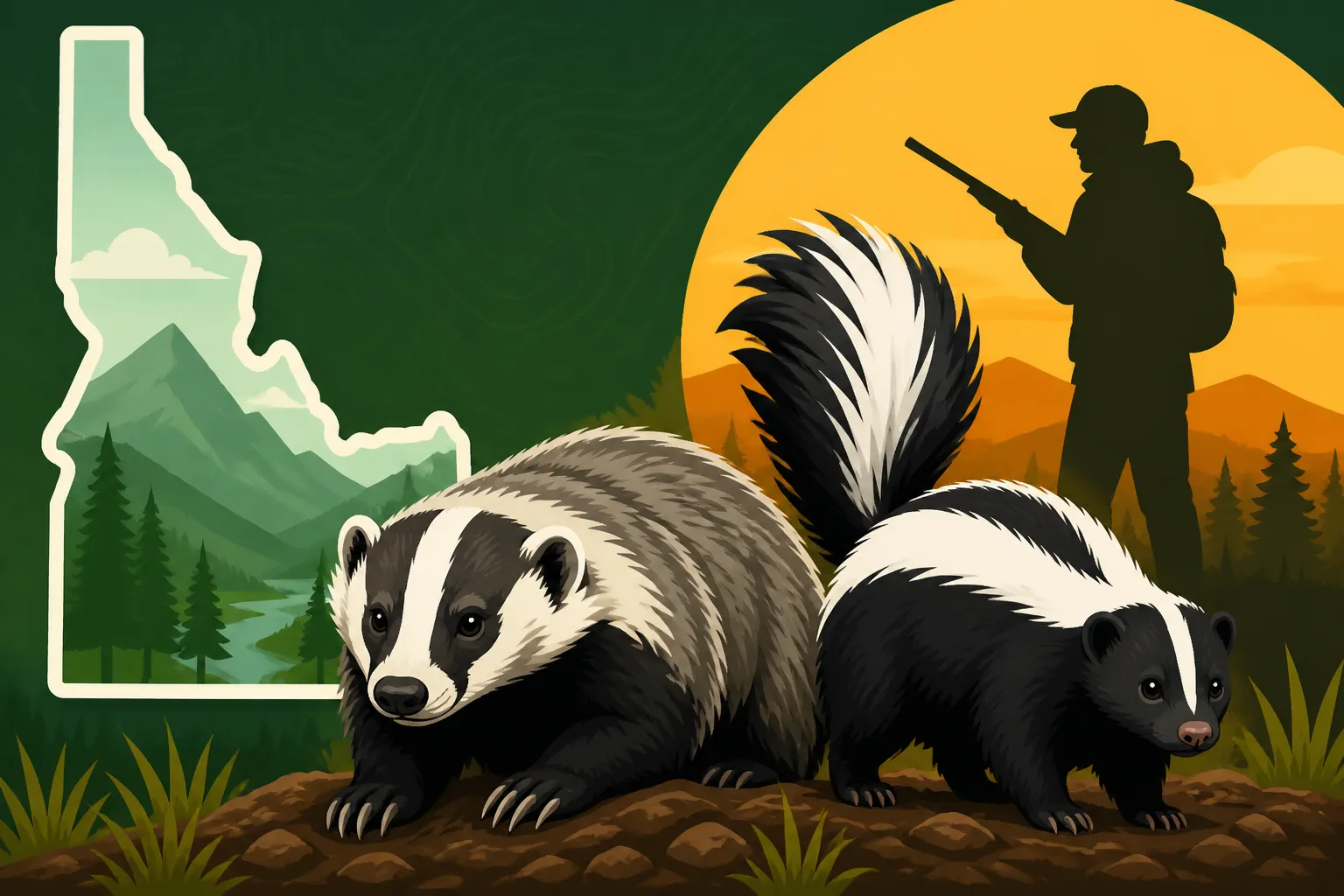
American badgers are unmistakable once you get a good look at them. They're built like little furry bulldozers, with broad, flattened bodies, short legs, and incredibly long claws on their front feet. These claws are their primary tools, allowing them to dig with astonishing speed, disappearing into the earth in mere minutes. Their fur is grizzled gray over much of their body, with a distinctive white stripe running from their nose over their head, flanked by black patches on their cheeks. They often weigh between 15 and 25 pounds, though larger ones are certainly out there.
Badgers are primarily carnivorous, and their diet largely consists of burrowing rodents like ground squirrels, marmots, and prairie dogs. If you see a lot of fresh digging activity, especially large, oval-shaped holes, there's a good chance a badger has been at work. They are predominantly nocturnal or crepuscular (active at dawn and dusk), though it's not uncommon to see them foraging during the day, especially if they're particularly hungry or have young to feed. They prefer open country, like sagebrush flats, grasslands, and agricultural fields where their prey is abundant and the soil is easy to dig. This also means you often find them where ground squirrel populations are thriving, which can sometimes be near farms or ranches.
Hunting badgers often involves spotting them as they move between burrows or actively digging. Their incredible digging ability means they can quickly evade danger by going underground, so a quick, ethical shot is paramount. They aren't typically a species that people hunt for their meat, but their pelts can be valuable, and they are sometimes managed as nuisance animals, especially when their digging creates hazards for livestock or machinery. Their presence can actually be a good thing for controlling rodent populations, but their tunneling can also be destructive.
Skunk Species and Their Habits in Idaho
When most people think of skunks, they picture the familiar striped skunk, and indeed, that's the most common species across Idaho. These medium-sized mammals are famous for their bold black and white coats and, of course, their potent defensive spray. Striped skunks have a prominent white stripe that typically forks into two stripes down their back, contrasting sharply with their otherwise glossy black fur. They're typically about the size of a housecat, weighing 6 to 10 pounds. Beyond the striped skunk, Idaho is also home to the western spotted skunk, though these are far less common and generally found in more specific habitats. Spotted skunks are smaller and have a more complex pattern of white stripes and spots on a black background, often appearing more active and "athletic" than their striped cousins.
Skunks are omnivores, meaning they'll eat just about anything they can get their paws on. Their diet includes insects, grubs, small rodents, eggs, berries, and even carrion. This adaptable diet allows them to thrive in a wide variety of habitats, from dense forests and riparian areas to suburban backyards and agricultural lands. They are mostly nocturnal, spending their days denned up in abandoned burrows (often those dug by badgers or marmots), hollow logs, rock piles, or even under buildings. Their activity tends to pick up after sundown, which is when you're most likely to encounter them.
For hunters, skunks are generally considered furbearers or sometimes nuisance animals. Their spray, composed of thiols, is a powerful deterrent and can ruin a hunt (and your clothes, and your vehicle, and your dog…). Approaching a skunk requires extreme caution and a clear understanding of its warning signs—stamping feet, hissing, and raising its tail are all signals that you're about to get a pungent surprise. While a direct hit might be rare for a hunter, the residual smell can linger, making scent control for future big game hunts a real challenge. Awareness of their nocturnal habits means if you're out predator calling at night, a skunk is often a potential respondent.
Navigating Idaho's Hunting Regulations for Badgers and Skunks
Idaho Fish and Game takes great care to manage all wildlife, big or small. When it comes to species like badgers and skunks, the rules are often simpler than for deer or elk, but they are no less important. Failing to understand these regulations can lead to unnecessary trouble, even if you're just enjoying a day afield.
Licensing and General Season Rules
To legally hunt badgers and skunks in Idaho, you generally need a valid hunting license. This isn't usually tied to a specific big game tag; rather, it's your standard annual hunting license that covers various small game, furbearers, and sometimes even unclassified wildlife, depending on the specifics of the animal you're pursuing. Make sure you check the current Idaho Fish and Game regulations book, which you can often find online or at any license vendor. What's legal for hunting small game is usually sufficient for these species. You might want to consider the Idaho Resident Hunting License Price or Nonresident Junior Mentored Tag Pricing in Idaho if you're new to the state or bringing along a younger hunter.
One of the great things about hunting badgers and skunks in Idaho is that they are often considered "unclassified wildlife" or specific furbearers with very liberal seasons, if not year-round opportunities in many areas. Unlike deer or elk, which have very specific season dates tied to zones and weapons, badgers and skunks typically fall under a general hunting season, sometimes with no closed season at all. This means you can often pursue them outside of the typical fall big game seasons, offering a unique opportunity to be outdoors during other times of the year. Always consult the official regulations summary for the current year to confirm exact dates and any unit-specific rules that might apply. I find that online tools like the Idaho Hunt Planner or apps like GoHunt are fantastic for quickly checking these details right from your phone while you're planning or even out in the field.
Legal Hunting Methods and Prohibitions
Idaho has clear rules on what weapons and methods are permissible for hunting various species, and badgers and skunks are no exception. Generally, any legal firearm or archery equipment is allowed. This includes centerfire rifles, rimfire rifles, shotguns, and bows. Many hunters targeting badgers and skunks often use rimfire rifles, like a .22LR or .17HMR, due to their lower noise signature and adequate power for these smaller animals, especially when hunting close to populated areas where safety is paramount. For skunks, given their nocturnal habits, legal spotlighting might be an option in specific situations, but you absolutely must verify Idaho's Idaho Spotlighting Rules for Predator Hunting before even considering it, as regulations on night hunting can be very strict and species-specific.
What's typically prohibited for these animals? Well, you can't use explosives (obviously!), poisons, or trapping devices unless you possess a specific trapping license for furbearers and are operating under those distinct regulations. Harassing animals from a motorized vehicle is also a no-go, and while you can often use a vehicle to access hunting areas, driving off-road to pursue or retrieve game is usually against the rules. Make sure you're aware of Idaho's Motorized Hunting Rule Keeps You on the Road and Can You Drive Off Road to Retrieve Downed Game before you head out. These rules are in place for safety, fair chase, and to prevent habitat damage. Using artificial lights attached to a firearm is also typically restricted unless specifically allowed for certain predator or varmint hunting scenarios, which you need to confirm in the current regulations.
Bag Limits and Reporting Requirements
For many unclassified species and furbearers like badgers and skunks, Idaho often doesn't impose a strict daily or seasonal bag limit. This means that, in many cases, if you have a valid license and are hunting within all other legal parameters, you can harvest multiple animals. However, this isn't a license to waste resources. Ethical hunting dictates that you only take what you will use, whether for pelts, population control, or other purposes. The intent is not to simply kill for sport, but to participate in responsible wildlife management.
Unlike big game species, which have mandatory reporting requirements—like filing a harvest report online or checking in with Fish and Game—badgers and skunks typically do not require such reporting. This simplifies the process considerably for hunters. You don't usually need to tag them, validate a tag, or call in your harvest. However, you should still be prepared to show your valid hunting license if requested by a conservation officer. Even without formal reporting, understanding your local badger and skunk populations, and hunting responsibly, contributes to the overall health of Idaho's diverse wildlife. Keeping personal records of your success can be a good way to track activity and improve your future hunts, even if it's not a legal requirement.
| Feature | Badgers | Skunks |
|---|---|---|
| Typical Habitat | Open grasslands, sagebrush, agricultural fields | Diverse, including forests, suburbs, riparian zones |
| Primary Activity | Nocturnal/Crepuscular, daytime occasional | Primarily Nocturnal |
| Main Diet | Rodents, burrowing animals | Omnivorous (insects, grubs, small animals, plants) |
| Season | Generally open/year-round (verify current regs) | Generally open/year-round (verify current regs) |
| Licensing | Valid Idaho Hunting License | Valid Idaho Hunting License |
| Bag Limits | Typically none, ethical harvest advised | Typically none, ethical harvest advised |
| Weapon Types Allowed | Legal firearms, archery | Legal firearms, archery |
| Special Concern | Rapid digging ability | Defensive spray |
Practical Approaches to Hunting Badgers and Skunks in Idaho
Hunting badgers and skunks isn't like hunting elk, where you might be Bugling Elk in Idaho's Timbered Zones or Glassing Idaho Breaks for Mule Deer. It requires a different mindset and set of tactics. Success often comes down to careful observation, understanding their habits, and a dose of patience.
Locating Prime Habitat and Scouting Techniques
The first step in hunting any animal is knowing where to find them. For badgers, look for wide-open spaces: sagebrush flats, grasslands, and agricultural fields. These areas are often riddled with ground squirrel colonies, which are a badger's bread and butter. You'll recognize badger activity by the distinctive large, oval-shaped holes they dig, often with a fresh mound of dirt nearby. These aren't like gopher mounds; they're much bigger and more substantial. Driving slowly along county roads or scanning with binoculars in areas known for ground squirrels can reveal badger signs. Scouting for badgers is really about scouting for their prey and their digging activity. The more fresh holes you see, the higher your chances.
Skunks are a bit more widespread. Since they're omnivores, they can thrive in more diverse habitats, from the edges of timber to suburban fringes. If you're looking for skunks specifically, focus on areas that offer both food and cover. Riparian corridors, rocky outcrops, abandoned farmsteads, and areas with dense brush are all good bets. Given their nocturnal nature, fresh tracks in mud or dust near water sources or den sites can be good indicators. You might also find signs of their digging for grubs in lawns or fields. Using mapping tools like those found on GoHunt can help you identify public lands adjacent to agricultural areas or creek bottoms, which often make prime habitat for both species. Remember, skunks are largely scavengers too, so areas with carrion from other hunting seasons or roadkill can attract them.
Ethical Considerations and Safety First
Any time you're afield with a firearm or bow, safety is paramount. Always be aware of your surroundings, know your target and what's beyond it, and follow all firearm safety rules. When hunting badgers, their habit of rapidly disappearing into the ground means you need to be quick and decisive to ensure a humane harvest. A poorly placed shot might wound an animal that then vanishes underground, which is something every ethical hunter wants to avoid. Take your time to get a steady rest and wait for a clear, ethical shot.
With skunks, the primary ethical consideration, beyond a humane harvest, is managing their infamous spray. Approaching a skunk cautiously, especially one that is showing warning signs, is critical. If you're going to harvest a skunk, consider the wind direction and have a plan for how you'll handle the animal to minimize the risk of being sprayed, or at least how to mitigate the aftermath. Some hunters will dispatch them quickly from a distance, then retreat to let the air clear before approaching. Always prioritize public safety, especially if you're hunting near roads or private property. Make sure you understand Idaho Legal Shooting Hours for Big Game as these may apply to small game too, or at least offer a good general guideline for when you should be shooting.
Gear and Tactics for a Successful Hunt
You don't need a lot of specialized gear for badger and skunk hunting, but a few items will certainly improve your chances.
- Optics: A good pair of binoculars (10×42 is often perfect) is essential for spotting badgers across open country or scanning for skunks at dawn or dusk. A spotting scope can also be beneficial if you're glassing vast sagebrush flats. Good optics help you spot movement and identify targets from a safe distance.
- Weapon: As mentioned, a .22LR or .17HMR rimfire rifle is a popular choice for both species, offering precision and relatively low recoil. For longer shots on badgers in open terrain, a flat-shooting centerfire rifle might be considered, but always with caution regarding bullet trajectory and backstops. Ensure your rifle has a good scope and is zeroed accurately.
- Rest: A bipod, shooting sticks, or even a backpack can provide a stable shooting platform, which is critical for making accurate, ethical shots on small, fast-moving targets.
- Scent Control: If you're worried about skunk spray, especially if you plan to hunt other species later, consider having a change of clothes or a "skunk kit" (tomato juice, hydrogen peroxide/baking soda solution) readily available in your vehicle, far from your main hunting gear.
- Calling: While not as common as for coyotes, some predator calls can attract skunks, especially during nocturnal hunts. Electronic calls, if legal for these species in your specific area, can also be effective. Just be aware that calling can bring in all sorts of curious critters. Always verify the legality of Electronic Calls for Predators and Varmint Hunting in Idaho. The GoHunt website often has detailed articles on these kinds of tactics.
Tactically, patience is key. For badgers, find a good vantage point in an area with fresh digging, and glass patiently, especially during early morning or late evening. They will eventually emerge or move between burrows. For skunks, focused nocturnal efforts, often tied to calling sequences designed for coyotes or foxes, can be productive. Setting up downwind, always, is a non-negotiable rule when hunting skunks!
Role of Badgers and Skunks in Idaho's Ecosystem and Management
It's easy to dismiss badgers and skunks as merely "varmints" or "furbearers," but they are integral parts of Idaho's natural landscape. Understanding their ecological roles helps us appreciate the complexity of wildlife management, even for these smaller species.
Understanding Their Place in the Food Web
Badgers are often unsung heroes when it comes to controlling rodent populations. Their voracious appetite for ground squirrels, gophers, and prairie dogs helps keep these populations in check, which can be a significant benefit to agriculture by reducing crop damage and preventing the spread of disease that rodents can carry. By creating and maintaining burrows, badgers also inadvertently provide shelter for a host of other species, including burrowing owls, foxes, and even rattlesnakes, creating microhabitats that enrich biodiversity. So, while their digging might sometimes be a nuisance, their ecological role as a predator and ecosystem engineer is quite valuable.
Skunks, too, play a vital role. As omnivores, they are opportunistic feeders that consume a wide range of insects, grubs, and small rodents. This makes them natural pest controllers, especially in agricultural areas and suburban environments where insect populations can sometimes explode. Their diet of eggs and carrion also means they act as natural clean-up crews, consuming what others leave behind. While their defensive spray might make them unpopular with humans and pets, it's a remarkably effective survival mechanism that has allowed them to thrive. They are also prey for larger predators, like great horned owls and coyotes, particularly those that are less sensitive to their scent, helping to cycle nutrients through the ecosystem. Hunting Coyotes in Idaho Year Round is a good way to stay active in predator management, and you might even call in a skunk by accident!
Managing Nuisance Animals and Depredation Concerns
Despite their ecological benefits, both badgers and skunks can sometimes become nuisance animals, leading to depredation concerns. Badgers, with their powerful digging, can undermine structures, create tripping hazards for livestock, or damage irrigation systems on farms. Skunks are notorious for denning under porches, sheds, or outbuildings, and their occasional spray incidents with pets (or people!) can cause considerable distress. They can also prey on poultry or raid gardens.
Idaho Fish and Game acknowledges these conflicts. While general hunting seasons are one tool for population management, specific situations might call for additional measures. Landowners experiencing significant depredation or nuisance issues with badgers or skunks can often work with Fish and Game or licensed pest control operators to find solutions. These might include non-lethal deterrents, exclusion techniques, or, in some cases, removal permits. The liberal hunting seasons for these animals often provide a simple avenue for individuals to address localized nuisance problems, within legal frameworks, without needing special permits beyond a general hunting license. Responsible management involves understanding when a wild animal truly poses a threat and when it's simply coexisting. Always be sure you are following all local and state regulations for nuisance wildlife.
Disclaimer
This article is for general informational purposes only and does not constitute professional advice. Laws, prices and regulations vary by location and change over time. Consult a qualified professional for guidance on your specific situation.