Ram Curl Requirements Idaho Enforces
One of the most thrilling and challenging hunts Idaho offers is for bighorn sheep, but the excitement often comes with a significant amount of anxiety about meeting the legal ram curl requirements. It’s an easy mistake to make when you’re out there, glassing a ram from a distance, trying to determine if he’s legal or not, and nobody wants to risk making a costly error on such a special hunt. This guide is here to break down exactly what Idaho expects from hunters when it comes to judging a ram’s curl, helping you understand the rules and giving you some practical tips for the field.
Why Idaho Has Ram Curl Requirements
Idaho's regulations around ram curl aren't there just to make things harder for hunters; they're a cornerstone of responsible wildlife management. These rules are put in place for several crucial reasons that directly impact the health and future of Idaho's incredible bighorn sheep populations.
Protecting Breeding Rams and Population Health
The most significant reason for ram curl requirements is the protection of younger, sexually mature rams. In bighorn sheep herds, older rams, particularly those with a full or near-full curl, are typically the dominant breeders. If hunters were to consistently harvest younger rams before they had a chance to fully mature and breed, it could skew the herd's age structure and potentially reduce breeding success. By ensuring that only rams meeting specific curl criteria are harvested, Idaho Fish and Game helps to maintain a healthy age class distribution within the herd, safeguarding the genetic vigor and overall reproductive capacity of bighorn sheep. This isn't just about big trophies; it's about ensuring a robust population for generations to come.
Sustaining Trophy Quality and Hunting Opportunity
While conservation is paramount, ram curl requirements also play a vital role in sustaining the quality of hunting opportunities. Let’s be honest, for many, a bighorn sheep hunt is a once-in-a-lifetime experience, and the dream is often to harvest a mature, impressive ram. If hunters were indiscriminately harvesting younger rams, the opportunity to encounter and pursue truly mature, trophy-class animals would diminish over time. The "full curl" rule, or variations of it, acts as a self-regulating mechanism that encourages the harvest of older, fully developed rams. This strategy helps to ensure that the trophy quality of Idaho's bighorn sheep remains high, offering hunters an exceptional and memorable experience when they finally draw one of those coveted tags. It’s about managing for both abundance and quality.
Distinguishing Rocky Mountain and California Bighorns
Idaho is unique in that it is home to two distinct subspecies of bighorn sheep: the Rocky Mountain Bighorn and the California Bighorn. These two subspecies are managed separately, and their populations reside in different parts of the state. For instance, you'll find Where Rocky Mountain Bighorns Live in Idaho in the central mountains, while Where California Bighorns Live in Idaho are primarily found along the Owyhee Breaks in the southwestern part of the state. Because these populations are distinct and managed independently, it's crucial for hunters to be able to distinguish between them, not just for general knowledge, but because certain regulations might apply differently, and drawing odds will certainly vary. The curl requirements themselves are generally consistent, but understanding the subspecies is important for knowing which units to apply for and what you're seeing in the field. This distinction is also key to Idaho's Why Idaho's Once-in-a-Lifetime Rule Is Per Subspecies, meaning you could theoretically draw a tag for each, given enough luck and time.
Decoding the Full Curl Standard in Idaho
Understanding what constitutes a "full curl" or a legal ram in Idaho is probably the biggest source of stress for bighorn sheep hunters. It’s not always as straightforward as it sounds, especially when you’re looking at an animal across a canyon. Idaho Fish and Game uses specific criteria to define a legal ram, primarily centered on the horn's growth and where it terminates in relation to the eye.
The "Tip Touches Eye" Rule Explained
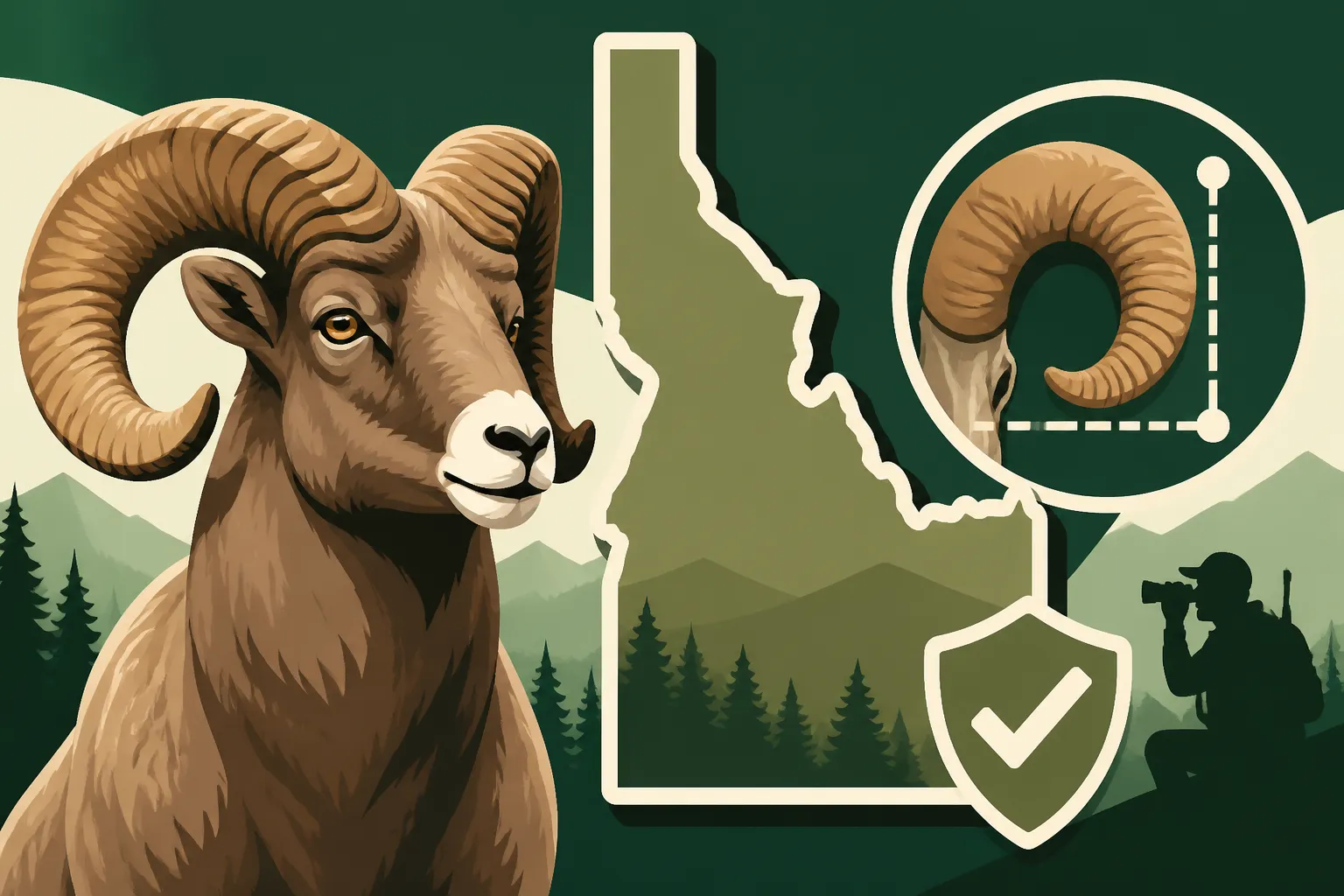
For both Rocky Mountain and California bighorn sheep in Idaho, the primary legal definition for a harvestable ram generally boils down to what hunters refer to as the "tip touches eye" rule. This means a ram is legal if the tip of its horn, when viewed from the side, extends beyond the rear edge of its eye. Essentially, if you can draw a straight line from the back of the ram's eye downwards, and the horn tip crosses that line, the ram is considered legal.
This rule is designed to ensure that only mature rams are harvested. As rams age, their horns grow in a characteristic spiral. Younger rams will have horns that are less developed, and their tips will not yet reach past the eye. As they get older, the horns continue to grow, often completing more than a full circle or "curl" around their ears and face. The "tip touches eye" standard is a practical field indicator of sufficient horn growth and, by extension, age and maturity. It's a visual benchmark that aims to reduce confusion, though, as we'll discuss, it still presents challenges.
Variations and Common Misinterpretations
While the "tip touches eye" rule is the general standard, hunters need to be acutely aware of specific unit regulations. Sometimes, a unit might have an "any ram" rule, though these are far less common for bighorn sheep due to conservation priorities. More often, the nuance comes from interpreting the rule in various field conditions.
One common misinterpretation is thinking that a ram needs to have horns that complete a perfect 360-degree circle. This isn't always the case. Some rams might have horns that flair out or grow in a slightly different direction, yet their tips still extend past the eye line. Conversely, a ram might have a very aesthetically pleasing, tight curl that looks full, but the tip might not actually cross the eye. The critical factor is the relationship of the horn tip to the eye, not just the visual impression of a complete circle.
Another challenge arises with broken horn tips. If a ram has a broken tip, it can make judging very difficult. In such cases, the rule might shift to requiring the horn to still meet the plane of the eye if it were intact, or in some cases, the ram may be illegal depending on the extent of the break. It's crucial to consult the current Idaho regulations booklet for any specific unit you're hunting, or to use a resource like GoHunt to understand these finer points. Never assume; always verify.
Here's a simple breakdown of how to think about ram curl:
| Feature | Legal Ram (Typically) | Sub-Legal Ram (Typically) |
|---|---|---|
| Horn Tip Position | Extends past the rear edge of the eye when viewed from side. | Does not extend past the rear edge of the eye. |
| Overall Curl | Often approaching or exceeding a full 360-degree circle. | Less than a full curl, often appearing less developed. |
| Mass and Age | Greater horn mass, appears older and more mature. | Less horn mass, often appears younger. |
| Behavior | Dominant, often with other mature rams. | May be with ewes, lambs, or smaller bachelor groups. |
Field Judging Rams: Tips and Challenges
Spotting a bighorn sheep is a monumental achievement in itself, but accurately field judging a ram to ensure it's legal before you take a shot adds an entirely new layer of complexity. The terrain, lighting, distance, and the sheer adrenaline of the moment can all conspire to make a clear judgment incredibly difficult.
Optics Are Your Best Friend (But They Aren't Perfect)
When you're out in the rugged Idaho backcountry, good optics are not just helpful; they are absolutely essential for field judging a ram. Your binoculars (10x or 12x are common choices) are great for initial spotting and some general assessment, but for the fine details of horn curl, you'll need a quality spotting scope. Powers of 60x or even 80x can make all the difference when a ram is hundreds of yards, or even a mile, away.
However, even the best optics have their limitations. Heat shimmer on a warm day can distort the image, making straight lines appear wavy and making it nearly impossible to judge accurately. Poor light, such as early morning shadows or late evening gloom, can obscure critical details. Rain or snow can also severely impact visibility. Experienced hunters know to exercise extreme caution in these conditions. If you can't get a crystal-clear view, you simply can't make a definitive judgment. Patience, repositioning, and waiting for better conditions are often the only way to avoid a mistake. This is similar to Optics Power for Idaho's Long Canyon Sightlines when judging mule deer, where long distances are common.
Angles, Lighting, and That Tricky "Eye Line"
The way a ram is positioned can drastically alter your perception of its horn curl. A ram looking directly at you, or angled slightly away, can make the horns appear shorter than they are. Conversely, if a ram is broadside but facing slightly uphill or downhill, it can also play tricks with the "eye line" measurement. You need a clear, broadside view that is as level as possible with the ram to accurately assess if the horn tip crosses the plane of the eye.
Lighting is another huge factor. When the sun is behind the ram, silhouetting it, judging the intricate details of the horn becomes nearly impossible. You want the sun on the ram, illuminating its features. Shadows cast by the horns themselves can also obscure the critical area near the eye. Many seasoned sheep hunters will tell you that you need to be absolutely certain, often requiring multiple views from different angles and in varying light conditions, before you ever consider making a move. It's a game of patience and meticulous observation, much like Glassing Breaks and Benches for Mule Deer where patience and careful observation are key to success. This is where researching your hunt using resources like GoHunt can help you study terrain and potential glassing points beforehand.
What Happens If You Make a Mistake?
Making a mistake in field judging a bighorn ram can have serious consequences. If you harvest a ram that does not meet the legal curl requirements, you are in violation of Idaho hunting laws. This isn't just a minor infraction; it can result in significant fines, loss of hunting privileges for an extended period (potentially for all species), and even confiscation of your weapon and the harvested animal. For such a rare and highly sought-after tag, these penalties can be devastating.
Beyond the legal ramifications, there's the ethical responsibility. Every hunter wants to do things by the book, and harvesting an illegal animal goes against the principles of fair chase and conservation. If you find yourself in a situation where you realize, after the fact, that you've made a mistake, the best course of action is to immediately contact Idaho Fish and Game. Being upfront and cooperative, while it won't erase the violation, can sometimes lead to a more lenient outcome than attempting to conceal it. The best defense, however, is a thorough understanding of the rules and unwavering discipline in the field to only take a shot when 100% certain of legality. Checking the most current regulations, which can often be found through resources like the Idaho Hunt Planner Is the Tool to Start With, is a vital step before heading out into the field.
Planning for Your Once-in-a-Lifetime Idaho Bighorn Hunt
A bighorn sheep hunt in Idaho isn't just another tag; it's a monumental undertaking, often the culmination of years of applying and dreaming. The planning required goes far beyond just knowing the ram curl requirements, though that's certainly a critical piece of the puzzle. You need to prepare mentally, physically, and logistically for what will likely be one of the most challenging and rewarding experiences of your hunting life.
Researching Units and Understanding Draw Odds
The first step in planning your Idaho bighorn sheep hunt often begins years before you ever set foot in the mountains: applying for the tag. Idaho's bighorn sheep tags are extremely limited and highly coveted, making them some of the toughest to draw in the West. This means meticulous research into hunt units and their respective draw odds is absolutely essential. Websites and platforms like GoHunt provide invaluable data on success rates, hunter numbers, and historical draw odds, allowing you to make informed decisions about where to apply.
You'll want to study Idaho Bighorn Sheep Draw Odds Explained to understand the landscape of success rates. Some units might offer slightly better odds, while others are truly long shots. Consider whether you're targeting Rocky Mountain Bighorns or California Bighorns, as specific units will hold one or the other, and you'll typically apply for one subspecies. Remember that Idaho does not use a preference point system, which means every applicant, regardless of how many years they've applied, has an equal chance each year the draw is run. This can be both frustrating and exciting, as a first-time applicant could theoretically draw a tag.
Beyond draw odds, delve into unit characteristics. What kind of terrain will you be hunting? What are the access points? Are there any special considerations like wilderness areas where specific rules apply to nonresidents? The more you know about your chosen unit before you draw, the better prepared you'll be to hit the ground running if you're lucky enough to punch that once-in-a-lifetime ticket.
Physical Conditioning for Mountain Terrain
Hunting bighorn sheep in Idaho is not for the faint of heart or the out of shape. These animals live in some of the most rugged, vertical, and unforgiving terrain in the state, often at high elevations. Your physical conditioning will be a huge factor in your success and, frankly, your enjoyment of the hunt. This isn't just about being able to walk; it's about being able to climb steep ascents, navigate treacherous scree slopes, cross boulder fields, and carry a heavy pack for miles, all while dealing with potential altitude sickness.
A serious bighorn sheep hunter begins their physical preparation months, if not a year, in advance. This means incorporating activities that mimic the demands of the hunt: intense cardio, strength training, and especially hiking with a weighted pack on steep inclines. Simulating hunting conditions, such as long days on your feet with elevation changes, is critical. Even if you plan on a fully guided hunt, your guide will expect you to be in good physical condition to keep up and make the most of your limited time in the field. Don't underestimate the physical toll; many sheep hunts are decided not just by spotting a ram, but by having the stamina to get to it in time.
Ethical Considerations and Conservation
Finally, beyond all the rules and physical demands, a bighorn sheep hunt carries with it a profound ethical responsibility. These animals are a precious resource, and participating in their harvest is a privilege. Ethical hunting extends beyond merely following the law; it involves respecting the animal, the land, and the spirit of fair chase. This means making every effort for a clean, ethical shot, ensuring proper meat care, and leaving no trace behind in the fragile mountain environment.
Furthermore, consider the broader conservation efforts. Hunters are often the strongest advocates and financial supporters of wildlife conservation. Understanding the ecology of bighorn sheep, the challenges they face (like disease and habitat loss), and how your tag dollars contribute to their management deepens the hunting experience. Each harvest is a testament to successful conservation, and treating it with the reverence it deserves is paramount. It's about being a steward of these incredible animals and the wild places they call home, ensuring that future generations will also have the opportunity to marvel at Idaho's magnificent bighorns.
Disclaimer
This article is for general informational purposes only and does not constitute professional advice. Laws, prices and regulations vary by location and change over time. Consult a qualified professional for guidance on your specific situation.