Where Pronghorn Populations Are Strongest
If you've spent any time dreaming about hunting Idaho, you've probably pictured towering elk in dark timber or big mule deer bucks in rocky canyons. But what about pronghorn? While Idaho certainly holds good numbers of these incredible speedsters, finding them isn't quite as straightforward as glassing a ridge for a deer. They're picky about their habitat, and if you don't know where to look, you might come up empty. This guide is all about helping you understand where Idaho's pronghorn populations are strongest, giving you the best chance to spot these unique big game animals.
Understanding Idaho's Pronghorn Habitat
Pronghorn aren't like elk that can adapt to high mountains or thick forests. They are creatures of the open, vast landscapes, highly specialized for speed and keen eyesight. Their habitat requirements are quite specific, and understanding these needs is the first step to pinpointing where you'll find their strongest populations in Idaho. It’s not just about open ground; it’s about the right kind of open ground.
The Sagebrush Sea and High Desert
When you think of pronghorn, you should immediately picture the "sagebrush sea." This isn't just a poetic term; it's a critical ecological description. Idaho's high desert, dominated by various species of sagebrush, provides the essential browse and cover that pronghorn rely on. They aren't grazers like cattle; they are primarily browsers, munching on sagebrush, forbs, and other woody plants. This makes the vast, arid to semi-arid regions of southern Idaho their prime real estate.
These landscapes are characterized by low precipitation, broad flat areas, rolling hills, and scattered but vital water sources. Elevation plays a role, too; you typically won't find large herds of pronghorn above the timberline. Instead, they thrive in elevations where sagebrush and native grasses dominate, often in the 3,000 to 6,000-foot range. The expansive views these areas offer are also crucial, allowing their incredible eyesight to detect predators (or hunters!) from miles away. When scouting, pay close attention to the health and prevalence of sagebrush stands, as these are the grocery store and safe haven for pronghorn.
Migration and Seasonal Movements
Just like many other big game species, pronghorn aren't static residents; they often undertake seasonal migrations between summer and winter ranges. However, their movements are less about chasing green feed up and down mountainsides and more about finding forage that isn't buried by snow in winter or finding available water in the dry summer months. Winter range is particularly critical, as they need areas where snow depths remain shallow enough for them to access forage, even during harsh conditions.
These movements can cover significant distances, and understanding them is vital for hunting success. Unfortunately, human development, including extensive fencing, roads, and agricultural expansion, can disrupt these ancient migration corridors. This disruption can fragment populations, making it harder for pronghorn to access essential resources, and thus affecting where their numbers are strongest. Look for large, undeveloped tracts of land with minimal barriers, especially those connecting various sagebrush-dominated ecosystems, as these are more likely to support robust, free-ranging herds.
Key Regions for Strong Pronghorn Populations
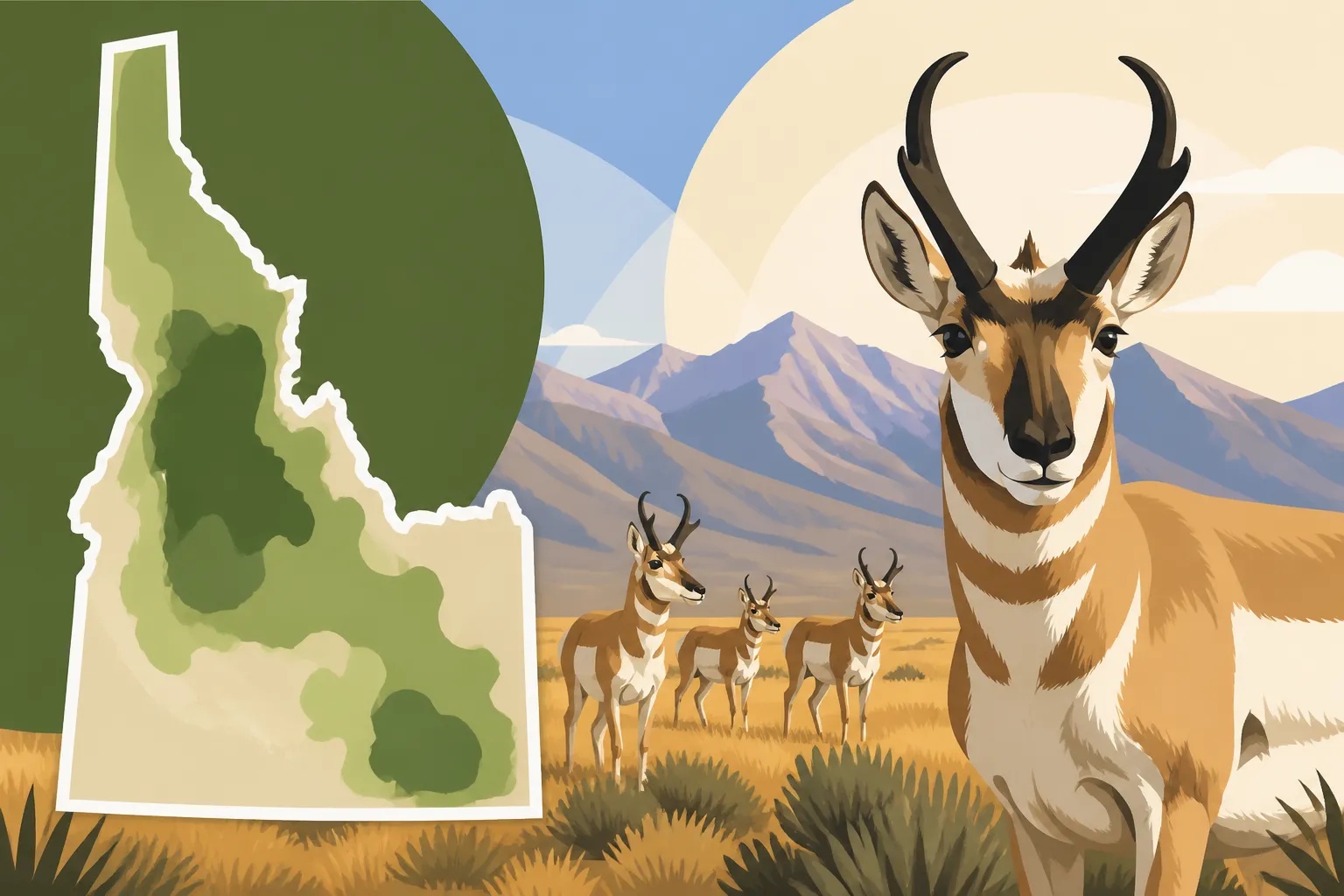
Idaho is a surprisingly diverse state, and while pronghorn are primarily found in its southern half, not all high desert is created equal for them. There are specific regions where their numbers consistently remain strong, offering the best opportunities for hunters willing to put in the effort. These areas share a common theme of vast, open sagebrush country but each has its own subtle characteristics.
The Owyhee Country
When hunters talk about pronghorn in Idaho, the Owyhee Desert often comes up first. This immense, remote, and rugged landscape in southwestern Idaho is a true stronghold for pronghorn. It's a land of endless sagebrush, volcanic formations, deep canyons, and vast, rolling plateaus. The sheer scale of the Owyhee provides the undisturbed habitat and expansive views that pronghorn require to thrive. Here, herds can spread out, finding ample forage and escape terrain.
Within the Owyhee, specific Game Management Units (GMUs) are consistently known for healthy pronghorn populations. The challenges here are often tied to access and water. While much of it is public land, managed by the Bureau of Land Management (BLM) as discussed in BLM Ground Across the Owyhee Country, roads can be sparse and rough, and water sources are few and far between. A pronghorn hunt in the Owyhee often involves long drives, extensive glassing, and serious off-road navigation. However, for those prepared for the commitment, the rewards can be significant, both in terms of opportunity and the experience of hunting in such a wild landscape.
Eastern Idaho's High Plains
Moving eastward, past the Snake River Plain, you'll find another important region for strong pronghorn populations: the high plains of eastern Idaho. This area, bordering Wyoming and Montana, shares many characteristics with its Owyhee counterpart, but with some distinct differences. Here, the landscape tends to be a mix of sagebrush steppe and more expansive grasslands, often at higher elevations than the lower Owyhee. The terrain can be flatter in some areas, resembling classic "antelope country" that many hunters envision.
Units in this region, particularly those around the vast open stretches, can hold significant numbers of pronghorn. Access can sometimes be a bit easier due to a more established network of county roads and agricultural boundaries, though private land issues can also become more prevalent. It’s critical to understand Idaho's Motorized Hunting Rule Runs August Into December when navigating these areas, as off-road travel for hunting or game retrieval is strictly regulated. While perhaps not as rugged as the Owyhee, the eastern plains demand diligent scouting to find the best pockets of animals, often relating to large ranches, public land blocks, or specific watering holes.
Using Tools to Locate Pronghorn Hotspots
Finding where pronghorn populations are strongest in Idaho isn't just about throwing a dart at a map. It requires thoughtful research and leveraging modern tools to gain an edge. In today's hunting world, there's no excuse not to use the resources available to you. These tools can help you narrow down potential areas, understand population dynamics, and plan your hunt more effectively, especially for a species like pronghorn that is managed through controlled hunts.
Deciphering the Idaho Hunt Planner and Regulations
The Idaho Fish and Game (IDFG) Hunt Planner is your absolute best friend when it comes to pronghorn. This online tool is packed with information that can guide your decision-making. I highly recommend taking A Walkthrough of the Idaho Hunt Planner to understand its full capabilities. When you're looking for pronghorn, you want to dive into the specific Game Management Units (GMUs) that offer controlled hunts for this species.
Within the Hunt Planner, you can look at harvest statistics by unit, which gives you a historical overview of hunter success and the number of animals taken. This provides a strong indicator of where populations are healthy enough to support hunting pressure. Critically, you'll also want to examine the Idaho Pronghorn Controlled Hunt Draw Odds. Low odds usually mean high demand for units with strong populations and good success rates. Conversely, units with slightly higher odds might indicate fewer animals, but also less competition, which can be a strategic choice for a first-time applicant. Reading the detailed unit descriptions for habitat types and public land access is also paramount.
Scouting with Mapping Apps and Aerial Imagery
Once you've identified a few promising GMUs using the Hunt Planner, it's time to go deeper with mapping applications. Services like GoHunt are invaluable for this stage of planning. With these platforms, you can layer public and private land boundaries, topography, and aerial imagery to find potential pronghorn hotspots from the comfort of your home. You're looking for vast expanses of sagebrush, minimal tree cover, and proximity to water sources.
Start by identifying large blocks of public land, especially BLM ground or State Endowment Lands, that fit the pronghorn habitat profile. Use the aerial imagery to pinpoint water tanks, stock ponds, or seasonal drainages, as these will concentrate animals, especially in dry periods. Pay attention to how the land lays out – open, rolling hills are perfect for glassing. As discussed in E-Scouting an Idaho Unit Before the Season, mapping apps allow you to mark potential glassing knobs, travel corridors, and even likely bedding areas. Remember, pronghorn often follow subtle terrain features for travel and escape, even in seemingly flat country. Using onX Layers for Idaho Public Land can help you discern these crucial details and avoid accidental trespass.
The Controlled Hunt Reality for Idaho Pronghorn
Unlike some other big game species, pronghorn in Idaho are exclusively managed through controlled hunts. This means you can't just buy a general tag over the counter and go hunting. This system is in place for a very good reason, and understanding it is critical if you hope to hunt these unique animals in the Gem State.
Why Pronghorn Are Controlled Hunt Only
The primary reason Why Idaho Pronghorn Is Controlled Hunt Only is to carefully manage populations and ensure sustainable hunting opportunities. Pronghorn have specific habitat requirements and are often sensitive to over-harvest, especially of mature bucks. By issuing a limited number of tags through a drawing system, IDFG can precisely control the harvest pressure on each individual herd within various Game Management Units. This scientific management approach helps prevent population declines and maintains healthy buck-to-doe ratios, leading to stronger populations overall.
Because pronghorn typically inhabit specific, often isolated, high desert ecosystems, their populations can fluctuate based on factors like drought, severe winters, and habitat loss. The controlled hunt system allows wildlife managers to adjust tag numbers year-to-year to reflect the current health and size of local herds. This adaptive management ensures that when you do draw a tag, you're hunting in an area with a viable and well-managed pronghorn population.
Navigating the Draw for a Pronghorn Tag
Since pronghorn tags are highly coveted and limited, navigating Idaho's controlled hunt drawing system is a crucial part of the process. One important thing to remember is that Idaho Has No Preference Points, and What That Changes. This means every applicant, whether it's your first time or your tenth, has the same statistical chance of drawing a tag in any given unit. While this can be frustrating for those who prefer a point system, it also means a first-time applicant has as good a chance as anyone else, which is pretty exciting!
The key is to apply during the designated application period, usually in the spring. You'll need to purchase a hunting license first, and then apply for your desired controlled hunt. You can apply for a first choice and a second choice, though success on a second choice is usually much lower. Carefully review the draw odds you found in the Hunt Planner and decide if you want to apply for a unit with excellent success rates but very low odds, or a unit with slightly lower success but better odds. Sometimes, applying for a less popular unit can be a more realistic strategy for drawing a tag in the short term. Always double-check the application deadlines When Idaho Controlled Hunt Applications Open each year to ensure you don't miss out on your chance.
| Region | Primary Terrain | Key Vegetation | Access Considerations | Typical Hunt Pressure |
|---|---|---|---|---|
| Owyhee Country | Vast, remote, rugged high desert, canyons | Sagebrush, desert grasses, forbs | Often challenging, rough roads, limited water | Moderate to Low |
| Eastern High Plains | Rolling plains, sagebrush steppe, grasslands | Sagebrush, native grasses, agricultural fringe | Mix of good county roads and private land | Moderate |
Disclaimer
This article is for general informational purposes only and does not constitute professional advice. Laws, prices and regulations vary by location and change over time. Consult a qualified professional for guidance on your specific situation.