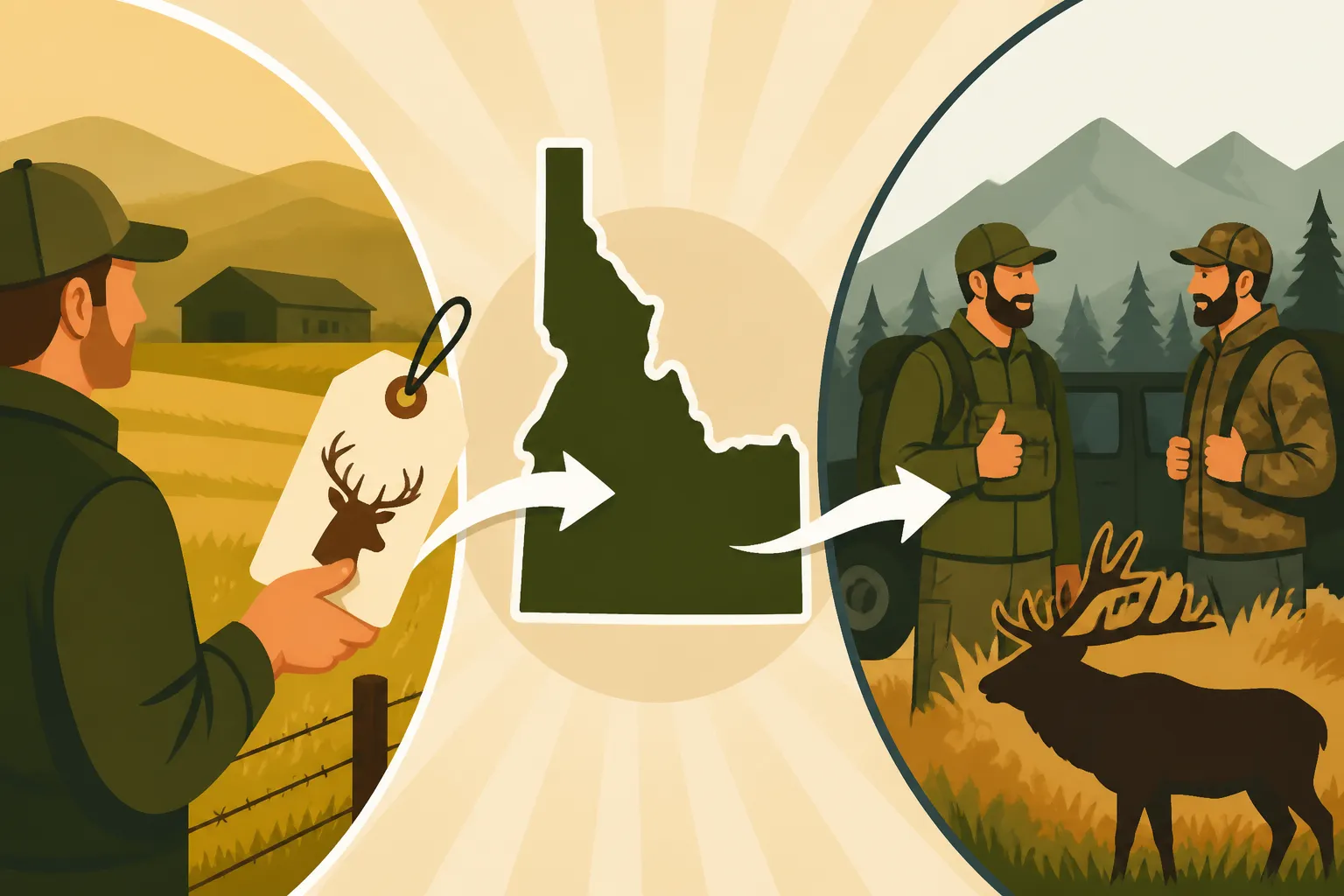
How Landowner Tags Reach Idaho Outfitters
It's incredibly frustrating to spend years building points in other states, only to come to Idaho and find out they don't have a preference point system. This means every year is a fresh roll of the dice in the controlled hunt draw, and for many, especially nonresidents, the odds can feel like a brick wall. This guide is all about one often-overlooked avenue for securing a hunting opportunity in Idaho: understanding how landowner tags make their way to outfitters, potentially providing a bypass to the draw lottery and opening up prime private land access.
Understanding Idaho's Landowner Appreciation Program Tags
The concept of "landowner tags" can sometimes feel a bit mysterious or misunderstood, especially for hunters new to a state like Idaho. At its heart, Idaho's Landowner Appreciation Program (LAP) is designed to recognize and, in a way, compensate private landowners for the role they play in hosting wildlife, providing habitat, and sometimes dealing with the challenges that come with abundant game animals on their property. These aren't just "extra" tags; they are a specific tool within the state's wildlife management framework.
The original intent behind the program was multifaceted. Primarily, it aimed to incentivize landowners to either allow public access to their property for hunting or to help manage game populations that might be causing agricultural damage or other issues, known as depredation. Imagine a farmer whose alfalfa fields are consistently being grazed by elk or deer, costing them thousands in lost crops. The state has an interest in mitigating this conflict, and offering LAP tags is one way to empower the landowner to help manage those animal numbers, often through hunting. These tags are a form of appreciation for their stewardship and an acknowledgement of the burden wildlife can sometimes place on private holdings.
These LAP tags differ significantly from the general season tags or the controlled hunt tags that most hunters apply for through the public draw. A general season tag allows you to hunt specific species within a designated elk or deer zone during a set period, typically on public land, though private land access is also fair game if you have permission. Controlled hunt tags are for specific units, species, and often dates, and require you to draw successfully in a lottery. Landowner tags, however, are allocated directly to eligible landowners. They are tied to specific properties and often have more flexible terms for hunter access and season dates, though still operating within the broader regulatory framework of Idaho Fish and Game. They are a valuable commodity because they often represent a guaranteed opportunity that bypasses the public drawing, which for a nonresident, can be a game-changer. You can delve deeper into the specifics of these opportunities by reading Landowner Appreciation Program Tags in Idaho.
The Path from Landowner to Outfitter
The journey of a landowner tag, from being issued to a private property owner to ultimately being used by a hunter on a guided trip, involves several pathways, all rooted in agreements and logistics between the landowner and an outfitter. This isn't a one-size-fits-all situation; instead, it's a dynamic relationship built on mutual benefit.
Direct Agreements Between Landowners and Outfitters
One of the most common ways landowner tags end up in the hands of hunters is through direct agreements between a private landowner and a licensed outfitter. Picture a sprawling ranch in central Idaho that holds a significant population of mule deer or elk. The rancher might be overwhelmed by the sheer volume of hunters seeking access, or perhaps they simply don't have the time or infrastructure to manage hunting operations themselves. They might also be experiencing significant crop damage from game, creating a need to reduce animal numbers.
In these scenarios, a reputable outfitter often approaches the landowner directly. The outfitter might offer to lease the hunting rights to the property or enter into a partnership where the outfitter manages all hunting activities. As part of this agreement, the landowner's allocated tags become part of the outfitter's hunt packages. For the landowner, this provides a steady income stream, professional management of their wildlife resource, and a reduction in game damage, all without the headache of vetting individual hunters or dealing with the logistics of guiding. For the outfitter, it means exclusive access to prime hunting ground, often with less pressure than public land, and critically, guaranteed tags for their clients. This allows them to offer high-demand hunts without clients having to navigate the uncertain public draw.
These direct arrangements are often long-standing, built on trust and a proven track record. The outfitter becomes an extension of the landowner's management plan, ensuring ethical hunting practices and compliance with state regulations, all while maximizing the hunting experience for their clients. Understanding the nuances of gaining hunting access on private land in Idaho is crucial, and you can learn more about securing permission by reading Landowner Permission on Idaho Private Ground.
The Role of Depredation Permits and Tags
Sometimes, landowner tags emerge from a more reactive situation: game depredation. Idaho Fish and Game takes wildlife conflicts seriously, especially when elk, deer, or other big game animals cause substantial damage to agricultural crops, fences, or other private property. When such damage becomes severe and consistent, the state might issue depredation permits or tags to the affected landowner. These tags are specifically intended to help reduce the offending animal population on that property and alleviate the economic burden on the landowner.
While these depredation tags are primarily for the landowner to utilize themselves or for designated individuals, they can sometimes factor into an outfitter's offerings. An outfitter might have an existing relationship with a landowner who receives depredation tags, and the outfitter can then facilitate hunters to use these tags under strict guidelines set by the state and the landowner. The conditions for these hunts are often very specific, targeting a certain number of animals, sometimes even specific sexes or age classes, and within very limited timeframes. The goal is management, not just sport.
It’s important to understand that these aren't "trophy hunts" in the traditional sense, though a quality animal might certainly be taken. They are focused on problem animals and population control. Outfitters who offer hunts using depredation tags are usually highly experienced in working with Idaho Fish and Game and the landowners to ensure all rules are followed, and the management objectives are met. This provides a unique, though often unpredictable, opportunity for a hunter to participate in a hunt that directly contributes to wildlife management and conflict resolution. For more on these specific scenarios, check out Idaho Depredation Hunt Opportunities.
Outfitters Facilitating Access on Leased Private Land
Another significant avenue for outfitters to offer hunts involving private land, and by extension, landowner tags, is through extensive land leasing agreements. Rather than simply operating on a landowner's behalf for a share of the hunt proceeds, some outfitters take on the financial commitment of leasing large tracts of private land directly. This gives them exclusive control over the hunting rights for the duration of the lease, transforming that private property into a dedicated hunting operation.
When an outfitter leases private ground, the landowner still retains their property rights, but the outfitter controls who hunts there and how. As part of the lease arrangement, the landowner's entitlement to LAP tags often transfers to the outfitter or is specifically accounted for in the lease agreement. This means the outfitter effectively "acquires" these tags through their land lease, which they then integrate into their hunt packages. These leased properties are often strategically chosen for their proven wildlife populations, minimal hunting pressure, and excellent habitat, allowing the outfitter to consistently provide high-quality hunting experiences.
The economics of leasing private land for hunting are substantial, and these costs are naturally passed on to the hunter in the form of higher-priced hunts. However, the value proposition is clear: clients gain access to prime, managed hunting ground with a guaranteed tag, bypassing the lottery system entirely. This offers a level of certainty and quality that can be difficult to achieve on heavily pressured public lands. For a deeper dive into the mechanics of securing hunting ground, consider reading Leasing Hunting Ground in Idaho.
How Hunters Access Outfitter-Held Landowner Tags
So, if these landowner tags often bypass the public draw and are tied to private land, how does a regular hunter actually get their hands on one and experience such a hunt? It's typically through a reputable outfitter, and understanding the process is key.
Booking Directly with an Outfitter
The most straightforward way to access hunts utilizing outfitter-held landowner tags is by booking directly with an outfitter who has secured these arrangements. You'll want to seek out outfitters who explicitly advertise "private land hunts" or "guaranteed tag hunts" in Idaho. These are the operations that have either leased large tracts of land or have strong, long-standing relationships with private landowners, allowing them access to those valuable LAP tags.
When you contact an outfitter, they will walk you through their available packages. These hunts are almost always offered as fully guided experiences, meaning the tag is intrinsically linked to the service, including the guide, lodging, meals, and field transportation. It's rare to find an outfitter offering just the landowner tag without the associated guided hunt service, as the value lies in the entire private land experience. Because these tags bypass the draw, they represent a significant premium, and the overall cost will reflect that guaranteed opportunity. This often means paying a deposit well in advance, sometimes a year or more out, to secure your spot. When you're considering such an investment, it's wise to come prepared with a list of inquiries, as outlined in Questions Worth Asking Before You Book. Resources like BookYourHunt can be a helpful starting point to discover outfitters specializing in these types of hunts, allowing you to compare offerings and find one that matches your goals.
The Draw Advantage and Outfitter Strategies
While landowner tags offer a bypass to the general controlled hunt draw, it's crucial to understand that hunters almost always still need to possess a valid Idaho hunting license. The landowner tag often complements this base license, allowing the hunter to pursue the specific species on the designated private land. The beauty of these outfitter-provided landowner tags is that they remove the anxiety and uncertainty associated with Idaho's draw system, where first-time applicants have the same odds as someone who has applied for a decade, since the state runs no preference points.
Outfitters who utilize landowner tags don't just offer an easy way in; they strategically plan their hunts around these allocations. They know precisely how many tags they have, for which species, and within what seasons, allowing them to provide firm booking dates and confirmations. This stands in stark contrast to public land draw hunts where a hunter might spend months e-scouting and planning, only to come up empty in the lottery. For those who want to avoid the "hope and pray" aspect of the draw, or for nonresidents who face lower odds in many popular units, an outfitter offering landowner tags provides a high degree of certainty for securing a hunt. Even if you're still interested in understanding public draw odds for comparison, platforms like GoHunt provide valuable insights, which outfitters themselves might use to inform their own strategies or to explain the value of their guaranteed tag hunts. Planning your hunt around the state's intricate draw calendar is a big part of the overall strategy, and you can learn more by checking out Booking an Idaho Hunt Around the Draw Calendar.
Understanding the Cost and Value Proposition
Let's be blunt: a hunt on private land with an outfitter-provided landowner tag is almost always going to be more expensive than a do-it-yourself public land hunt or even many standard guided public land hunts. This isn't just about the outfitter trying to make a bigger profit; it reflects the real value and cost involved in securing these unique opportunities. The outfitter has invested significant capital in leasing the land, maintaining access agreements, and often managing the game populations on that private acreage. The landowner tag itself, while not having a set retail price for the hunter to purchase separately, represents a premium because it guarantees an opportunity that is otherwise left to chance.
The value proposition for the hunter, however, is substantial. You are paying for a guaranteed hunting opportunity, often on land with lower hunting pressure, managed game populations, and potentially higher success rates for mature animals. The cost typically includes the tag (or the right to use it), the services of an experienced guide, comfortable lodging, delicious meals, and all the logistics of a well-run hunt. For many hunters, especially those with limited vacation time or who are traveling long distances as nonresidents, the peace of mind and higher likelihood of success associated with a private land outfitter hunt outweighs the increased financial outlay. It’s an investment in a high-quality, memorable hunting experience where the odds are significantly tilted in your favor. To get a sense of the broader financial commitment, consider reading The Average Cost of a Guided Idaho Elk Hunt.
Advantages and Considerations for Hunters
Deciding whether to pursue a hunt involving landowner tags through an outfitter requires weighing several factors. It's not just about the cost; it's about what kind of experience you're seeking and what level of certainty you desire in your hunting adventures.
Guaranteed Opportunity vs. Draw Uncertainty
One of the most compelling advantages of hunting with an outfitter who offers landowner tags is the elimination of draw uncertainty. For many of us, the annual ritual of applying for controlled hunts can be a nerve-wracking experience, especially in states like Idaho that don't operate on a preference point system. You're essentially starting from scratch every year, and consistently drawing a coveted tag can feel like winning the lottery – because it often is. This uncertainty can make planning future hunts incredibly difficult, particularly for nonresidents who need to commit to travel plans and time off work far in advance.
With an outfitter-provided landowner tag, that uncertainty vanishes. Once you book, your hunt is secured. This means you can plan your flights, your vacation days, and your physical conditioning with confidence, knowing that you will have an opportunity to hunt. This certainty is invaluable for busy professionals, families, or anyone who simply can't afford to keep striking out in the draw. While the cost is higher, the psychological relief and the ability to plan effectively are significant benefits. Of course, it also means you might miss out on the "thrill of the draw" and the satisfaction of earning a public land tag, but for many, the guaranteed opportunity trumps the gamble. If you want to understand more about Idaho's draw system, you can learn about Idaho Has No Preference Points, and What That Changes.
Ethical Considerations and Fair Chase
Sometimes, hunters who primarily pursue game on public land might look at private land or landowner tag hunts with a touch of skepticism, questioning the "fair chase" aspect or viewing it as less of an accomplishment. It's a natural reaction to anything that seems to make hunting "easier." However, it's crucial to understand that hunting on private land with a landowner tag, especially with a reputable outfitter, is absolutely fair chase. The animals are wild, roam freely, and present all the same challenges in terms of spotting, stalking, and shooting as they would on public ground.
The primary difference is the environment: private land often has less hunting pressure, and the outfitter has exclusive access to a specific piece of ground. This might lead to higher success rates or opportunities for larger animals, but it doesn't diminish the hunt itself. In fact, these programs play a vital role in wildlife conservation and management. Landowners, by working with outfitters and utilizing these tags, contribute to managing game populations, preventing overgrazing, reducing depredation on agricultural crops, and funding habitat improvements. It's a symbiotic relationship where hunting provides a necessary management tool while offering unique opportunities. Understanding how these programs benefit both hunters and landowners is key, and you can explore this further by looking at Landowner Appreciation Tags Through Idaho Outfitters.
The Logistics and What to Expect
When you book a hunt with an outfitter that involves landowner tags, you're not just buying a piece of paper; you're investing in a comprehensive hunting experience. Beyond the tag itself, the outfitter typically provides a full suite of services that make the hunt as smooth and successful as possible. This usually includes comfortable lodging, which might range from a cozy cabin to a well-appointed lodge, and delicious, hearty meals to fuel your days in the field.
Logistically, the outfitter will handle all in-field transportation, getting you to and from prime hunting spots on their leased or associated private lands. Most importantly, you'll be paired with an experienced guide who knows the land intimately, understands the local game movements, and can help you locate and ethically harvest your animal. Post-harvest, they'll assist with field dressing, packing out your animal, and often, initial caping and transportation to a local meat processor or taxidermist. It’s important to clarify exactly what is included in your package before you book, such as trophy fees, meat processing, or taxidermy arrangements, as these are often additional costs. While the tag provides the opportunity, your physical conditioning and shooting proficiency are still paramount. Even on private land, you'll need to be prepared for rugged Idaho terrain and ready to make a clean, ethical shot.
Here's a quick comparison of what you might expect between a traditional public land draw hunt and an outfitter-provided landowner tag hunt:
| Feature | Public Land Draw Hunt (DIY or basic guided) | Outfitter Landowner Tag Hunt (Private Land) |
|---|---|---|
| Tag Acquisition | Lottery drawing, uncertain odds | Guaranteed via outfitter, bypasses draw |
| Cost (Tag + Hunt) | Generally lower, can vary greatly | Higher, reflects guaranteed access & services |
| Access to Land | Public lands, potential for high pressure | Private, often exclusive, lower pressure |
| Planning Certainty | Low (depends on draw success) | High (booked in advance, confirmed tag) |
| Logistics | DIY (camps, food, transport, guiding) or basic guided | Comprehensive (lodging, meals, guide, transport) |
| Success Rates | Varies widely, can be lower due to pressure | Often higher due to managed access & lower pressure |
| Experience Type | More rugged, self-reliant, "earned" feel | Guided, higher comfort, focus on hunting |
| Time Commitment | Significant research for draw, scouting, hunting | Less research for draw, more for outfitter vetting |
Disclaimer
This article is for general informational purposes only and does not constitute professional advice. Laws, prices and regulations vary by location and change over time. Consult a qualified professional for guidance on your specific situation.