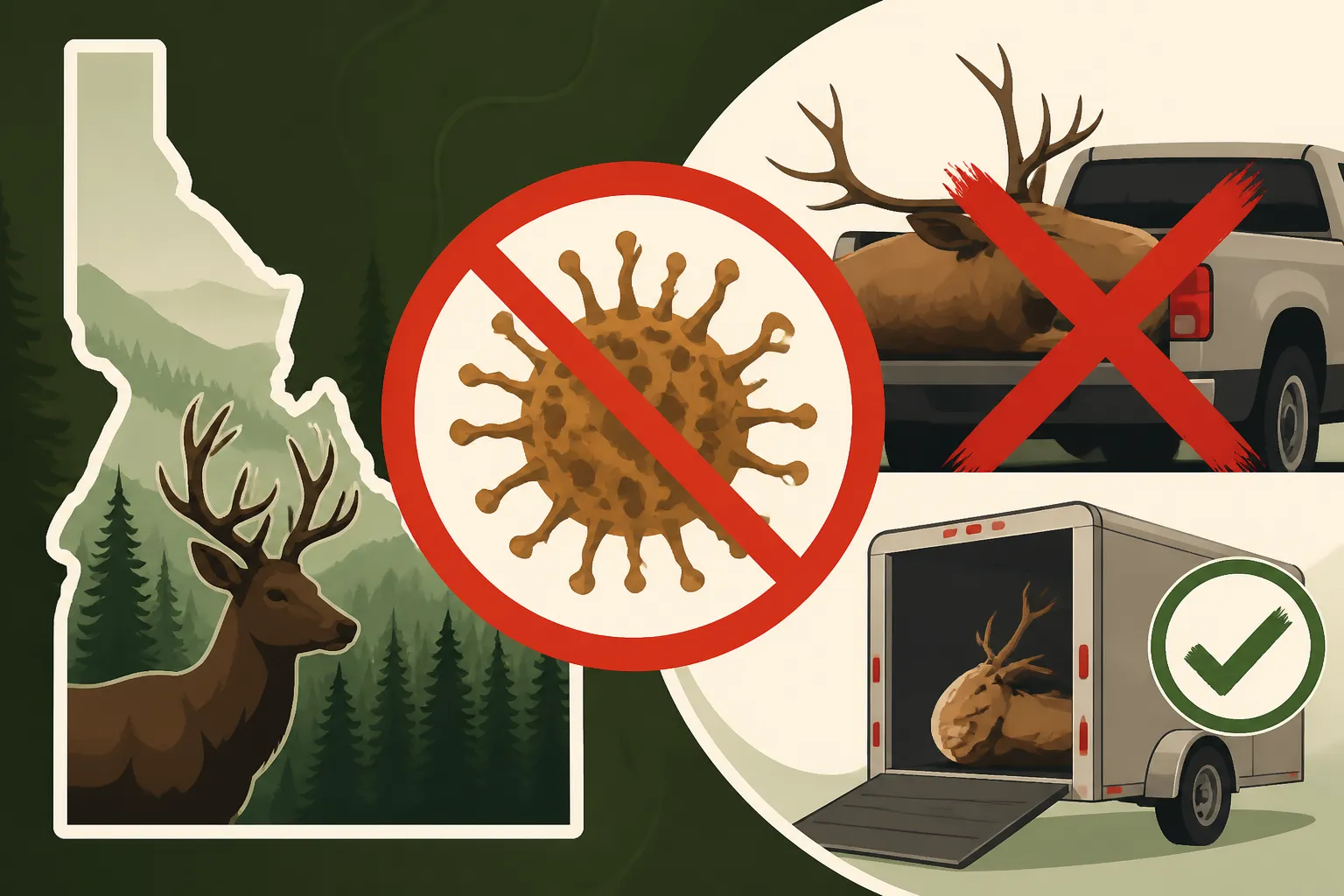
Carcass Transport Rules After a CWD Detection
Navigating the ever-changing landscape of hunting regulations can feel like trying to hit a moving target, and few topics stir up more anxiety and confusion than Chronic Wasting Disease (CWD). The thought of harvesting a magnificent animal, only to be bogged down by complex rules about what you can and can't do with the carcass, is a real headache for many of us. This guide is here to untangle the specific carcass transport rules in Idaho once a CWD detection occurs, helping you understand your responsibilities and how to ensure your hunt stays on the right side of the law while protecting our wild herds.
Understanding Chronic Wasting Disease and Its Threat to Idaho's Wildlife
Before we dive into the nitty-gritty of transport rules, it’s crucial to understand why CWD is such a big deal. This isn't just another hunting regulation tacked on for fun; it's a serious disease that poses a significant threat to our deer, elk, and moose populations. CWD is a neurological disease, meaning it attacks the brain and nervous system of cervids, eventually leading to death. Think of it as a zombie-like illness for deer.
The frustrating thing about CWD is that it’s caused by abnormal proteins called prions, not a virus or bacteria. This makes it incredibly resilient. These prions can persist in the environment – in soil, plants, and even water – for years, making it possible for other animals to pick them up long after an infected animal has passed through. It spreads through direct animal-to-animal contact, but also indirectly through contaminated environments. There’s no vaccine, no treatment, and no cure. Once an animal is infected, it’s a slow, inevitable decline. It can take months, sometimes even years, for symptoms to show, which means an infected animal can be spreading the prions long before anyone knows it’s sick. The long incubation period and environmental persistence are exactly why Idaho is so serious about managing its spread, and why hunters play such a vital role in prevention.
Idaho's Carcass Transport Rules to Prevent CWD Spread
Idaho, like many Western states, is diligent about trying to contain CWD. A key component of this strategy revolves around strict carcass transport rules, especially once a detection occurs within a specific area. The main goal is to prevent the movement of high-risk parts from an area where CWD has been detected (often designated as a CWD Management Zone or CWD positive area) to areas where the disease has not yet been found. This means that if you harvest an animal in a CWD-positive area, your ability to simply load it up and drive it home across state lines or even across Idaho might be severely restricted.
The Idaho Fish and Game department has identified specific parts of a harvested animal that carry the highest risk of transmitting CWD prions. These are the parts that typically contain concentrated levels of the infectious prions. Understanding this list is paramount because these are the components you absolutely cannot transport out of a designated CWD zone.
Here's a breakdown of what Idaho considers high-risk and restricted:
- Brain and spinal column: These are the primary sites where CWD prions accumulate.
- Eyes: Prions can be found in the ocular tissues.
- Lymph nodes: Especially those found in the head and neck region.
- Spleen: Another organ where prions can concentrate.
- Tonsils: Small lymphatic tissues in the throat.
Basically, anything that looks like nervous tissue or lymphatic tissue from the head and spinal column is a no-go for transport out of a CWD management area. This might sound daunting, especially if you're used to hauling an entire animal home, but it's a critical measure. The regulations are specifically designed to reduce the chance of unknowingly introducing CWD to new areas, protecting the health of deer and elk herds across the entire state. You'll find these rules are quite explicit in the annual regulations book, and sites like GoHunt often provide summaries and alerts regarding specific unit statuses. For a broader understanding of general rules, you can also check out Field Dressing and Carcass Transport Rules Explained.
Practical Steps for Hunters After a CWD Detection
So, you've successfully harvested a deer or elk, but you’re in an area where CWD has been detected or is being actively monitored. What do you do? Panic is not the answer! Instead, having a clear plan will save you a lot of grief and ensure you comply with the law.
Field Dressing in a CWD Zone
The first crucial step happens right where your animal falls. If you're in a designated CWD positive area, the best practice is to do as much field dressing as possible at the kill site. This means removing all high-risk materials before you even think about moving the carcass.
This includes:
- Removing the entrails (gut pile).
- Severing the head from the spine.
- Removing the spinal cord (if possible and practical, though usually deboning is the easier route).
The goal is to leave all the high-risk parts right there on the ground, minimizing their movement. Of course, you’ll want to be mindful of proper disposal, burying these materials where scavengers are less likely to get at them, if that's an option. This practice not only adheres to the spirit of the regulations but also lightens your load for the pack out.
Getting Your Animal Tested and Awaiting Results
Idaho has a robust CWD surveillance program. When you harvest an animal, especially in or near a CWD zone, getting it tested is often a requirement or, at the very least, highly encouraged. This is where your role as a responsible hunter truly shines. Knowing Where Idaho CWD Sampling Stations Are is key. These stations are set up specifically to collect samples, usually lymph nodes from the neck, for CWD testing.
Once you drop off your sample, you’re in a waiting game. During this period, you generally cannot move the restricted parts of the animal out of the CWD zone until you receive a "not detected" result.
Here's what you can typically transport while awaiting results:
- Deboned meat: This is the safest and most commonly allowed form of transport. All meat must be completely free of bone, nervous tissue, and lymph nodes.
- Clean skull plate or antlers: If there's no visible brain tissue attached.
- Hide: As long as it's free of head and spinal tissue.
- Teeth: If they are removed from the skull.
If you don't debone, your options are limited to transporting the entire carcass directly to a CWD sampling station or a licensed meat processor within the CWD zone. Planning ahead by checking the current CWD status of your hunting unit (which you can often find through resources like GoHunt or the Idaho Fish and Game website) is paramount to avoid last-minute headaches. The rules around Mandatory Reporting After an Idaho Harvest might also come into play here, as reporting often coincides with CWD surveillance efforts.
Specific Transport and Disposal
Let's say you've deboned your animal at the kill site. You pack out your deboned meat, a clean skull plate, and the hide. Now you can transport these parts anywhere in the state, and usually across state lines (though always check the rules of your destination state!).
However, what if you want a full skull mount? This is where it gets tricky. If you're in a CWD positive area, you generally cannot transport an entire skull with brain tissue out of that zone. Your options usually involve:
- Taking the head to an approved taxidermist or processor within the CWD zone who can properly remove all high-risk tissue and dispose of it. They'll then prepare the skull plate for you.
- Removing the brain and spinal cord yourself, ensuring the skull is cleaned of all nervous tissue, before transporting it. This can be a messy and meticulous job.
The critical takeaway is to avoid moving the parts most likely to carry CWD prions. This is a hassle, yes, but it’s a necessary one to protect the health of our wildlife. Always consult the most current Idaho Fish and Game regulations for the specific unit you are hunting, as CWD zones can change.
Here's a quick reference table for carcass transport after a CWD detection in Idaho:
| Carcass Part | Transport Status Out of CWD Zone (Pre-Test Result) | Transport Status Out of CWD Zone (Post-Negative Test) | Notes |
|---|---|---|---|
| Deboned Meat (bone-free) | Allowed | Allowed | Must be completely free of bone, nervous tissue, and lymph nodes. |
| Clean Skull Plate (antlers attached/detached) | Allowed | Allowed | Must be free of brain/nervous tissue. |
| Antlers (shed or attached to clean skull) | Allowed | Allowed | |
| Hide/Skin (caped) | Allowed | Allowed | Must be free of head and spinal tissue. |
| Teeth | Allowed | Allowed | Removed from the skull. |
| Head (full, with brain/lymph nodes) | Restricted | Restricted | Must remain in CWD zone or go to approved facility in zone for cleaning before transport. |
| Spinal Column | Restricted | Restricted | Must remain in CWD zone or be completely removed from meat. |
| Eyes | Restricted | Restricted | Must remain in CWD zone. |
| Spleen | Restricted | Restricted | Must remain in CWD zone. |
| Whole Carcass (bone-in) | Restricted | Restricted | May only be transported directly to a CWD sampling station or licensed processor within the CWD zone for processing and high-risk part removal. |
This table is a general guide; always confirm with the latest Idaho Fish and Game regulations for any specific unit or season.
Idaho's Ongoing CWD Monitoring and Management Efforts
Idaho is not sitting idly by when it comes to CWD. The state has a dedicated, proactive approach to monitoring and managing this disease. This isn't just about reacting to detections; it's about constant vigilance and strategic planning. Their efforts are multi-faceted, involving extensive surveillance, hunter cooperation, and adaptive management strategies.
One of the cornerstones of Idaho's strategy is its ongoing CWD surveillance program. This involves both voluntary and mandatory testing of harvested deer, elk, and moose. Hunters are critical partners in this effort. When you bring your animal to a check station or CWD sampling site, you're contributing vital data that helps wildlife managers understand the prevalence and distribution of the disease. Every sample collected paints a clearer picture, informing decisions about where to focus future surveillance and what management actions might be necessary. This collective effort, where hunters actively participate in surveillance, is what gives Idaho a fighting chance against CWD. Idaho CWD Sampling Stations Are strategically placed to make this process as convenient as possible for hunters in key areas.
When a CWD detection does occur, it's not taken lightly. A single positive test can trigger a cascade of actions, including the establishment of CWD Management Zones, increased testing requirements, and, of course, the carcass transport rules we've been discussing. These zones are dynamically managed; their boundaries and rules can change based on new information and further testing. This adaptive approach is crucial because CWD is a complex disease, and managing it requires flexibility and responsiveness.
The long-term strategy for CWD in Idaho isn't about eradication – that's a near-impossible goal with a prion disease. Instead, it focuses on containment and minimizing spread, particularly to areas that are currently CWD-free. This involves managing herd densities in affected areas, educating hunters and the public, and investing in research. Hunters remain at the forefront of this battle. By understanding and adhering to carcass transport rules, utilizing sampling stations, and staying informed, we can all play a part in safeguarding Idaho's incredible big game populations for generations to come. Your diligence, even when it feels like an inconvenience, makes a real difference.
Disclaimer
This article is for general informational purposes only and does not constitute professional advice. Laws, prices and regulations vary by location and change over time. Consult a qualified professional for guidance on your specific situation.