Grizzly Identification for Idaho Bear Hunters
For any bear hunter heading into Idaho's vast and wild landscapes, the thought of encountering a grizzly bear is a serious concern. The stakes are incredibly high when you're trying to distinguish between a black bear and a grizzly in the field—not just for your safety, but for the well-being of these protected animals and your legal standing. This guide is here to walk you through the crucial identification markers, behavioral cues, and habitat insights you need to confidently tell the difference and make safe, ethical decisions when you're out hunting black bears in Idaho.
The Critical Importance of Correct Bear Identification in Idaho
Hunting black bears in Idaho is an incredible experience, offering challenges and rewards for those who pursue them. However, it comes with a profound responsibility: ensuring you correctly identify your target. Idaho is home to both black bears and grizzly bears, and while black bear hunting is legal in many areas, grizzly bears are a federally protected species. Mistaking a grizzly for a black bear can lead to severe legal penalties, including hefty fines, loss of hunting privileges, and even jail time, not to mention the immense ethical ramifications of harming a protected animal. Beyond the legal and ethical aspects, proper identification is absolutely paramount for hunter safety. Grizzlies are powerful animals, and understanding their presence and behavior is key to avoiding dangerous encounters.
Imagine being deep in the Selway-Bitterroot Wilderness, perhaps scouting for elk, and you see a bear at a distance. Your heart rate quickens. Is it the black bear you have a tag for, or is it a grizzly? The difference means everything. You need to be equipped to make that call quickly and accurately. Relying on a single characteristic can be a recipe for disaster; instead, you need to consider a suite of features and behaviors to form a solid identification. This isn't just about following rules; it's about respecting the wildlife and ensuring you come home safely from your hunt.
Legal and Ethical Consequences of Misidentification
The laws protecting grizzly bears are very clear and strictly enforced. If you accidentally harvest a grizzly bear, even if you genuinely believed it was a black bear, the consequences are severe. These can range from significant monetary fines that could easily stretch into the tens of thousands of dollars to federal prison sentences. Your hunting license and privileges will undoubtedly be revoked, not just in Idaho but potentially across state lines due to interstate wildlife compacts. This isn't just a slap on the wrist; it's a life-altering event.
Ethically, the impact is even broader. Grizzly populations in the Lower 48 states, including Idaho, have faced immense challenges over the past century. Their recovery is a testament to dedicated conservation efforts, and every individual grizzly bear is critical to the species' long-term survival. As hunters, we are often among the strongest advocates for wildlife conservation. An accidental grizzly harvest undermines these efforts, erodes public trust in hunting, and can fuel anti-hunting sentiments, making it harder for all hunters to enjoy their traditions. We owe it to the animals, the land, and the future of hunting to be absolutely certain of our target.
Hunter Safety in Grizzly Country
Beyond legal and ethical concerns, your personal safety hinges on knowing how to identify and react to grizzly bears. Grizzlies, especially sows with cubs or bears protecting a food source, can be incredibly defensive and dangerous. While black bears are generally more timid and prone to flee, grizzlies are known for their aggression when threatened. Understanding their presence in an area, recognizing their body language, and being prepared for an encounter can mean the difference between a tense but safe experience and a life-threatening one.
Knowing that you are in Where Grizzlies Overlap Idaho Hunting Units should heighten your awareness and change your approach to hunting. This isn't just about carrying bear spray—though that's non-negotiable—it's about how you move through the landscape, how you store your food, and how alert you remain. If you're confident in your identification skills, you can react appropriately, whether that means retreating slowly and making noise, or deploying your bear spray. You might check a resource like GoHunt's mapping tools to see where grizzly populations are most prevalent in a specific unit you're considering, helping you plan your hunt with heightened awareness.
Key Physical Characteristics: Telling Grizzlies from Black Bears
When you're out in Idaho's wild country, trying to identify a bear, it's easy to get flustered. Bears can look different depending on their age, sex, and even the time of year. But there are several consistent physical features that, when considered together, provide a reliable way to distinguish between a grizzly and a black bear. Don't rely on just one characteristic, like color, as both species can vary widely in hue. Instead, look for a combination of these markers.
The Shoulder Hump: A Dead Giveaway
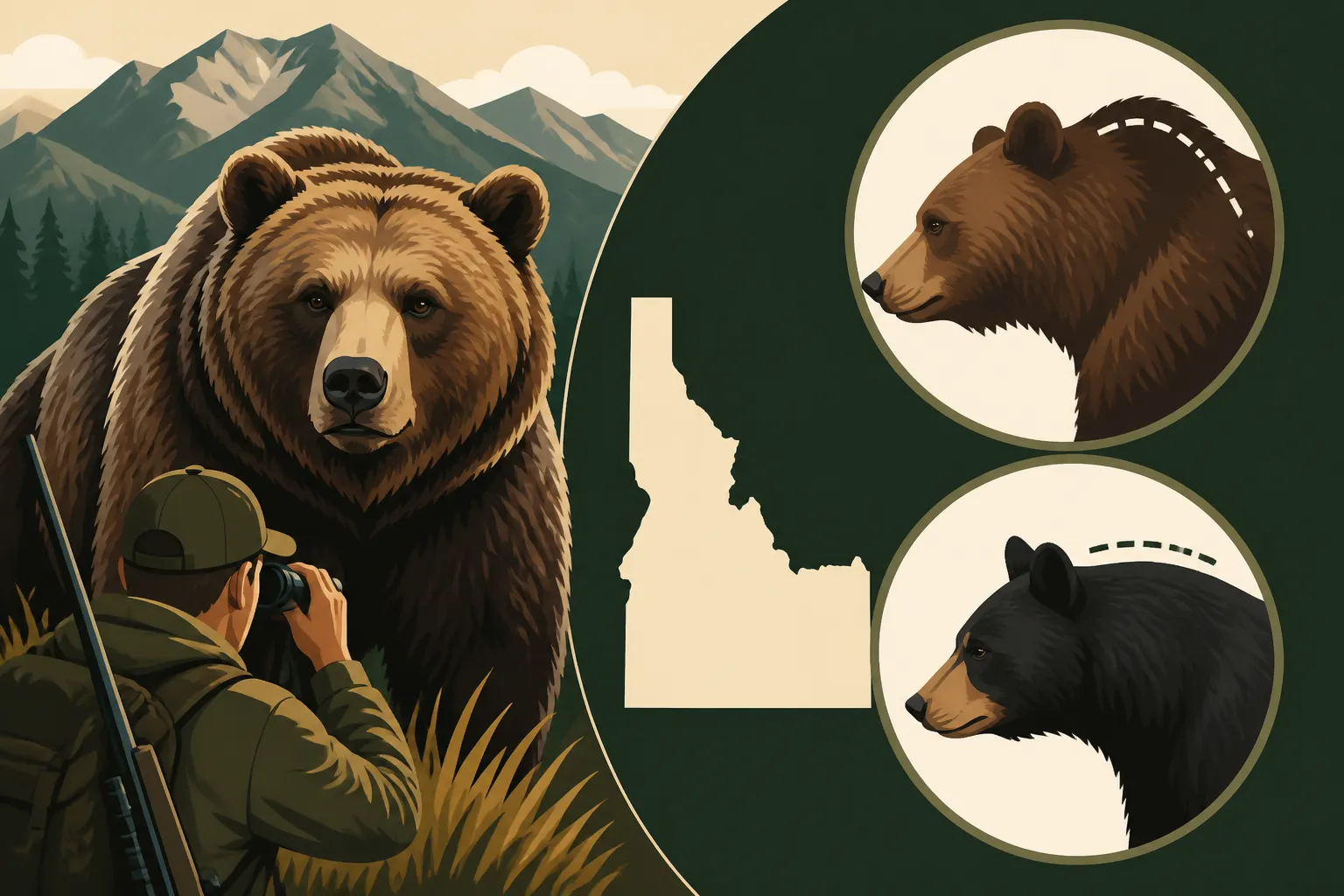
Perhaps the most distinctive and reliable feature of a grizzly bear is the prominent muscular hump between its shoulders. This hump is pure muscle, used for digging and for providing powerful strokes with their front paws. Black bears, on the other hand, lack this pronounced hump. Their back typically forms a relatively straight line from the neck to the rump.
When you see a bear, try to get a side profile, even if it's brief. If you can clearly discern that bulky, almost camel-like hump over the shoulders, you're almost certainly looking at a grizzly. If the bear's back appears flat or gradually sloped without a distinct rise, it's more likely a black bear. This is often the first thing experienced hunters look for, especially from a distance or when vegetation partially obscures the animal. Think of it as nature's heavy-duty digging machine versus a more streamlined, agile climber.
Facial Profile and Ear Shape
Another crucial area to examine is the bear's head and facial features. Grizzlies generally have a broader, dished-in or concave facial profile, particularly noticeable from the eyes to the tip of their nose. Their snout tends to be shorter and more robust. Black bears, conversely, typically have a straighter or convex facial profile, meaning their nose bridge might even appear slightly Roman-nosed or simply flat without that dished appearance. Their snout is often longer and more slender.
The ears are also a good indicator. Grizzly bear ears tend to be smaller, rounder, and set further apart on their head, often appearing almost like small, furry buttons relative to the size of their head. Black bear ears are usually larger, more pointed, and set closer together, standing more prominently erect. This difference in ear size and placement can be quite subtle, but when combined with the facial profile, it paints a clearer picture. Imagine a grizzly as having a blockier, more powerful-looking head, while a black bear's head appears a bit more refined and dog-like.
Claws and Tracks
While you might not always get a clear view of a bear's claws in the field, knowing what to look for can be helpful if the opportunity arises, or if you're examining tracks. Grizzly bears have long, relatively straight, and prominent front claws, typically 2 to 4 inches in length, which are ideal for digging up roots, grubs, and excavating dens. These claws are usually visible even when the bear is walking or standing. Black bears have shorter, more curved claws, usually less than 1.5 inches long, better adapted for climbing trees.
When examining tracks in mud or soft earth, this difference becomes quite apparent. A grizzly track will often show claw marks well ahead of the toe pads, sometimes by an inch or more. A black bear track will show claw marks much closer to the toe pads, or sometimes not at all if the ground is hard. The overall foot size can also be a clue, though not a definitive one; adult grizzly paws tend to be broader and larger than those of comparably sized black bears. Some hunters even use tracking apps or GoHunt's detailed maps to identify areas where different bear species might leave tracks.
Size, Color, and Roaming Habits: Secondary Clues
It's tempting to rely on size and color, but these are often the least reliable indicators. Both grizzly and black bears exhibit a wide range of colors, from blonde to dark brown, cinnamon, and even black. A light-colored black bear can easily be mistaken for a grizzly if color is your only diagnostic. Similarly, a young grizzly can be much smaller than a large, mature black bear. Therefore, use these as secondary clues, never primary.
Grizzlies tend to be, on average, larger and heavier than black bears, but there's considerable overlap. A large male black bear can weigh as much as a medium-sized grizzly. What might be more indicative than absolute size is the proportionality—grizzlies often look more massive and powerfully built overall, especially with that shoulder hump, while black bears can appear more agile and lean.
As for roaming habits, grizzlies in Idaho are generally found in the northern and eastern parts of the state, particularly in forested, mountainous areas of the Panhandle and around the Yellowstone ecosystem. Black bears are much more widespread throughout the state, found in almost all forested habitats. However, there are significant areas of overlap. A useful tool like GoHunt can show you historical grizzly sightings or population areas within specific game management units, which can help inform your awareness when planning your hunt. Always assume grizzlies could be present in suitable habitat.
Here's a quick comparison table to help you keep these key differences straight:
| Feature | Grizzly Bear | Black Bear |
|---|---|---|
| Shoulder Hump | Distinct, muscular hump present | No distinct hump; back is a relatively straight line |
| Facial Profile | Dished or concave profile (eyes to nose) | Straight or convex profile |
| Ears | Smaller, rounder, set wider apart | Larger, more pointed, set closer together |
| Front Claws | Long (2-4 inches), relatively straight | Shorter (under 1.5 inches), more curved |
| Tracks | Claw marks well ahead of toe pads | Claw marks close to or overlie toe pads |
| General Build | More massive, powerful, blocky | More agile, streamlined, leaner |
| Color | Highly variable (blonde, brown, black) | Highly variable (black, brown, cinnamon) |
Behavioral Cues and Habitat Considerations
While physical appearance is critical, understanding bear behavior and the specific habitats they prefer can provide additional layers of identification and, more importantly, help you navigate grizzly country safely. Grizzlies and black bears, while both powerful, often exhibit different tendencies when encountering humans or in how they utilize their environment.
Understanding Aggression and Defensive Behavior
This is perhaps where the most critical difference in safety lies. Grizzlies are renowned for their potential for defensive aggression, especially sows with cubs or bears that perceive a threat to a food source or their personal space. Their first instinct might not always be to flee, but to stand their ground, bluff charge, or even attack. This is why understanding their range and being prepared with Bear Spray Against a Sidearm in Grizzly Country is so vital. A grizzly often displays warning signs: head down, ears back, huffing, or swatting the ground. They are formidable and demand respect.
Black bears, by contrast, are generally more timid and will typically flee from human presence. While any bear can be dangerous if habituated to humans or protecting cubs, black bear defensive attacks are far less common than those from grizzlies. When a black bear feels threatened, it might attempt to climb a tree or make a short bluff charge, but a full-on attack is rare. This isn't to say black bears are harmless, but their default response to humans is usually avoidance. Knowing you're in an area where grizzlies reside changes your entire mindset and level of preparedness.
Scat and Tracks: Reading the Ground
While we touched on claw marks in tracks earlier, looking at the overall size and shape of tracks, as well as bear scat, can offer further clues about which species is present. Grizzly tracks are often broader and more rounded in the heel pad, with the distinct, widely spaced claw marks. Black bear tracks tend to be more elongated and narrower, with the claw marks closer to the toe pads. Observing a fresh track can confirm a bear's presence and, with practice, help you distinguish the species.
Bear scat can also tell a story, primarily about their diet. Grizzly scat often contains a lot of undigested vegetation, roots, and sometimes hair or bone fragments if they've been scavenging or predating. Because of their powerful digging abilities, grizzlies are masters at finding roots and tubers. Black bear scat often reflects a diet higher in berries, nuts, and insects, though both bears are opportunistic omnivores. If you're exploring an area, checking for signs like this, especially using tools that help identify overlapping habitat, is a smart move.
Habitat Overlap and Specific Idaho Units
While black bears are found across nearly all of Idaho's forested regions, grizzly bear populations are more localized to specific recovery zones. These primarily include areas of northern Idaho, particularly the Panhandle and Selkirk Mountains, and eastern Idaho within the Greater Yellowstone Ecosystem, such as parts of the Caribou-Targhee National Forest. Units bordering Montana and Wyoming are particularly likely to have grizzly presence.
It's absolutely essential to be aware of the specific game management unit you're hunting in and its potential for grizzly bears. Resources like the Idaho Fish and Game website and detailed mapping platforms like GoHunt can show you maps of known grizzly range or units with confirmed sightings. Even if a unit isn't traditionally considered "grizzly country," occasional dispersals do occur, so always remain vigilant. This information isn't just for identification; it informs your camping practices, like following Food Storage Rules in Grizzly Country, and overall situational awareness throughout your hunt.
What to Do If You're Unsure or Encounter a Grizzly
The moment of truth arrives when you're in the field and see a bear. What do you do if you're not 100% sure of its identity, or if you positively identify it as a grizzly? Remaining calm and knowing your next steps is crucial for both your safety and the bear's.
Prioritizing Safety Over Certainty
When in doubt, always err on the side of caution. If you see a bear and cannot definitively confirm it's a black bear based on multiple identifying characteristics, assume it's a grizzly. This mindset prioritizes safety and the protection of a federally listed species. It means you will not raise your rifle or nock an arrow. It means you will begin to slowly and calmly back away while talking in a low, monotone voice to alert the bear to your presence without startling it.
If the bear is far off and simply moving through its habitat, consider yourself lucky to have witnessed such an animal. Do not try to get closer for a better look or a photograph. Your primary goal is to avoid an interaction. If you're hunting black bears, this means finding another area to hunt where you can be sure of your target. Your hunt isn't worth the risk or the potential consequences of a mistake.
Handling a Close Encounter Safely
If you find yourself in a close encounter with a grizzly, the advice changes slightly based on the bear's behavior. Generally, you want to make yourself look as large as possible, speak in a firm voice, and slowly back away. Never run; running can trigger a chase response. Have your bear spray readily accessible and know how to use it. If the bear charges, stand your ground and be prepared to deploy the spray when it is within 20-30 feet. Aim for the face.
In the rare and terrifying event of a physical attack, whether to fight back or play dead depends on the nature of the attack. If it's a defensive attack—meaning the bear feels threatened, perhaps by a surprise encounter or if you're near cubs or a carcass—playing dead by lying on your stomach, clasping your hands behind your neck, and protecting your vital organs is often advised. However, if it's a predatory attack (very rare with grizzlies but more common with black bears), fighting back aggressively with any means possible is the recommendation. Again, the most important thing is to avoid the encounter in the first place through vigilance and careful identification.
Reporting Sightings and Incidents
If you have a confirmed grizzly sighting in an area where they are not commonly expected, or if you have any kind of close encounter, it is important to report it to the Idaho Department of Fish and Game. This information helps wildlife managers track bear movements, understand population dynamics, and inform other hunters about potential grizzly presence.
You should also report any instances of a bear showing unusual aggression or habituation to humans. This data is critical for managing bear-human conflicts and ensures that the Idaho Fish and Game can respond appropriately to maintain both public safety and bear welfare. Being a responsible hunter means contributing to the overall knowledge and management of wildlife in our state. Always carry your phone or a satellite communication device to ensure you can reach help if an emergency arises or report an important sighting.
Disclaimer
This article is for general informational purposes only and does not constitute professional advice. Laws, prices and regulations vary by location and change over time. Consult a qualified professional for guidance on your specific situation.