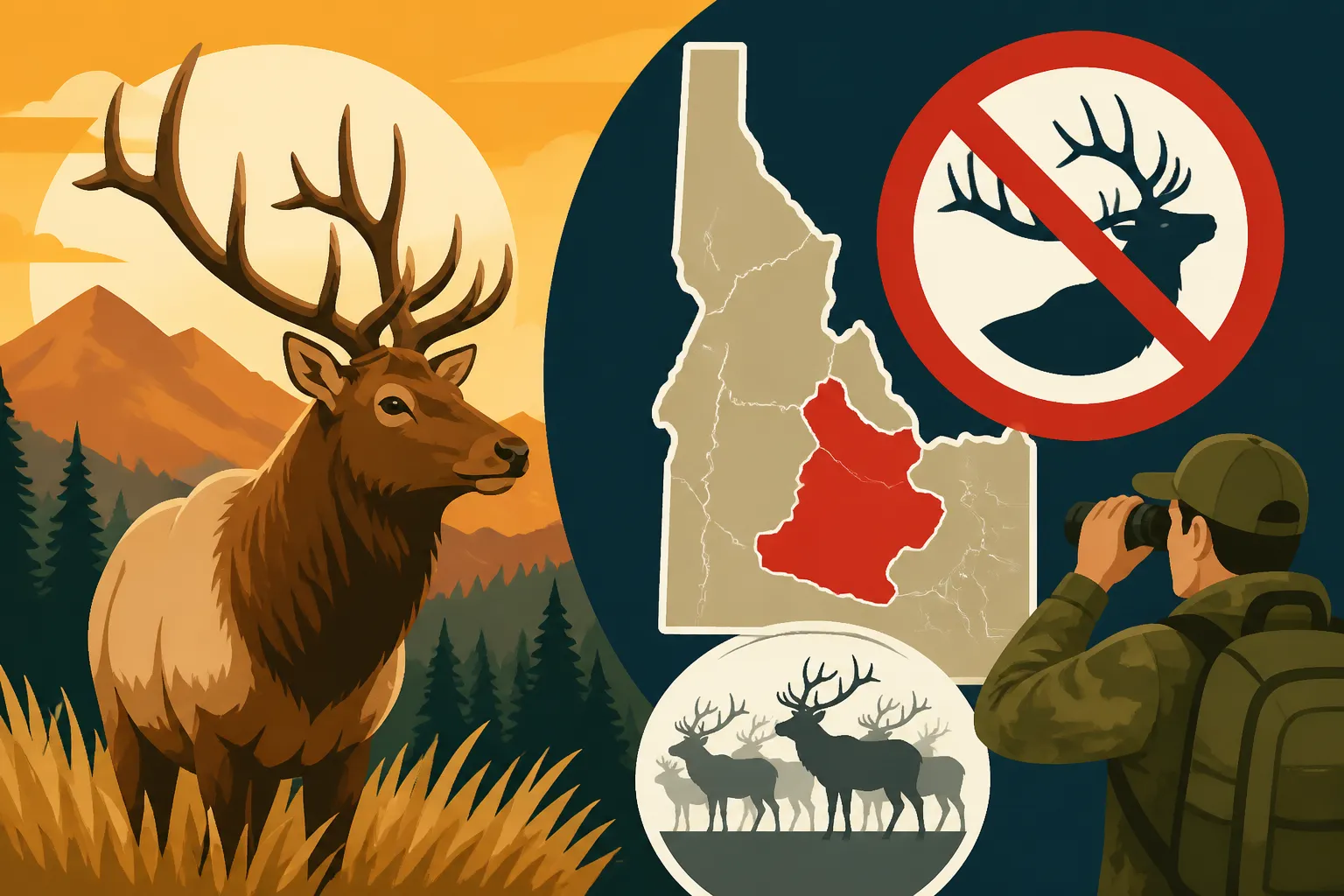
Why Capped Zones Count Against Idaho’s Elk Quota
It's incredibly frustrating when you're trying to figure out the ins and outs of Idaho's elk hunting regulations, especially when complex terms like "capped zones" and "statewide quota" start flying around. You might be left wondering if applying for a special capped zone tag means you're playing in a completely different ballpark, only to hear that it all still comes from the same pie. This guide aims to clear up that confusion, diving deep into why Idaho's capped elk zones are, in fact, integral to the state's larger elk quota, and what that means for every hunter hoping to draw a tag.
Understanding Idaho's Elk Management Philosophy
Idaho Fish and Game (IDFG) manages elk populations with a delicate balance in mind, aiming to provide hunting opportunities while maintaining healthy, sustainable herds across the state. This isn't just about how many animals are out there; it’s about managing herd health, controlling depredation on private lands, and ensuring a quality hunting experience for residents and nonresidents alike. The decisions made regarding tag numbers and season structures are deeply rooted in this overarching philosophy, designed to serve multiple objectives simultaneously.
The Foundation of Elk Population Objectives
At the heart of IDFG's management strategy are detailed population objectives set for each elk management zone. These objectives aren't static; they evolve based on annual aerial surveys, hunter harvest data, and scientific modeling. The goal is often a specific number of elk per square mile or a certain bull-to-cow ratio, tailored to the unique habitat and challenges of that particular area. These targets guide how many tags are made available, influencing everything from general season availability to the more restrictive controlled hunts, including those coveted capped zones. This granular approach ensures that management isn't a one-size-fits-all solution but rather a responsive system adapting to localized herd conditions.
Balancing Hunter Opportunity and Herd Health
It’s a constant tightrope walk for IDFG: how do you maximize hunter opportunity without overharvesting or stressing the elk population? This balance is central to why certain tags are allocated as general season tags, available widely, while others become part of a limited drawing process or are designated for specific capped zones. The department uses tools like The Idaho Hunt Planner Is the Tool to Start With to communicate these complex dynamics. Every tag issued, regardless of whether it’s a general tag or a special capped zone tag, represents a potential harvest. Therefore, each tag must be accounted for within the overall framework of what the elk population can sustain, tying all available tags back to that fundamental statewide quota. If the numbers of a particular unit within a zone are too low, that directly impacts how many tags can be offered, and sometimes, leads to a capped zone designation to control hunter pressure.
The Mechanics of Idaho's Statewide Elk Quota
Idaho doesn't just pull elk tag numbers out of a hat. There's a comprehensive, data-driven system in place to determine how many elk can be harvested each year. This system is designed to prevent overharvest, ensure herd stability, and distribute hunting pressure effectively across the state's diverse landscapes. Understanding this framework is key to grasping why every tag, including those in capped zones, contributes to the larger picture.
Defining the Statewide Harvest Objective
The statewide elk quota isn't a single, fixed number that applies uniformly to every corner of Idaho. Instead, it's an aggregate total derived from specific harvest objectives set for each of Idaho's 28 elk zones. Each zone has its own management plan, considering factors like population size, habitat capacity, calf recruitment rates, and the desired bull-to-cow ratios. These individual zone objectives are then combined to form a statewide picture of the total allowable harvest. This allows for flexibility; some zones might have liberal general seasons, while others, perhaps struggling or recovering, might have very limited controlled or capped opportunities. This distinction is vital, as it highlights that while the overall quota is statewide, its composition is built from hyper-local management goals.
Allocating Tags to Meet Objectives
Once harvest objectives are established, IDFG then allocates hunting tags to meet these goals. This allocation process is where general season tags, controlled hunt tags, and capped zone tags all come into play. For instance, in areas with robust elk populations and good habitat, general season tags might be plentiful, allowing many hunters to participate. However, in more sensitive areas, or those managed for trophy potential, the number of tags is strictly limited and distributed through a drawing or as specific capped tags. These various tag types are not separate accounting buckets but different tools within the same overall management strategy. Every single tag, once successfully drawn or purchased, counts toward that zone's specific harvest objective, which in turn rolls up into the statewide quota. It means that an elk harvested on a general tag in the Panhandle contributes to the same overarching harvest calculation as a bull taken in a highly sought-after capped zone like the Beaverhead.
What Are Capped Elk Zones, Anyway?
The term "capped zone" often sounds like an exclusive club, separate from the bustling general hunting seasons. And in many ways, it is more exclusive. However, this distinction is about how tags are distributed and managed for specific areas, not about separating them from the larger state goals. Capped zones are a critical component of Idaho's nuanced approach to elk management, designed to finely tune hunter pressure and opportunity in particular areas.
Purpose and Designation of Capped Zones
Capped elk zones are specific management units or groups of units where IDFG limits the total number of tags sold. Unlike general tags, which are often sold over-the-counter until a season ends, capped zone tags have a set limit that, once reached, means no more tags are available for that specific zone, regardless of the season dates. This system is primarily put in place for areas needing tighter control over hunter numbers due to sensitive elk populations, specific management goals (like promoting older age-class bulls), or to manage public land pressure more effectively. For example, some units might be designated as a capped zone because they historically experience higher hunting pressure, and the cap helps to spread out hunters and protect bull-to-cow ratios. This structured limitation helps IDFG achieve precise harvest objectives in areas that might otherwise be overwhelmed during general seasons, allowing for more sustainable long-term management. You can often find detailed information about these zones and their specific rules in the current regulations booklet or by using resources like GoHunt to research historical drawing odds.
How Capped Zones Differ from General Tags
The most significant difference between capped zones and general tags lies in their availability and how they are acquired. General tags, while still limited by overall state quotas, are typically easier to obtain, often purchased over-the-counter or online until a cutoff date or specific quota for that type of tag is met. They often align with Idaho Elk Zones and the A Tag or B Tag Choice that offer more flexibility. Capped zone tags, on the other hand, have a hard limit that applies to all hunters, resident and nonresident alike, and they often sell out very quickly, sometimes within minutes of becoming available.
Here's a quick comparison:
| Feature | General Season Tags | Capped Zone Tags |
|---|---|---|
| Availability | Typically more numerous, sold over-the-counter/online | Strictly limited, often sell out quickly |
| Quota Source | Part of overall statewide/zone quota, less restrictive | Part of overall statewide/zone quota, highly restrictive |
| Hunter Pressure | Can be higher, less controlled | Regulated by fixed tag limit, helps spread pressure |
| Management Goal | Broad recreational opportunity, herd control | Specific population objectives, quality experience control |
| Draw System | Some general tags are drawn, but many are OTC | Most often part of a drawing or rapid first-come, first-served sale |
| Example Zones | Many zones have general opportunities | Units like 39, 43, 44, 45, etc. often have capped seasons |
While the acquisition method and limitations vary greatly, it's crucial to remember that both types of tags are ultimately drawn from the same pool of allowable harvest numbers for that specific zone. A capped zone tag is not an "extra" tag that exists outside the state's total elk management plan; it's simply a more controlled subset within that plan, meticulously designed to manage specific areas.
How Capped Zones Intersect with General Tags
This is where much of the confusion often lies for hunters. It's easy to think of capped zones as entirely separate from the broader general elk seasons. However, the truth is they are intimately linked, and understanding this relationship is vital for anyone planning an Idaho elk hunt. The capped zones are not independent entities that operate outside the statewide management plan; rather, they are a specialized tool used within that plan to achieve specific outcomes for particular areas.
Accounting for Tags Within a Zone
Every elk management zone in Idaho has an allocated harvest objective. This objective dictates the total number of elk that can be taken from that zone in a given season, often broken down by bull and cow. Whether a tag is a general tag or a capped zone tag, it ultimately contributes to this zone-specific harvest limit. Imagine a pie representing the total allowable harvest for a particular elk zone. Some slices of that pie might be designated for general season hunters, allowing widespread access. Other, smaller, more precisely cut slices might be for controlled hunts, like early archery seasons or late-season rifle hunts. And then there are the slices for the capped zones.
These capped zone tags are not additions to the pie; they are simply slices of the same pie, albeit with more stringent rules around their distribution and availability. So, when Idaho Sets Aside 1,846 Deer and 2,975 Elk Tags for Nonresidents, that total number includes all forms of elk tags that a nonresident can acquire, including those for capped zones if a nonresident is successful in obtaining one. The Idaho Fish and Game Department meticulously tracks all tags issued to ensure that the combined total—general, controlled, and capped—does not exceed the biological capacity of the elk herds in each zone.
The Resident and Nonresident Quota Impact
Idaho, like many western states, has a dual quota system: one for residents and a separate, more limited one for nonresidents. When we talk about capped zones counting against Idaho's overall elk quota, this applies to both resident and nonresident hunters. The total number of elk tags available in a capped zone is predetermined, and within that number, a certain percentage is often allocated to nonresidents, following the state's overall nonresident tag quotas. This means that if you're a nonresident hunter successful in securing a capped zone tag, that tag comes directly out of the limited nonresident allocation for that specific zone, which in turn, contributes to the overall nonresident statewide elk tag limit.
This can sometimes feel like a double whammy for nonresidents who also deal with A Nonresident Idaho Elk Hunt Starts at $836.75 for their license and tag. It underscores the competitive nature of Idaho elk hunting, especially for those highly desirable capped zones. Resources like GoHunt can be incredibly helpful for nonresidents to research these quotas and understand their chances. They provide data and insights into how many tags are available to nonresidents in specific capped zones, helping hunters make informed decisions about where to apply their efforts and money.
Impact on Hunter Opportunity and Tag Availability
Understanding that capped zones contribute to the overall elk quota isn't just an academic exercise; it has very real consequences for hunter opportunity and the availability of tags. This integrated approach means that every tag decision, whether it's for a general season or a limited capped zone, has a ripple effect across the entire system.
The Scarcity of Capped Zone Tags
Because capped zones are designed to limit hunter numbers in specific, often high-demand or sensitive areas, the tags for these zones are inherently scarce. This scarcity is a direct consequence of their role within the broader elk management plan—they exist precisely to cap the number of hunters. When these tags are made available, especially for nonresidents, they are often snapped up incredibly quickly. For instance, if a specific capped zone has an allocation of only 50 tags for a given season, and that number includes both resident and nonresident portions, it means competition will be fierce.
This limited availability means that many hunters who wish to hunt these zones might be left empty-handed. It's a trade-off: tighter management and potentially higher quality hunting experiences for those who draw, versus broader access for the general hunting public. This dynamic also means that if you're set on hunting a capped zone, you need to be incredibly diligent about application deadlines and on-sale dates. This applies to initial applications in December for nonresidents, and sometimes Idaho's Second Controlled Hunt Drawing Works in early August for leftover tags, though these are often even scarcer.
How Capped Zones Affect General Tag Pressure
One might think that by drawing hunters into capped zones, general season pressure would decrease. While there's some truth to that, the effect isn't always as pronounced as one might hope. The fact that capped zone tags count against the overall quota means that fewer total tags might be available for general seasons in zones that also contain capped areas. More importantly, the high demand for capped zones often creates a "fallback" effect. Hunters who fail to draw a coveted capped zone tag often revert to purchasing a general season tag.
This influx of unsuccessful capped zone applicants into the general pool can actually increase pressure in general units, especially those that border desirable capped areas. Hunters, having invested time and money in the draw, are still determined to hunt, and the general seasons offer that opportunity. This dynamic means that Idaho Elk Herd Distribution by Zone and Reading an Elk Zone Boundary on a Map become crucial tools for hunters. Those looking for less pressure might need to venture further into units with lower public land access or areas that are geographically more challenging. It highlights that the entire system is interconnected; a decision made in one part of the state's management can easily impact hunting experiences in another.
Strategies for Navigating the Capped Zone System
Facing a system with capped zones and statewide quotas can feel daunting, especially for those new to hunting Idaho or for nonresidents. However, with the right approach and a little strategic planning, you can significantly improve your chances and make the most of the opportunities available. It's all about understanding the rules, doing your homework, and being prepared.
Researching Capped Zone Opportunities
The first and most crucial step is thorough research. Don't just pick a zone based on a friend's recommendation or a single picture you saw online. Dive deep into the Idaho Fish and Game regulations for the current year. Pay close attention to the specific unit descriptions, season dates, and weapon restrictions for each capped zone. You'll want to check historical harvest statistics, public land percentages, and drawing odds. Websites like GoHunt offer powerful tools and data analytics that can help you Checking Idaho Drawing Odds Before You Apply, compare zones, and identify trends in tag availability.
For instance, some capped zones might offer better opportunities for bowhunters, aligning with A Tags Favor Archery and Muzzleloader Hunters, while others might be more conducive to rifle hunting during B Tags Favor the Centerfire Rifle Crowd. Consider your preferred hunting style, physical capabilities, and the type of experience you're seeking. Look beyond just bull tags; sometimes, cow elk controlled hunts in capped zones offer excellent meat-hunting opportunities with better draw odds. Remember, the earlier you start your research, the better, as it allows you to adapt to any changes in regulations or quotas year to year.
Application Timing and Backup Plans
Given that capped zone tags are highly limited and often sell out rapidly, timing is everything. For controlled hunts that include capped zones, ensure you mark your calendar for the application opening and closing dates. Missing a deadline can mean missing out on an entire season. For general capped zone tags that are sold on a first-come, first-served basis, be ready at your computer or phone the moment they become available. These can literally sell out in minutes, especially for desirable units.
However, it's also wise to have a robust backup plan. Because drawing a capped zone tag is never guaranteed, especially for nonresidents, always consider which general season zones you'd be happy to hunt if your primary capped zone application is unsuccessful. This means understanding What an Idaho B Tag Buys You in general units or exploring other zones that offer good over-the-counter opportunities. Having a solid Plan B ensures you still get to hunt even if your dream capped zone doesn't pan out. Remember, hunting is about the experience, and Idaho has incredible opportunities even outside the most competitive units.
Utilizing Idaho Fish and Game Resources
IDFG provides a wealth of information to help hunters navigate the complex tag system. Their website is full of resources, from detailed regulation booklets to harvest reports and maps. The Idaho Hunt Planner Is the Tool to Start With is an invaluable interactive map and data portal that allows you to research units, check public land percentages, and review harvest statistics. This tool is constantly updated and offers the most accurate information straight from the source.
Beyond the online resources, don't hesitate to contact the IDFG regional offices. The biologists and staff there are incredibly knowledgeable and can often provide insights that aren't readily available online, perhaps about specific herd conditions or unique access challenges in certain units. Building this relationship and utilizing official resources is critical. Pair this with reliable third-party tools like GoHunt for an even more comprehensive scouting and planning approach. The more informed you are, the better your chances of a successful and enjoyable hunting season in Idaho.
Disclaimer
Please remember that hunting regulations, season dates, and tag allocations are subject to change. Always consult the most current Idaho Fish and Game regulations for the exact, up-to-date rules before planning or embarking on any hunting trip. This guide is for informational purposes only and should not be considered a substitute for official state publications.