Maximum Party Size in an Idaho Controlled Hunt
It's incredibly frustrating when you and your hunting buddy are dreaming of that shared backcountry experience, only to dive into the Idaho regulations and realize the controlled hunt application process feels like a labyrinth designed to keep you guessing. Trying to figure out how to apply together, what the limits are, and if it even makes sense to pool your chances can be a real headache. This guide is here to untangle that knot, specifically breaking down the maximum party size for Idaho controlled hunts and giving you the realistic lowdown on how to navigate it all with your hunting partners.
Understanding Idaho's Controlled Hunt System
Before we talk about hunting buddies, let's set the stage for controlled hunts in Idaho. These aren't your general season, over-the-counter tags. Controlled hunts are designed to manage specific animal populations, distribute hunting pressure, and offer opportunities for trophy-quality animals or species with very limited numbers. It means there's a finite number of tags, and they're allocated through a drawing.
Why Controlled Hunts Exist in Idaho
Idaho Fish and Game uses controlled hunts as a critical tool for wildlife management. Imagine a particular elk herd that's thriving in one unit, while another nearby is struggling. Controlled hunts allow the state to issue more tags in the healthy unit and fewer, or none, in the struggling one. This precision management helps maintain healthy populations, provides quality hunting experiences, and ensures that certain species, like moose or bighorn sheep, aren't over-harvested. It's all about balance, and it's why these tags are so coveted and often hard to draw. Many of the premium hunts for species like moose, sheep, goat, and even specific high-demand deer and elk hunts fall into this category. If you're wondering Which Idaho Species Require a Controlled Hunt Tag, the answer often points back to management needs.
Idaho's Unique Drawing Process
Now, here's where Idaho stands apart from some other Western states: there are no preference points. Seriously, none. This means every applicant, whether it's their first time applying or their twentieth, theoretically has the same chance in the drawing each year. This can be both a blessing and a curse. For new hunters, it's exciting because you're not years behind the curve. For seasoned hunters who've been trying for decades, it can feel unfair when a rookie draws that dream tag on their first try. The point system in other states can build anticipation, but Idaho keeps it simple and truly random. This means understanding Idaho Has No Preference Points, and What That Changes is crucial for setting your expectations.
Species Often Managed Through Controlled Hunts
When you delve into Idaho's controlled hunt offerings, you'll see a range of species. Elk and deer are the most common, with specific units or weapon types (like muzzleloader-only or archery-only hunts in certain areas) falling under the controlled hunt umbrella. Then you have the true "once-in-a-lifetime" species like moose, bighorn sheep, and mountain goat, which are almost exclusively offered through controlled draws and have incredibly low odds. Pronghorn are another species that require controlled hunt tags across the state, making every antelope hunt a special draw. Even specific bear hunts or fall turkey seasons can be part of the controlled hunt system, depending on the unit and local population dynamics. For anyone dreaming of a Shiras moose, you'll quickly learn that Idaho Moose Is a Controlled Hunt You Wait Years For, highlighting just how competitive these draws can be.
The Mechanics of Party Applications
So, you've decided you want to hunt with a friend or family member in a controlled hunt. That's a fantastic goal! Hunting together, sharing the experience, the highs, and the lows – it's what makes many of these trips truly memorable. Idaho does allow party applications, but it's important to understand the specifics to ensure your application is valid and to manage your expectations regarding drawing odds.
Defining a Party Application in Idaho
When Idaho Fish and Game talks about a "party application," they mean a single application submitted by multiple eligible hunters for the exact same controlled hunt. This isn't just two separate applications that happen to be for the same unit. Instead, it's a linked application where the success or failure of one applicant is tied directly to the other. If you apply as a party, you're essentially telling Idaho Fish and Game, "We either both get tags for this specific hunt, or neither of us do." There's no middle ground where one person draws and the other doesn't when applying as a party.
The Maximum Party Size in Idaho
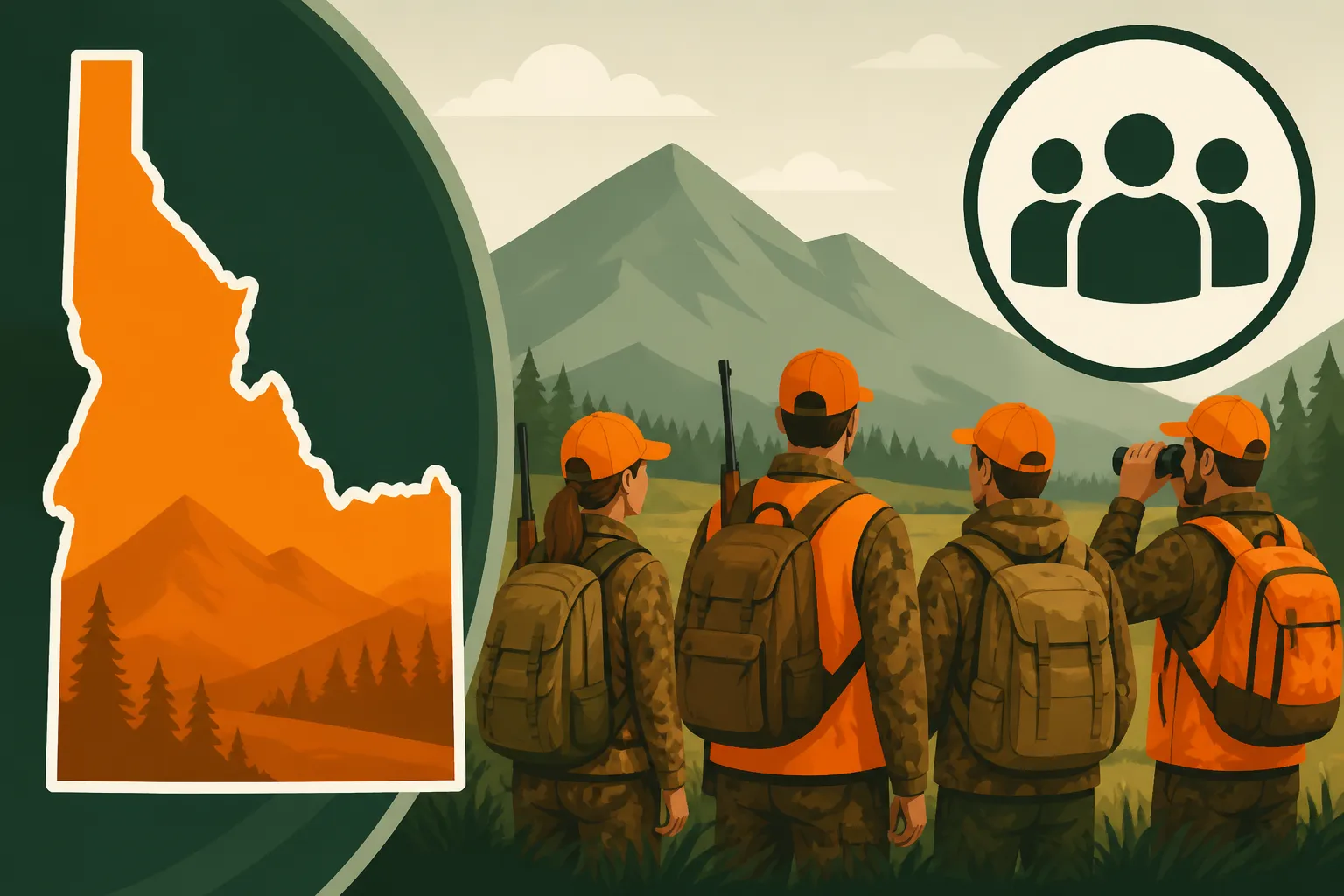
Here's the critical detail you've been looking for: the maximum party size for most big game controlled hunts in Idaho is two hunters. That's right, typically, you and one other person can apply together. This rule is consistent across most deer, elk, bear, and pronghorn controlled hunts. For those dream hunts like moose, bighorn sheep, and mountain goat, the limit is also generally two.
While this might feel restrictive if you have a larger group of friends or family eager to hunt together, it's a deliberate design. Limiting party size to two helps ensure that large groups don't disproportionately impact the drawing odds for individual applicants, and it makes the tag allocation process more manageable for the state. Imagine if a party of ten could apply for a hunt with only 20 tags; their success would effectively reduce the available individual tags by ten, creating an even tougher draw for everyone else. By capping it at two, Idaho strikes a balance between allowing shared experiences and maintaining fairness for all applicants.
How a Party Application Operates
The process for a party application is fairly straightforward, but precision is key. Both individuals must select the identical controlled hunt choice, including the same unit, season dates, and weapon type. If even one detail differs, the system will flag it as an invalid party application, or worse, process them as individual applications, defeating the purpose.
Here's how it generally works:
- Mutual Agreement: You and your partner decide on the exact hunt code you both want to apply for.
- License and Fees: Both hunters must have purchased their valid Idaho hunting license and any necessary species-specific validations (e.g., elk tag validation) before applying for the controlled hunt. This is a common point of confusion, and it's essential to remember Why Idaho Charges the License Before the Draw.
- Application Submission: One hunter initiates the party application through the Idaho Fish and Game licensing system (often via GoOutdoorsIdaho.com or an authorized vendor). They will select the "party application" option and then enter their partner's customer ID number. The system then links their applications.
- Payment: Each hunter is responsible for their own application fee, which is typically charged at the time of application.
- The Draw: When the drawing occurs, the system looks for two available tags for that specific hunt. If two tags are available, the party is drawn. If only one tag is available, or zero, the party application is bypassed, and neither hunter receives a tag. This is a critical point that significantly impacts your odds.
It's vital that both hunters applying as a party understand these rules. There's no "almost drew" for a party. You either both succeed or you both fail.
Strategic Considerations for Party Hunts
Deciding whether to apply as a party or individually for an Idaho controlled hunt involves a bit of strategy. There are definite advantages to hunting with a partner, but there are also statistical realities you need to weigh, especially for highly sought-after tags.
Advantages of Applying as a Party
The most obvious and compelling advantage of applying as a party is the guarantee of hunting together if you draw. For many, the shared experience is paramount. Imagine finally drawing that coveted elk tag after years of applying. Having your best hunting buddy right there with you, sharing the scouting, the camp life, the hard work of a pack-out, and the story-telling around the fire, amplifies the entire experience.
Beyond the camaraderie, there are practical benefits. Shared logistics can lighten the load. You can split gas costs, share camp gear, and tackle the immense effort of field dressing and packing out a big game animal as a team. Two sets of eyes and ears are always better than one when you're glassing vast country or still-hunting through timber. For safety in the backcountry, especially in Idaho's rugged terrain, having a partner is invaluable. It’s hard to put a price on knowing someone has your back miles from the nearest road.
Disadvantages and Reduced Drawing Odds
Now for the dose of reality. While applying as a party guarantees you hunt together if drawn, it almost always reduces your statistical odds of drawing a tag compared to applying individually. This isn't Idaho Fish and Game trying to trick you; it's simple math.
Consider a controlled hunt with 100 available tags.
- If you apply individually, the system needs to find one available tag for you.
- If you apply as a party of two, the system needs to find two adjacent or simultaneous available tags for your party.
If there are only 5 tags left in the draw, and you're a party of two, you cannot be drawn because there aren't two tags available for your party. An individual applicant, however, could still draw one of those remaining 5 tags. This means party applications are skipped over if there aren't enough tags left to accommodate both hunters.
Let's illustrate this with a simplified table:
| Factor | Individual Application | Party Application (2 Hunters) |
|---|---|---|
| Max Hunters | 1 | 2 |
| Tags Required | 1 | 2 |
| Draw Odds (Conceptual) | Higher (only 1 tag needed) | Lower (2 tags simultaneously needed) |
| Shared Experience | Plan meeting after draw | Guaranteed together if drawn |
| Application Process | Simpler, single entry | Coordinated entry, identical |
This is a significant drawback for highly sought-after hunts with limited tags. The fewer tags available, the more pronounced this reduction in odds becomes. It's a trade-off: guaranteed companionship vs. a statistically better chance for someone to draw.
When a Party Hunt Makes Sense
Given the reduced odds, when does it make sense to apply as a party?
- High-Tag Units: If you're targeting a controlled hunt with a relatively high number of tags (e.g., hundreds of tags), the impact on your individual odds might be less noticeable, and the benefits of hunting with a partner could outweigh the slight reduction.
- Less Competitive Hunts: Some controlled hunts, perhaps for certain bear seasons, late-season deer hunts in specific units, or hunts with less desirable dates, might have higher drawing odds. In these scenarios, applying as a party is a lower-risk proposition.
- The Experience is Paramount: If the primary goal is truly the shared experience, and drawing a tag together is more important than either of you drawing one individually, then a party application aligns with your priorities.
- "Any Weapon" or General Seasons within a Controlled Hunt: Sometimes, controlled hunts cover periods within a general season, offering specific advantages (e.g., a specific unit's archery season extended). These might have more tags available.
Using Tools like GoHunt for Research
This is where planning and research become your best friends. Tools like GoHunt can be incredibly valuable here. You can use their Insider platform to analyze historical drawing odds for specific hunt codes. Many such platforms allow you to filter results for individual vs. party applications, giving you a realistic picture of your chances. GoHunt's data helps visualize how applying as a party might affect your success rate in different units and for various species.
Before you commit to a party application, delve into the data. Look at the number of tags available for your chosen hunt and the number of applicants. If the draw odds are already extremely low for individuals, they'll be even lower for a party. However, if the odds are respectable, or there's a significant number of tags, then applying with your buddy becomes a much more viable option. Don't forget to research Idaho controlled hunt draw odds thoroughly for any hunt you're considering.
Navigating Common Pitfalls and Rules
Applying for controlled hunts can feel like walking a tightrope, and party applications add another layer of complexity. It's easy to make a mistake that could cost you and your partner a shot at a coveted tag. Being meticulous and understanding the rules is your best defense.
Ensuring Identical Applications
This cannot be stressed enough: every single detail of a party application must be identical. We're talking hunt code, species, weapon type (e.g., archery, muzzleloader, any weapon), and season dates. If Hunter A applies for Unit X, Archery, Sept 1-30, and Hunter B accidentally selects Unit X, Archery, Sept 15-Oct 15, your party application is toast. The system will likely split your applications or reject the party link entirely.
- Double-Check Everything: Before clicking "submit," both hunters should review the application details on the screen. Read the hunt code aloud to each other. Verify the dates. Confirm the weapon choice. This small step can save a huge amount of heartache later.
- Coordinate in Advance: Don't wait until the last minute to decide on your hunt choices. Sit down together, consult the Idaho Fish and Game regulations book, and use tools like GoHunt or the official The Idaho Hunt Planner Is the Tool to Start With to research specific units and hunts.
What Happens If You Don't Draw
The stark reality of controlled hunts is that most applicants don't draw. And if you apply as a party and aren't successful, neither hunter gets a tag. There's no consolation prize, no partial draw where one of you gets lucky. This is the biggest hurdle for party applications on highly sought-after hunts. The application fees are generally non-refundable, so you're out that money whether you draw or not.
- Have a Backup Plan: It's always wise to have a Plan B. If your controlled hunt party application doesn't pan out, are there general season opportunities you can fall back on? Or perhaps different units where over-the-counter tags are available? This thinking ahead can turn a disappointment into a different kind of adventure.
- Consider the Second Drawing: Idaho does have a second controlled hunt drawing in early August for tags that weren't claimed or allocated in the first draw. While the options might be limited, it's worth understanding How Idaho's Second Controlled Hunt Drawing Works as a potential second chance, though party applications can still be submitted for these if tags are available.
Splitting Up for Better Odds
Sometimes, if drawing a tag (any tag!) is the absolute priority, you might consider applying individually rather than as a party. For example, if you and your buddy both want to hunt elk in Idaho, but one particular unit has very few tags and a low party draw rate, you could each apply individually for different hunt codes or even different units. This doesn't guarantee a draw for either of you, but it gives each individual application a theoretically higher chance of success compared to a linked party application where two tags must be found simultaneously.
- Discuss Expectations: This strategy requires an honest conversation with your hunting partner. Are you both okay with the possibility that one might draw and the other might not? If so, how will that impact your hunting plans? Will the one who drew still hunt, or will you forgo the tag to maintain the shared experience in a different year? These are tough questions but necessary for a smooth partnership.
Understanding Different Hunt Categories
While the two-hunter limit is standard for most big game controlled hunts, it's always prudent to double-check the current Idaho Fish and Game regulations for any specific exceptions. Regulations can sometimes change, or there might be niche hunts that operate under slightly different rules, although this is rare for big game party limits. Always consult the official Idaho Fish and Game website or the printed regulations booklet for the most up-to-date and authoritative information. The Idaho Controlled Hunt Calendar, April Through August is an excellent resource for keeping track of application deadlines and draw results for various categories of hunts.
Finally, remember that the total cost of any nonresident hunt in Idaho involves more than just the tag. For example, a nonresident looking to hunt elk should understand that A Nonresident Idaho Elk Hunt Starts at $836.75, covering the license and tag, but this doesn't factor in travel, gear, or guided services. So, planning your finances, whether solo or with a partner, is just as crucial as navigating the draw process itself. Always consider the Total Cost of a Nonresident Idaho Elk Hunt when making your choices.
Disclaimer
Please remember that hunting regulations, seasons, and application processes can change. It is every hunter's responsibility to check the most current Idaho Fish and Game regulations and proclamations before planning any hunt or submitting any application. This article is intended for informational purposes only and should not be considered legal advice or a substitute for official state regulations.