Idaho Counts Rocky Mountain and California Bighorns Separately
Hunting bighorn sheep in Idaho is a dream for many, but it's also one of the most challenging and sought-after experiences in the West. The landscape is unforgiving, the sheep are elusive, and the tags are incredibly scarce. What many hunters might not realize, though, is that Idaho takes its bighorn management a step further than simply "sheep." The Gem State meticulously distinguishes between its two distinct subspecies of bighorn sheep—the majestic Rocky Mountain bighorn and the rugged California bighorn—and understanding this difference is absolutely critical if you ever hope to chase one of these incredible animals. This guide will walk you through why Idaho separates these magnificent creatures, where they roam, what it means for your hunting aspirations, and how you can navigate the complex system to potentially draw one of these coveted tags.
Understanding Idaho's Unique Bighorn Sheep Management
Idaho's commitment to wildlife conservation is reflected in its precise management of bighorn sheep. It's not just a matter of two different populations; these are genetically distinct subspecies, each adapted to unique environments within the state. This biological reality directly impacts how tags are allocated and how hunters approach these hunts.
Why the Separate Designations Matter
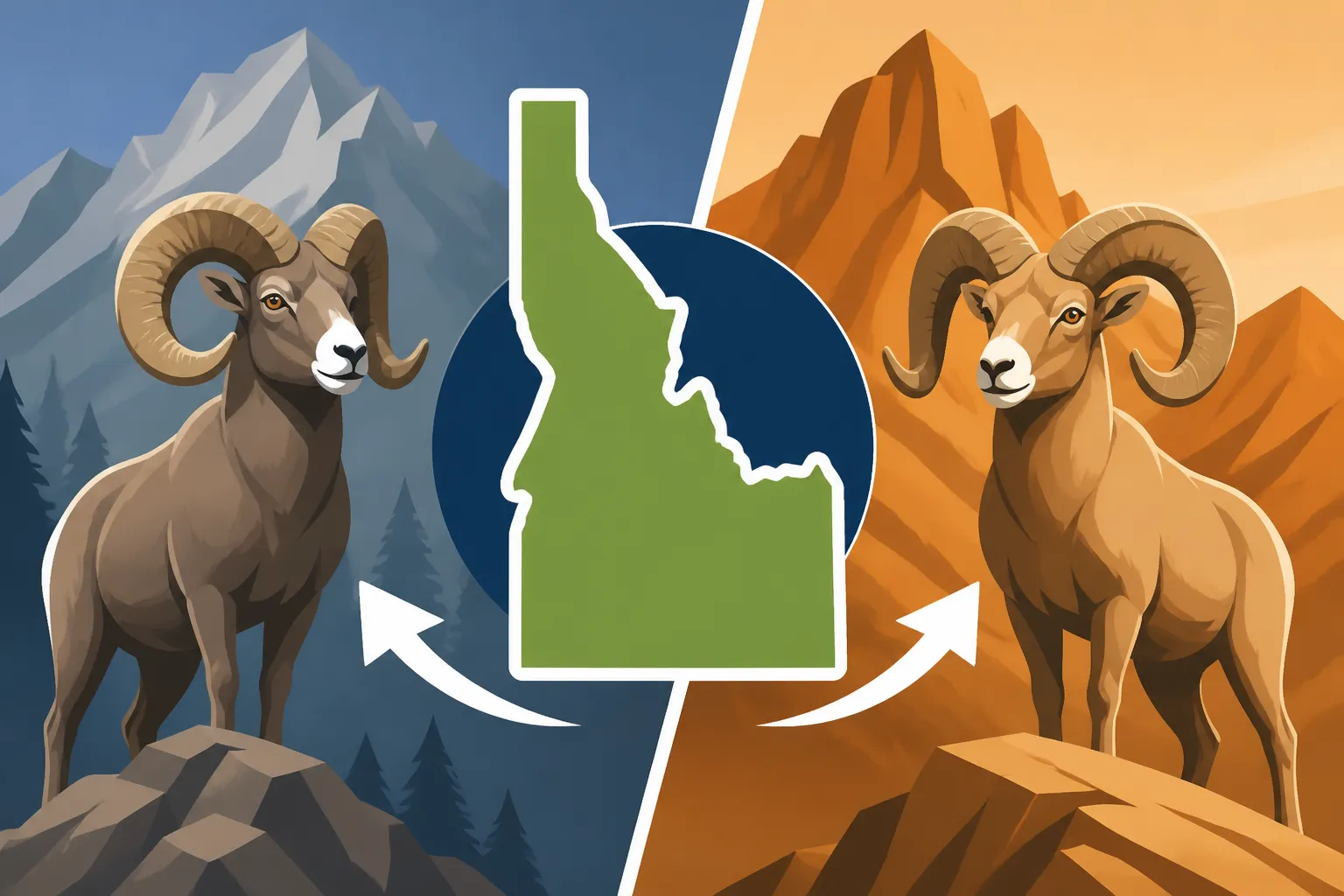
Biologically speaking, Rocky Mountain bighorns (Ovis canadensis canadensis) and California bighorns (Ovis canadensis californiana) are indeed different. They've evolved in isolation over millennia, leading to subtle differences in their physical characteristics, preferred habitats, and even their behavior. For a state like Idaho, which prides itself on scientific wildlife management, recognizing these distinctions is paramount. It allows the Idaho Department of Fish and Game (IDFG) to tailor conservation efforts and hunting regulations to the specific needs of each subspecies. If one population is struggling, they can implement measures without necessarily impacting the other.
From a hunter's perspective, this separation means that tags for one subspecies are entirely distinct from tags for the other. You apply for a Rocky Mountain bighorn tag in one unit or zone, and a California bighorn tag in another. This also plays a huge role in the "once-in-a-lifetime" rule, which we'll delve into later. Essentially, Idaho is saying, "These are two different trophies, two different experiences, and we manage them as such." It’s a level of detail that speaks to the deep respect for these animals and the quality of the hunting experience.
Geographic Distribution of Each Subspecies
The geographical divide between these two bighorn populations is fascinating and stark. Rocky Mountain bighorns typically inhabit the higher, rugged mountain ranges of central and eastern Idaho. Think of the towering peaks and deep canyons of the Frank Church River of No Return Wilderness or the challenging terrain of the Salmon River Breaks. These are the classic, high-alpine bighorns often depicted in dramatic photography, thriving in steep, timbered, and rocky environments where they can escape predators and find suitable forage.
In contrast, California bighorns are primarily found in the more arid, high-desert canyonlands of southwestern Idaho. The most prominent example is the vast, rugged Owyhee Breaks, a landscape characterized by deep, winding canyons, rimrock, and sagebrush-steppe. While still incredibly steep and difficult to navigate, their habitat often lacks the dense timber and consistent snowfall of the Rocky Mountain bighorn strongholds. Their distribution in Idaho is far more limited, making their tags even rarer in some respects. Understanding these geographic differences is the first step in even dreaming about a specific bighorn hunt.
The Rarity and Value of Bighorn Sheep Tags
Let's not sugarcoat it: bighorn sheep tags in Idaho are among the rarest and most coveted big game tags in North America. We're talking about extremely limited opportunities, with drawing odds that can make winning the lottery seem plausible. This rarity is a direct result of several factors: the naturally limited populations of bighorn sheep, the specific and sensitive habitats they require, and the IDFG's conservative management approach, which prioritizes herd health and sustainability over high harvest numbers.
For many hunters, drawing a bighorn tag is the culmination of a lifetime of dedication, patience, and often, significant financial investment in application fees over many years. The value placed on these tags isn't just monetary; it's steeped in tradition, conservation, and the sheer challenge and prestige associated with pursuing one of the continent's most iconic wild animals. Every tag represents an extraordinary opportunity to experience an ancient landscape and test one's skills against an incredibly wary and resilient animal. It’s a testament to the fact that some experiences in hunting simply cannot be bought; they must be earned through persistence.
Rocky Mountain Bighorn Sheep: The Mountain Monarchs
When most people picture a bighorn sheep, they're often imagining the Rocky Mountain subspecies. These magnificent animals embody the spirit of the high country, thriving in some of Idaho's most breathtaking and challenging terrain.
Physical Characteristics and Habitat
Rocky Mountain bighorns are robust, muscular animals, typically larger than their California counterparts. Adult rams can weigh upwards of 200-300 pounds, with impressive, heavily-ridged horns that curl back and around their ears, sometimes forming a full curl or more. Their coats are generally a grayish-brown, providing excellent camouflage against the rocky slopes and sparse vegetation of their environment. They have a distinctive white rump patch, which is often the first thing you spot as they bound away up a mountain.
Their habitat preference is classic alpine and subalpine terrain: steep, rocky slopes, cliffs, and open grasslands interspersed with timber. They need quick access to escape terrain to evade predators like mountain lions and wolves. You'll often find them grazing on high mountain meadows in summer, retreating to lower, yet still steep and broken, country during the winter months where snow is less deep but still offers escape routes. The ability to navigate extreme vertical terrain is their superpower, allowing them to utilize areas no other large game animal can truly call home.
Prime Rocky Mountain Bighorn Habitats in Idaho
Idaho boasts some legendary Rocky Mountain bighorn country. The rugged canyons and high peaks surrounding the Salmon River are perhaps the most famous, particularly areas within the River of No Return Wilderness. Units around the Clearwater National Forest and parts of the Middle Fork of the Salmon River also hold significant populations. These areas are characterized by vast, untamed wilderness, where the only access is often by foot, horseback, or jet boat on the major rivers.
Consider units like the Chamberlain Basin or portions of the Hells Canyon National Recreation Area where the Salmon River cuts deep gorges. These regions offer the perfect combination of rocky cliffs, open benches, and nutritious forage. Hunting here means embracing true wilderness, where you might not see another human for days. It requires extreme physical conditioning, top-tier navigation skills, and a deep understanding of sheep behavior. Exploring these remote areas offers an unparalleled backcountry experience, but it’s not for the faint of heart. For a deeper dive, check out our guide on how to read an elk zone boundary on a map, which can also apply to understanding sheep unit boundaries in these complex areas.
Hunting Strategies for Rocky Mountain Bighorns
Hunting Rocky Mountain bighorns is a game of extreme glassing and relentless stalking. Given their preference for steep, open country, your optics are your most important tool. A high-quality spotting scope with a sturdy tripod and powerful binoculars are non-negotiable. Hunters will often spend days, sometimes weeks, methodically glassing vast expanses of mountain, searching for that tell-tale white rump or the distinctive curve of a ram's horn against the rock. The process is painstaking, often involving long hours behind the glass from a vantage point miles away.
Once a ram is spotted, the real work begins: the stalk. This can involve hours, or even a full day, of navigating treacherous terrain, traversing steep scree fields, crossing drainages, and climbing through thick timber, all while staying out of sight and playing the wind. The objective is to get within comfortable shooting range, which for sheep can still be a long shot given their vigilance. Physical and mental toughness are paramount. There's no driving to your spot; it's all about sweat equity. You’ll need to master reading wind in steep timbered country and be prepared to use benches and draws to close distance effectively.
California Bighorn Sheep: High Desert Specialists
While perhaps less widely known than their Rocky Mountain cousins, Idaho's California bighorns are equally impressive, having mastered survival in a completely different, yet equally harsh, environment.
Distinguishing Features and Preferred Environments
California bighorn sheep are generally slightly smaller and lighter in color than Rocky Mountain bighorns. Their horns, while still substantial, tend to be more flared and less massive than those of the Rocky Mountain rams, with less curl. Their coats often have a richer, more tawny or reddish-brown hue, blending seamlessly with the red rock and sagebrush of their desert homes. Like all bighorns, they possess incredible agility and sure-footedness, allowing them to navigate the broken, eroded canyon country with ease.
Their preferred environment is a stark contrast to the high mountains. California bighorns thrive in the rugged, arid canyonlands and breaks of southwestern Idaho. These areas are characterized by deep river gorges, basalt cliffs, rimrock, and expanses of sagebrush and bunchgrass. They are incredibly resilient to extreme heat and prolonged dry spells, finding water in seasonal springs, seeps, or by staying close to perennial rivers. Their survival in these harsh conditions is a testament to their adaptability.
Key California Bighorn Strongholds in Idaho
The undisputed heartland for California bighorn sheep in Idaho is the Owyhee Breaks. This vast, remote region in the southwestern corner of the state is an expansive network of rugged canyons, mesas, and draws carved by the Owyhee River and its tributaries. It's a landscape of raw, untamed beauty, far removed from major roads and towns. This area offers some of the most remote and challenging hunting experiences in the lower 48, attracting hunters who truly want to test their mettle against the elements and an incredibly tough animal.
Other, smaller populations might exist in similar arid breaks along the Snake River corridor, but the Owyhee stands out as the primary stronghold. Hunting here means dealing with extreme temperatures, limited water sources, and vast, open expanses that demand meticulous attention to detail and patience. It's a different kind of tough than the high mountains, but equally demanding.
Tactics for Pursuing California Bighorns
Hunting California bighorns in Idaho often involves different tactical considerations than their mountain-dwelling relatives. While glassing remains paramount, the scale and nature of the terrain require a slightly different approach. Instead of focusing on individual peaks and basins, hunters often grid glass a basin without missing bucks, systematically sweeping vast canyon systems from high vantage points, looking for any sign of sheep. The sheer immensity of the Owyhee Breaks means you're often glassing across multiple miles.
Stalking in this open, arid environment requires extreme stealth and an intimate knowledge of the terrain's nuances. Utilizing every fold in the earth, every rock, and every sagebrush clump to break up your silhouette is crucial. The lack of dense timber means there's often less cover to work with, making long, circuitous routes common. Access can also be a significant challenge, with many areas requiring extensive hiking just to get to glassing points. Being able to find water sources in dry sage country is not just a hunting tactic, but a survival skill.
Navigating the Idaho Bighorn Sheep Draw
For most hunters, the path to a bighorn sheep hunt in Idaho begins and often ends with the draw. Understanding this system is crucial to even having a remote chance at a tag.
Idaho's Once-in-a-Lifetime Rule Per Subspecies
This is a critical rule that sets Idaho apart. Unlike some states where a bighorn tag is truly a "once-in-a-lifetime" opportunity for any bighorn, Idaho's regulation states that you can harvest one Rocky Mountain bighorn and one California bighorn in your lifetime within the state. This means if you are incredibly fortunate enough to draw and harvest a Rocky Mountain ram, you are still eligible to apply for and potentially harvest a California bighorn ram at a later date.
This rule acknowledges the biological distinction and provides a unique opportunity for hunters to pursue both iconic subspecies. However, don't let this give you false hope about the ease of drawing. The odds for each subspecies are still astronomically low, and many hunters will apply for decades without ever seeing a tag. It's a testament to the fact that you can apply for both bighorn subspecies, but drawing either is a monumental achievement.
Understanding Idaho Bighorn Sheep Draw Odds Explained
Idaho's controlled hunt drawing system is a pure lottery; there are no preference points or bonus points that accumulate over time. This means every applicant, whether it's their first time applying or their thirtieth, theoretically has the same odds of drawing a tag each year. While this can be frustrating for seasoned applicants, it also means that a brand-new hunter has just as much of a chance as someone who has been putting in for decades.
Researching draw odds is essential. Resources like the Idaho Fish and Game website and third-party platforms like GoHunt provide detailed statistics on past draws, including the number of applicants per tag in each unit for both Rocky Mountain and California bighorns. This data will quickly illustrate just how challenging it is. For example, it's not uncommon to see hundreds, if not thousands, of applicants for a single tag in some units. Focusing on units with historically "better" odds (which still might be 1-2%) can slightly increase your chances, but luck remains the dominant factor. Familiarize yourself with how Idaho draws without a point system and the details of Idaho bighorn sheep draw odds explained to maximize your understanding.
Application Periods and Deadlines
The application period for Idaho's controlled hunts, including bighorn sheep, typically opens in the spring. For moose, sheep and goat, applications usually open in April with a deadline later that month. It’s crucial to mark these dates on your calendar because missing the deadline means waiting another year. The results for these trophy species are generally released later in the spring, often in May or June.
You'll need an Idaho hunting license to apply, even if you're a nonresident, and there's an application fee per species. Make sure all your information is correct before submitting, as mistakes can disqualify your application. Always double-check the Idaho Fish and Game website for the most current dates and regulations each year, as they can occasionally shift.
Essential Gear and Physical Preparation
A bighorn sheep hunt is not a casual outing. It's an expedition into some of the wildest and most demanding landscapes, requiring specialized gear and peak physical condition.
Optics for Long-Range Glassing
Your optics system is arguably the most critical component of a bighorn sheep hunt.
- Binoculars: High-quality 10×42 or 12×50 binoculars are a minimum, but many sheep hunters opt for 15x or even 18x binoculars, especially when paired with a tripod. Brands like Swarovski, Zeiss, and Vortex are popular choices. These allow for comfortable, sustained glassing without eye strain.
- Spotting Scope: A powerful spotting scope (20-60x or 25-75x) is essential for confirming sheep at extreme distances, identifying legal rams, and planning your stalk. Paired with a sturdy, lightweight carbon fiber tripod, it becomes an extension of your eyes.
- Tripod: Don't skimp on the tripod. It needs to be stable enough to hold your optics steady in windy conditions and on uneven terrain. A good tripod allows you to pick apart distant hillsides for hours without fatigue.
The adage "your optics are your legs" holds true for sheep hunting. The more effectively you can glass from a single vantage point, the less ground you have to cover, conserving precious energy for the demanding stalk. Consider optic power for Idaho's long canyon sightlines.
Footwear and Clothing for Rugged Terrain
Your feet are your foundation on a sheep hunt, and proper footwear is non-negotiable.
- Boots: Invest in high-quality, stiff-soled, waterproof, and breathable mountain hunting boots that are thoroughly broken in. Brands like Crispi, Kenetrek, and Schnee's are favorites among serious mountain hunters. You'll be traversing rocky terrain, scree, and possibly snow, so ankle support and traction are paramount.
- Socks: Multiple pairs of merino wool socks are essential to prevent blisters and manage moisture.
- Clothing: Layering is key for unpredictable mountain weather. You'll need moisture-wicking base layers, insulating mid-layers (fleece or puffy jackets), and a durable, waterproof/windproof outer shell. Camouflage patterns that blend with rocky, open country are often preferred, but durability and function trump pattern. Remember, temperatures can swing wildly from freezing mornings to hot afternoons, even in September.
Physical Conditioning for Bighorn Hunts
This cannot be overstated: bighorn sheep hunting is perhaps the most physically demanding hunt in North America. These animals live in brutal terrain, and to hunt them successfully, you must be in peak physical condition.
- Cardiovascular Endurance: Think long, steep climbs with a heavy pack. Incorporate hiking with a weighted pack, trail running, and stair climbing into your routine months, if not a year, before your hunt.
- Strength Training: Focus on core strength, leg strength, and overall body endurance. You'll be scrambling, climbing, and packing out heavy loads.
- Acclimatization: If you're coming from lower elevations, spend a few days at altitude before your hunt to help your body adjust.
- Mental Toughness: Beyond the physical, the mental grind of a sheep hunt—the endless glassing, the grueling stalks, the unpredictable weather—requires immense fortitude. Prepare yourself for discomfort and embrace the challenge. Preparing for elevation on an Idaho hunt is a critical step many overlook.
Ethical Considerations and Conservation
Drawing a bighorn tag comes with immense responsibility. Ethical hunting and conservation are paramount, ensuring these magnificent animals continue to thrive for future generations.
Ram Curl Requirements Idaho Enforces
Idaho, like many Western states, has specific ram curl requirements to ensure the harvest of mature rams and to protect younger, breeding animals. Typically, a legal ram is defined by a 3/4 curl or greater, or by being "broomed" (meaning the tips are broken off due to fighting or rubbing, indicating an older ram). This rule is designed to allow younger rams to reach breeding age and pass on their genetics, contributing to herd health.
It is absolutely crucial to be able to accurately field judge a ram's curl before taking a shot. This requires careful observation through your spotting scope, often from a distance, and a deep understanding of what constitutes a legal ram. There is no room for error; harvesting an illegal ram can result in significant fines, loss of hunting privileges, and forfeiture of the trophy. Always refer to the current year's Idaho hunting regulations for the precise definition of a legal ram. Our article on ram curl requirements Idaho enforces dives deeper into this topic.
Importance of Wildlife Management
The existence of robust bighorn sheep populations in Idaho today is a direct result of decades of dedicated wildlife management and conservation efforts. Hunters play a vital role in this, not just through ethical harvest but also through the financial contributions generated by hunting licenses and tag fees. These funds are directly channeled back into habitat restoration, disease research, population surveys, and transplant programs that benefit bighorns and countless other wildlife species.
Bighorn sheep populations face numerous challenges, including disease (such as pneumonia), habitat loss, and predation. IDFG works tirelessly to monitor herd health, relocate sheep to suitable habitats, and manage factors that impact their survival. Every hunter who participates in the draw, even if they don't draw a tag, contributes to these essential conservation efforts, supporting the very resource they hope to pursue.
Minimizing Impact and Respecting the Resource
Hunting in remote bighorn country demands an unwavering commitment to Leave No Trace principles. This means packing out everything you pack in, minimizing your impact on fragile alpine and desert ecosystems, and respecting the solitude of the wilderness.
- Waste: Pack out all trash, including food scraps, spent cartridges, and toilet paper.
- Campsites: Choose durable surfaces for camping, minimize fire impacts (or use a stove), and leave your camp cleaner than you found it.
- Water Sources: Be mindful of water sources; don't contaminate them.
- Wildlife: Observe wildlife from a distance and avoid disturbing them.
Furthermore, respecting the animal extends beyond the shot. It means proper field dressing and carcass transport rules explained, ensuring the meat is cared for, and the trophy is preserved ethically. A bighorn hunt is about immersing yourself in the wild and leaving it as pristine as you found it.
Overcoming the Challenges of a Bighorn Hunt
A bighorn hunt is a series of challenges, both external and internal. Success often hinges on your ability to overcome these hurdles.
The Mental Game of a Low-Odds Hunt
The mental aspect of bighorn hunting starts long before the hunt itself, with the draw. Knowing that your chances are infinitesimally small year after year can be demoralizing. But for those who eventually draw, the mental game shifts to the hunt. You might spend days glassing without seeing a single sheep, or spot rams only to have them disappear into impossible terrain. Patience and persistence are key. There will be moments of doubt, exhaustion, and frustration.
A successful bighorn hunter possesses an almost unbreakable will. They can endure discomfort, keep their spirits high despite setbacks, and maintain focus for hours on end. Celebrating small victories—finding fresh sign, spotting a ewe, making it to a challenging vantage point—can help sustain motivation. Remember, you've earned this opportunity through years of patience, and now it's time to apply that same resilience to the hunt itself.
Dealing with Extreme Weather and Terrain
Idaho's bighorn country is notorious for its extreme and unpredictable weather. In the high mountains, you can experience all four seasons in a single day: blistering sun, torrential rain, hail, and even early season snowstorms. In the Owyhee, scorching daytime temperatures can plummet after sunset, and fierce winds can be a constant companion. Being prepared for anything is not just good planning; it's a matter of safety.
- Layered Clothing: Essential for adapting to rapid temperature changes.
- Shelter: A lightweight, sturdy tent or bivy system is crucial.
- Hydration: Especially in the arid Owyhee, carrying ample water and having a reliable filtration system is critical.
- Navigation: A GPS, satellite communication device (like a Garmin inReach or Zoleo), and paper maps with compass are indispensable. Cell service will be nonexistent in most bighorn habitats.
- First Aid: A comprehensive first aid kit for remote wilderness scenarios is a must.
The terrain itself is a challenge. Expect steep climbs, loose footing, dizzying heights, and potentially long traverses across unstable slopes. Every step requires concentration. Always let someone know your itinerary and expected return time.
Post-Harvest Care and Trophy Preservation
If you're fortunate enough to harvest a bighorn ram, the work isn't over. Proper field care is essential to preserve the meat and the valuable trophy.
- Field Dressing: Gut the animal quickly to allow the carcass to cool, especially in warmer conditions.
- Caping: If you plan on a full shoulder or life-size mount, learn how to cape an animal properly in the field. This can be a complex process, and practicing on a smaller animal or watching detailed tutorials beforehand is highly recommended.
- Meat Salvage: Idaho has meat salvage requirements for big game, meaning you must remove all edible portions.
- Transport: Packing out a bighorn ram, especially in remote, steep country, is an immense physical undertaking. Having a robust pack frame and a strong team is invaluable. You might consider an outfitter or pack string services for retrieval in truly remote areas.
- Reporting: Mandatory reporting after an Idaho harvest is required.
The horns themselves are porous and can absorb moisture, so ensure they are aired out and kept dry. Get your trophy to a taxidermist as soon as possible after the hunt. This final stage is as much a part of the hunt as the stalk, and ensuring proper care honors the animal and the incredible experience.
| Feature | Rocky Mountain Bighorn Sheep | California Bighorn Sheep |
|---|---|---|
| Primary Habitat | High, rugged mountains, alpine basins, timbered canyons | Arid, high-desert canyonlands, rimrock, sagebrush-steppe |
| Typical Terrain | Steep cliffs, rocky slopes, open meadows, dense timber | Deep river gorges, basalt cliffs, eroded draws |
| Size (Rams) | Generally larger, 200-300+ lbs | Slightly smaller, 175-250 lbs |
| Horn Shape | More massive, tight curl, often full curl or more | More flared, less massive, typically tighter curl |
| Coat Color | Grayish-brown | Tawny, reddish-brown |
| Key Idaho Areas | Salmon River Breaks, Frank Church Wilderness, Clearwater NF | Owyhee Breaks, parts of Snake River corridor |
| Hunting Style | Extreme glassing, long stalks in vertical terrain | Extensive glassing across vast, open canyon systems |
| Water Needs | Access to mountain springs, snowmelt, rivers | Highly adapted to arid conditions, relies on seeps/rivers |
| Draw Rule | Once-in-a-lifetime per subspecies (can draw both) | Once-in-a-lifetime per subspecies (can draw both) |
Disclaimer
Always consult the current year's Idaho Fish and Game hunting regulations for the most accurate and up-to-date information regarding seasons, license requirements, unit boundaries, and specific rules. Hunting regulations can change annually, and it is the hunter's responsibility to be fully informed before heading afield. This guide is for informational purposes only and does not replace official state regulations.