Checking Idaho Drawing Odds Before You Apply
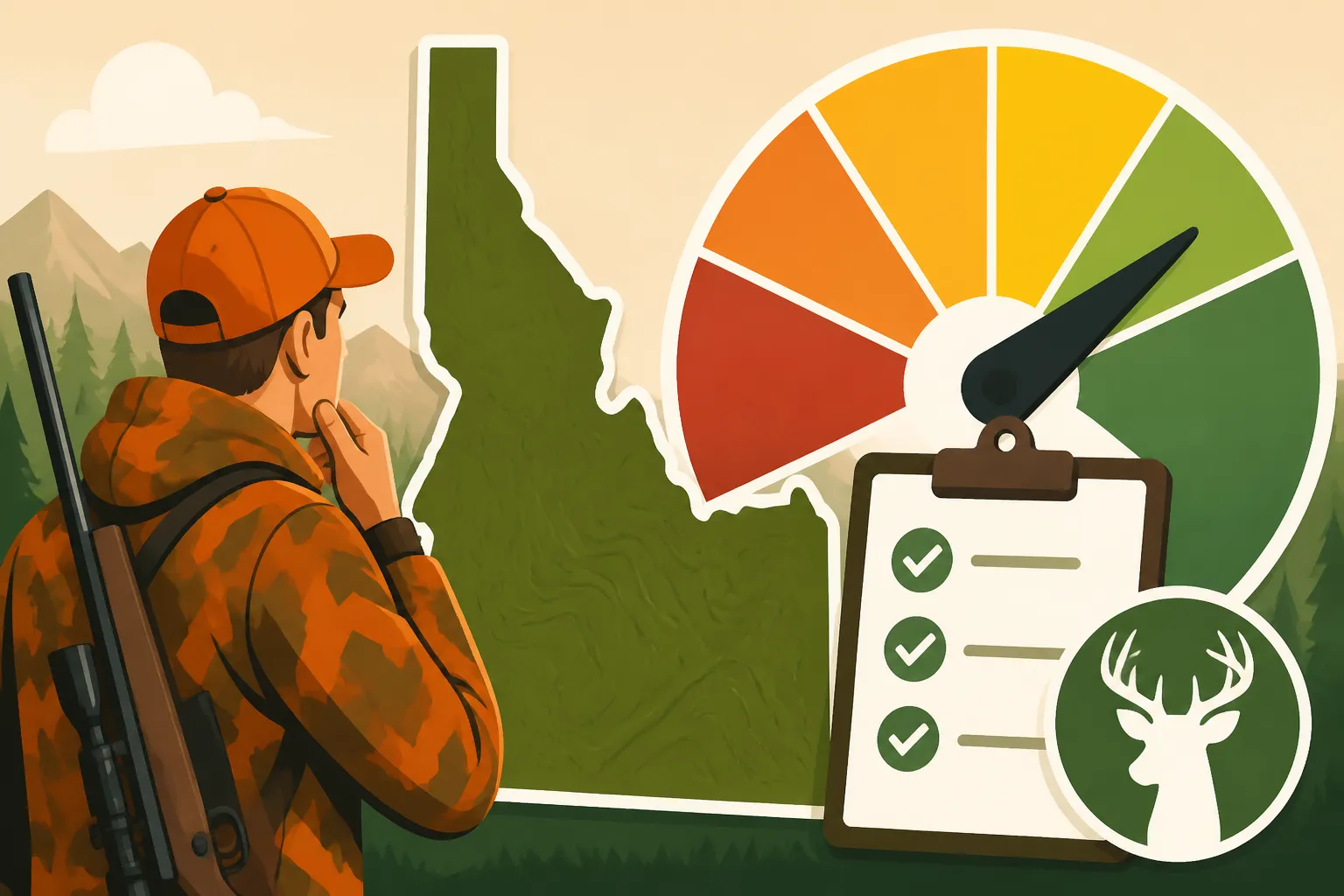
The anticipation of an Idaho hunting season is electric, isn't it? You spend countless hours scouting maps, dreaming of big bulls or bucks, and then comes the stark reality of the application process. Nothing is more frustrating than pouring your hopes, and your hard-earned money, into applications for units you know little about, only to face rejection year after year. This comprehensive guide is here to shed light on how you can understand and check Idaho drawing odds before you apply, transforming a shot in the dark into a well-informed strategy.
Why Understanding Drawing Odds Matters in Idaho
Let's be honest, applying for hunting tags can feel like playing the lottery. You pick a unit, cross your fingers, and hope for the best. But in Idaho, where the hunting opportunities are legendary, a little bit of research can go a very long way in maximizing your chances and making your application fees count.
Avoiding Application Fatigue and Financial Drain
There's a real emotional and financial toll that comes with repeatedly applying for tags that have incredibly low draw odds. Think about it: you pay for your hunting license, application fees, and sometimes even species-specific validations, only to get that "unsuccessful" email again. It's not just a monetary loss; it's a drain on your enthusiasm and can lead to what we call "application fatigue." You start to wonder if it's even worth it. For nonresidents, the cost of an Idaho hunting license, which is non-refundable even if you don't draw, only adds to the sting of an unsuccessful application. Being strategic with your applications means you're investing in a higher probability of success, or at least a more realistic expectation, keeping that hunting spark alive.
Strategic Application for Limited Opportunities
Idaho operates on a true lottery system, meaning every applicant, resident or nonresident, generally starts with an equal chance each year for a given tag. There are no preference points or bonus points to build up over time that increase your odds in subsequent years, which is a stark contrast to many other Western states. This system is a double-edged sword: it means a first-time applicant has the same mathematical chance as someone who's been applying for two decades. On the one hand, that's exciting! On the other, it means that understanding current drawing odds is absolutely paramount. You can't rely on accumulated points to bail you out. Instead, you need to dissect the previous year's data to identify trends, gauge demand, and make intelligent choices about where to put your name in the hat. This is especially critical for species like elk, where demand can far outstrip the available tags in popular units. Knowing these odds allows you to apply for tags that align with your risk tolerance and hunting goals, whether that's a long-shot trophy unit or a more accessible general season tag.
Where to Find Official Idaho Drawing Odds Data
When you're ready to dive into the numbers, you want the most accurate, official information available. Fortunately, the Idaho Department of Fish and Game (IDFG) provides a wealth of data to help you make informed decisions.
The Idaho Fish and Game Website: Your Primary Source
The official Idaho Fish and Game website is your go-to resource for historical drawing odds. Typically, after the primary controlled hunt drawings are completed each year, IDFG compiles and publishes detailed reports. You'll usually find these reports under the "Hunting" section, often linked from the "Controlled Hunts" or "Hunt Planner" pages. These reports are comprehensive, breaking down drawing success rates by unit, species, weapon type (e.g., archery, muzzleloader, rifle), and residency status.
When you pull up these reports, you'll see tables that list the hunt number, the unit(s) it covers, the number of tags allocated, the total number of applicants, and then the success rates. It's pretty straightforward, but the sheer volume of data can be a bit overwhelming at first. Don't rush through it; take your time. These official statistics are the bedrock of any successful application strategy, giving you a clear picture of how competitive specific hunts were in the previous year. For example, if you're looking into an early-season archery elk hunt, you'll want to find the specific hunt number for that combination and see how many people applied for those limited tags.
Interpreting Raw Data: Beyond the Percentages
Simply looking at a percentage isn't enough; you need to understand what those numbers truly represent. For each hunt choice, you'll typically see a "1st Choice Success Rate" and sometimes a "2nd Choice Success Rate." This distinction is crucial. Many hunters prioritize their dream hunt as their first choice, even if the odds are slim. If there are still tags left after all first-choice applications are processed, they might be offered to those who listed it as a second choice. However, for highly sought-after hunts, tags often run out after the first choice, making second-choice odds effectively zero.
It's also vital to differentiate between resident and nonresident odds. Idaho Sets Aside 1,846 Deer and 2,975 Elk Tags for Nonresidents, and these quotas mean that nonresident odds for popular hunts are almost always significantly lower than resident odds due to a smaller pool of available tags for a similar or often higher demand. If a hunt had 100 tags and 1,000 resident applicants, but only 10 nonresident tags and 500 nonresident applicants, the resident odds are 10%, while nonresident odds are a mere 2%. These differences are critical to acknowledge when planning your application. You also need to pay attention to the "Total Applicants" column. A low success rate might just mean a lot of people applied for very few tags, even if the unit isn't necessarily a "trophy unit." Looking at the number of applicants over several years can sometimes highlight units that are gaining or losing popularity, though with Idaho's no-point system, these trends can sometimes shift more dramatically year to year than in point-based states.
Leveraging Third-Party Tools and Resources
While the official IDFG data is indispensable, navigating it can be a bit clunky, especially for new applicants. That's where third-party tools come in, often simplifying the research process and providing additional insights.
GoHunt and Other Application Services
Several online platforms have emerged to help hunters with the complex world of Western big game applications. Services like GoHunt are excellent examples, aggregating official drawing odds data from various state agencies, including Idaho, and presenting it in a much more user-friendly format. Instead of sifting through dozens of PDF tables on the IDFG website, you can often filter by species, unit, weapon, and residency to quickly find the specific information you need.
These platforms often go a step further, providing graphical representations of draw odds over multiple years, which can help you spot long-term trends in demand and success rates. They might also offer "draw odds calculators" that allow you to plug in your desired hunt and get an immediate estimate of your chances based on historical data. Many of these services, including GoHunt, also provide detailed unit profiles, which can be invaluable. These profiles often include information on public land percentages, harvest statistics, terrain types, and even anecdotal reports from hunters who have explored those areas. While these services typically come with a subscription fee, the time saved and the enhanced understanding gained can be well worth the investment, especially if you're applying in multiple states or are new to Western hunting. They take the raw data and make it actionable, allowing you to develop a much more sophisticated application strategy.
Community Forums and Scouting Reports
Beyond the official data and paid services, the hunting community itself can be a valuable, albeit less formal, resource. Online forums, social media groups dedicated to Idaho hunting, and even local sports shops can offer anecdotal evidence, tips, and insights that might not appear in official statistics. You might hear about a particular unit that's been producing good animals lately, or one that has unexpectedly high pressure.
However, it's crucial to approach this information with a healthy dose of skepticism. What one person considers "good odds" might be a 1% chance, while another is looking for 50/50. Information shared in these spaces can be outdated, biased, or simply wrong. Use it to supplement your research, not replace the hard data. If a forum discussion points you towards a promising unit, verify the information with official IDFG statistics and services like GoHunt before you commit your application. Think of it as gathering clues rather than definitive answers. It can certainly provide interesting perspectives or highlight areas you might not have considered, but always double-check with reliable sources.
Factors That Influence Idaho Drawing Odds
Drawing odds aren't just random numbers; they're the result of a complex interplay of factors that dictate demand and supply. Understanding these influences can help you anticipate which hunts will be competitive and why.
Species, Weapon Choice, and Season Dates
The most obvious factor affecting draw odds is the species you're pursuing. Elk are why most hunters come to Idaho, and trophy bull tags are almost universally the hardest to draw. Mule deer tags can also be highly competitive, especially for early-season hunts or units known for producing Boone & Crockett bucks. In contrast, general season deer tags or cow elk hunts often have much higher draw odds or are even available over-the-counter in some areas.
Your weapon choice also plays a significant role. Archery season tags, often held in September during the rut, are incredibly popular, making them harder to draw than later rifle seasons in the same unit. Muzzleloader hunts, with their unique challenges and sometimes limited seasons, can also have distinct odds. If you're considering an archery elk hunt, for example, remember that Idaho's Minimum Peak Draw Weight for Any Bow is one factor to consider, but the popularity of archery during the rut often drives down draw odds significantly. This is why you'll often see distinct odds for specific "A Tags Favor Archery and Muzzleloader Hunters" versus "B Tags Favor the Centerfire Rifle Crowd." Early archery seasons during the bugle can be incredibly enticing, but the high demand makes them highly competitive.
Unit Popularity, Access, and Trophy Potential
Some units just have a reputation, don't they? Units known for producing massive bulls or bucks, or those with highly accessible public land, naturally attract more applicants. These "trophy units" often have astronomically low draw odds, sometimes in the single digits, especially for nonresidents. Conversely, units that are harder to access, require significant physical effort, or have lower trophy potential might have better odds.
Access is another huge determinant. Units with ample public land access, particularly those adjacent to good road networks or with plentiful camping opportunities, will see higher application numbers. The Idaho Hunt Planner Is the Tool to Start With for scouting these aspects. You can filter by public land percentages and see how many roads and trails crisscross a unit. If a unit is relatively easy to get into and offers decent hunting, it will be in higher demand. Conversely, remote backcountry units, even those with excellent game populations, might have slightly better odds simply because fewer people are willing or able to commit to the strenuous effort required to hunt them. Understanding the Public Land Opportunity in Southern Idaho or identifying Units With the Highest Public Land Percentage will certainly inform your application strategy.
Nonresident Quotas and Application Timelines
For nonresidents, Idaho's system includes specific quotas that severely limit the number of available tags. Idaho Sets Aside 1,846 Deer and 2,975 Elk Tags for Nonresidents, and these caps mean that the nonresident draw is inherently more competitive. Even if a unit has a high overall success rate, the nonresident portion might be minuscule. This makes meticulous research even more crucial for out-of-state hunters.
Furthermore, missing the application window means missing out entirely. The primary application period for nonresident deer and elk tags opens in December, typically around the first of the month, and closes in January. You need to be acutely aware of "The December Application Window for Idaho Nonresidents" and make sure your application is submitted well before "The Last Day to Apply for Idaho Nonresident Tags." These deadlines are firm, and there are no second chances for the main draw. If you're even a day late, you're out. While there are sometimes opportunities in Idaho's Second Controlled Hunt Drawing or for Leftover Idaho Tags Sold First-Come After the Second Draw, these are often for less desirable hunts or come with very short notice.
Developing a Smart Idaho Application Strategy
Now that you understand the mechanics of drawing odds, let's talk about how to translate that knowledge into a successful application strategy. It’s about balance, research, and a willingness to adapt.
Diversifying Your Application Choices
A common mistake is to put all your eggs in one basket, applying only for highly coveted, low-odds tags. While it's great to dream big, a more pragmatic approach involves diversification. Idaho Has No Preference Points, and What That Changes means you don't lose anything by applying for a "dream hunt" year after year, but it also means you don't gain anything. So, consider balancing your application choices.
You might designate your first choice for a long-shot, high-quality unit that you truly covet. Then, for your second and third choices, select units with historically better draw odds or general season opportunities. This increases your overall chances of drawing a tag, even if it's not your absolute top pick. Think about applying for different weapon types or slightly less popular season dates within a unit if available. For instance, if the early rifle season is highly competitive, check the odds for a late archery season or a muzzleloader hunt in the same general area. The goal is to maximize your time in the field with a valid tag, rather than striking out completely in pursuit of a single, unlikely dream.
Researching Alternative Species or Seasons
If drawing a premier elk or mule deer tag consistently proves elusive, don't despair. Idaho offers fantastic hunting opportunities for a variety of other species, and sometimes exploring these alternatives can lead to incredibly rewarding experiences and much higher draw odds. Consider applying for Idaho Spring Bear Runs From April Into Summer, which can be a thrilling hunt with more available tags and varying methods like spot-and-stalk or baiting. Turkey, mountain lion, or even some of the smaller game species can offer great adventures and keep your hunting skills sharp.
Sometimes, simply adjusting the timing of your hunt can make a difference. Late-season hunts, often after the rut, might see fewer applicants and therefore better odds, even if the weather conditions are more challenging. Cow elk tags, for example, are usually much easier to draw than bull tags and still offer an incredible freezer-filling experience. Be open to expanding your horizons beyond the most popular big game hunts. Any time spent chasing game in Idaho’s wild landscapes is a win, regardless of the species.
Understanding the Second Drawing and Leftover Tags
Even if you're unsuccessful in the primary draw, your Idaho hunting journey might not be over. Idaho conducts a second controlled hunt drawing in early August for any tags that went unpurchased or unclaimed from the initial drawing. This is a vital backup plan to be aware of. While the tags available in the second drawing are often for less popular units or specific hunts, it's still an opportunity to secure a tag if your primary application didn't pan out. "Idaho's Second Controlled Hunt Drawing Works" by taking applications for these remaining tags, usually with a much shorter application window.
Following this second drawing, any remaining tags are then sold on a first-come, first-served basis. These "Leftover Idaho Tags Sold First-Come After the Second Draw" can sometimes include desirable tags if a hunter had an unexpected change of plans. You need to be vigilant and ready to act quickly when these tags become available, as they often sell out in minutes. Setting up email notifications from IDFG or following relevant social media channels can give you a crucial edge in snatching one of these last-minute opportunities. While it's not a primary strategy, knowing these fallback options exist can provide peace of mind and sometimes even lead to unexpected hunting adventures.
| Hunt Type / Species | Typical Nonresident Draw Odds (Approximate) | Resident Draw Odds (Approximate) | Notes |
|---|---|---|---|
| Premium Bull Elk (Archery) | < 5% | 5-15% | Highly competitive, especially during the rut. |
| General Bull Elk (Rifle) | 5-15% | 15-30% | Varies greatly by zone and unit popularity. |
| Cow Elk (Controlled Hunt) | 15-40% | 40-70% | Often good opportunities for meat hunts, typically later seasons. |
| Mule Deer (Trophy Units) | < 2% | 2-10% | Very difficult to draw for specific, high-potential units. |
| General Mule Deer (Rifle) | 5-20% | 20-50% | Better odds in less popular units or with later season dates. |
| Whitetail Deer (Panhandle) | 10-30% | 30-60% | Generally better odds than mule deer; good opportunities in the northern zones. |
| Spring Black Bear | Over-the-counter or 40-70% | Over-the-counter or 60-90% | Good draw odds or general season availability in many units. |
| Pronghorn (Controlled Hunt) | 1-5% | 5-15% | Limited tags, very popular. |
Please note: These are general approximations based on historical data and can vary significantly year to year, and by specific hunt number, unit, and weapon type. Always consult the official Idaho Fish and Game draw odds reports for the most current and accurate information.
Disclaimer
The information provided in this article is for general guidance only and is based on publicly available data and common hunting practices in Idaho. Hunting regulations, tag allocations, and drawing odds are subject to change annually by the Idaho Department of Fish and Game. Always consult the most current official Idaho hunting regulations and draw statistics before making any application decisions. The author and publisher are not responsible for any outcomes resulting from the use of this information.