How Long the Online Hunter Education Course Takes
Many aspiring hunters in Idaho often feel overwhelmed by the process of getting certified, especially when trying to balance family, work, and life's endless commitments. The thought of adding another long, drawn-out course to an already packed schedule can be a real barrier to getting out into the field. This comprehensive guide is here to demystify the time commitment involved in completing the online hunter education course for Idaho, breaking down the typical duration and what influences how long it actually takes to earn your certification.
The Typical Time Commitment for Idaho's Online Hunter Education
When you're looking to get your hunter education certificate in Idaho, choosing the online route offers a lot of flexibility, which is a huge plus for busy folks. However, it's not a "quick click-through" affair. There's a solid amount of material to absorb to ensure you're a safe and responsible hunter.
Understanding the Self-Paced Nature
One of the biggest advantages of taking your hunter education online is that it's entirely self-paced. This isn't a classroom where you're tied to a lecture schedule or have to rush through material to keep up with the instructor. You can log in and out as your schedule allows, picking up right where you left off. This flexibility is a game-changer for many, allowing you to fit learning into evenings, lunch breaks, or quiet weekends.
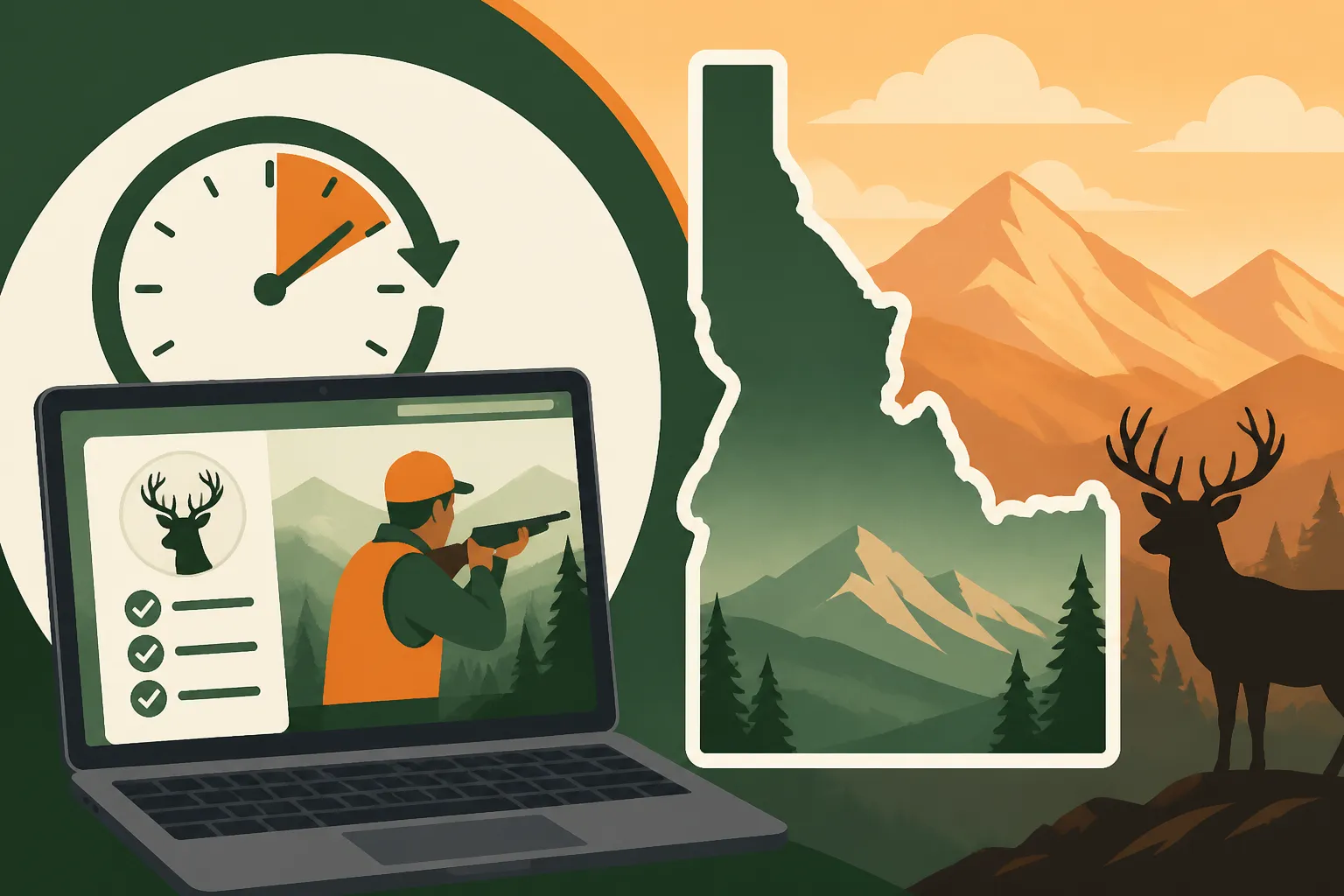
Most online hunter education providers, like the one offered through Hunter-ed.com, estimate that the actual online course material will take you anywhere from 6 to 8 hours to complete. This is a solid block of time, but remember, it's not consecutive. You could tackle it over a few evenings, dedicating an hour or two each night, or knock out a larger chunk on a Saturday morning. This adaptive format is truly designed to accommodate the demands of modern life, letting you learn at your comfort level without the pressure of a ticking clock.
Factors Influencing Your Pace
While the 6-8 hour estimate is a good benchmark, your actual completion time can vary based on a few personal factors. Everyone learns differently, and that's perfectly okay. If you're someone who likes to really delve deep into the material, re-read sections, or take extensive notes, you might find yourself closer to the upper end of that estimate, or even a little beyond.
Consider your prior knowledge of firearms, hunting ethics, and wildlife. If you're brand new to the world of hunting, you might spend more time on foundational concepts. Conversely, if you've grown up around hunting and shooting, some sections might feel more like a review, allowing you to move a bit more quickly. Distractions also play a role; trying to complete modules with kids running around or constant notifications popping up will naturally extend your time. Finding a quiet, focused environment, even for short bursts, can significantly improve your efficiency and retention.
What the Online Course Covers and Why It Takes Time
The Idaho hunter education course isn't just about learning to shoot a gun safely. It's a comprehensive program designed to mold well-rounded, ethical, and knowledgeable hunters. The breadth and depth of the material are precisely why it takes several hours to complete properly. You're not just memorizing facts; you're learning principles that will guide your actions in the field for years to come.
Key Modules and Their Importance
The online course is typically broken down into several modules, each focusing on a critical aspect of safe and responsible hunting. These generally include:
- Firearm and Archery Safety: This is foundational, covering everything from proper handling, storage, and transport of different weapon types to understanding ammunition and safe shooting practices. This isn't just theory; it's vital information that prevents accidents.
- Hunting Ethics and Responsibility: Beyond legality, this section delves into the moral compass of a hunter. It covers concepts like fair chase, respect for wildlife, landowners, and other outdoor users. Being a good steward of the land and a responsible ambassador for hunting is just as important as knowing how to pull a trigger.
- Wildlife Conservation and Management: You'll learn about the role of hunters in conservation, wildlife biology basics, habitat management, and how hunting license fees contribute to healthy ecosystems. Understanding the "why" behind hunting helps foster a deeper appreciation for the sport.
- Idaho Hunting Regulations: This is hyper-local and essential. You'll learn about season dates, bag limits, tagging requirements, legal shooting hours, and specific rules that apply within Idaho, such as those related to Idaho's Motorized Hunting Rule Keeps You on the Road. This information is critical for staying legal and avoiding costly mistakes in the field.
- Survival and First Aid: Being prepared for the unexpected in the backcountry is non-negotiable. This module covers basic wilderness survival skills, navigation, and critical first aid knowledge to handle injuries or emergencies far from civilization.
- Hunter Preparedness and Trip Planning: This section helps you plan your hunt, from proper gear selection to understanding weather patterns and physical conditioning. This practical knowledge ensures you're ready for the challenges of an Idaho hunting trip.
Each of these modules requires dedicated attention. They build upon each other, creating a holistic understanding of what it means to be a modern hunter. The time spent here is an investment in your safety, the safety of others, and the future of hunting.
The Role of Interactive Elements and Quizzes
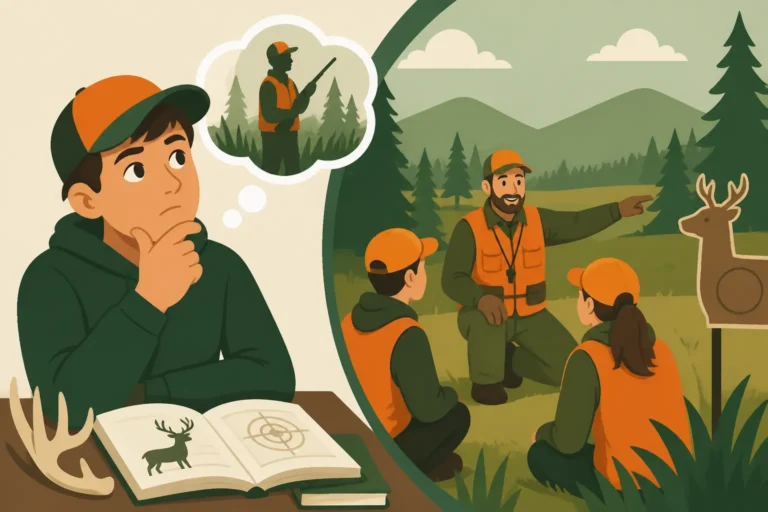
To keep you engaged and ensure comprehension, online hunter education courses are packed with interactive elements, videos, and quizzes. These aren't just there to fill time; they're pedagogical tools designed to enhance your learning experience. Videos might demonstrate safe firearm handling or illustrate tracking techniques, making complex actions easier to visualize than simply reading about them.
Quizzes at the end of each module serve a crucial purpose: they test your understanding before you move on. They help you identify areas where you might need to review the material, ensuring you grasp key concepts. This iterative process of learning, testing, and reviewing is far more effective than just passively reading a textbook. Ultimately, these elements are there to prepare you for the final exam, but more importantly, to ensure you genuinely understand the principles that keep you and others safe in the field. When you're ready to start planning your hunts, resources like GoHunt can help you scout units and understand regulations, but only after you've mastered the basics through your hunter education.
The Essential Field Day: An Additional Time Investment
Here's where many new hunters can miscalculate the total time commitment: the online course is often just one part of the full certification process in Idaho. For most individuals, particularly younger hunters or those obtaining their first-time certification, a mandatory field day is required after completing the online portion. It's a critical component that bridges the gap between theoretical knowledge and practical application.
Who Needs to Attend a Field Day in Idaho
It's important to understand Idaho's specific requirements. Unlike some states where the online course alone is sufficient, Idaho Fish and Game explicitly states that students who complete an online course generally still need to attend a field day to obtain their full hunter education certificate. This is a non-negotiable step for many new hunters. Therefore, when you're asking "How long does it take?", you must factor in this additional time.
There are specific exemptions, of course. For example, if you're an adult who previously held a hunting license in Idaho or another state, you might be exempt from the field day requirement. However, for most first-time hunters, especially those born after December 31, 1974, who are required to have hunter education, the field day is an integral part. For a detailed breakdown of who needs this certification, you can read more about Anyone Born After 1974 Needs Idaho Hunter Education. If you're considering the alternative, understanding Online and Classroom Hunter Education Compared can also shed light on the differences.
What Happens During a Field Day
The field day is where all that online learning comes to life. Typically, these sessions are run by certified Idaho Fish and Game instructors and volunteers, offering hands-on training that simply cannot be replicated online. These sessions usually last a full day, ranging from 4 to 8 hours, depending on the curriculum and the instructor.
During a field day, you can expect to:
- Practice Safe Gun Handling: This involves demonstrating safe loading, unloading, carrying, and storage techniques with various firearms under direct supervision.
- Live-Fire Exercises: You'll get the opportunity to shoot on a range, reinforcing muzzle control, trigger discipline, and target identification. This is a critical skill component.
- Outdoor Skills: Instructors often cover practical navigation using a map and compass, identifying safe zones of fire, and maybe even some basic tracking or game recovery techniques.
- Ethics and Regulations Review: There's usually a recap of key ethical considerations and Idaho-specific regulations, often with real-world scenarios discussed.
- Scenario-Based Learning: You might participate in mock hunting scenarios, making decisions about shot placement, target identification, and environmental awareness.
The field day is your chance to ask questions, interact with experienced hunters, and gain confidence in your abilities before you step into the woods. It's an invaluable part of the overall hunter education experience, ensuring you're not just book-smart but also field-ready. Finding and registering for these can sometimes require planning, as spots can fill up, especially during peak seasons.
Planning for Success: Efficiently Completing Your Hunter Education
Knowing the time commitment upfront allows you to plan effectively, transforming a daunting task into a manageable step towards your hunting goals. Successfully navigating the online course and securing your field day slot requires a little forethought and a strategic approach.
Setting a Realistic Schedule
With the online portion typically taking 6-8 hours and the field day adding another 4-8 hours, you're looking at a total of 10-16 hours of dedicated time for full certification, spread across several days or weeks. Don't try to cram it all into one weekend. Instead, break the online course into smaller, digestible chunks. Maybe set aside an hour each evening for a week, or dedicate a few longer blocks over two weekends. The self-paced nature of the online course truly works to your advantage here.
Once you've made progress on the online modules, start looking for available field day dates and locations through the Idaho Fish and Game website. These events are scheduled at specific times and places, so early registration is key. Many hunters face the frustration of finding their online certificate isn't enough; they still need that field day. To avoid this common pitfall, consult the official IDFG site for upcoming dates well in advance. Planning ahead ensures you don't complete the online course only to find yourself waiting months for a field day slot. Remember that for individuals exploring options, The Idaho Hunting Passport and Who Qualifies can offer a temporary path, but full certification is usually the long-term goal.
Maximizing Your Learning Experience
Simply clicking through the online modules isn't enough to become a truly safe and ethical hunter. To make the most of your time investment, engage actively with the material. Take notes, even if it's just jotting down key regulations or safety principles. Don't rush through the quizzes; use them as learning opportunities to reinforce what you've just read. If you find a concept challenging, go back and review it until it makes sense. This isn't just about passing a test; it's about internalizing knowledge that could literally save a life, your own or someone else's.
Consider discussing the material with a seasoned hunter if you know one. Their real-world experiences can often bring abstract concepts to life. Think about how the regulations might apply to a unit you've been e-scouting on GoHunt. By truly understanding the principles, you'll be better equipped for the field day and, more importantly, for your actual hunting adventures. Your commitment to a thorough learning process now will pay dividends in confidence and safety later. After all, proving your certification in the field, as discussed in Proving Your Certification Out in the Field, is about demonstrating competence, not just holding a card.
Here’s a quick overview of the time commitment:
| Component | Estimated Time | Notes |
|---|---|---|
| Online Course Content | 6-8 hours | Self-paced; can be broken into multiple sessions. |
| Required Field Day | 4-8 hours | One-day, in-person session for hands-on training and proficiency. |
| Total Time to Certify | 10-16 hours | This does not include travel time to the field day or registration processing. |
Disclaimer
Please remember that hunting regulations and requirements are subject to change by the Idaho Department of Fish and Game. Always consult the official Idaho Fish and Game website or contact them directly for the most current and accurate information regarding hunter education requirements, course availability, and specific rules that apply to your situation. This guide provides general information and estimates based on current publicly available data.