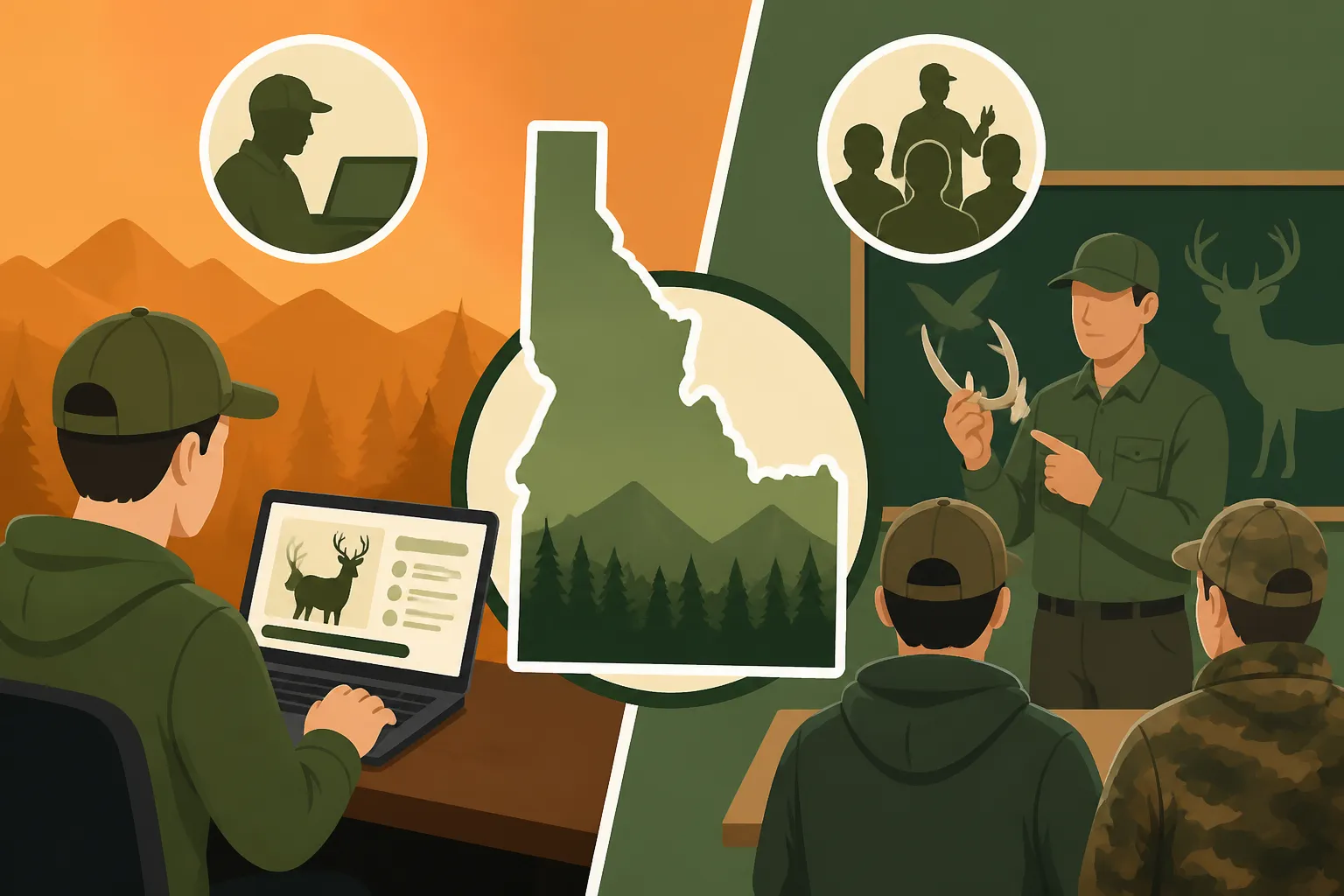
Online and Classroom Hunter Education Compared
Navigating the requirements for hunting in Idaho can feel a bit like trying to find your way through dense timber without a map. One of the biggest hurdles, especially for new hunters or those coming from out of state, is figuring out the best way to get your hunter education certification. This guide will walk you through the ins and outs of both online and traditional classroom hunter education, helping you understand which path makes the most sense for your journey into Idaho's wild landscapes.
Understanding Idaho's Hunter Education Requirement
Before you even start thinking about what type of hunter education course to take, it’s crucial to understand why it’s required and who needs it. Idaho, like most states, takes hunter safety and ethics very seriously, and for good reason. The goal isn't just to make sure you can shoot straight, but that you operate safely, ethically, and responsibly in the field.
Who Needs Certification to Hunt in Idaho
The rule of thumb in Idaho is pretty clear: if you were born on or after January 1, 1975, you need to complete a hunter education course before you can purchase a hunting license. This cutoff date is a significant one, and it's designed to ensure that everyone who started hunting after a certain point has received formal training. It doesn't matter if you've been hunting with family for years; if your birth year falls on or after '75, you'll need that certificate. There are some nuances, of course. For instance, if you're a nonresident, the requirement still applies, but Idaho often accepts hunter education certificates from other states, so always check with Idaho Fish and Game if you're already certified elsewhere. If you're wondering, "Anyone Born After 1974 Needs Idaho Hunter Education," then yes, this rule applies to you, and understanding it is the first step. You might also be interested in "The Idaho Hunter Education Birth Year Cutoff" for more specific details on this important date.
There are limited exemptions, primarily for those participating in mentored hunts under certain conditions, which brings us to the Idaho Hunting Passport. This program allows eligible individuals, often new to hunting, to try hunting for one year under the direct supervision of a licensed adult hunter without first completing hunter education. This is a fantastic way to dip your toes in, but it’s not a substitute for full certification if you plan on hunting independently long-term. Even children as young as nine can obtain a hunting license for certain species, but again, the rules for "Minimum Age to Hunt Big Game in Idaho" often come with specific supervision requirements.
The Core Curriculum of Hunter Education
Regardless of whether you choose an online or classroom format, the core curriculum remains largely the same. Hunter education courses are designed to instill a foundational understanding of several critical areas. First and foremost is firearm and archery safety. This covers everything from safe handling, storage, and transport of weapons to understanding ammunition types and shooting fundamentals. You'll learn the four basic rules of firearm safety (treat every firearm as if it's loaded, always point the muzzle in a safe direction, be sure of your target and what's beyond it, and keep your finger off the trigger until ready to shoot) and why they are non-negotiable.
Beyond safety, the courses delve deep into responsible hunting practices. This includes understanding fair chase principles, respecting private land, and the importance of ethical shot placement. Conservation and wildlife management also form a significant part of the curriculum, teaching hunters about their role in sustaining healthy wildlife populations and ecosystems. You'll learn about game identification, field dressing techniques, and legal requirements for tagging and reporting harvests. Environmental considerations, survival skills, and first aid are also typically covered, preparing you not just for the hunt, but for the unexpected challenges of being in the outdoors.
The Convenience of Online Hunter Education
In our increasingly digital world, it’s no surprise that online hunter education has become a popular choice for many aspiring hunters. It offers a level of flexibility that traditional classroom settings simply can't match, making it an ideal option for those with demanding schedules or living in areas without readily available in-person classes.
Flexibility and Self-Paced Learning
The primary appeal of online hunter education is its incredible flexibility. Imagine being able to complete your course work whenever and wherever it suits you. This means no rigid class schedules that conflict with work, family commitments, or school. Many hunters find themselves squeezing in modules during lunch breaks, after the kids are in bed, or on quiet weekend mornings. This self-paced approach allows you to dedicate as much time as you need to complex topics, re-watching videos or re-reading sections until you feel confident. For some, this freedom from a set schedule makes all the difference in actually completing the certification process.
This format truly caters to individual learning styles. If you're someone who prefers to absorb information at your own speed, without the pressure of keeping up with a group, online courses shine. You can pause, take notes, and research additional information on topics that particularly interest you, like specific Idaho hunting regulations or local wildlife. However, this also means you need a good deal of self-discipline. There's no instructor to remind you of upcoming deadlines or keep you accountable. It's all on you to stay motivated and move through the material consistently.
Understanding Online Course Providers and Content
When you opt for online hunter education in Idaho, you're usually choosing a course offered by a third-party provider that's approved by the Idaho Department of Fish and Game. These aren't free-for-all, unvetted websites. They follow a standardized curriculum to ensure you're getting the necessary education. Popular platforms might include offerings from organizations like hunter-ed.com or ilearntohunt.com. While Idaho Fish and Game oversees and approves these courses, they are administered by these private entities.
These online platforms are generally rich with multimedia content. Expect a mix of engaging videos demonstrating safe firearm handling, interactive quizzes that test your understanding, detailed animations explaining ethical shot placement, and comprehensive text modules covering everything from Idaho game species to survival basics. Many of these platforms are designed to be mobile-friendly, meaning you can even work through sections on a tablet or smartphone, further enhancing their accessibility. The course material is regularly updated to reflect current regulations and best practices, ensuring you're receiving the most relevant information. When thinking about "How Long the Online Hunter Education Course Takes," remember that while the state might suggest a minimum number of hours, your actual time spent could vary based on your learning speed and how thoroughly you engage with the material.
The GoHunt Advantage in Planning Your Education
Even though the core hunter education itself isn't offered directly through GoHunt, their platform can be an invaluable tool in planning your entire hunting journey, including fitting in your education. Imagine using GoHunt's robust mapping and research tools to scout potential hunting units, and then realizing you still need your hunter education. Their detailed information on hunting regulations and zones can help you understand the context of what you're learning in your hunter education course. For example, as you learn about ethical shot placement in your online module, you could simultaneously be researching specific elk zones on GoHunt to see where those skills will be most applicable.
Furthermore, GoHunt's comprehensive calendar and license application information can help you strategize when to complete your online course and field day. You can see upcoming application deadlines or season openers and then work backward to ensure your certification is complete well in advance. This integrated approach, where your hunter education isn't just a standalone task but part of your broader hunting preparation assisted by tools like GoHunt, makes the entire process more efficient and less stressful. Many hunters use resources like GoHunt to stay informed about Idaho Fish and Game updates, which can include announcements about hunter education availability or changes to requirements.
The Value of Traditional Classroom Hunter Education
While online courses offer unparalleled convenience, there's still immense value in the traditional classroom setting for hunter education. For many, the hands-on experience, direct interaction with instructors, and camaraderie with fellow students create a more memorable and effective learning environment.
Hands-On Instruction and Peer Interaction
One of the biggest advantages of a classroom setting is the opportunity for hands-on learning. Instead of watching a video about safe firearm handling, you might actually get to hold an inert firearm, practice loading and unloading, and learn to identify its parts under the direct supervision of an experienced instructor. This tactile, experiential learning can be invaluable, especially for individuals who have never handled a firearm or archery equipment before. Instructors can demonstrate proper shooting stances, how to clear a malfunction, or safely cross a fence with a weapon, providing immediate feedback and correction.
Beyond the physical skills, classroom courses foster a sense of community and peer interaction. You're learning alongside other aspiring hunters, some of whom might be just as new as you are, and others who might have some experience but are looking for formal certification. This shared experience often leads to discussions, questions, and the building of connections that can extend beyond the classroom. It's a great place to meet potential hunting partners or mentors. These interactions make the learning process more dynamic and can help solidify concepts through discussion and shared understanding.
Direct Q&A with Experienced Mentors
Perhaps the most significant benefit of a traditional classroom course is the direct access to experienced instructors. These aren't just people reading from a manual; they are often seasoned hunters, game wardens, or long-time volunteers with a wealth of practical knowledge and real-world experience. They can share personal anecdotes, discuss nuances of hunting ethics, and offer insights into local Idaho hunting conditions or specific challenges you might face in the field. This ability to ask immediate follow-up questions, to clarify complex regulations, or to delve deeper into a particular topic is something that online courses simply can't fully replicate.
Imagine being able to ask a game warden about the specifics of "Idaho's Motorized Hunting Rule Keeps You on the Road" or how to navigate public vs. private land access in a particular unit. These kinds of nuanced questions often require an expert's personal judgment and experience, which you get directly in a classroom. The instructors can read the room, identify common areas of confusion, and tailor their explanations to the specific needs of the students present. This mentorship aspect is crucial for developing not just safe hunters, but thoughtful and responsible conservationists. They can provide practical advice that goes beyond the textbook, making the learning experience much richer.
Structured Learning Environment
For some individuals, a structured learning environment is simply more effective. The fixed schedule, the expectation of being present, and the guided progression through the material can help keep students on track and ensure they absorb all necessary information. If you're someone who struggles with self-motivation or tends to procrastinate with self-paced online courses, the accountability inherent in a classroom setting might be exactly what you need. The clear start and end times, coupled with breaks and interactive exercises, create a predictable rhythm that can be conducive to learning.
Furthermore, a classroom setting often means fewer distractions. You're in a dedicated learning space, away from the temptations of home or work, allowing you to focus solely on the course material. The instructor acts as a facilitator, guiding the discussion, ensuring everyone understands the concepts, and addressing any misunderstandings in real-time. This can be particularly beneficial for complex topics like ballistics, ethical considerations, or intricate hunting regulations. The direct engagement can prevent misconceptions from taking root, ensuring a solid foundation of knowledge.
Deciphering the Field Day Component
Regardless of whether you choose the online convenience or the traditional classroom experience for your hunter education in Idaho, there's one critical component that you absolutely cannot skip: the field day. This isn't just an optional add-on; it's a mandatory, hands-on session designed to bridge the gap between theoretical knowledge and practical application.
Why a Field Day is Non-Negotiable
The field day is the practical exam of hunter education, and it's essential for several reasons. While online courses can teach you the rules of firearm safety and ethical hunting, they can't replicate the feel of holding a shotgun, the precise movements of safely crossing a fence with a loaded rifle, or the process of tracking a game animal. The field day provides that crucial hands-on experience, allowing certified instructors to observe your practical skills and ensure you can apply what you've learned in a real-world setting. This is why "Does Hunter Education Include a Field Day?" is a question with a resounding "Yes!" in Idaho.
This is where your knowledge of things like "Proving Your Certification Out in the Field" truly begins to solidify. It’s about more than just passing a written test; it’s about demonstrating competence and judgment in situations where safety is paramount. Instructors assess your ability to handle firearms safely, identify proper shooting zones, and understand the practical implications of hunting ethics. Without this supervised practical component, the theoretical knowledge, no matter how comprehensive, would be incomplete. It's the state's way of ensuring that every certified hunter has demonstrated a basic level of practical proficiency.
What to Expect at a Field Day
A typical Idaho hunter education field day will involve a variety of stations and activities designed to evaluate your practical skills. You'll likely spend time on a shooting range, demonstrating safe firearm handling, target identification, and accurate shooting. This isn't about being a sharpshooter, but rather about showing you can safely load, aim, and unload a firearm, and understand your shooting capabilities. You'll also learn and practice proper archery techniques if you're pursuing that discipline, including safe nocking, drawing, and releasing.
Beyond shooting, you might participate in scenarios involving safe obstacle crossing (like fences or logs) with a simulated loaded firearm. There are often segments on blood trailing, where you'll follow a mock blood trail to understand how to recover downed game ethically and efficiently. Instructors will cover topics like tree stand safety, basic survival skills, and identifying different types of game animals. You'll learn how to use a compass and map, and practice basic first aid scenarios. The goal is to provide a comprehensive, albeit simulated, experience of what you'll encounter during an actual hunt, all under the watchful eye of certified mentors who can offer immediate, corrective feedback.
Finding and Registering for a Field Day
Finding and registering for a field day requires a bit of planning, especially if you've completed an online course. These events are typically organized by Idaho Fish and Game and its volunteer instructors, and they have limited capacity. They're often held on specific dates, usually on weekends, and can fill up quickly, particularly during peak hunting season preparations. It's not uncommon to complete your online portion only to find that the next available field day is several weeks or even months away, which can be a frustrating delay if you're eager to get your license.
The best place to find information about upcoming field days is the Idaho Department of Fish and Game website. They'll have a schedule of available sessions, locations, and registration instructions. You'll usually need to pre-register online and might need to pay a small fee. It's highly advisable to register as soon as possible, especially if you have a specific hunting season or trip in mind. Don't wait until the last minute, as missing the field day deadline could mean missing an entire hunting season. Keeping tabs on the Idaho Fish and Game website or even using a platform like GoHunt to stay abreast of important dates related to hunting in Idaho can be incredibly beneficial.
Choosing the Right Path for Your Hunting Journey
Deciding between online and classroom hunter education isn't a one-size-fits-all choice. Your personal circumstances, learning style, and previous experience will all play a significant role in determining which method is best suited for your journey into Idaho's hunting scene.
Assessing Your Learning Style and Schedule
The first step in choosing your hunter education path is to honestly assess your learning style. Are you a self-starter who thrives on independent study, capable of pacing yourself through modules and retaining information without direct supervision? If so, the flexibility of an online course might be perfect for you. You can dedicate short bursts of time or lengthy sessions, fitting the education around your already packed life. This is especially true if you have a demanding job, family responsibilities, or live far from a hunter education facility.
However, if you know you learn best in a structured environment, where an instructor guides you through the material and you can ask questions in real-time, a traditional classroom course might be more effective. Some people find the discipline of a set class schedule and the interaction with peers to be crucial for absorbing and retaining complex information, particularly when it comes to safety protocols and ethical considerations. Consider whether you need that external motivation and direct instruction to truly grasp the material.
Considering Your Experience Level
Your prior experience with firearms, hunting, and outdoor activities should also factor into your decision. If you're a complete novice, someone who has never handled a firearm, spent significant time in the wilderness, or been exposed to hunting culture, a traditional classroom course can offer invaluable benefits. The hands-on practice with inert firearms, the direct demonstrations, and the immediate feedback from experienced instructors can build a foundation of confidence and competence that's harder to achieve through screens alone. You'll also gain from the collective questions and experiences of other new hunters in the room.
On the other hand, if you're someone who grew up around firearms, perhaps even hunted in other states and is simply needing to get certified for Idaho, an online course might be a more efficient route. You may already be familiar with many of the safety principles and ethical considerations, and the online format allows you to quickly move through material you already know while focusing on Idaho-specific regulations. Even for an experienced hunter, there are always new insights to be gained, and both formats cover the essential elements. The most important thing is that you actually learn the material, not just pass the test.
Weighing the Cost and Availability
Both online and traditional hunter education options come with costs, though they can vary. Online courses typically have a fee, which can range anywhere from $15 to $50, depending on the provider. While this is a direct upfront cost, it's often fixed and can be paid when you start. The main cost for traditional classroom courses might be less direct for the instruction itself, as many are taught by volunteers, but there might be small registration fees or costs for materials.
The greater consideration often revolves around availability. Online courses are available 24/7, limited only by your internet access. Field days, however, are a different story. They are scheduled at specific times and locations across Idaho, and their availability can be limited, especially in more rural areas or during peak season. You might complete your online course quickly, only to face a delay of several weeks or months before you can get into a field day. This often necessitates booking your field day well in advance. For traditional classroom courses, you're dependent on finding a class in your area that fits your schedule. Early planning is key for both methods, particularly if you have specific dates in mind for purchasing your license or going on a hunt. You don't want to find yourself ready for a hunt only to realize you can't get your certification in time. When "Online and Classroom Hunter Education Compared," these practical considerations often become the deciding factors.
Here's a quick comparison of the two main types of hunter education:
| Feature | Online Hunter Education | Traditional Classroom Hunter Education |
|---|---|---|
| Flexibility | High: Self-paced, 24/7 access, learn anywhere. | Low: Fixed schedule, specific location, less adaptable. |
| Learning Style | Best for self-motivated, independent learners. | Best for structured learners, hands-on, interactive. |
| Instructor Interaction | Minimal to none; typically through forums/email. | Direct, real-time Q&A with experienced instructors/mentors. |
| Hands-On Practice | Primarily through videos/simulations; requires field day for practical. | Often includes in-class practice with inert equipment. |
| Peer Interaction | Limited; mostly virtual. | High; direct interaction with other students, networking. |
| Cost | Typically a fee for the online course itself. | May have small registration/material fees; instruction often volunteer-based. |
| Time Commitment | Varies by individual pace, but can be done quickly. | Fixed hours over several sessions (e.g., a weekend or evenings). |
| Field Day Requirement | Mandatory practical session after online course. | Mandatory practical session, often integrated or closely follows class. |
| Ideal For | Busy individuals, those with prior experience, remote locations. | Beginners, those seeking direct mentorship, social learners. |
Ultimately, the choice comes down to what works best for you. Both methods are designed to equip you with the knowledge and skills necessary to be a safe, ethical, and responsible hunter in Idaho. Take the time to consider your personal needs and preferences, and then commit to the path that will best prepare you for the challenges and rewards of hunting in Idaho's stunning wild lands.
Disclaimer
Please remember that hunting regulations, license requirements, and educational course availability can change. Always consult the official Idaho Department of Fish and Game website or contact them directly for the most current and accurate information before planning your hunt or enrolling in a course.