Corner Crossing Legality in Idaho
Oh, the infamous "corner crossing" dilemma! If you've spent any time staring at a public land map in Idaho, especially those checkerboard sections where private and public squares meet, you've probably felt that knot of anxiety. It's that moment when you see a perfectly accessible piece of public land, but to get there, you'd have to step over a theoretical invisible line at the four-way intersection of public, private, public, and private property. This guide is here to unravel the confusion and help you navigate the tricky, often frustrating, legal gray area surrounding corner crossing in Idaho.
Understanding the Corner Crossing Conundrum in Idaho
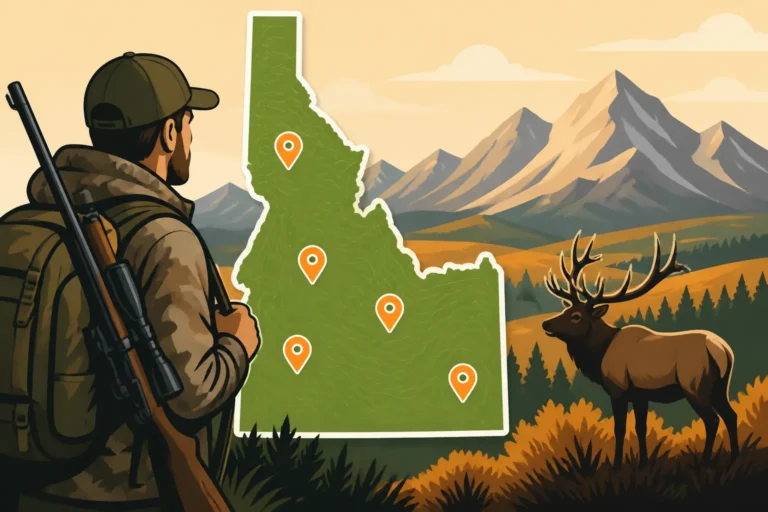
Hunting public land in Idaho is a dream for many, offering incredible opportunities across vast stretches of national forests, BLM ground, and state lands. But the dream can quickly turn into a nightmare when you encounter the complex tapestry of land ownership, especially in areas with "checkerboard" patterns. This isn't just a map oddity; it's a real-world barrier that can make seemingly accessible public land feel utterly unreachable.
What Exactly is Corner Crossing?
Let's break down what we're talking about here. Imagine you're looking at a grid on a map. You've got public land in the top-left square and public land in the bottom-right square. In between them, you have private land in the top-right and bottom-left squares, all meeting at a single point—a corner. Corner crossing is the act of stepping or passing from one piece of public land, across that common corner point, directly onto another piece of public land, without ever touching the surface of the private land that forms the other two corners of that intersection.
It sounds simple enough, right? You're just moving from public to public. But the problem arises because, legally, private property rights often extend not just to the ground beneath your feet but also to the airspace directly above it. So, even if you don't physically touch the private ground, a landowner might argue you're trespassing through their "airspace" at that precise corner. It's a technicality, but one that carries very real legal weight and has led to significant disputes, particularly in western states known for their checkerboard land ownership, often a relic of historical railroad land grants. Hunters, hikers, and other outdoor enthusiasts often scratch their heads, thinking, "But it's public land! Why can't I get there?" It's a completely valid frustration, making perfectly good hunting ground feel like it's behind an invisible, impenetrable wall.
Why is it Such a Legal Gray Area?
The reason corner crossing remains such a contentious and legally ambiguous issue boils down to conflicting interpretations of property law and public access rights. On one side, you have landowners asserting their right to control all aspects of their private property, including the space above it. They often argue that any passage, no matter how brief or "airborne," over their corner is an infringement on their property rights and constitutes trespass. From their perspective, if you aren't legally allowed to physically set foot on their ground, you certainly aren't allowed to fly over it either, even if it's just a theoretical few inches at a corner.
On the other side, public land advocates and hunters argue that if two pieces of public land meet at a corner, there should be an inherent right to traverse that common point without fear of trespass, especially since no physical damage or intrusion onto the private property's surface occurs. They highlight the spirit of public land access and the practical difficulties this legal gray area creates for reaching vast amounts of public acreage. The core issue is that there isn't a universally accepted, clear federal or even state-level statute in many places that explicitly addresses corner crossing. This legal vacuum leaves the interpretation open to individual landowners, local law enforcement, and potentially, the courts. The lack of specific guidance means that what might be overlooked in one county could lead to a confrontation or a citation in another, turning an otherwise straightforward hunt into a high-stakes gamble.
Idaho's Stance (or Lack Thereof) on Corner Crossing
When it comes to corner crossing, Idaho finds itself in a similar position to many western states: there's no explicit law that definitively says "yes, this is legal" or "no, this is absolutely illegal." This absence of clear legal language is precisely what creates the tension and uncertainty for hunters trying to do the right thing.
The Legal Vacuum and Its Implications for Hunters
Unlike some neighboring states that have seen high-profile court cases or specific legislative attempts to clarify corner crossing, Idaho largely operates in a legal vacuum on this particular issue. This isn't necessarily a bad thing, but it certainly isn't a good thing for hunters seeking clear guidance. What it means in practice is that the legality often comes down to interpretation, local enforcement discretion, and the specific landowner involved. You could find yourself facing a civil trespass charge, or even a criminal one, depending on the severity of the landowner's complaint and how a local prosecutor decides to proceed.
Think about it: you spend months planning your dream elk hunt, poring over maps, only to find a critical access point involves navigating these checkerboard corners. Do you risk it? The implication for hunters is significant. Even if you believe you are legally in the right, fighting a trespass charge—even if it's ultimately dismissed—can be incredibly costly, time-consuming, and emotionally draining. You might miss out on precious hunting time, incur legal fees, and face unnecessary stress. This uncertainty can effectively "landlock" vast tracts of public land, not by physical barriers, but by the threat of legal action, forcing hunters to abandon otherwise prime hunting spots. It creates a chilling effect, where the path of least resistance often means avoiding these corners altogether, even when doing so requires significantly longer routes or gives up entirely on certain areas.
Navigating Unmarked Boundaries and Landowner Relations
The theoretical legal debate around corner crossing meets the harsh reality of the Idaho landscape. Not every property line is marked with clear fencing, "No Trespassing" signs, or even visible corner posts. Often, you're relying on a GPS unit or a mapping app to tell you where one property ends and another begins. This can make the act of not corner crossing incredibly difficult in the field, especially in dense timber or rugged terrain where a straight line on a map doesn't translate easily to the ground.
Beyond the physical challenges, there's the critical issue of landowner relations. Many Idaho landowners are incredibly protective of their property, and rightly so. They've invested time, money, and effort into their land, and they expect it to be respected. The ambiguity of corner crossing can quickly lead to strained relationships between hunters and landowners. A landowner who feels their property rights have been violated, even technically, might become hostile towards all hunters, regardless of intent. This can result in increased signage, more vigilant patrolling, and a general hardening of attitudes against public land users. It's a sad cycle where a misunderstanding or perceived slight at a single corner can sour relations for an entire community, impacting access for generations. Respect, communication, and a clear understanding of boundaries are paramount, even when those boundaries feel frustratingly vague.
Practical Strategies for Idaho Hunters
Given the legal ambiguity surrounding corner crossing in Idaho, a proactive and cautious approach is your best bet. No hunter wants to have their season ruined by a legal dispute, let alone contribute to the ongoing tension between landowners and public land users.
The "Avoid at All Costs" Mentality
My most direct advice for any Idaho hunter encountering a potential corner crossing situation is to adopt an "avoid at all costs" mentality. This isn't about giving up your right to access public land; it's about making smart, risk-averse decisions that protect you legally and preserve the fragile relationship between hunters and private landowners. If you're looking at your map and see one of those checkerboard intersections, and you have any doubt about the legality or landowner's wishes, find an alternative route. It might mean hiking an extra mile, taking a less direct path, or even choosing a different hunting unit altogether. The inconvenience of a longer walk almost always outweighs the potential legal headaches, fines, and stress of a trespass accusation.
Consider the long-term impact. One negative incident, even if you are eventually cleared, can fuel anti-hunting sentiment and lead to more restrictive access for everyone. By consciously choosing to avoid corner crossing, you're not just protecting yourself; you're also being a responsible ambassador for the hunting community. It's about respecting the spirit of property rights, even when the letter of the law is hazy. In areas where public and private lands are interwoven, it’s worth reviewing resources like Idaho's Motorized Hunting Rule Runs August Into December to ensure your access methods are compliant with other regulations that govern movement on public lands near private holdings.
Leveraging Technology for Clear Land Ownership
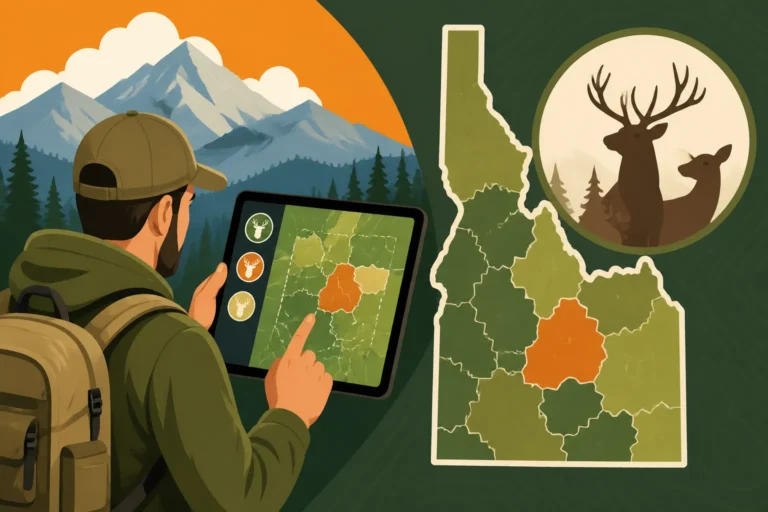
In today's hunting world, mapping technology is not just a convenience; it's an absolute necessity, especially when navigating complex land ownership patterns. Tools like onX Hunt have revolutionized how hunters understand and interact with the landscape. These apps utilize GPS to show your precise location relative to property boundaries, clearly distinguishing between federal public land, state land, private parcels, and even specific private ownership names. When you're standing at a four-way intersection of public and private property, an app like onX Hunt can show you exactly where that corner point is, allowing you to confirm that you are truly only stepping from public to public ground, if you decide to risk it.
However, even with these incredible tools, the "avoid at all costs" mentality should prevail. Use these apps primarily to identify unquestionable public access points and to plan routes that entirely circumvent corner crossing scenarios. Before you ever leave home, use the map layers on tools like onX Hunt or GoHunt to pre-scout your chosen unit. Look for clear ingress and egress points, identify any potential corner crossings, and plan detours in advance. The Idaho Hunt Planner Is the Tool to Start With as it provides a fantastic overview of units, seasons, and drawing odds, but you'll need a detailed mapping app layered on top to really nail down those exact property lines. Understanding Reading a Land Ownership Layer Correctly is vital to making informed decisions in the field.
Seeking Permission and Alternative Access
Sometimes, a direct route across a small sliver of private land, or even a corner, would make your hunt significantly more feasible. In these situations, the most ethical and legally sound approach is to seek explicit permission from the landowner. A respectful, face-to-face conversation can go a long way. Many landowners are reasonable and, if approached courteously, might grant permission, especially if you explain your intentions and assure them you will respect their property. Always ask for permission in writing if possible, detailing the specific area and duration of access. This protects both you and the landowner.
Furthermore, explore alternative access programs. Idaho boasts an excellent initiative called Access Yes Opens 328,000 Private Acres in Idaho, which provides public access to private lands for hunting and fishing through agreements with landowners. These properties are often clearly marked and offer legitimate access to otherwise landlocked public lands or provide additional hunting opportunities on private ground. Always consult the Idaho Fish and Game website or the Access Yes maps to find these locations and understand their specific rules. Beyond formal programs, consider exploring other large public tracts like Hunting Idaho's National Forests and BLM Ground or even looking at more remote options like Hunting the Frank Church River of No Return where land ownership is less fragmented, though these areas come with their own challenges. Ultimately, being proactive in securing Getting Landowner Permission in Idaho can unlock opportunities you might otherwise miss.
Broader Implications and Future Outlook
The issue of corner crossing is more than just a nuisance for individual hunters; it's a symptom of a larger, ongoing debate about public land access in the West. How we navigate these complex issues today will undoubtedly shape the future of hunting and outdoor recreation in Idaho.
The Need for Clearer Legislation
The current legal ambiguity surrounding corner crossing serves neither hunters nor landowners well. For hunters, it creates fear and limits access to public resources. For landowners, it fosters frustration and the feeling that their property rights are being eroded, leading to potential conflict. A clear legislative solution, whether at the state or federal level, would provide much-needed certainty. Such legislation could explicitly define what constitutes trespass at a corner intersection, or it could establish a legal right of passage from public land to public land at common corners, possibly with specific conditions or requirements.
The debate is complex, balancing fundamental property rights with the public's right to access their shared resources. Recent judicial rulings in other states have, at times, sided with hunters, but these decisions are often specific to state law and factual circumstances, making their direct applicability to Idaho uncertain. Without clear guidance, disputes will continue to arise, placing burdens on the legal system and creating ongoing friction. Hunters and landowners alike would benefit from a legislative framework that clarifies the rules, reduces conflict, and creates a predictable environment for everyone.
Advocating for Hunter Access
As hunters, we have a vital role to play in advocating for responsible public land access. This means supporting organizations that work tirelessly to protect and expand access, like national conservation groups and local sportsmen's associations. These groups often engage with policymakers, participate in legal challenges, and work directly with land management agencies to find solutions that benefit both wildlife and the public. Being an ethical, law-abiding hunter is also a powerful form of advocacy. Every time you respect private property, pack out your trash, and follow game laws, you contribute to a positive public image of hunters. This positive image is crucial when advocating for continued access and when discussing contentious issues like corner crossing.
The landscape of public land access is constantly evolving, influenced by population growth, changing land use patterns, and legal interpretations. Staying informed about proposed legislation, court cases, and new access initiatives is essential. Remember, The Best Public Land Units in Northern Idaho and Public Land Opportunity in Southern Idaho are only truly accessible if we collectively work to ensure respectful and legal access. By actively participating in the conversation and demonstrating a commitment to responsible outdoor ethics, hunters can help shape a future where public land remains open and accessible for generations to come, fostering a spirit of cooperation rather than conflict between diverse stakeholders.
| Land Type | Typical Public Access | Corner Crossing Status (Idaho) | Recommendations for Hunters |
|---|---|---|---|
| Federal Public (BLM, NF) | Generally open | Legally ambiguous | Avoid if possible; use mapping tools to plan detours. |
| State Public | Generally open | Legally ambiguous | Avoid if possible; consider alternative routes. |
| Private Land | Permission required | Strictly prohibited (trespass) | Always obtain explicit, preferably written, permission before entering. |
| Access Yes Program | Specific agreements | Follow program rules | Consult program details and designated access points; permission is built-in under program rules. |
Disclaimer
This article is for general informational purposes only and does not constitute professional advice. Laws, prices and regulations vary by location and change over time. Consult a qualified professional for guidance on your specific situation.