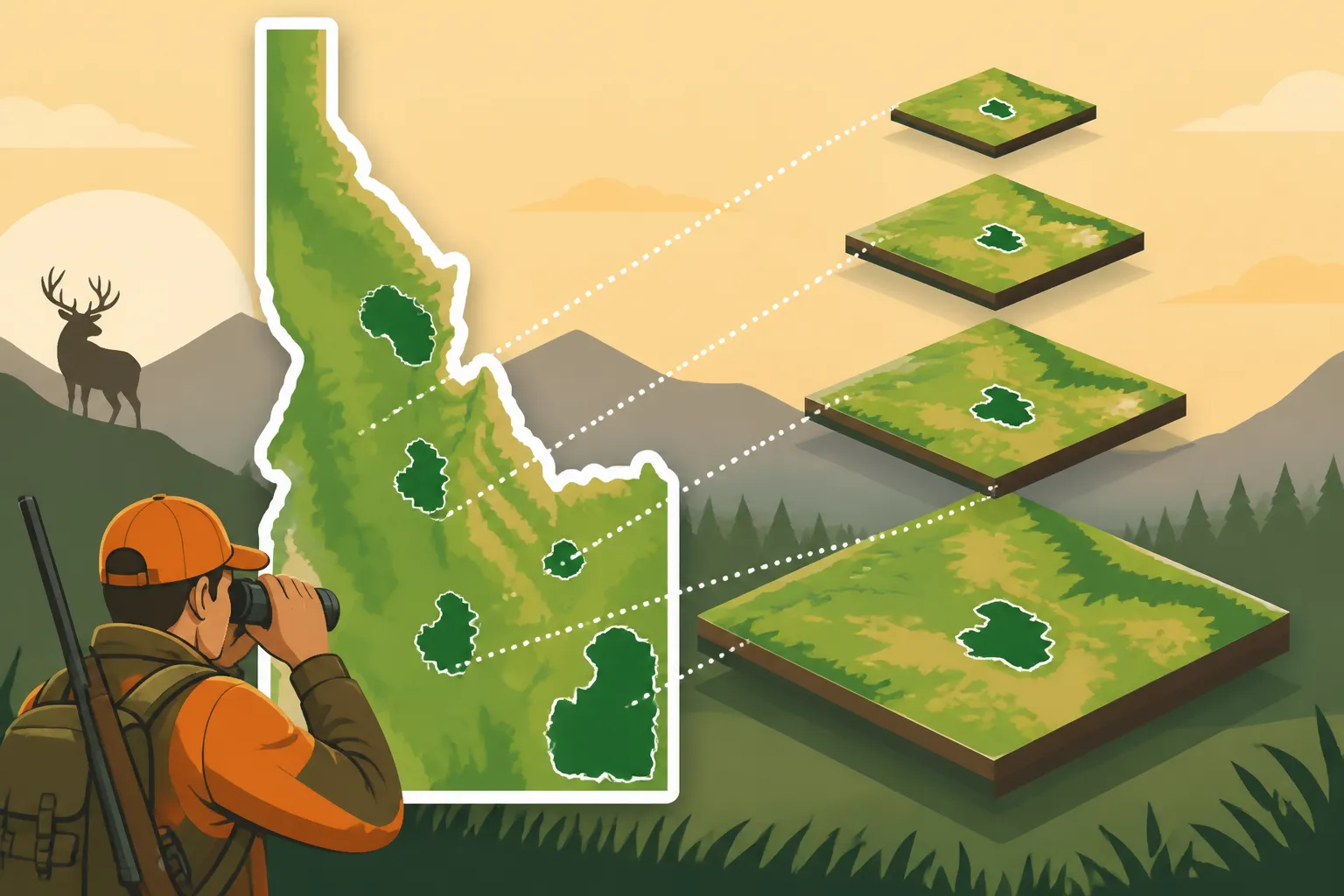
How Large Idaho’s WMAs Actually Are
Understanding the sheer scale of public land in Idaho can be a real head-scratcher, and when it comes to Wildlife Management Areas, or WMAs, it's not always clear just how much ground you're looking at. Hunters often wonder if a WMA is a small, intensively managed parcel or a vast expanse offering a true backcountry feel. This guide aims to pull back the curtain on the varied sizes of Idaho's WMAs and what that means for your hunting adventures.
The Purpose and Promise of Idaho's WMAs
When we talk about hunting in Idaho, our minds often jump to massive tracts of national forest or BLM land. But the Idaho Department of Fish and Game (IDFG) also manages a network of Wildlife Management Areas, and these are incredibly vital pieces of the puzzle for wildlife conservation and public hunting access. They're not just random parcels of land; each one is acquired and managed with specific goals in mind.
These WMAs are designed to provide crucial habitat for a variety of game and non-game species, often focusing on critical winter range for big game like elk and deer, or prime nesting and brood-rearing areas for upland birds and waterfowl. This means they are incredibly rich in wildlife, and by extension, offer fantastic hunting opportunities. However, the exact experience you'll have can hinge dramatically on the WMA's physical size and its specific management objectives. It’s a core component of Idaho Wildlife Management Areas by Region.
What Exactly is a WMA?
At its heart, a WMA is a piece of land owned and actively managed by the state's wildlife agency – in our case, the Idaho Department of Fish and Game. Unlike national forests or BLM lands, which have broader mandates like timber production, grazing, or recreation, WMAs are laser-focused on wildlife. This means everything from habitat manipulation – think controlled burns, planting specific forage, or managing water sources – to limiting human disturbance in sensitive areas. They're often purchased using funds generated from hunting and fishing license sales, making them a direct benefit of our contributions as sportsmen and women.
For hunters, WMAs represent dedicated public access. You're not worrying about navigating private land boundaries or finding access points; these areas are set aside specifically for wildlife-dependent recreation, with hunting being a primary activity. This can be a huge relief, especially if you're trying to figure out Hunting Rules Specific to Idaho WMAs or are newer to hunting and feeling overwhelmed by vast, undefined public areas. The management is often visible, from improved roads and parking areas to interpretive signs, all geared towards making your experience, and the wildlife's health, better.
Why Size Matters for Hunters
The size of a WMA isn't just a number on a map; it fundamentally shapes the type of hunting experience you can expect. A smaller WMA, perhaps a few hundred acres, might be perfect for an afternoon pheasant hunt or for targeting a specific waterfowl impoundment. It might feel more like a controlled environment, where you're likely to encounter other hunters, and where careful planning around pressure is key. These smaller spots are often vital wintering grounds or migration corridors, attracting a lot of animals to a concentrated area.
On the other hand, a WMA that sprawls over tens of thousands of acres offers a completely different proposition. These larger WMAs can mimic a true backcountry hunt, with opportunities for extended stalks, less human interaction, and a more expansive feel. They often encompass diverse terrain, from river bottoms to timbered slopes, offering habitat for a wider array of species. Knowing the size helps you prepare your gear, plan your scouting trips, and set realistic expectations for the density of both game and fellow hunters. For example, a large WMA might feel more like a mini-national forest unit, impacting how you approach Hunting Idaho's National Forests and BLM Ground.
Idaho's WMA Landscape: A Spectrum of Sizes
Idaho's WMAs are far from uniform. You'll find everything from relatively compact parcels that might feel more like a community park to truly vast landscapes that can take days to explore thoroughly. This diversity is intentional, designed to protect various critical habitats across the state's incredibly varied topography and ecological zones. Trying to nail down a single "average" size wouldn't really tell the whole story, because the average wouldn't capture the extremes.
It's this very range that makes them so interesting for hunters. You might have a WMA that’s just a few hundred acres, tucked into an agricultural valley, specifically managed for waterfowl or pheasants. Then, across the state, you could find another WMA that spans tens of thousands of acres, covering steep canyon country and high desert, providing crucial winter range for mule deer and elk. This spectrum means that hunters can find a WMA suited to almost any hunting style, from quick day trips to multi-day excursions.
From Pocket-Sized to Expansive Holdings
Idaho truly has WMAs that cover a surprising range of acreage. On one end of the spectrum, you might encounter WMAs that are just a few hundred acres, often strategically located along rivers, in floodplains, or adjacent to agricultural fields. These smaller areas are typically managed intensively for specific species, such as migratory waterfowl, pheasants, or even certain songbirds, and are crucial for providing safe havens and breeding grounds. Hunting on these often means understanding the specific boundaries and being prepared for relatively close encounters with other hunters, especially on opening weekend. They're fantastic for accessible, targeted hunts, but you won't be escaping into the wilderness.
Then, there are the titans – the WMAs that stretch for thousands, sometimes tens of thousands, of acres. These are often found in more rugged, remote parts of the state, encompassing diverse landscapes from sagebrush steppe to dense timber and riparian corridors. These large WMAs offer a much more expansive hunting experience, closer to what you'd find on larger federal lands. They can hold significant populations of big game like elk, mule deer, and sometimes bear, providing opportunities for longer stalks, more solitude, and a more immersive backcountry feel. These larger areas are where you might feel like you're truly getting away from it all, requiring more advanced planning and physical exertion, much like tackling Packing an Elk Out of Steep Country Alone.
How WMA Size Impacts Your Hunt Planning
The size of an Idaho WMA directly dictates your hunting strategy and preparations. For a smaller WMA, your focus might be on short, intensive hunts. You'd likely scout for specific bottlenecks, pinch points, or cover that animals use for refuge. Given their limited size, knowing where other hunters tend to congregate will be crucial for finding your own space. You might plan for a morning or evening hunt, focusing on areas with easy access, and be prepared to move if the pressure becomes too high. Parking access and entry points become paramount in these smaller parcels.
When you're looking at a larger WMA, your planning shifts dramatically. You can think about multi-day trips, packing in gear, and covering significant ground on foot. These areas lend themselves to more traditional spot-and-stalk tactics, or even calling strategies for elk, as there’s more room for animals to move and for you to operate without constantly bumping into others. You'll want to focus on understanding the larger landscape – identifying winter range, bedding areas, and migration routes. For a deeper dive into strategizing, tools like onX Hunt become invaluable for understanding not just boundaries, but also topography, water sources, and potential access routes within these vast areas. When considering a broader hunt, this scale difference is similar to figuring out Idaho Elk Zones and the A Tag or B Tag Choice.
Navigating WMA Boundaries and Scale
One of the biggest frustrations for hunters, especially when new to an area, is figuring out exactly where one type of land ends and another begins. WMAs are no exception. You might see a WMA listed in the regulations, know its general vicinity, but getting a real sense of its precise dimensions and boundaries on the ground can be a challenge without the right tools. It's not like every WMA has a fence line and a welcome sign every hundred yards. Often, their boundaries might follow natural features, old fence lines, or property markers that aren't immediately obvious to the casual observer.
This ambiguity can lead to hesitations, or worse, accidental trespass, which no hunter wants. Understanding the true scale of a WMA isn't just about knowing if it's "big" or "small"; it's about being able to visualize it in the landscape, identify key access points, and understand how it connects to surrounding public or private lands. This clarity is essential for effective scouting, safe hunting, and respecting land ownership, a fundamental part of Hunting Idaho's National Forests and BLM Ground.
The Challenge of Knowing "How Big" Without a Map
Imagine driving by a sign that says "Idaho Department of Fish and Game WMA" on the side of a highway. You know it's a hunting area, but what does that really mean? Is it a narrow strip along the river? Does it extend back into the hills for miles? Without a detailed map, it's virtually impossible to gauge the actual size and shape of the WMA. This lack of immediate visual information can be incredibly frustrating. You might scout an area for hours, only to realize later that half of your scouting was done on adjacent private land or that the WMA itself is much smaller than you envisioned, limiting your hunting options.
This "mystery meat" approach to land boundaries is a common headache. It leads to wasted time, uncertainty, and a diminished hunting experience. You want to know if there's enough room to get away from the crowds, if there's diverse habitat to hold different species, and if your planned stalk won't accidentally carry you onto land where you don't have permission. This is particularly true when you're exploring new areas, or if you're a nonresident trying to make the most of your trip, trying to understand Idaho's Motorized Hunting Rule Runs August Into December in relation to these undefined boundaries.
Tools for Pinpointing WMA Dimensions
Thankfully, in today's digital age, hunters have incredibly powerful tools at their fingertips to overcome the challenge of ambiguous WMA boundaries and sizes. Gone are the days of relying solely on paper maps that might be outdated or lack the granular detail you need in the field. Modern hunting apps are absolute game-changers here. Brands like onX Hunt have revolutionized how we interact with public land, allowing you to see precise WMA boundaries right on your phone or GPS device. You can zoom in, see the contour lines, identify access roads, and instantly know whether you're standing on WMA land, private ground, or national forest. This is critical for planning and executing a hunt without second-guessing your location.
Similarly, platforms like GoHunt provide not just boundary information, but also integrate data on drawing odds, harvest statistics, and unit-specific details that can help you select which WMAs might be worth exploring. Imagine being able to virtually scout an entire WMA from your couch, understanding its true acreage, the shape of its terrain, and even potential choke points, all before you ever set foot on the ground. These tools empower you to make informed decisions, visualize the true scale of a WMA, and maximize your hunting time, helping you understand The Idaho Hunt Planner Is the Tool to Start With on a much deeper level.
A Look at Diverse Idaho WMAs and Their Scale
To truly grasp the concept of WMA sizes in Idaho, it's helpful to consider the two main categories they fall into: the sprawling, multi-thousand-acre expanses and the more focused, smaller parcels. Each type serves a distinct ecological purpose and offers a unique hunting experience. While I can't give specific, current acreages for every single WMA without live data, I can speak to the general characteristics and implications of these different scales based on their typical functions across the state.
Understanding these differences is key to choosing the right WMA for your hunting goals. Are you looking for a quick morning hunt with high probability of seeing certain species, or are you aiming for a multi-day backcountry challenge? The size of the WMA will be a major factor in answering that question and will also influence other aspects of your hunt, such as how far you'll need to walk and the level of hunting pressure you can expect.
Large WMAs: Backcountry Feel, Diverse Opportunities
When you look at Idaho's larger WMAs, often encompassing thousands or even tens of thousands of acres, you're looking at areas that, in many ways, mimic the feel of hunting in a national forest or other vast public lands. These WMAs are typically situated in more rugged or expansive landscapes – think along major river systems, in significant canyon breaks, or across vast sagebrush and timber transitions. Their sheer size means they can support robust, free-ranging populations of big game like elk, mule deer, and sometimes even moose or bear, depending on the specific habitat.
Hunting these large WMAs often involves more strenuous effort, longer hikes, and potentially multi-day excursions. You might find yourself several miles from the nearest road, providing that sought-after sense of solitude and immersion in nature. The diverse terrain within these larger WMAs means varied opportunities: you could be glassing open hillsides for deer in the morning, then still-hunting through dense timber for elk in the afternoon. They are perfect for hunters seeking a challenging experience, where woodsmanship and physical fitness are just as important as marksmanship, echoing the challenges of Glassing Idaho Breaks for Mule Deer. They often hold significant portions of critical winter range, meaning that late-season hunts can be particularly productive as animals migrate down to lower elevations.
Smaller WMAs: Niche Opportunities and Strategic Use
On the flip side, Idaho's smaller WMAs, often ranging from a few hundred to a couple of thousand acres, serve a crucial but different role. These are usually highly specialized areas, managed intensively to provide specific habitat for particular species or to protect critical resources. You'll often find them strategically located: perhaps a narrow strip of riparian habitat along a river, a parcel of wetlands managed for waterfowl, or a section of irrigated farmland set aside for pheasants. They are invaluable for accessible hunting opportunities, especially for species that thrive in specific, often limited, ecological niches.
Hunting a smaller WMA typically means a more focused approach. You're likely targeting specific game animals, like ducks over decoys, pheasants in dense cover, or maybe even an early-season deer passing through a particular choke point. These areas are often more accessible by vehicle and can experience higher hunting pressure due to their convenience. Success here often comes down to precise timing, understanding animal behavior within a confined area, and being adaptable to other hunters' presence. They're excellent for day trips, introducing new hunters to the field, or for targeting specific game without needing to commit to a multi-day backcountry expedition. For specific species, understanding Chukar, Grouse and Idaho's Upland Country on these smaller, managed parcels can be a real advantage.
Managing Expectations: WMA Size vs. Hunting Pressure
It's a common misconception among hunters that simply finding a "big" piece of public land automatically guarantees solitude and unpressured animals. While larger WMAs certainly offer more space for animals and hunters to spread out, the reality of hunting pressure is far more nuanced. In Idaho, like many places in the West, readily accessible public lands – even big ones – can see significant hunter numbers, especially during opening weekends and peak seasons. This is particularly true for WMAs that are well-known, close to population centers, or offer relatively easy access via established roads.
Understanding this dynamic is crucial for setting realistic expectations and planning a successful hunt. A massive WMA with a good road system might be easier to access, but that very ease can concentrate hunters in popular areas. Conversely, a large WMA with limited road access and rugged terrain might indeed offer more solitude, but it demands a higher level of physical fitness and preparation. The size of the WMA is just one piece of the puzzle; how that size interacts with access, terrain, and reputation will ultimately determine how many other hunters you might encounter. It's a critical aspect often overlooked when looking at Idaho's Motorized Hunting Rule Keeps You on the Road.
The Paradox of Public Land: Size Doesn't Always Mean Solitude
You can pull up a map, see a WMA that looks enormous, and immediately envision yourself in an untouched wilderness, chasing unpressured game. The truth, however, can be a stark dose of reality. Many of Idaho's WMAs, even the larger ones, are designed to maximize public access and are often managed to improve habitat for specific species. This commendable goal, combined with the growing popularity of hunting, means that even vast areas can see significant pressure. Think about WMAs that straddle popular river corridors or those that feature well-maintained roads and numerous parking areas; these spots, regardless of their total acreage, can feel crowded during prime hunting times.
The paradox is that while the land is large, the hunters often gravitate to the most convenient and well-known spots within it. Animals, being smart, quickly learn to adapt to this pressure, often moving into thicker cover, becoming more nocturnal, or retreating to less accessible parts of the WMA. So, even in a huge WMA, you might find yourself bumping into other hunters if you stick to the easy-access zones. The challenge, then, isn't just finding a large WMA, but understanding the nuances of how hunters and game utilize that space. This is a common theme whether you're dealing with WMAs or figuring out Finding Low Pressure Ground on Opening Weekend on other public lands.
Scouting Smart for Low-Pressure Spots
So, how do you beat the pressure, even on a large, popular WMA? It all comes down to smart scouting and a willingness to work a little harder. The key is to leverage the size of the WMA to your advantage, by focusing on areas that deter other hunters. This often means looking at topographical maps for steep, rugged terrain, or identifying areas with limited road access that require a longer hike. Many hunters will stick to within a mile or two of their vehicle; pushing beyond that threshold can often put you into significantly less pressured territory.
Using satellite imagery and topographical maps, particularly with tools like onX Hunt, allows you to identify benches, draws, and dense timber pockets that might serve as natural sanctuaries for game animals. Look for north-facing slopes, remote water sources, or areas with thick cover that provide both food and security. Sometimes, even small elevation changes or a thick band of trees can deter casual hunters. It's about finding the "islands" of solitude within the larger WMA, where animals feel safe and are less likely to be disturbed. This meticulous scouting is similar to the approach needed for The Grid Glassing Method, Step by Step when searching for mule deer in expansive country.
Comparing WMA Characteristics
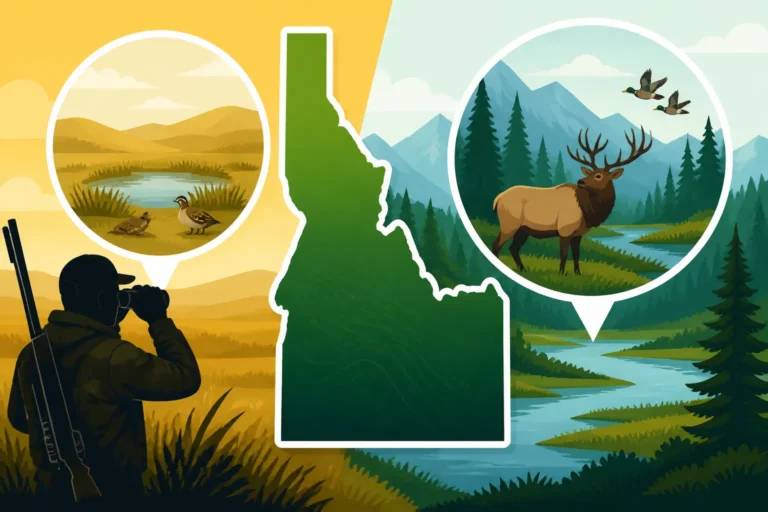
To help visualize the differences, here's a quick comparison of general characteristics you might find between smaller, more focused WMAs and larger, more expansive ones in Idaho.
| Feature | Smaller WMAs (e.g., hundreds to a few thousand acres) | Larger WMAs (e.g., many thousands to tens of thousands of acres) |
|---|---|---|
| Primary Focus | Specific habitat management (e.g., waterfowl, pheasants, critical winter range) | Diverse habitat management, large landscape conservation |
| Hunting Experience | Targeted, accessible, often good for day trips, higher chance of encountering other hunters | More expansive, backcountry feel, good for multi-day trips, potential for more solitude |
| Terrain | Often flatter, riparian zones, agricultural interfaces, specific habitat features | More varied: canyons, hills, timber, sagebrush, diverse ecosystems |
| Species Targeted | Waterfowl, upland birds (pheasant, quail), specific deer/elk migration corridors | Elk, mule deer, bear, moose, diverse upland birds |
| Access | Often good road access, multiple entry points, easy walk-in | Can have mixed access; some good roads, but often requires significant hiking or packing into interior |
| Pressure | Generally higher, especially in easily accessible areas, good pressure management strategy needed | Can be high in accessible zones, but opportunities to escape pressure by working harder/going deeper |
| Scouting Emphasis | Identifying pinch points, specific cover, food/water sources, understanding pressure patterns | Understanding large-scale animal movements, finding remote bedding areas, glassing vast expanses |
| Typical Gear | Shotgun, bird dog, waders, small pack, daypack | Rifle or archery gear, binoculars, spotting scope, larger backpack, camping gear, physically demanding |
Disclaimer
This article is for general informational purposes only and does not constitute professional advice. Laws, prices and regulations vary by location and change over time. Consult a qualified professional for guidance on your specific situation.