Idaho’s Motorized Hunting Rule and Where It Applies
One of the biggest headaches when planning an Idaho hunt, especially if you're venturing into new territory, is figuring out where you can actually drive. It's not just about finding the perfect elk wallow or mule deer glassing point; it's about navigating the labyrinth of regulations that dictate where your truck, ATV, or UTV can legally take you. This guide is going to strip away the confusion around Idaho's motorized hunting rule, diving deep into what it means, where it applies, and how you can stay on the right side of the law while still getting to your hunting grounds.
Understanding Idaho's Motorized Hunting Rule
Let's be honest, the thought of driving right to your glassing knob or a fresh set of elk tracks is tempting. But Idaho's motorized hunting rule is in place for a reason – primarily to manage wildlife, prevent resource damage, and ensure a fair chase experience for everyone. It's a fundamental part of hunting ethics and conservation in the Gem State, and understanding its nuances is crucial, not just for legal compliance but for respecting the wild spaces we all cherish.
What "Motorized" Actually Means on the Ground
When we talk about "motorized" in the context of Idaho hunting, we're talking about any vehicle that operates on an engine. This isn't just your big pickup truck; it includes ATVs, UTVs (side-by-sides), motorcycles, snowmobiles, and even electric bicycles if they're being used in a manner that falls under the motorized vehicle definition in specific areas. The key is that these vehicles provide a mechanical advantage for travel.
The regulations make a clear distinction between traveling on designated roads and hunting from those roads. While you can typically use motorized vehicles to access certain areas, hunting itself (like shooting, spotting, or pursuing game) from a motorized vehicle or immediately adjacent to one on non-designated routes is generally prohibited. This means you can't just drive around spotting game, jump out, and shoot. The intent is to ensure that hunters are actively engaging in the pursuit of game on foot, adding to the challenge and ensuring a more ethical hunt. Think of it as using your vehicle as a tool for transportation to a starting point, not as a mobile hunting blind.
The Core Principle: Stay on Established Roads
At its heart, Idaho's motorized hunting rule boils down to one simple, yet often confusing, principle: stay on established roads. But what exactly counts as an "established road"? This is where many hunters get tripped up, because what looks like an old two-track leading into a basin might not be considered an "established road" by the authorities. Generally, these are routes that are maintained for public vehicular travel and are clearly marked or identified on official maps. They have a history of being used by vehicles, not just a game trail that’s been rutted out by a few trucks.
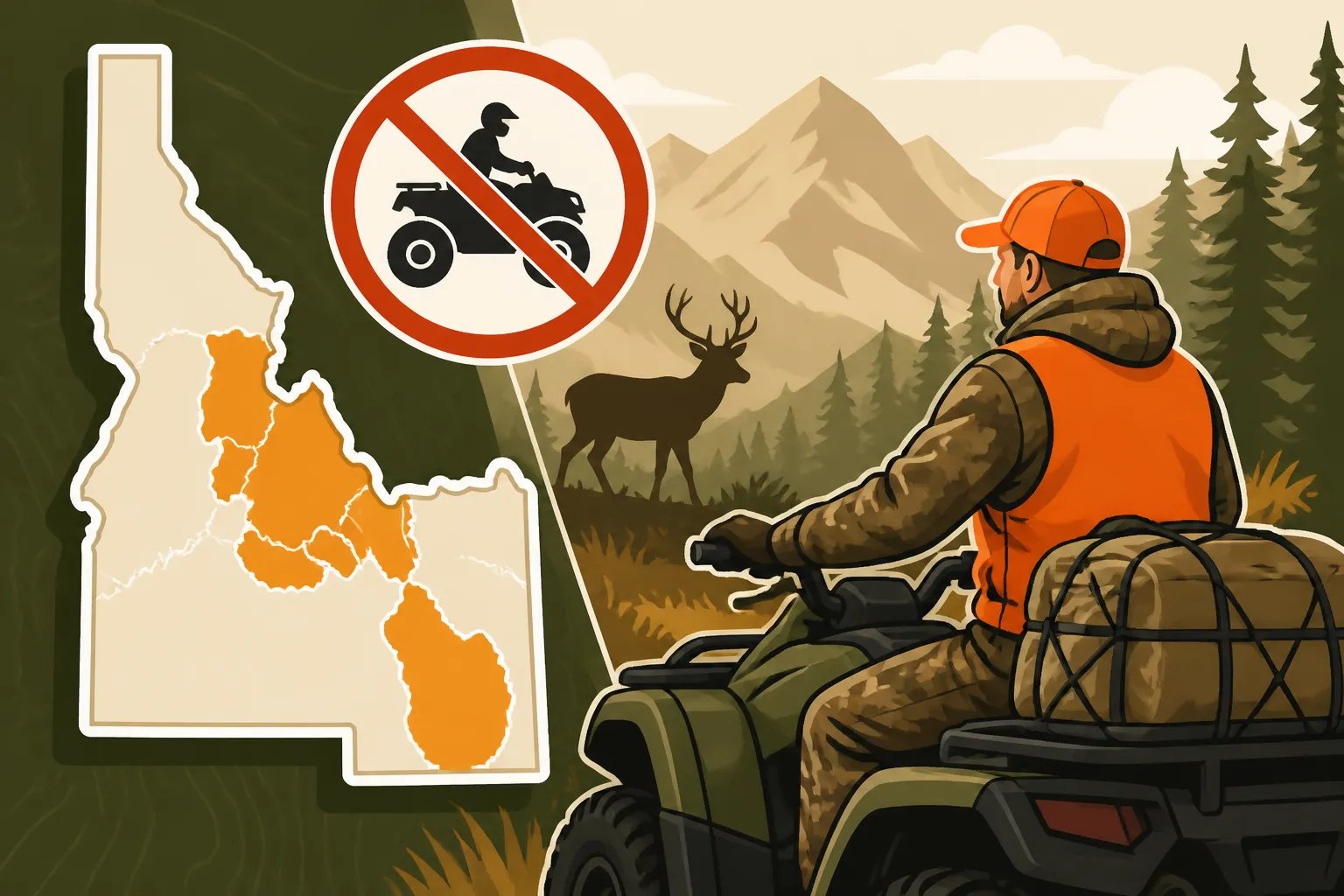
The rule prohibits operating motorized vehicles off designated routes. This means no driving across meadows, up dry creek beds, or creating new trails just because it looks like a shortcut to your secret spot. The spirit of the rule is to concentrate vehicle use to specific corridors, minimizing disturbance to wildlife habitats, preventing erosion, and preserving the overall wilderness character of an area. It’s about leaving a light footprint. When in doubt, assume a route is not an established road unless you have official confirmation, usually through maps provided by the land management agency. This cautious approach can save you a lot of grief and potential fines. You'll want to review What Counts as an Established Roadway to avoid any missteps.
Where the Rule Applies: Specific Land Designations
Idaho is a state with vast swaths of public land, a hunter's paradise, really. But not all public land is managed the same way, and understanding these distinctions is critical for navigating motorized access. The motorized hunting rule isn't a blanket statement that applies identically across every acre; its application often depends on who manages the land and what specific plans they have in place.
National Forests and BLM Lands
Much of Idaho's prime hunting habitat falls under the jurisdiction of the U.S. Forest Service or the Bureau of Land Management (BLM). These federal agencies have their own travel management plans, and this is where things can get specific. For National Forests, the definitive guide to motorized travel is the Motor Vehicle Use Map (MVUM). These maps, usually available digitally or for free at Forest Service offices, clearly depict which roads and trails are open to motorized vehicles, which are seasonally closed, and which are completely off-limits. They are the law of the land when it comes to driving on Forest Service property. If a road isn't on the MVUM as open, assume it's closed. This includes old logging spurs that might look passable but are not designated.
BLM lands operate under similar principles, often with travel management plans that designate specific routes. While MVUMs are specifically for Forest Service ground, BLM often has its own set of maps or guidelines. The general rule of thumb remains: stick to existing, designated roads. Dispersed camping might allow for a short drive off a designated road to a campsite, but this is an exception, not an invitation to create new two-tracks while hunting. This is where tools like Using onX Layers for Idaho Public Land become indispensable, as they often integrate these MVUM and BLM travel layers directly into the app, saving you from having to consult multiple paper maps.
Idaho Wildlife Management Areas (WMAs) and State Lands
Idaho Fish and Game (IDFG) manages a network of Wildlife Management Areas across the state, specifically designed to conserve wildlife and provide public access. While these areas are fantastic for hunting, they often come with their own, sometimes stricter, set of regulations regarding motorized access. Many WMAs have very limited motorized access, restricting vehicles to paved or main gravel roads, and sometimes completely prohibiting off-road travel to protect sensitive habitats and minimize disturbance to wintering game.
Similarly, Idaho also has State Endowment Lands, managed by the Idaho Department of Lands. These parcels are often interspersed with federal and private lands, creating a patchwork that can be confusing. While some state lands are open to motorized access on existing roads, others may have specific restrictions or require an easement to cross if they are landlocked by private property. It's crucial to check the specific regulations for any WMA or State Land parcel you plan to hunt. Don't assume that just because it's public, it means open season for your ATV. Local IDFG offices are a great resource for current WMA rules, and The Idaho Hunt Planner Is the Tool to Start With also provides valuable information on these areas.
| Land Type | Primary Authority | Motorized Rule Basis | Key Tool for Access Info | Typical Vehicle Access |
|---|---|---|---|---|
| National Forest | U.S. Forest Service | Motor Vehicle Use Maps (MVUMs) | MVUMs, onX Hunt | Designated roads & trails; off-route travel generally prohibited |
| BLM Land | Bureau of Land Management | Travel Management Plans & maps | BLM maps, GoHunt, onX Hunt | Designated roads & trails; off-route travel generally prohibited |
| Wildlife Mgt. Areas | Idaho Fish and Game | WMA-specific rules (often stricter) | IDFG website, local offices | Often limited to main roads, specific entry points |
| State Endowment Land | Idaho Dept. of Lands | IDL rules, easements for access | IDL website, county plat maps | Varies; typically existing roads, check for specific rules |
| Private Land | Landowner | Landowner permission, trespass laws | Direct contact, Access Yes maps | At landowner's discretion |
Common Hunter Misconceptions and Frustrations
Even with the best intentions, Idaho's motorized hunting rule can be a source of significant frustration and misunderstanding for hunters. It's not always black and white, and scenarios arise in the field that can test your knowledge and patience. Let's tackle a couple of the most common ones.
The "Retrieving Downed Game" Trap
This is perhaps the single biggest source of confusion and temptation for hunters. You've just made a great shot on an elk or a deer, and it's piled up 300 yards off the main road in a steep, brushy draw. Your first thought, naturally, is "Can I just drive my ATV in there to get it?" The answer, in almost all cases, is a resounding no. Idaho's motorized hunting rule generally prohibits driving off an established road to retrieve downed game. The only exception, and it's a critical one, is if the area is specifically designated for such access or if you have explicit, written permission from the land management agency before you drive off-road. This is exceedingly rare, especially on public land during hunting season.
The frustration here is palpable. You want to be efficient, respectful of the meat, and avoid an arduous pack-out. However, the rule prioritizes the integrity of the habitat and fair chase. The intention is that if you hunt deep enough into the backcountry to harvest an animal, you should be prepared to pack it out under your own power, or with the aid of horses or non-motorized game carts. Thinking you can just zip in with your side-by-side after the shot is a common and costly mistake. Remember, Why You Cannot Drive Off Road to Retrieve Game is a rule that has serious implications if violated. Always plan your hunt with the expectation of a manual pack-out from your designated parking spot.
Interpreting "Open" vs. "Closed" Roads
Another frequent point of contention is understanding what constitutes an "open" or "closed" road. It sounds simple enough, but out in the vastness of Idaho's public lands, it's rarely as straightforward as a locked gate. You might encounter roads that are simply overgrown, have faded away to a faint two-track, or are blocked by natural debris like fallen trees. Does an old, unmaintained track still count as a "road"? What about a road that's completely clear but has a small berm across its entrance?
Generally, if a road is not explicitly shown as open on an official map (like an MVUM for Forest Service land) or has any kind of physical barrier (even a small berm or a pile of rocks), it should be considered closed to motorized traffic. Seasonal closures are also a huge factor. Many roads, especially in higher elevations, are closed to vehicles for parts of the year to protect wintering wildlife, prevent road damage during wet seasons, or for fire danger. These closures are often posted with signs, but sometimes they're simply marked on maps. The period from August into December, which covers much of the big game season, is a common time for these rules to be actively enforced, as detailed in Idaho's Motorized Hunting Rule Runs August Into December. It's your responsibility as a hunter to know the current status of the roads you plan to use, which leads us to the next important section.
Tools and Strategies for Navigating Motorized Rules
Given the complexities of Idaho's motorized hunting rule, simply "hoping for the best" isn't a strategy. Modern technology and diligent planning are your best allies in ensuring you stay compliant and focus on the hunt itself, not on worrying about vehicle access.
Leveraging Digital Mapping Tools (onX Hunt, GoHunt)
In today's hunting world, digital mapping applications like onX Hunt and GoHunt are no longer luxuries; they are essential tools, especially in a state like Idaho with its patchwork of land designations and intricate road systems. These apps typically layer official data onto satellite imagery, providing a crystal-clear picture of land ownership, unit boundaries, and crucially, motorized vehicle restrictions.
With onX Hunt, for example, you can toggle on layers that show Forest Service Motor Vehicle Use Maps (MVUMs), BLM travel restrictions, and even private land boundaries. This means you can see, in real-time or with downloaded maps offline, exactly which roads are open, which are closed, and which have seasonal restrictions. You can scout from your couch, identifying legal parking spots and planning your walking routes long before you ever set foot in the woods. GoHunt offers similar robust mapping features within its platform, often integrating draw odds and unit statistics, which can help you select areas that align with your access preferences. These tools literally put a living, breathing map of Idaho's regulations in the palm of your hand, minimizing guesswork and greatly reducing the chance of accidental trespass or rule violation.
Understanding Motor Vehicle Use Maps (MVUMs)
While digital apps make life easier, understanding the source material is still incredibly valuable. Motor Vehicle Use Maps (MVUMs) are the official documents published by the U.S. Forest Service. They are black and white, often look a bit like a spaghetti noodle diagram, but they are the definitive guide for motorized travel on National Forest land. These maps delineate all roads and trails open to motorized vehicle travel, typically organized by vehicle type (e.g., full-sized vehicles, ATVs, motorcycles).
The critical thing about MVUMs is that if a road or trail is not shown on the map as open, then it is considered closed to motorized use. This applies even if there are no physical barriers. Relying solely on what "looks open" is a recipe for trouble. You can download MVUMs for free from individual National Forest websites, or pick up paper copies at Forest Service ranger stations. Learning to read these maps is a fundamental skill for any hunter who plans to use Motor Vehicle Use Maps for Forest Ground to access prime hunting ground. Cross-referencing these maps with your digital tools like onX Hunt provides the most comprehensive and reliable information.
Scouting and Planning Your Access
Even with the best maps and apps, there's no substitute for thorough scouting and planning. This involves more than just identifying promising elk country; it means meticulously planning how you'll get to that country and where you'll legally park your vehicle. Use your digital maps to identify all potential access points, paying close attention to road designations and seasonal closures. E-Scouting an Idaho Unit Before the Season can help you visualize the terrain and road networks before you even leave home.
Consider where you'll leave your vehicle. Is there a designated trailhead or parking area? If not, is there a wide enough shoulder off an open road where you can park without impeding traffic or blocking access? Remember that even if a road is open, parking restrictions might apply, especially near gates or private property. If you're venturing deep into the backcountry, think about how you'll travel once you leave your vehicle. Hiking, mountain biking, or using pack animals are all viable alternatives that allow you to cover ground while respecting motorized restrictions. Planning your hunt, from access to extraction, is key to a smooth and legal experience. Don't forget to also consider Camping on Forest Ground During Hunting Season and where you can legally set up your base camp in relation to motorized access points.
Penalties and Ethical Considerations
Ignoring Idaho's motorized hunting rules isn't just a minor inconvenience; it carries significant legal consequences and reflects poorly on the hunting community as a whole. Understanding these repercussions and the underlying ethical principles is paramount for responsible hunters.
The Consequences of Violating Motorized Rules
Violating Idaho's motorized hunting rules can lead to a range of unpleasant and costly penalties. At the very least, you could face hefty fines that quickly add up, easily costing you hundreds or even thousands of dollars. Beyond monetary penalties, repeat offenses or egregious violations could lead to the revocation of your hunting license, not just for Idaho, but potentially in other states through interstate compacts. Imagine losing your ability to hunt for several years, all because of a questionable shortcut in your UTV.
In some severe cases, particularly if significant resource damage occurs or if the violation is tied to other illegal activities like poaching, your vehicle could even be impounded or confiscated. Game wardens and land management officers take these rules very seriously because they are fundamental to wildlife conservation and managing public lands. They are out there, they know the roads and trails, and they know where violations are likely to occur. It's simply not worth the risk. For a deeper dive into the potential legal ramifications, you might want to review Penalties for Breaking the Motorized Rule.
The Ethics of Motorized Use and Fair Chase
Beyond the legal implications, there's a profound ethical dimension to Idaho's motorized hunting rule. The concept of "fair chase" is a cornerstone of ethical hunting, meaning that hunters should not have an unfair advantage over the game they pursue. Driving off-road to chase down an animal, or even just to get within an easy shooting distance, fundamentally undermines this principle. It reduces the challenge, diminishes the value of the hunt, and can create undue stress on wildlife.
Furthermore, illegal motorized use can cause significant damage to the very habitats we rely on for healthy game populations. Ruts from vehicles can lead to erosion, damage fragile vegetation, and disrupt seasonal migrations or wintering grounds. It also creates a negative perception of hunters among the general public and other outdoor users. When people see illegal tracks or environmental damage, it casts a shadow on all hunters, regardless of whether they followed the rules. As stewards of the land and wildlife, we have a responsibility to adhere to these rules, not just because they're laws, but because they align with a deeper respect for the wild places and the animals that call them home. Our actions define us, and by demonstrating responsible motorized use, we uphold the integrity of hunting for future generations.
Disclaimer
This article is for general informational purposes only and does not constitute professional advice. Laws, prices and regulations vary by location and change over time. Consult a qualified professional for guidance on your specific situation.