Designated Wilderness Changes the Rules for Idaho Nonresidents
If you've ever dreamt of chasing an Idaho bull elk deep in the backcountry, the kind of hunt where you pack in for days and see no other human tracks, then you've probably stumbled upon a rather frustrating reality: if you're not an Idaho resident, and you plan to hunt certain species within a designated wilderness area, the rules change significantly. This guide is here to untangle that complex web, explaining exactly when a nonresident hunter needs a guide in Idaho's vast wilderness, which species are affected, and how to successfully navigate these unique regulations.
Understanding Idaho's Designated Wilderness Areas
Idaho is home to some of the largest and most rugged wilderness areas in the lower 48, vast tracts of land set aside to remain wild and untamed. For a nonresident hunter, these areas represent both incredible opportunity and a unique set of challenges, especially concerning the requirement of a licensed guide. It's crucial to understand what these areas are and why they exist before diving into the hunting regulations.
What Exactly is Designated Wilderness?
Designated Wilderness, under the Wilderness Act of 1964, is a special classification of federal land intended to preserve its pristine, undeveloped character. When a landscape gets this designation, it means very specific things for how it can be used and managed. Think of it as land where "man is a visitor who does not remain." This isn't just a fancy name; it carries strict rules. You won't find any roads, permanent structures, or motorized vehicles within its boundaries. Even mountain bikes are often prohibited. The idea is to maintain an area where nature's processes can unfold largely uninterrupted, offering unparalleled opportunities for solitude and primitive recreation, like backpacking, horse packing, and, of course, hunting. This commitment to wildness means that once you step foot inside, you are relying entirely on your own skills, preparation, and perhaps the capabilities of pack animals. The scale alone can be daunting, with many of these areas encompassing millions of acres, making even a short foray feel like a true expedition into the unknown.
Key Wilderness Areas in Idaho for Hunters
Idaho boasts an impressive roster of these wild sanctuaries, each offering distinct challenges and incredible hunting experiences. The most famous and largest is the Frank Church River of No Return Wilderness, often simply called "the Frank Church." This massive area, over 2.3 million acres, is a cornerstone of Idaho's wilderness heritage, known for its deep canyons, towering peaks, and the iconic Salmon River snaking through its heart. It's a place where you can truly get lost in the best sense of the word, a true test for any backcountry enthusiast. Another significant area is the Selway-Bitterroot Wilderness, straddling the Idaho-Montana border. It's renowned for its dense timber, rugged mountains, and healthy populations of big game, but its terrain is notoriously difficult to navigate. Selway-Bitterroot Wilderness Access in Idaho can be a real commitment. Further south, the Sawtooth Wilderness offers spectacular alpine scenery and high-elevation hunting, while the Gospel-Hump Wilderness provides a mix of timber and open ridges. Finally, parts of Hells Canyon Wilderness, the deepest canyon in North America, also fall within Idaho's borders, presenting extreme vertical challenges and unique hunting scenarios. Each of these wilderness areas demands respect, extensive preparation, and a deep understanding of self-reliance, especially for the hunter venturing into its depths.
Why Wilderness Exists and Its Impact on Access
The fundamental purpose of wilderness designation is to protect untouched natural ecosystems and provide opportunities for primitive, unconfined recreation. This means that infrastructure, which often facilitates easy access in other public lands, is intentionally absent. There are no paved roads, no designated campgrounds with amenities, and certainly no motorized trails once you cross the wilderness boundary. For hunters, this immediately impacts access and retrieval. You can't simply drive your ATV down a two-track to check a game camera or retrieve a downed animal. Every step, every pound of gear, and every ounce of meat must be carried in or out on your back, or with the aid of pack animals. This translates to incredibly physically demanding hunts, often requiring extensive time and resources just to get to prime hunting grounds. The lack of easy access, while challenging, also preserves the quality of the hunting experience by reducing human pressure and fostering truly wild game populations. It reinforces the idea of fair chase in its purest form, where success is earned through sweat, skill, and sheer perseverance.
The Nonresident Guide Requirement in Idaho Wilderness
Now, let's get to the crux of the matter that often catches nonresident hunters by surprise: the specific rules regarding licensed guides in Idaho's designated wilderness areas. This isn't just a suggestion; it's a legal requirement for certain species, and misunderstanding it can lead to serious consequences.
The Rule: When Nonresidents Need a Guide
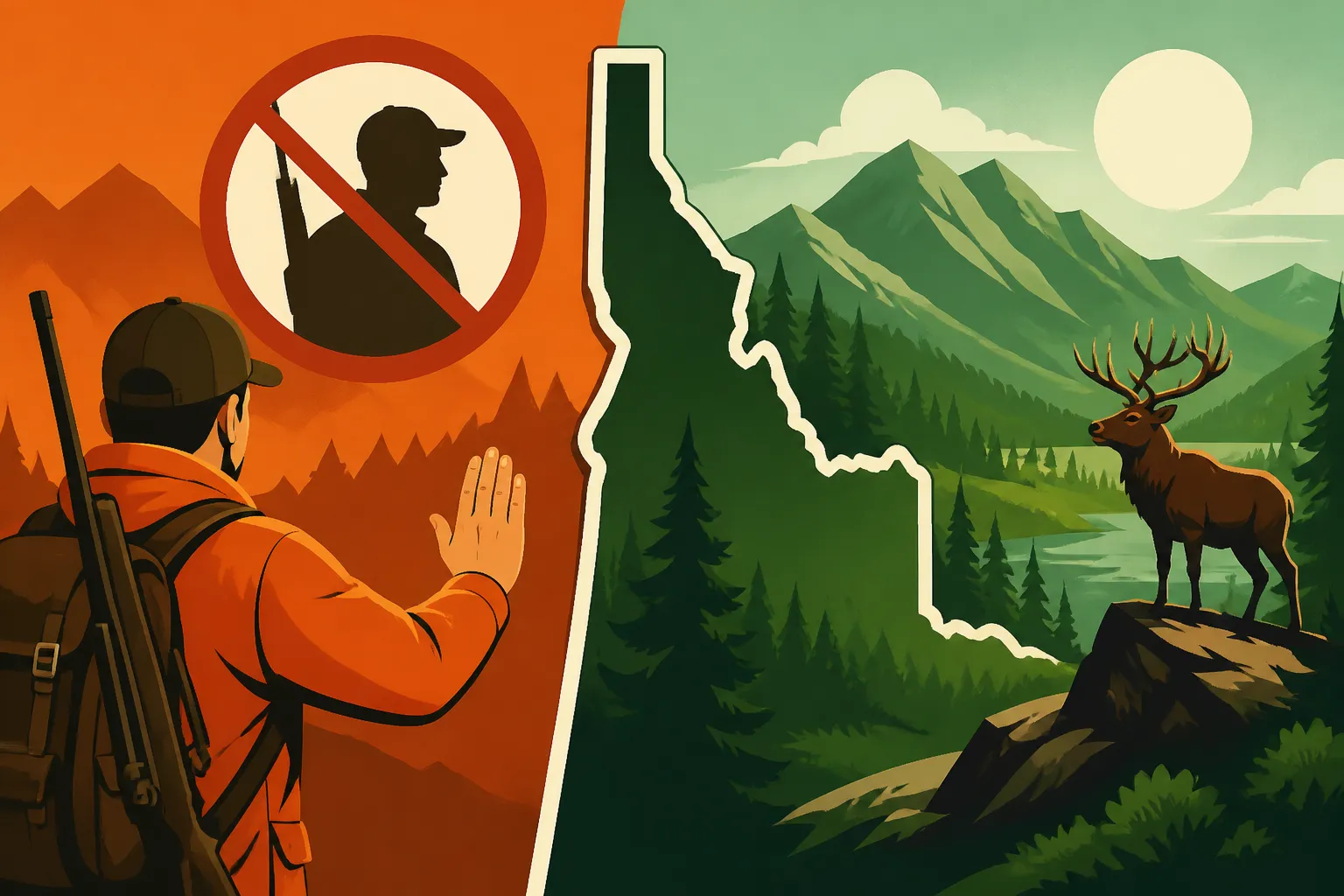
Idaho law is very clear on this: if you are a nonresident and you plan to hunt specific big game species within one of Idaho's designated wilderness areas, you must employ the services of a licensed Idaho outfitter or guide. This isn't about being new to hunting or unfamiliar with the terrain; it's a blanket rule. The species that trigger this mandatory guide requirement are elk, bighorn sheep, mountain goat, and mountain lion. This means if you draw a coveted moose, sheep, or goat tag, or are pursuing general season elk in the Frank Church, Selway-Bitterroot, or any other designated wilderness, and you live outside of Idaho, you'll need to arrange for professional guiding services. This rule applies regardless of whether you’re planning a fully guided expedition or just a drop camp where an outfitter packs you in and out. Idaho Forces Nonresidents to Hire a Guide for Wilderness Elk is a critical piece of legislation to understand. The underlying intent is often debated, but the enforcement is steadfast.
Consider a scenario: you've spent years putting in for that dream bighorn sheep tag in the Frank Church. You finally draw it, only to realize that as a nonresident, you can't just grab your pack and head in alone or with a buddy. You're now faced with the additional expense and logistical challenge of securing a licensed outfitter, and these hunts aren't cheap or easy to book last minute. This requirement is a significant factor in trip planning and budgeting, often doubling or tripling the overall cost of the hunt. It's a hurdle that many nonresident hunters don't anticipate, making thorough research well in advance of applying or planning essential.
Species Exempt from the Guide Rule
While the guide rule applies to some of Idaho's most sought-after big game, it’s important to note that not all species fall under this mandate. Mercifully for nonresident hunters looking for a more independent wilderness experience, deer (both mule deer and whitetail) and black bear are generally exempt from the nonresident guide requirement within designated wilderness areas. This distinction is crucial for planning your Idaho adventure. You can, for instance, pack into the Gospel-Hump Wilderness with your gear and hunt mule deer or black bear entirely on your own, provided you have all the necessary licenses and tags, and adhere to all other Idaho hunting regulations. Deer and Bear Escape Idaho's Wilderness Guide Rule provides a pathway for nonresident hunters who want to experience Idaho's remote wilderness without the added expense of an outfitter.
This exemption opens up fantastic opportunities. Imagine a solo or buddy hunt for high-country mule deer in the Sawtooths, where you're truly self-reliant, navigating by map and compass, and living out of your pack for a week. Or perhaps a spring black bear hunt in the Selway-Bitterroot, spot-and-stalking bears on distant slopes. These are still incredibly challenging hunts, requiring top-tier physical fitness, extensive backcountry skills, and meticulous planning, but they don't carry the outfitter mandate. It’s important to double-check the latest regulations each year, as laws can change, but generally, deer and bear hunts offer a more accessible wilderness experience for nonresidents.
Defining a Licensed Idaho Outfitter and Guide
If you're going to hunt those regulated species in Idaho's wilderness as a nonresident, you absolutely need to understand who you're hiring. In Idaho, there's a distinct difference between an "outfitter" and a "guide," though they work hand-in-hand. An outfitter is the licensed business entity, the one who holds the permits, insurance, and ultimately takes legal responsibility for the hunt. They are licensed by the Idaho Outfitters and Guides Licensing Board. The Idaho Outfitters and Guides Licensing Board Explained is the authority that oversees all commercial outfitting in the state. An outfitter is responsible for securing the necessary Forest Service or BLM special use permits that allow them to operate commercially within specific areas, including wilderness.
A "guide," on the other hand, is an employee of a licensed outfitter. Guides are the individuals who are actually with you in the field, leading the hunt, providing expertise, and ensuring your safety. They must meet certain experience requirements, including demonstrating proficiency in the areas they guide and possessing skills like horsemanship if pack animals are used. Every Idaho Guide Works Under a Licensed Outfitter, meaning a guide cannot legally take clients into the field independently; they must be operating under the umbrella of a licensed outfitter. When you book a hunt, you are contracting with the outfitter, who then assigns guides to your trip. It's crucial that you verify both the outfitter's and the guide's credentials to ensure you're dealing with a legitimate and reputable operation.
Navigating the "Why": Rationale Behind the Wilderness Guide Rule
Understanding the motivations behind Idaho’s nonresident wilderness guide rule can help hunters appreciate, or at least accept, its existence. It’s not simply a barrier to entry; it’s a policy rooted in several complex considerations.
Resource Management and Hunter Pressure
One primary rationale for the nonresident guide rule in wilderness areas is deeply tied to resource management and the desire to control hunter pressure. Idaho's wilderness areas, while vast, are still finite ecosystems. Unregulated access, especially for high-demand species like elk and trophy animals such as sheep and goats, could lead to unsustainable hunting pressure and negative impacts on wildlife populations. By requiring nonresidents to use licensed outfitters, the state gains a degree of control over how many nonresident hunters enter these sensitive areas, and often, how their hunts are conducted. Outfitters typically operate under specific Forest Service or BLM permits that limit their client days or the number of hunters they can take into a particular zone. This effectively caps the commercial hunting effort in designated wilderness.
This approach helps distribute hunters more evenly, preventing overcrowding in easily accessible spots (which are few and far between in wilderness anyway) and ensuring a more dispersed impact on the landscape. Furthermore, outfitters often have extensive knowledge of game populations and habitat, and are incentivized to maintain healthy herds to ensure their long-term business. While it might feel restrictive to the individual nonresident hunter, from a broader conservation perspective, the rule aims to contribute to the long-term health and sustainability of Idaho’s iconic wilderness hunting resources.
Safety and Search & Rescue Considerations
Another significant factor underpinning the guide requirement is hunter safety and the logistical nightmares that can arise in true wilderness. Idaho's wilderness areas are incredibly remote, rugged, and unforgiving. Cell service is non-existent, and medical help can be days away, even if you can communicate an emergency. Getting lost, injured, or facing severe weather in these environments can quickly become a life-threatening situation. When a nonresident hunter, potentially unfamiliar with the specific terrain or the unique challenges of Idaho’s backcountry, ventures deep into these areas without experienced assistance, the risk of needing a search and rescue operation increases dramatically.
Search and rescue operations in vast wilderness areas are incredibly costly, resource-intensive, and dangerous for the responders. By requiring nonresidents hunting certain species to use a licensed outfitter, Idaho essentially ensures that these hunters have experienced professionals (their guides) with them. These guides are intimately familiar with the terrain, weather patterns, and wildlife, and are trained in backcountry first aid and emergency protocols. They carry satellite communication devices and know how to initiate a rescue. This drastically reduces the burden on local search and rescue teams and significantly increases the safety margin for the hunters themselves. It's a way for the state to mitigate risk and potential liability in some of its most dangerous landscapes.
Supporting Local Economy and Industry
It's also undeniable that the nonresident guide rule plays a role in supporting Idaho's local economy and the professional outfitting industry. Outfitting is a significant business in Idaho, particularly in the rural communities that border these vast wilderness areas. Licensed outfitters and their guides provide jobs, purchase supplies from local businesses, and contribute to the tax base. By mandating the use of these services for high-value nonresident hunts, the state ensures a steady stream of business for this established industry.
While a nonresident hunter might view this as an unwelcome additional cost, it's also true that these outfitters often invest heavily in their operations – from maintaining a string of pack horses and mules to owning specialized equipment and constantly scouting new areas. This infrastructure and expertise are invaluable for accessing truly remote wilderness. The rule helps sustain this intricate network of services, which in turn preserves a certain style of traditional backcountry hunting that relies on professional logistics and local knowledge. It creates a symbiotic relationship where the state benefits from managed access and reduced rescue incidents, and the local economy benefits from the guided nonresident hunts.
Practical Implications for Nonresident Hunters
For a nonresident hunter, the guide requirement isn't just a paragraph in the regulations; it has profound practical implications for how you plan, budget, and execute your Idaho wilderness hunting adventure.
Planning a Wilderness Hunt: DIY vs. Guided
When you're a nonresident looking at Idaho's wilderness, the guide rule immediately presents a critical fork in the road for certain species: DIY (Do-It-Yourself) is simply not an option for elk, sheep, goat, or lion. If you want to pursue those animals in the designated wilderness, a guided hunt is mandatory. This means the dream of packing in deep with just your buddies for elk becomes a guided expedition, transforming the nature of the trip entirely. This decision is less about skill and more about legality.
However, if you're pursuing deer or bear, where the guide rule is exempt, the DIY option is very much on the table. But "DIY" in a vast Idaho wilderness isn't for the faint of heart. It demands meticulous planning, from route finding and navigation to food and water caches, emergency preparedness, and physical conditioning. A guided hunt, on the other hand, handles much of that logistical burden. The outfitter provides camp, food, guides who know the terrain and game patterns, and pack stock for getting you and your harvest in and out. This frees you up to focus purely on the hunt. The trade-off, of course, is the significant financial investment for a guided trip compared to the potentially lower monetary cost (but higher personal effort and risk) of a DIY exempt-species hunt. You might use tools like GoHunt to research potential units and draw odds, but for guided hunts, your research will extend to vetting outfitters. Vetting an Idaho Outfitter Before You Send a Deposit is a crucial step no matter how you proceed.
Verifying Outfitters and Booking Your Hunt
Once you've accepted that a guided hunt is necessary for your nonresident wilderness elk, sheep, goat, or lion pursuit, the next crucial step is finding and booking the right outfitter. This process requires diligence. First and foremost, you must verify that the outfitter is currently licensed by the Idaho Outfitters and Guides Licensing Board. Their website is the official source for this information. Don't take their word for it; look them up. A legitimate outfitter will be proud to share their license number and references.
When you start contacting outfitters, be prepared with a list of questions:
- What specific wilderness area do they operate in, and do they hold the necessary permits for it?
- What is their success rate for the species you're targeting in that specific area?
- What is included in the price (e.g., food, lodging, transportation from a pick-up point, field dressing, caping)?
- What are the client-to-guide ratios?
- Can they provide a list of recent references (not just testimonials on their website)?
- What are their deposit and cancellation policies, especially regarding drawing a tag? Many outfitters require a significant deposit well in advance, sometimes even before the draw results are known. You’ll want to understand if and how you get your money back if you don't draw a tag.
Always get everything in writing—a detailed contract outlining services, costs, and contingencies. Booking well in advance is almost always necessary for quality wilderness outfitters, especially for popular seasons and species. Research resources like GoHunt can help you identify outfitters working in specific units, but direct contact and thorough vetting are indispensable.
Understanding Outfitter Services: From Drop Camps to Fully Guided
When you hire an Idaho outfitter for a wilderness hunt, you're not necessarily signing up for one cookie-cutter experience. There's a spectrum of services, each with its own level of support and cost, even for mandatory guided hunts.
At one end, you have the fully guided hunt. This is the most comprehensive and typically the most expensive option. It includes everything: guides leading you daily, providing expertise on game movement and terrain, cooking meals, setting up camp, and handling the logistics of getting you and your game out. You arrive at a designated meeting point, and the outfitter takes care of virtually everything else until you depart. This is ideal if you're new to serious backcountry hunting, have physical limitations, or simply want to maximize your hunting time without worrying about the camp chores. What a Guided Idaho Elk Hunt Costs will give you an idea of the investment.
In the middle, you might find spike camp support or semi-guided options. With spike camp support, the outfitter might set up smaller, satellite camps deeper in the wilderness, providing some food and gear, and then check in periodically, but you and your assigned guide (or even just your hunting party, if an exempt species) are largely self-sufficient in the spike camp. Semi-guided might mean the outfitter provides initial direction, camp, and perhaps packs you in and out, but the daily hunting is more on your own with less direct guide involvement.
Then there are drop camps. This is where an outfitter packs you and your gear into a pre-determined wilderness location, often with pack horses or mules, drops you off with supplies, and then picks you up at a specified date. You are entirely self-sufficient for the duration of the hunt. While drop camps are an excellent way to access deep wilderness and cut down on costs compared to a fully guided hunt, it's critical to remember that if you're a nonresident hunting elk, sheep, goat, or lion, even a drop camp arrangement still falls under the "services of a licensed outfitter" requirement. You're paying for their permit, their knowledge of the country, and their packing services, even if you’re doing the hunting on your own. Drop Camps in Idaho's Backcountry can be a great option for the experienced hunter who wants to run their own hunt but needs the logistical support of pack animals to get deep into the wilderness.
Alternative Strategies for Nonresidents in Idaho
While the wilderness guide rule is a significant consideration, it doesn't mean Idaho is off-limits for nonresidents who prefer unguided hunts. There are plenty of fantastic alternatives and strategies to consider.
Hunting Wilderness-Adjacent Public Land
One of the most effective strategies for nonresidents who want to experience the ruggedness of Idaho's backcountry without the guide mandate (for species like elk, sheep, goat, or lion) is to hunt public land just outside the designated wilderness boundaries. Often, the game animals don't recognize these invisible lines; they move freely between wilderness and non-wilderness areas. This means you can strategically position yourself on National Forest or BLM land adjacent to the wilderness and potentially intercept animals that are migrating or moving between feeding and bedding areas.
Hunting these fringe areas often still means deep backcountry, rugged terrain, and limited access, but it removes the legal requirement for a guide. You can still expect a physically demanding hunt, but you retain the freedom to plan and execute it independently. This approach requires excellent map reading skills (using tools like onX Hunt is invaluable here), knowledge of game migration corridors, and an understanding of how hunting pressure within the wilderness itself might push animals out towards the edges. Scouting these transition zones, either in person or through e-scouting methods, becomes even more critical to success. Hunting the Frank Church River of No Return from its boundaries is a prime example of this strategy.
Focusing on Exempt Species in Wilderness
As mentioned earlier, deer (mule deer and whitetail) and black bear are exempt from the nonresident guide rule in Idaho's designated wilderness areas. This offers a fantastic opportunity for nonresidents to experience true wilderness hunting independently. If your primary goal is a backcountry adventure and you're flexible on the species, targeting deer or bear can fulfill that desire without the cost and logistical complexity of a mandatory guided hunt.
These hunts are still incredibly challenging. You'll need to be proficient in navigation, self-sufficient for a week or more, and prepared for harsh conditions. But the reward of harvesting a mule deer or black bear deep in an unroaded wilderness, entirely on your own terms, is immense. It allows you to develop your backcountry skills and truly test your mettle against the wild. Remember that specific regulations for deer and bear, such as tag types, season dates, and unit boundaries, still apply, so always consult the latest Idaho Fish and Game regulations. It's a way to get that deep woods experience without breaking the bank or running afoul of the law for species like elk.
Exploring Non-Wilderness Public Land Opportunities
Idaho is a public land mecca, and a huge percentage of it lies outside of designated wilderness. This includes vast tracts of National Forest, Bureau of Land Management (BLM) land, and state lands. All of these areas are open to nonresident hunters without any guide requirement for any species, provided you have the proper licenses and tags. Hunting Idaho's National Forests and BLM Ground provides countless opportunities for all big game species, waterfowl, and upland birds.
These non-wilderness public lands range from easily accessible areas near roads to expansive, roadless backcountry that feels every bit as wild as designated wilderness, simply without the specific "wilderness" classification. Many of these areas offer excellent hunting for elk, mule deer, whitetail, and bear, often with varying levels of hunting pressure depending on access and terrain. Using a mapping application like onX Hunt is absolutely essential for navigating these areas, understanding land ownership, and finding access points. It allows you to identify public/private boundaries, locate designated roads and trails, and scout potential hunting spots from the comfort of your home. You can find hidden pockets of public land, identify areas with limited vehicle access that reduce pressure, and plan your routes efficiently. Even though these are not "wilderness" in the designated sense, they still demand respect, preparedness, and solid hunting skills.
| Rule / Condition | Wilderness Area (Elk, Sheep, Goat, Lion) | Wilderness Area (Deer, Bear) | Non-Wilderness Public Land (All Species) | Private Land (All Species) |
|---|---|---|---|---|
| Nonresident Guide Required | Yes | No | No | No (but permission needed) |
| Motorized Vehicles Allowed | No | No | Limited (on designated roads/trails) | Yes (with permission) |
| Pack Animals Allowed | Yes | Yes | Yes | Yes (with permission) |
| Primary Access Method | Foot/Horseback | Foot/Horseback | Vehicle/Foot/Horseback | Vehicle/Foot/Horseback |
| Difficulty/Physical Demands | Extreme | Extreme | Variable (Easy to Extreme) | Variable (Easy to Extreme) |
| Cost Implications for NR | Significant (Outfitter fees) | Basic (Tags, gear) | Basic (Tags, gear) | Basic (Tags, gear, fees) |
Essential Gear and Preparation for Idaho Wilderness Hunts
Regardless of whether you're guided or pursuing exempt species, venturing into Idaho's wilderness is no small undertaking. It demands a high level of self-sufficiency and preparation, where your gear choices and physical readiness can make or break your hunt, and even your survival.
Physical and Mental Conditioning
Let's be brutally honest: hunting Idaho's wilderness is not a stroll in the park. The terrain is relentlessly steep, often covered in dense timber, thick brush, or treacherous loose rock, and elevations can climb quickly into the alpine. You’ll be covering miles each day, often with a heavy pack, and then potentially packing out hundreds of pounds of meat over difficult ground. This isn't just about being "in shape"; it's about being in mountain hunting shape. Months of dedicated physical conditioning are not just recommended, they are absolutely mandatory. This means rigorous cardio, strength training focused on legs and core, and extensive hiking with a weighted pack, simulating the conditions you’ll encounter.
Beyond the physical, mental conditioning is equally vital. Wilderness hunts can be mentally grueling. You'll face fatigue, frustration, adverse weather, and the solitude of vast, empty spaces. The ability to remain positive, focused, and resilient when things get tough—when it's raining for days, the elk aren't talking, or you're physically exhausted—is paramount. Hunters who come unprepared physically often find themselves quitting early or, worse, becoming a safety liability to themselves or their hunting partners. Being honest about your capabilities and pushing your limits before the hunt, not during it, is the key to success and enjoyment.
Navigation and Communication in Remote Areas
In Idaho's vast wilderness, your phone will quickly become a useless brick for communication and GPS. Relying solely on a smartphone for navigation is a recipe for disaster. You need robust, reliable tools and the knowledge to use them. A high-quality handheld GPS unit, loaded with detailed topographic maps and unit boundaries, is essential. Always carry physical waterproof maps of your hunting area and a compass, and know how to use them together, even if you primarily rely on GPS. Batteries die, electronics fail, and a printed map never needs charging. Using apps like onX Hunt for scouting beforehand and as a backup on a portable device (with downloaded maps) can be extremely helpful, but it should not be your sole navigation method.
Communication beyond your immediate hunting party is equally critical for safety. Since cell service is absent, a satellite communication device is a non-negotiable item. Devices like satellite messengers (e.g., inReach or Spot) or even a satellite phone allow you to send emergency messages, communicate with loved ones, or provide your location if you become lost or injured. These devices can literally be lifesavers, enabling you to call for help even in the most remote canyons. Practice using these devices before your trip so you're familiar with their functions and can operate them quickly in an emergency.
Packing for Self-Sufficiency and Emergency Preparedness
Every item that goes into your pack for a wilderness hunt needs to earn its weight. You are packing in everything you need to survive and thrive for the duration of your trip, often a week or more. This means careful consideration of shelter, food, water, and emergency supplies. Lightweight, durable backpacking tents or shelters are crucial. Dehydrated or freeze-dried meals, combined with calorie-dense snacks, form the bulk of your food supply. Don't forget high-quality water filters or purification tablets, as reliable water sources are not always guaranteed or safe to drink directly.
Beyond the basics, a comprehensive first-aid kit, tailored for backcountry use and capable of handling significant injuries, is paramount. Learn basic wilderness first aid. Carry fire-starting materials (multiple methods), a headlamp with spare batteries, a repair kit for gear, and extra layers of clothing to account for rapidly changing mountain weather. If you're in bear country (which much of Idaho's wilderness is, including areas with grizzlies), bear spray is a must, carried in an easily accessible holster. Think through every conceivable emergency—a sprained ankle, an unexpected snowstorm, losing your way—and pack accordingly. The goal is to be entirely self-sufficient and capable of dealing with minor setbacks before they escalate into life-threatening situations.
Disclaimer
This article is for general informational purposes only and does not constitute professional advice. Laws, prices and regulations vary by location and change over time. Consult a qualified professional for guidance on your specific situation.