Bugling Elk in Idaho’s Timbered Zones
Many elk hunters dream of hearing a bull scream back in the timber, but actually making it happen in Idaho's dense, often unforgiving forests can feel like trying to find a needle in a haystack. The thick cover, swirling winds, and often pressured animals make bugling a true challenge. This comprehensive guide is designed to peel back the layers of mystery surrounding bugling elk in Idaho's timbered zones, offering practical strategies and insights to help you locate, call, and ultimately connect with that elusive bull.
Understanding Idaho's Timbered Elk Habitat
When you're chasing elk in Idaho, particularly during the archery or early muzzleloader seasons, you're going to spend a lot of time in the trees. It’s not like those wide-open basin hunts you see on TV, where you can glass for miles. Here, the timber is the elk's sanctuary, their feeding ground, and their breeding arena. Learning to read this habitat is step one in successful bugling.
What "Timbered Zones" Really Mean in Idaho
Idaho's timbered zones are incredibly diverse, from the thick, dark timber of the Panhandle National Forests to the mixed conifer stands of the Clearwater National Forest, and even the higher elevation pockets of pine and fir in the Boise National Forest. When we talk about "timbered zones," we're not just talking about any patch of woods. We're talking about areas dense enough to offer elk security, thermal cover, and often, reliable water sources. These are the places where elk feel safe from predators, including us hunters. They provide refuge from the heat of the day and shelter from severe weather.
Often, these timbered areas are characterized by mature forests with a relatively closed canopy, creating shaded, cooler conditions underneath. The understory might be sparse in some spots, allowing for decent visibility, but more often, it’s a tangled mess of brush, downed logs, and saplings that can make moving silently a real challenge. Think about the unit you're planning to hunt; is it heavily logged with young, impenetrable stands, or old growth with more open bottoms? Understanding the specific timber type can dictate how you move, where you set up, and even how far your calls will carry. It’s not just trees; it's the structure of the forest itself that dictates elk behavior and your approach.
Identifying Prime Elk Holding Cover
Within these vast timbered landscapes, elk aren't just anywhere. They seek out specific features that meet their daily needs. Prime elk holding cover in the timber often consists of north-facing slopes, especially during warmer weather. These aspects retain moisture longer, providing lusher forage, and offer cooler temperatures throughout the day, which is crucial when elk are trying to avoid overheating. Conversely, south-facing slopes, while hotter, can be excellent feeding areas in the mornings and evenings when the elk are more active. Look for pockets of dense bedding cover – often thick stands of younger trees, blowdowns, or even just areas with extremely heavy undergrowth – adjacent to these feeding areas.
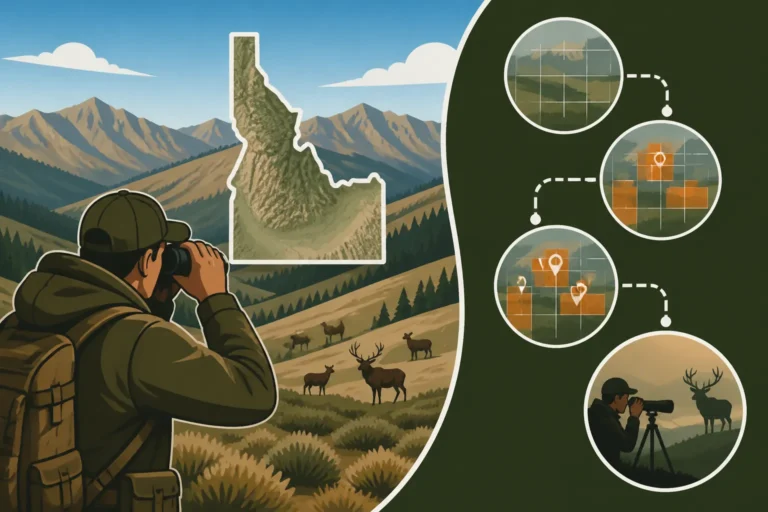
Additionally, don't overlook natural benches or saddles on ridges. These are often natural travel corridors and can act as thermal sinks where elk might bed. Water sources are also critical; even a small spring seep or a wallow can be an elk magnet, especially during the rut when bulls are exerting so much energy. Understanding where the elk will naturally move between these critical resources is key. A valuable tool like GoHunt can help you overlay public land maps with terrain features and water sources, allowing you to e-scout potential hotspots before you even set foot in the woods. This can save you countless hours of walking through unproductive ground.
The Impact of Elevation and Aspect
Elevation and aspect play huge roles in timbered elk hunting, particularly in a mountainous state like Idaho. As the season progresses from early September into October, elk often start to drift down from the highest summer ranges, but they'll still utilize varying elevations based on weather patterns, hunting pressure, and forage availability. Early season, bulls might be found high up, seeking cooler air and fresh feed. As hunting pressure increases, they'll often retreat to the thickest, nastiest timber at mid-elevations.
North-facing slopes, as mentioned, are cooler and hold moisture, making them ideal bedding and feeding areas during hot spells. South-facing slopes warm up faster and offer good sun exposure, so elk might feed there during cooler mornings or evenings, especially when they need to dry out after a wet night. The sun's angle and duration on a slope can profoundly impact forage quality and elk comfort. Knowing the general aspect of a ridge or basin you're hunting can help you predict where elk will be at different times of the day. A smart hunter will consider how the sun hits the mountain throughout the day, and use that knowledge to predict where elk are likely to be bedding or feeding at various times. This intimate understanding of the terrain, often gleaned from detailed topographic maps or even satellite imagery from an app like GoHunt, is vital for predicting elk movement.
The Art of Bugling: Why and When it Works Best
Bugling is more than just making noise; it's a conversation. To be effective, you need to understand the nuances of elk vocalizations and how they relate to the breeding cycle. When done right, it can bring a giant bull charging into your lap. Done wrong, and you might just send them running in the opposite direction.
Deciphering the Elk Rut and Calling Windows
The elk rut, when bulls are most vocal and susceptible to calling, typically peaks in Idaho from mid-September through early October, though variations occur depending on elevation and local conditions. You can check resources like "When the Elk Rut Actually Peaks Out West" for more detailed information on timing. There are generally three phases to consider:
- Pre-rut (Early September): Bulls are starting to feel frisky, but herds aren't fully consolidated. You might hear isolated bugles, often "locator bugles," as bulls try to find cows. They are often traveling and responding well to calls, especially cow calls, as they are looking for their first harems.
- Peak Rut (Mid-September to early October): This is the magic window. Bulls are actively herding cows, constantly bugling to assert dominance and challenge rivals. Cow calling is also highly effective, as bulls are eager to add to their harems. This is when the most intense bugling action happens, and your chances of calling in a bull are highest. Learning the nuances of "Bugle and Cow Call Timing Through September" is crucial during this period.
- Post-rut (Mid-October onward): Bulls are often worn out, harems may be breaking up, and their vocalizations become much less frequent and aggressive. They're more focused on feeding and recovering. Calling can still work, but you generally need to be much more subtle, focusing more on soft cow calls or satellite bull whines, rather than aggressive challenges.
Understanding these windows allows you to adjust your calling strategy. An aggressive challenge might work wonders during the peak rut but might scare off a wary post-rut bull.
When to Aggressively Bugle vs. When to Be Subtle
This is where the art truly comes in. Aggressive bugling involves loud, challenging calls, often mimicking a dominant bull. This works best during the peak rut when bulls are eager to fight or intimidate rivals. If you hear a bull bugle nearby, a strong, confident bugle back, perhaps with a chuckle, can often bring him in, especially if he thinks you're moving in on his cows. However, an overly aggressive bugle in the wrong situation – for instance, early season when bulls are still bachelor grouped up, or late season when they're tired – can be a deterrent. You need to gauge the bull's mood.
Subtle calling, on the other hand, relies more on cow and calf calls, soft whines, and even quiet, non-committal bugles. This is often more effective in heavily pressured areas, where bulls have heard every aggressive bugle in the book, or during the pre-rut and post-rut. Sometimes, a quiet series of cow mews, perhaps with a soft, questioning grunt from a bull, is all it takes to pique a bull's curiosity without putting him on high alert. Imagine a scenario where you've been "Calling Elk on Pressured National Forest Ground" – subtlety is often your best friend. A single, soft cow call can sometimes pull a wary bull out of thick cover when an aggressive bugle would have sent him deeper into the dark timber.
Reading Elk Vocalizations Beyond the Bugle
Elk communicate in a surprisingly complex array of sounds. While the bugle is iconic, paying attention to other vocalizations can give you a significant edge.
- Cow Mews and Chirps: These are crucial. Different mews indicate different things – a short, soft mew might be a cow casually feeding, while a longer, pleading mew could signal a cow looking for a bull. Chirps are typically social calls within the herd. Mastering these can make your calling sound incredibly realistic.
- Calf Cries: These can be great for eliciting a protective response from cows or a curious response from bulls. A lost calf sound can sometimes bring a whole herd in, especially early in the season.
- Bull Grunts and Chuckles: Often accompanying a bugle, these signify aggression and dominance. A bull’s deep grunt says, "I'm here, and I'm big." The chuckles often follow a bugle, conveying a bull's dominance and challenge. If you can replicate these convincingly, you'll sound more like a real bull.
- Glunking: A deep, resonant sound made by a bull, often after a bugle, indicating extreme agitation or challenge. Not all bulls glunk, but if you hear it, you know you've got an aggressive bull on your hands.
- Estrus Buzz: A highly specific call made by a cow in heat, indicating she's ready to breed. This is one of the most powerful calls you can make during the rut.
By understanding and incorporating these varied vocalizations into your calling sequence, you can paint a more complete and convincing picture for an incoming bull, making him believe there's a real herd situation unfolding.
Essential Gear for Timbered Elk Hunting
Elk hunting in Idaho's timber is physically demanding, and having the right gear can make or break your hunt. Beyond the obvious weapon choice, certain items are non-negotiable for success and safety in these challenging environments.
Calls: Choosing the Right Bugle and Cow Call
Your calls are your voice in the woods, and you need reliable ones. For bugling, there are several types, each with pros and cons:
- Diaphragm Calls: These are worn in the roof of your mouth and require practice, but offer the most realistic and versatile sounds. You can seamlessly transition from a deep bugle to a challenging grunt, to a cow mew, all without using your hands, which is critical when a bull is approaching and you need to keep your bow or rifle ready. Brands like Phelps Game Calls or Primos make excellent diaphragm calls.
- Open Reed or External Reed Calls: These are easier to learn than diaphragms and produce excellent cow and calf sounds. Many hunters pair an open reed cow call with a diaphragm bugle. They're great for realism but require a hand to operate.
- Tube Calls (Bugle Tubes): Essential for projecting sound. A good bugle tube amplifies your diaphragm call, allowing you to reach out to distant bulls. It also adds the nasally resonance that makes a bugle sound authentic. Some tubes have built-in reeds for beginners, but most serious callers use them with a diaphragm.
For cow calls, having a variety of sounds available is beneficial. An open reed call can produce excellent mews and chirps. Combining a good bugle tube, a selection of diaphragm calls (practice is key!), and an external reed cow call will give you a full arsenal for any situation. Remember, sound quality trumps volume. A realistic, softer call is often more effective than a loud, fake one.
Optics: Why Binos are Crucial Even in Timber
You might think that in dense timber, optics aren't as important as in wide-open country. That's a huge misconception. While you won't be glassing across canyons for miles, quality binoculars are absolutely crucial for picking apart dense cover at close range. Imagine a bull bugling just 100 yards away in a thick patch of pines. You hear movement, but all you see are shadows and tree trunks. A good pair of 10×42 binoculars, like those from Vortex or Maven, can help you identify that flicker of an ear, the outline of an antler, or a patch of hide through the brush, giving you crucial seconds to prepare for a shot.
They're also vital for confirming legal game, especially in spike-only or antler point restricted units. You don't want to make a mistake in low light. Binoculars are also invaluable for safety, confirming that movement isn't another hunter. While a spotting scope isn't usually practical in thick timber, your binos will be glued to your chest. For deep canyons and longer sightlines, you might consider something more powerful, as discussed in "Optics Power for Idaho's Long Canyon Sightlines," but for timber, quality 8x to 10x binoculars are your best friend.
Navigational Tools and Mapping for Dense Cover
Getting lost in Idaho's vast timber is not just inconvenient, it can be life-threatening. A reliable GPS device or a smartphone app with offline mapping capabilities is non-negotiable. Apps like onX Hunt or Gaia GPS, especially when paired with a robust external battery pack, are invaluable. They allow you to:
- Pinpoint your location: Know exactly where you are relative to roads, trails, and your vehicle.
- Track your movements: See the route you've taken, which is incredibly helpful for finding your way back to camp in the dark or navigating through unfamiliar territory.
- Identify property boundaries: Crucial for staying on public land or knowing where private property starts.
- Mark waypoints: Drop pins for elk sign, water sources, potential bedding areas, or a downed animal.
- Scout remotely: Before you even leave home, you can use these apps to study terrain, identify potential travel corridors, and mark areas of interest. GoHunt also offers robust mapping features that can help you with this pre-season scouting, highlighting public land access and historical animal activity areas.
Always carry a physical map and compass as a backup, and know how to use them. Electronics can fail, and batteries die. There's no substitute for being able to navigate with traditional tools, especially when you're many miles deep in the wilderness. Learning to use these tools effectively is as important as learning to shoot your bow or rifle.
Strategic Calling Setups in Timber
Calling an elk is only half the battle; the other half is setting up correctly to get a shot when they respond. In timber, this means paying excruciating attention to your surroundings, anticipating elk movement, and mitigating their superior senses.
The "Caller Back" Strategy for Drawing Bulls
This is a classic and highly effective strategy for hunting in timber, especially when you have a hunting partner. The primary caller positions themselves 50-100 yards behind the shooter, off to one side. When a bull responds, the primary caller continues to engage, mimicking a dominant bull or a receptive cow. The bull, eager to confront the rival or find the cow, will focus his attention on the sounds, often walking directly towards the caller.
Meanwhile, the shooter, positioned silently and hidden, has a clear shot opportunity as the bull passes by, completely focused on the "source" of the sound behind them. This setup greatly reduces the chance of the bull spotting the shooter, and it also prevents the bull from circling downwind and scenting you. It requires excellent communication and trust between hunting partners. For more insights on this, refer to "Two-Hunter Calling Setups That Actually Work." This strategy really shines in thick timber where clear lanes are limited, as it allows the shooter to remain still and maximize their shooting window.
Aggressive Blind Calling in Unpressured Areas
In truly unpressured timbered zones, where elk haven't been relentlessly pursued, aggressive blind calling can be very successful. This involves moving through likely elk habitat (bedding areas, feeding zones, travel corridors) and periodically letting out a series of locator bugles or an aggressive challenge. You're essentially announcing your presence and daring a bull to respond.
If a bull answers, you then assess his location and attitude. If he sounds hot, you might move in closer with a more aggressive sequence, using cow calls to add realism. The key is to cover ground and be ready to move quickly to cut off a responding bull. This approach works best in areas with low hunting pressure, where bulls are less wary and more willing to investigate. However, it also means you might be moving quite a bit, so your calling has to be quick, decisive, and then you need to be ready to quickly set up if a bull answers close. This is where mastering "Locator Bugles for Finding Bulls at Dawn" can really pay off.
Setting Up for Success: Wind, Shot Lanes, and Escape Routes
When a bull is coming in hot, the last thing you want is for him to wind you, or for him to vanish into an impenetrable thicket before you get a shot.
- Wind: Elk have an incredible sense of smell, and the wind is your absolute worst enemy. You must position yourself downwind of where you expect the elk to approach. In timber, wind can swirl unpredictably, especially in draws and saddles. Constantly monitor the wind using a wind checker. If the wind shifts, be prepared to move and re-position immediately. "Reading Wind in Steep Timbered Country" offers crucial advice on this often-overlooked aspect of hunting. It's often better to move silently for an hour to get into a favorable wind position than to call aggressively with a bad wind and blow the whole setup.
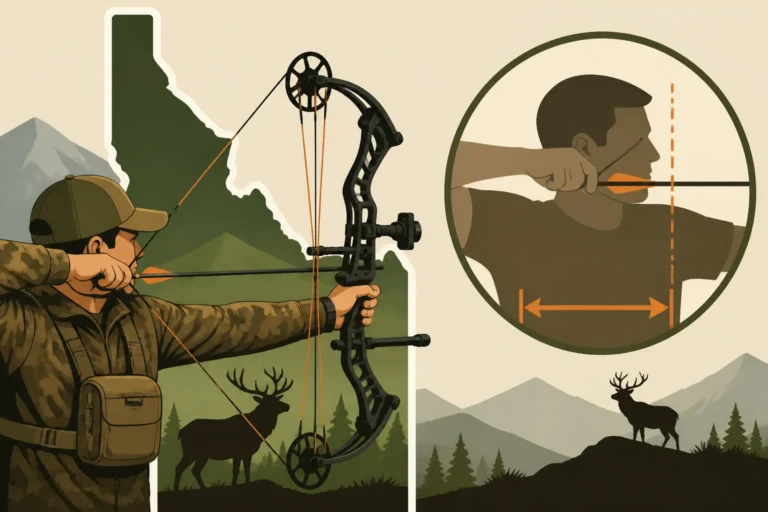
- Shot Lanes: Before a bull even shows himself, identify potential shooting lanes. These are natural openings in the timber, gaps between trees, or clearings. Position yourself so that you have multiple shot opportunities at different distances and angles. Trim small branches if necessary, but don't overdo it or you'll leave too much human sign. For bowhunters, this means knowing "How Close a Bowhunter Needs to Get on Elk" and preparing those critical 20-40 yard lanes.
- Escape Routes: Always have an escape route in mind, not for you, but for the bull. Often, elk will approach, stand in a shooting lane for a moment, and if they feel uneasy, they'll bolt along a specific escape route. Anticipating this helps you get a shot off. Also, identify where a wounded animal might go, aiding in recovery. This foresight is critical for ethical hunting and successful retrieval.
Remember, elk often circle downwind before committing. Setting up against a natural barrier like a cliff face or a steep drop-off can force them to approach from a more predictable direction, making your wind strategy more effective.
Dealing with Pressured Elk in Timbered Zones
The reality of public land hunting in Idaho is that elk are often pressured. They're smart, they've heard it all, and they quickly learn to associate human sounds with danger. Adapting your strategy to these wary animals is crucial.
Identifying Over-Hunted Areas
It's a harsh truth that some areas, especially those with easy road access, get hammered year after year. Signs of over-hunted areas include:
- Abundant human sign: Boot tracks, old shell casings, flagging tape, trash, or even tree stands left from previous seasons.
- Sparse fresh elk sign: If you're seeing lots of old rubs and droppings but no fresh tracks, beds, or recent feeding activity, the elk have likely moved on or become extremely nocturnal. You can learn to identify fresh sign by checking out "Reading Fresh Elk Sign in Dark Timber."
- Silent timber: During peak rut, if you're not hearing any bugles in an area that looks like prime habitat, it could be a sign that the elk are staying quiet due to pressure.
- E-scouting tools: Services like GoHunt can sometimes show public land access points and historical hunter activity, which can indicate areas that might receive heavy pressure. Studying road density and proximity to major trailheads can also reveal potential hot spots for human activity.
If you find yourself in an over-hunted area, don't waste too much time there. Your best bet is to either move deeper into the wilderness, where pressure is less, or drastically alter your calling and hunting tactics.
Adapting Your Calling to Wary Bulls
When facing pressured elk, aggressive, loud bugling is often counterproductive. Wary bulls have learned that such calls often lead to danger. Instead, pivot to a more subtle, inquisitive approach:
- Soft Cow Talk: Focus heavily on soft cow mews, chirps, and estrus whines. A bull is often more likely to investigate a "lonely" cow than a challenging rival, especially if he's trying to avoid confrontation.
- Distress Calls: Sometimes a lost calf call, followed by soft cow mews, can trigger a maternal response from cows or pique a bull's curiosity.
- Silence and Patience: Instead of constantly calling, call sparingly. Listen for natural elk sounds, and only call when you have a specific reason – to locate a bull, challenge a soft bugle, or reassure an incoming animal. Patience is a virtue; sometimes waiting an hour after a single, soft call is more effective than continuous bugling.
- Satellite Bull Sounds: Instead of mimicking a dominant herd bull, try soft, unsure bugles, whines, or grunts of a smaller, satellite bull. A dominant bull might not be interested in fighting, but he might still come to push off a perceived smaller rival who is moving in on his cows.
- Don't Overcall: Less is often more. One well-placed, realistic call is better than a dozen fake ones. Give the elk time to respond and process the sound.
Remember, these bulls are already educated. Your goal is to sound as natural and non-threatening as possible, appealing to their instincts without raising red flags.
The Role of Still Hunting and Stalking
In timbered areas, especially with pressured elk, still hunting and stalking become indispensable skills. Calling is just one tool in your arsenal.
- Still Hunting: This involves moving incredibly slowly and deliberately through the timber, stopping frequently (every 10-20 yards) to scan your surroundings, listen intently, and observe. You're trying to spot elk before they spot you. This method is highly effective in finding bedded elk or animals moving quietly through thick cover. It demands immense patience and attention to detail. Focus on terrain features that might hide elk, such as thickets, blowdowns, or benches.
- Stalking: Once you've located an elk (either by sound or sight), stalking is the art of closing the distance silently for a shot. This requires careful attention to wind direction, foot placement (heel-to-toe or toe-first, testing each step), and using available cover. Move when the elk's head is down, or when they are obscured by trees. Always be aware of your surroundings, potential shot lanes, and escape routes. Remember, a bowhunter needs to be incredibly close, so practice "Realistic Archery Practice Distance for Big Game" to know your limits.
Combining silent movement with judicious calling can be a deadly combination. You might still hunt until you bump into a group of cows, then quickly set up and try to call in the bull that was with them or nearby. Or, you might hear a distant bugle, then still hunt closer before initiating a calling sequence. The dynamic between calling, still hunting, and stalking is what makes timber elk hunting so engaging and challenging.
Safety Considerations and Best Practices
Hunting in Idaho's timbered zones, especially during archery seasons when many hunters are bugling, carries inherent risks. Beyond the obvious dangers of the wilderness itself, there's the critical need to be safe around other hunters.
Calling Safety: Identifying Other Hunters
This is paramount. When you're bugling, you're mimicking an elk, and other hunters might be doing the same, or they might be trying to call in the "elk" they hear (you!). Always assume any sound you hear, even a perfect bugle, could be another hunter.
- Positive Identification: Never shoot at a sound or a flicker of movement. Always, always, always make positive identification of your target, ensuring it is a legal animal and not another person. Look for the entire animal, and specifically look for antlers before anything else.
- Wear Blaze Orange (where required): While not always mandatory for archery season, wearing some blaze orange (e.g., a hat or vest) when moving through areas of high hunting pressure can increase your visibility to other hunters. For more details on specific requirements, check the regulations regarding "Blaze Orange Requirements Through the Season."
- Communicate with Partners: If you're hunting with a group, establish clear communication protocols. Know where everyone is, and have a system for identifying each other if you encounter one another in the woods. Whistles or specific verbal cues can be helpful.
- Be Aware of Your Background: When taking a shot, always know what's beyond your target. In thick timber, a bullet can ricochet or travel farther than expected.
The most important rule is: if there's any doubt, don't take the shot. No elk is worth endangering another human life.
Bear Awareness in Dense Timber
Idaho is home to both black bears and grizzly bears, particularly in the northern and central parts of the state, overlapping with prime elk habitat. Encounters are a real possibility, especially when you're moving quietly through thick timber or setting up calling sequences.
- Carry Bear Spray: This is your most effective deterrent. Keep it easily accessible on your chest or hip, not in your backpack. Know how to use it. Brands like Counter Assault or UDAP are widely trusted.
- Make Noise When Moving: If you're not actively stalking, make some noise (talk, sing, clap) to alert bears to your presence and avoid surprising them. Most bear encounters happen when an animal is startled at close range.
- Proper Food Storage: If you're camping, ensure all food and scented items are stored in bear-resistant containers, hung from a tree, or in an electric fence system. Never keep food in your tent.
- Be Alert for Sign: Look for bear tracks, scat, rubbed trees, or overturned rocks. If you see fresh sign, be extra vigilant.
- Know What to Do: Understand the difference between defensive and predatory encounters, and how to react to each. Most black bear encounters can be deterred by making noise and looking large. Grizzlies require different tactics, often involving standing your ground unless charged, and then using bear spray. Knowing "Grizzly Identification for Idaho Bear Hunters" is a good idea.
Being bear aware is part of responsible hunting in Idaho's wild places.
Weather Preparedness and Emergency Planning
Idaho's mountain weather is notoriously unpredictable. A beautiful crisp morning can quickly turn into a raging snowstorm or torrential downpour. Being unprepared can lead to hypothermia, frostbite, or getting stranded.
- Layered Clothing: Dress in layers of synthetic or wool clothing that can be added or removed as conditions change. Avoid cotton, which loses its insulating properties when wet.
- Rain Gear: Always carry quality waterproof and windproof outerwear. A lightweight rain jacket and pants can be a lifesaver.
- Emergency Kit: This should include a first-aid kit, fire-starting materials (waterproof matches, lighter, fire starter), an emergency shelter (space blanket or lightweight tarp), extra food and water, a headlamp with extra batteries, and a way to signal for help (whistle, satellite messenger like a Garmin inReach or Zoleo).
- Tell Someone Your Plan: Always inform a trusted person of your exact hunting area, expected return time, and your vehicle's make and model. This information is critical if you become overdue.
- Physical Conditioning: Hunting in Idaho's steep, timbered terrain is physically demanding. Be in good shape before your hunt to reduce the risk of injury and fatigue.
Planning for the worst while hoping for the best is the mindset you need when venturing into Idaho's backcountry.
Post-Shot Strategies in Dark Timber
The shot is only the beginning. Retrieving your animal in dark, dense timber presents its own unique set of challenges. This is where patience, preparation, and careful planning truly pay off.
Tracking in Thick Cover
Once you've taken a shot, especially in thick timber, your immediate actions are crucial for a successful recovery.
- Observe and Listen: Immediately after the shot, focus on where the animal was hit, its reaction, and the direction it ran. Listen intently for any sounds – a crash, a gurgle, a stumble. Mark the exact spot of the shot, perhaps with flagging tape or a piece of bright toilet paper.
- Give It Time: This is perhaps the hardest but most important step. Unless you've made an obvious spine or head shot, give the animal time. For a good lung or heart shot, waiting 30-60 minutes is generally sufficient. For a gut shot, it's critical to wait at least 4-6 hours, or even overnight if conditions allow. Pressing a gut-shot animal too soon will push it farther, making recovery exponentially harder.
- Locate First Blood: Once you start tracking, move slowly and deliberately. Look for blood, hair, bone fragments, and disturbed ground. Mark each spot of blood with flagging tape or toilet paper so you can easily see your last known point and prevent getting lost.
- Grid Search: If the blood trail peters out, don't give up. Implement a grid search pattern around the last known blood. Expand your search area, looking for any sign, no matter how small. Elk often go downhill or toward water after a hit. Be methodical. For deeper insights on this, a resource like "Packing an Elk Out of Steep Country Alone" often details the tracking process from start to finish.
Tracking in timber is a skill honed over time, and it requires immense patience and an eye for minute details. Don't rush it.
Field Dressing and Game Care in Remote Areas
Once you've found your elk, proper field dressing and game care are essential to preserve the meat, especially in warmer early-season conditions.
- Location and Ventilation: Try to get the animal to a relatively flat, shaded spot, if possible. Prop the animal up to allow for air circulation. If it's a bull, consider the best angle for caping if you plan on a shoulder mount.
- Gutting vs. Gutless Method:
- Gutting: The traditional method. Open the cavity, remove all internal organs, and allow the carcass to cool. This can be messy but effectively cools the animal down.
- Gutless Method: Increasingly popular in backcountry hunting. This involves skinning and butchering the animal on the spot, removing the meat in quarters without opening the body cavity. This is generally cleaner, faster, and allows for easier cooling of the meat, especially when you're deep in the wilderness and need to "Packing an Elk Out of Steep Country Alone." It also leaves the gut pile intact, minimizing disturbance for predators.
- Cooling: Rapid cooling is paramount. Once the animal is field-dressed, get it off the ground, prop the cavity open, and let air circulate. If it's warm, consider quartering the animal and placing the meat in game bags in a shaded, breezy spot. Dry ice can also be an option for multi-day trips.
- Game Bags: Heavy-duty, breathable game bags (canvas or synthetic) are a must. They protect the meat from flies, dirt, and debris while allowing it to cool and "skin" over. Avoid plastic bags, which trap heat and moisture.
Idaho also has specific "Field Dressing and Carcass Transport Rules Explained" that you should familiarize yourself with, including "Evidence of Sex Requirements on a Carcass" and mandatory harvest reporting.
Packing Out the Meat: Logistics and Planning
Packing out an entire elk from deep in Idaho's timber is an epic undertaking, even with a strong partner. It often requires multiple trips and significant physical exertion.
- Quartering the Animal: This is almost always necessary for backcountry elk. The animal should be broken down into four main quarters (two front, two hind), the backstraps, tenderloins, neck meat, and sometimes the ribs and brisket. Don't forget the head and cape if you plan to mount it.
- Weight Distribution: A mature bull elk can yield 200-300 pounds or more of boned-out meat. You'll likely be carrying 50-80 pounds per trip, so a sturdy, comfortable pack frame is essential. Distribute the weight evenly and secure it tightly.
- Multiple Trips: Unless you're extraordinarily strong or very close to a vehicle, expect to make multiple trips. Plan your route, mark it with GPS waypoints, and be prepared for hours or even days of hard work.
- Horse or Mule Support: If you're fortunate enough to have pack stock, they can significantly ease the burden. However, horse packing requires its own skill set and equipment. Some outfitters offer "drop camp" services where they pack you in and out, or help retrieve your downed game.
- Know the Rules: Be aware of Idaho's "Motorized Hunting Rule Keeps You on the Road" and specifically, "Why You Cannot Drive to Retrieve Downed Game." You cannot drive off established roads to retrieve your animal, which means it will be packed out by human power or pack animals.
Packing out an elk is often the most physically grueling part of the hunt, but it's also a deeply satisfying culmination of your efforts. Prepare for it physically and mentally, and you'll bring home some of the finest wild game meat available.
Disclaimer
Please be aware that hunting regulations, seasons, and requirements can change frequently. It is the responsibility of every hunter to consult the most current Idaho Fish and Game regulations before planning and executing any hunting trip. This guide offers general advice and insights based on commonly understood practices and information.