What Replaces Points in the Idaho Draw
One of the biggest head-scratchers for hunters coming to Idaho, especially from states with long-established point systems, is trying to figure out how the draw works here. You might be used to meticulously building up preference or bonus points for years, hoping that elusive dream tag will finally be within reach. Then you look at Idaho, and it's like a whole different ballgame. This guide is here to demystify Idaho's unique draw system, explaining exactly what replaces those familiar point systems and how it impacts your chances of drawing a coveted tag.
Understanding Idaho's Draw Philosophy Without Points
It's easy to get frustrated when you've been conditioned by other states to believe points are the only way to get a good tag. Idaho simply operates on a different philosophy, one that often prioritizes equal opportunity each year rather than rewarding tenure. This means that every applicant, whether it's their first time applying or their twentieth, essentially starts on the same footing for many draws.
Why Idaho Ditched Preference Points
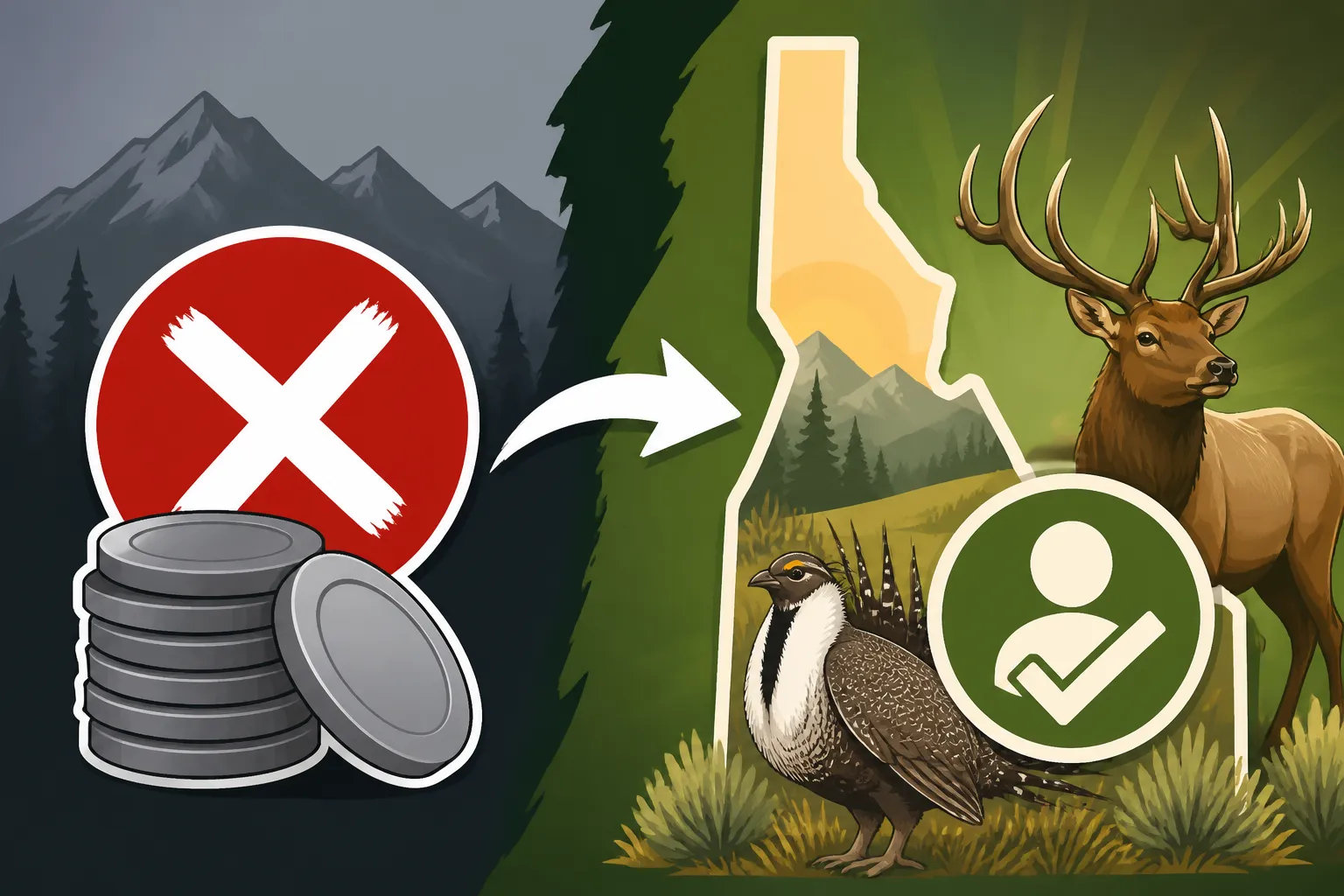
Idaho's approach to tag allocation stems from a desire to keep things relatively simple and give everyone a shot. The Idaho Fish and Game Department has historically aimed to avoid the "point creep" phenomenon seen in many western states, where drawing a quality tag can literally take a lifetime, often making it feel impossible for new or younger hunters to ever catch up. In those systems, if you don't start accruing points from day one, you're immediately at a disadvantage. Idaho decided to side-step this entirely, choosing a system that resets the playing field annually.
This decision wasn't just about fairness; it was also about maintaining hunter participation and engagement. When the barrier to entry feels insurmountable, interest wanes. By removing the point system, Idaho keeps the dream alive for more hunters each year, fostering a broader base of applicants who feel they have a genuine chance. It means that while the odds can still be tough for highly sought-after hunts, a first-time applicant truly has the same statistical chance as someone who has applied for years. This is a core reason why you might hear that Why First-Time Applicants Have Even Odds in Idaho is a common talking point among those who appreciate the state's draw system.
How a Pure Lottery System Works
Instead of points, Idaho primarily uses a pure lottery system for its controlled hunts. When the application period closes, all eligible applications for a specific controlled hunt are pooled together. Then, winners are randomly selected from that pool until all available tags are allocated. It's essentially like throwing all the names into a hat and drawing them out one by one. There’s no weighting for past applications, no bonus points for unsuccessful attempts, and no preference given for anything other than fulfilling the application requirements.
This straightforward system means that while persistence might pay off over many years simply due to the law of averages, there's no mathematical advantage gained by having applied in previous seasons. Your success in any given year truly comes down to luck, which can be both exhilarating and agonizing depending on your results! It means that Idaho Has No Preference Points, and What That Changes fundamentally alters the strategy one might employ when planning their hunting future here.
The Annual Application and Draw Process
Without a point system, the application process for Idaho's controlled hunts becomes a critical, annual event where timing and accuracy are paramount. There are no points to fall back on, so every application stands alone.
Key Application Dates and Windows
The calendar for Idaho's controlled hunts is crucial. Generally, the main application period for deer, elk, antelope, and bear controlled hunts typically runs from April through early June. For those truly once-in-a-lifetime tags like moose, bighorn sheep, and mountain goat, the application period usually opens in April and closes a bit earlier in the spring. It's absolutely essential to mark these dates on your calendar and submit your application well within the window. Idaho Fish and Game provides a comprehensive calendar, and sites like GoHunt often compile these dates conveniently, allowing you to easily track all important deadlines. Missing a deadline means missing your only shot for that year.
Once you’ve submitted your application, the waiting game begins. Results for the initial draw are usually posted in early July, with deadlines to purchase drawn tags typically in August. For those who didn’t draw in the first round, there's often a second application period for remaining tags in August, providing another, albeit smaller, opportunity. This iterative process highlights the importance of staying informed and engaged throughout the spring and summer. Keeping an eye on The Idaho Controlled Hunt Calendar, April Through August is a non-negotiable part of a successful application strategy.
Navigating the GoOutdoorsIdaho System
All applications for controlled hunts in Idaho are submitted through the Idaho Fish and Game's online licensing system, GoOutdoorsIdaho. This portal is your one-stop shop for everything from purchasing your non-refundable hunting license (which is a prerequisite for applying for tags) to actually submitting your controlled hunt choices. The system is fairly intuitive, but it's vital to double-check every selection before finalizing your application. A common mistake is selecting the wrong hunt unit or weapon type, which can't be easily changed once submitted.
Before you even get to the controlled hunt application, you'll need to purchase your general hunting license. For nonresidents, this is a significant upfront cost that is generally non-refundable, regardless of whether you draw a tag or not. This is a crucial financial consideration. When you're ready to apply for specific controlled hunts, you'll enter your choices, often ranking them if multiple options are available within a species. The system then automatically enters you into the random draw for your selected hunts. Organizations like GoHunt provide valuable unit data and draw odds analysis that can help inform your choices within the GoOutdoorsIdaho system, making the process less daunting.
Impact on Draw Odds and Strategy
The absence of a point system profoundly changes how hunters approach the draw and what their chances look like, especially for highly desired tags.
Equal Opportunity for All Applicants
The most significant implication of Idaho's pure lottery system is that every single applicant for a specific controlled hunt has the same statistical chance of drawing a tag, regardless of how many times they've applied in the past. This means that a brand-new hunter with zero application history has the exact same odds as someone who has been applying for twenty years. This is a stark contrast to point states, where years of unsuccessful applications translate into a higher probability of drawing in subsequent years. In Idaho, consistency in application simply means you're playing the lottery repeatedly, but without improving your 'ticket number'.
This truly levels the playing field, making dream hunts potentially accessible to anyone who applies. While this can be exciting, it also means that drawing a highly coveted tag, like a prime elk or moose hunt, will always remain a low-probability event, even for seasoned applicants. There’s no building up a safety net of points. Every year is a fresh start, which can be both invigorating and, at times, a bit frustrating when you don't draw year after year. Understanding that Idaho Has No Preference Points, and What That Changes is key to managing expectations.
Researching Hunt Units and Controlled Hunt Draw Odds
Since there are no points to factor in, research shifts entirely to understanding the draw odds for specific hunt units and managing expectations based on those figures. Idaho Fish and Game publishes detailed draw odds from previous years, showing the number of applicants versus the number of tags available for each controlled hunt. This data becomes your primary tool for strategy. For example, if a hunt unit offered 50 tags and received 1,000 applicants, your odds would be 1 in 20. This information is readily available on the Fish and Game website and is often compiled and analyzed by hunting intelligence platforms like GoHunt, which can save you a lot of time poring over raw data.
When planning your application, it's wise to consider a mix of desirable, low-odds hunts and more accessible, higher-odds options. Many hunters will apply for a very tough-to-draw, high-quality hunt as their first choice, and then follow it with second or third choices that have slightly better odds, hoping to at least draw something. This strategy allows you to swing for the fences while still having a realistic chance at a tag. Delving into Idaho controlled hunt draw odds will be invaluable in crafting a practical application plan.
Planning for the Long Game
While Idaho's system offers immediate opportunity, it also means that consistent application over many years is still the best long-term strategy for drawing a premium tag. If you want to hunt a specific, highly competitive unit for species like elk or moose, simply applying every single year is your only path to success. There's no way to 'leapfrog' other applicants; you just have to keep entering the lottery until your number comes up. This demands patience and a realistic understanding that some tags might take many years, even decades, to draw.
For some of the most sought-after hunts, like those for Shiras moose, the odds can be incredibly long, sometimes hundreds or even thousands to one. This means that while anyone could draw it their first year, statistically, it's a multi-year commitment just to play the game. Understanding Idaho Moose Controlled Hunt Draw Odds gives you a stark look at the kind of patience required. This long-game approach is less about accumulating points and more about simply participating consistently until luck is on your side.
The Role of Controlled Hunts and General Season Tags
Idaho's hunting opportunities are split between general seasons, where tags are over-the-counter or sold until a quota is met, and controlled hunts, which are precisely what we've been discussing – the lottery system. The distinction is crucial when planning your hunt.
General Season Tags: Over-the-Counter and First-Come, First-Served
For many species and units, Idaho offers general season tags that don't require participation in a draw. These tags are typically available over-the-counter or can be purchased online until specific quotas are reached. For example, many deer and elk zones have general season archery or rifle opportunities where, once you have your license, you can simply purchase the corresponding tag. This offers a fantastic option for hunters who don't want to deal with the uncertainty of a draw or who prefer to plan a hunt without waiting for results.
However, even general season tags can sell out, especially in popular nonresident-allocated zones. It's often a first-come, first-served scenario. This means that while there's no draw, there's still a rush to secure a tag once they become available. For instance, How to Pick Between an Idaho A Tag and a B Tag often comes down to timing for general season tags, especially for nonresidents. Staying informed about sales dates and being ready to purchase is key if you're targeting a general season hunt in a desirable area.
Controlled Hunts for Premium Opportunities
Controlled hunts are where Idaho manages access to specific areas or species to maintain quality hunting and manage populations. These are the hunts that typically offer better success rates, higher quality animals, or take place in specific, sought-after units. These are the tags that everyone is applying for in the lottery, precisely because they offer a more curated hunting experience. These controlled hunts might be for specific weapon types (e.g., muzzleloader-only), specific species (e.g., moose, mountain goat), or in areas with limited access or sensitive populations.
The beauty of the controlled hunt system, in Idaho's no-point model, is that it allows the state to allocate these premium opportunities fairly to anyone, rather than just those with the most points. This means that a truly exceptional hunting experience could be yours with just one lucky draw, even if you’re new to hunting Idaho. This is also where strategic research using tools like the Checking Idaho Drawing Odds Before You Apply becomes paramount, as it helps you balance your dreams with realistic expectations.
| Hunt Type | Application/Purchase Method | Point System Used? | Odds Factor | Typical Quality/Opportunity |
|---|---|---|---|---|
| General Seasons | Over-the-counter or FCFS | No | Availability | Varies, often higher pressure |
| Controlled Hunts | Lottery Draw | No | Random Chance | Often higher quality, lower pressure |
Advanced Strategies Without a Point System
Even without points, savvy hunters develop strategies to maximize their chances and opportunities in Idaho's unique draw system.
Maximizing Application Choices and Hunt Research
Since every application is a roll of the dice, the most effective strategy is to apply for as many relevant hunts as you're eligible for and interested in. This often means carefully researching multiple units and hunt types, diversifying your choices to include a mix of highly competitive, dream hunts and more realistic, but still desirable, options. Platforms like GoHunt are incredibly useful here, providing tools to filter units by success rates, public land access, and draw odds. You can delve deep into each unit's characteristics, understanding its terrain, species populations, and historical harvest data.
Furthermore, many species allow for multiple choices on a single application. For example, you might apply for an early-season archery elk hunt in a prime unit as your first choice, followed by a late-season rifle hunt in a different unit as your second choice. While drawing a first choice is always the goal, having a solid second or third choice can mean the difference between hunting and staying home. This careful balancing act is essential in a system where luck plays such a prominent role. Utilizing The Idaho Hunt Planner Is the Tool to Start With can make this extensive research much more manageable.
The Second Controlled Hunt Drawing
Idaho offers a unique opportunity with its second controlled hunt drawing. After the initial draw results are posted, any tags that were not drawn (perhaps because no one applied for them, or because drawn applicants failed to purchase them by the deadline) are put back into a pool for a second drawing. This often occurs in early August. While these second-draw tags are typically for less popular units or more challenging hunts, they still represent legitimate hunting opportunities.
The second drawing offers a lifeline for hunters who were unsuccessful in the main draw, or for those who decide late in the season that they want to try for an additional tag. The odds might be even longer, or the tags might be for specific weapon types or areas that are harder to hunt, but it's another bite at the apple. Keeping an eye on Idaho's Second Drawing in Early August is a smart move for maximizing your chances in Idaho.
Considerations for Nonresidents
Nonresidents face an additional layer of complexity and cost. First and foremost, the price for an Idaho hunting license and tags is significantly higher than for residents. A nonresident hunting license alone costs a substantial amount, and it's mandatory before you can even apply for any controlled hunts. This license is non-refundable, so if you don't draw a tag, that money is gone. This upfront investment means nonresidents need to be even more strategic in their applications.
Furthermore, Idaho has specific quotas for nonresident tags in both general and controlled hunts. For example, Idaho Moved Nonresident Deer and Elk Tags Into a Draw for 2026, which will further impact nonresident hunting strategies in the future. Nonresidents often focus their applications on units known for higher success rates or quality animals, even if the draw odds are longer, to justify the travel and expense. The comprehensive data provided by platforms like GoHunt becomes even more critical for nonresidents to make informed, high-stakes decisions when applying for costly tags such as the Total Cost of a Nonresident Idaho Elk Hunt.
Disclaimer
Please remember that hunting regulations, seasons, and draw processes can change. Always consult the most current Idaho Fish and Game regulations and official publications before planning your hunt. The information provided here is for general guidance and educational purposes only.