Idaho Application Fee Per Species
Navigating the world of hunting applications can feel like a maze, especially when you start looking at the various fees involved. It's not just about the big price tag of the actual hunting license or the eventual tag itself; there's often a smaller, non-refundable application fee that many states, including Idaho, require for each species you hope to draw. This can quickly add up and become a significant consideration, particularly if you're applying for multiple species or as a nonresident. This guide aims to demystify Idaho's application fees per species, helping you understand where your money goes and how to plan your hunting budget more effectively.
Understanding the Foundation of Idaho's Application Fees
Before we dive into the specific numbers, it’s helpful to grasp why Idaho charges application fees in the first place. These aren't just arbitrary charges; they play a crucial role in the administration and financial health of the state's wildlife management programs.
Why Idaho Charges Application Fees
When you apply for a controlled hunt in Idaho, you're essentially asking the state's Fish and Game department to process your entry into a lottery system. This process, from managing the application portals and running the draws to communicating results and handling inquiries, incurs administrative costs. The application fees are designed to offset a portion of these operational expenses, ensuring the system can run smoothly year after year. Think of it as a processing fee for entering a high-demand draw.
Beyond just administrative overhead, these fees contribute to the broader conservation efforts across the state. Every dollar, no matter how small, plays a part in funding habitat restoration, wildlife research, law enforcement, and public access projects. It's a common practice across many western states, even if it sometimes feels like just another hurdle to jump. While it can be frustrating to pay a fee for something you might not even get, it's an investment in the long-term health and management of Idaho's incredible wildlife resources.
The Non-Refundable Nature of Application Fees
One of the most common points of frustration for hunters, particularly those new to draw systems, is the non-refundable nature of application fees. You pay the fee, you enter the draw, and if you're unsuccessful, that money is typically not returned to you. This can sting, especially when the odds are long for highly coveted tags.
Idaho, like many other states, has this policy for practical reasons. Imagine the administrative nightmare of processing tens of thousands of small refunds after every draw period. The cost of processing those refunds would likely outweigh the revenue generated by the fees themselves, creating an even larger burden on the department. The fee covers the attempt to draw a tag, not the successful acquisition of one. It’s a sunk cost that goes towards the system that gives you a chance at that dream hunt. Understanding this upfront helps manage expectations and financial planning. While it might feel like a gamble, it's the cost of entry for a chance at some of the West's best hunting opportunities.
Breaking Down Application Fees by Major Species
Now, let's get into the nitty-gritty: the actual costs you'll encounter when applying for various species in Idaho. It's important to remember that these are application fees only, and do not include the cost of your annual hunting license or the much larger fee for the actual tag if you are successful in the draw.
Fees for Deer and Elk Tags
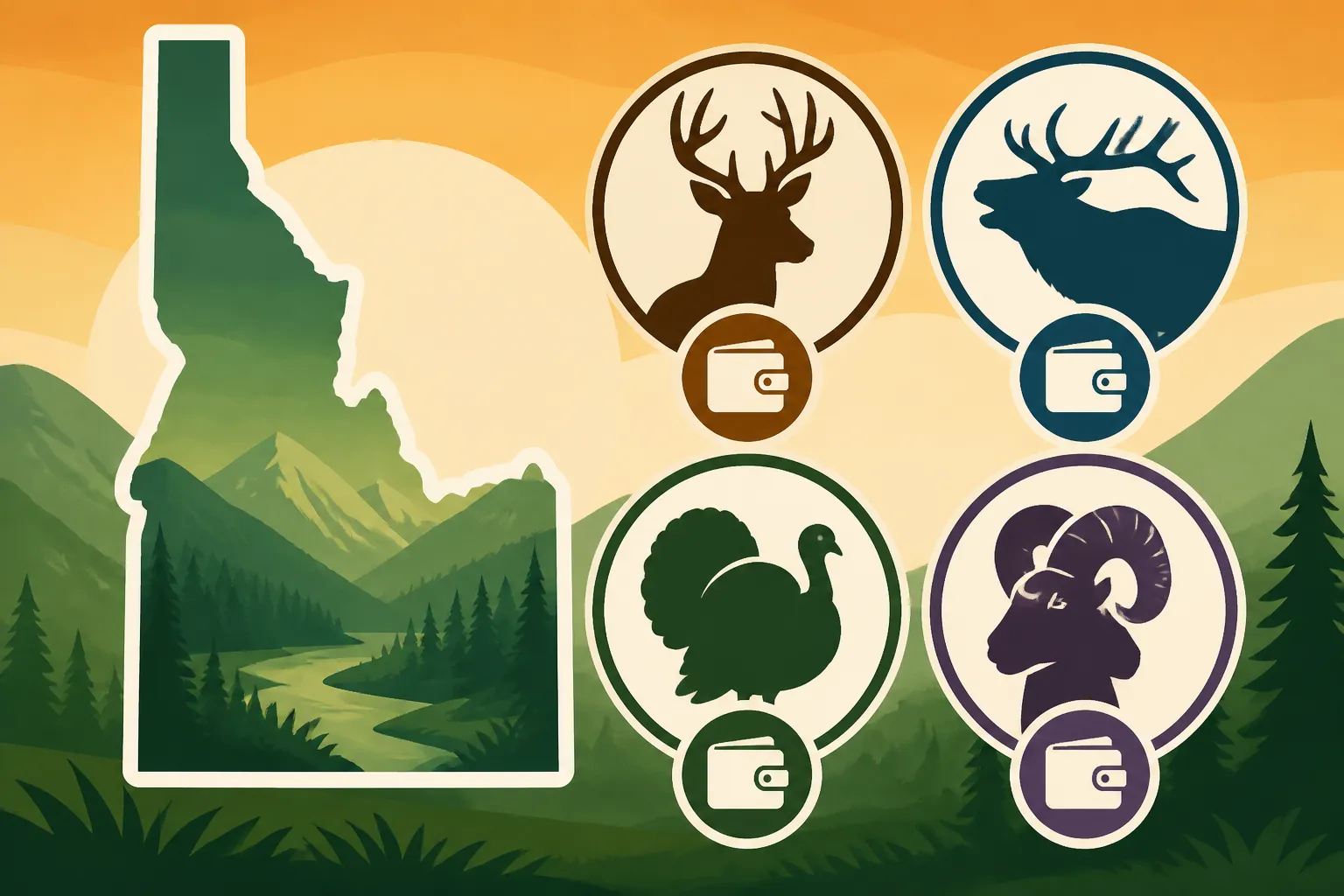
When it comes to the bread and butter of big game hunting in Idaho—deer and elk—the application fees are relatively modest, especially for residents. For a resident hunter, the application fee for either a deer or an elk controlled hunt tag is typically a very low amount, often just a couple of dollars. This makes applying for these popular species quite accessible for Idahoans.
However, for nonresidents, while still manageable, the fees are a bit higher. If you're coming from out of state with hopes of chasing Idaho’s mule deer across the breaks or bugling elk in the timber, you can expect to pay around $10 for each deer or elk controlled hunt application. This means if you apply for both, you're looking at $20 in application fees, plus the nonresident hunting license fee, which is a prerequisite for applying. To understand the full financial picture, it’s essential to factor in the total cost, not just the application fee. For instance, the Total Cost of a Nonresident Idaho Elk Hunt or the Total Cost of a Nonresident Idaho Deer Hunt will include the license, application, and tag costs. These fees are per application, so even if you apply for an A tag for archery season and a B tag for rifle season in different zones, each application counts separately and incurs its own fee.
Application Costs for Trophy Species: Moose, Sheep, Goat
For many hunters, the ultimate dream is drawing a tag for one of Idaho's premier trophy species: moose, bighorn sheep, or mountain goat. These are often once-in-a-lifetime hunts, and the application process reflects their rarity and high demand. The application fees for these species are significantly higher than for deer or elk, for both residents and nonresidents.
A resident hunter will pay a notably higher application fee for moose, bighorn sheep, or mountain goat, which is currently around $16.75 per species. This is a substantial jump from the standard deer and elk application fees, signaling the higher stakes involved. For nonresidents, the application fee for these trophy species climbs even further, typically around $55 per species. This fee acts as a more serious barrier to entry, ensuring that applicants are truly committed to these highly competitive draws. Given the extremely long odds for these tags—sometimes requiring a decade or more of applying—this higher fee for trophy species is something to carefully consider in your long-term hunting strategy. You can find more details about when to apply by looking into information like When Moose and Sheep Applications Open in Idaho and understanding the odds with resources like Idaho Moose Controlled Hunt Draw Odds.
Other Big Game: Bear, Lion, Wolf, and Turkey
Idaho offers exciting hunting opportunities for other big game species, each with its own application fee structure if a controlled hunt is involved. Black bear, mountain lion, and wolf hunts can be incredibly rewarding, offering a different kind of challenge than deer or elk.
For resident hunters, applying for controlled hunts for black bear, mountain lion, or wolf generally falls into the same low-cost category as deer and elk, typically around $1.75 per application. Spring and fall turkey controlled hunts also usually follow this pattern for residents. Nonresidents, on the other hand, will pay approximately $10 per application for these species, similar to deer and elk. This applies to both spring and fall bear seasons, as well as controlled hunts for lions and wolves. While many bear, lion, and wolf opportunities are general season tags that don't require an application or draw, specific controlled hunts offer unique dates or locations that require you to enter the lottery. Be sure to check the regulations for the specific hunt you are interested in. For example, knowing the Idaho Spring Black Bear Season Opening Date or reviewing Idaho Wolf Season Dates by Unit will help you determine if you need to apply for a controlled hunt or if it's a general season opportunity.
Important Distinction: License vs. Application vs. Tag Fees
One of the biggest sources of confusion for hunters, especially those new to Idaho or multi-state applications, is understanding the difference between a hunting license, an application fee, and a tag fee. It's critical to distinguish these three separate costs for effective budgeting and planning.
The hunting license is your base permit to hunt in the state for a given year. You must purchase this before you can even apply for any controlled hunt tags. Without a valid license, your application will be rejected. This is why Idaho requires you to buy your license upfront, a policy explained further in Why You Buy an Idaho License Before Drawing.
The application fee is what we've been discussing: the non-refundable cost to enter the draw for a specific controlled hunt tag. You pay this fee for each species and often for each specific controlled hunt you apply for. This fee simply gives you a chance to win a tag.
The tag fee is the much larger sum you pay only if you are successful in the draw. This is the actual cost of the physical tag that allows you to harvest an animal of a specific species in a specific unit during specific dates. For many nonresident big game tags, these can run into hundreds or even thousands of dollars. It's a significant financial commitment that only comes into play after a successful draw.
Here's a simple table to illustrate the differences:
| Fee Type | Description | Timing | Refundable? |
|---|---|---|---|
| Hunting License | Annual permit required to hunt any species. | Must be purchased before applying for draws. | No |
| Application Fee | Non-refundable fee to enter a controlled hunt drawing for a specific species. | Paid during the application period. | No |
| Tag Fee | Cost of the actual permit to harvest an animal if successfully drawn. | Paid after a successful draw result. | Yes (under limited conditions) |
Strategic Considerations for Managing Application Costs
With these various fees in mind, it's easy to see how costs can escalate, particularly for nonresidents aiming for multiple big game species. Smart planning and a clear understanding of your goals can help you manage these expenses effectively.
Researching Odds and Planning Your Application Strategy
Throwing money at every available application might seem like a way to maximize your chances, but it's often a fast track to draining your hunting budget without much to show for it. A more strategic approach involves careful research into draw odds before you apply. This means understanding which units have better success rates, which hunts are perennially difficult to draw, and whether a unit's tag allocation aligns with your chances.
Tools like GoHunt are incredibly valuable for this kind of research. They compile years of draw statistics, harvest reports, and unit data, allowing you to filter by species, weapon choice, and even public land percentage. Using such resources can help you identify realistic opportunities, whether you're targeting a high-odds resident deer tag or trying to understand the slim chances for a coveted nonresident elk tag. Instead of blindly applying, you can make informed decisions, prioritizing applications where your money has the best chance of leading to a tag. This kind of planning also helps you understand Idaho Runs No Preference Point System, which means every applicant, new or old, theoretically has the same odds each year, making research even more critical. By delving into the details, you ensure your application fees are spent on hunts that align with your chances and goals.
When Fees Add Up: Applying for Multiple Species
It's tempting to apply for every possible big game species in Idaho – deer, elk, bear, lion, wolf, turkey. Each one represents a unique adventure. However, remember that each application carries its own fee. If you’re a nonresident, applying for deer, elk, spring bear, and a moose controlled hunt, for example, could quickly stack up to over $70 in application fees alone ($10 + $10 + $10 + $55). Add in the significant nonresident hunting license fee, and you’ve already invested a substantial amount before even considering the cost of drawn tags.
This is where self-reflection on your priorities and budget becomes crucial. Is your primary goal a trophy elk, or are you hoping to fill a freezer with deer meat? Spreading your applications too thin can dilute your budget without significantly increasing your chances of drawing a desired tag. Sometimes, focusing your efforts on one or two key species where you have a better understanding of the unit and the odds is a more financially prudent and emotionally satisfying approach. For example, if you're set on elk, consider whether applying for a general What an Idaho A Tag Buys You or a specific controlled hunt makes more sense for your budget and preferred hunting style.
Leveraging the Idaho Hunt Planner
To help hunters navigate the myriad of regulations, season dates, and unit boundaries, Idaho Fish and Game provides an excellent, free resource: the Idaho Hunt Planner. This online tool is an invaluable asset for every hunter, offering a comprehensive overview of hunting opportunities across the state.
The Hunt Planner allows you to search by species, weapon type, and even specific game management units (GMUs) to find detailed information on controlled hunts, general seasons, drawing odds, and harvest statistics. You can view maps, read specific regulations for each hunt, and understand the nuances of various seasons, all without incurring additional costs. This platform can be your first stop in determining which hunts are even worth considering for an application fee. For a deeper dive into how to use this tool, checking out A Walkthrough of the Idaho Hunt Planner can provide a step-by-step guide. By leveraging the Idaho Hunt Planner, you can refine your application strategy, ensuring that every application fee you pay is for a hunt that genuinely interests you and aligns with your research. It's a proactive way to avoid unnecessary expenses and focus your efforts where they count the most.
Disclaimer
Please note that hunting regulations and fees in Idaho are subject to change. While this guide aims to provide accurate and up-to-date information, it is always crucial to consult the official Idaho Department of Fish and Game regulations and website for the most current details before applying for any licenses or tags.