Shotgun Slugs and 00 Buck as Short-Range Weapons
Navigating Idaho's hunting regulations can sometimes feel like trying to untangle a knot of fishing line in the dark. A common point of confusion for many hunters, especially those looking at specific short-range weapon seasons or new to the state, revolves around shotguns: are slugs allowed, what about buckshot, and how do these fit into the "short-range" category? This guide aims to clear up that confusion, diving deep into the specifics of using shotgun slugs and 00 buck for hunting in the Gem State, ensuring you're legal, ethical, and prepared for your next pursuit.
Deciphering Idaho's Short-Range Weapon Rules
Idaho's short-range weapon regulations are put in place for a few key reasons, primarily public safety in areas closer to human habitation or to manage game populations in specific units where traditional rifle hunting might not be ideal. Understanding these definitions is the first step to ensuring you're compliant and ethical in the field.
The Rationale Behind Short-Range Seasons
Imagine trying to hunt with a high-powered rifle in an area dotted with cabins, trails, or even small towns. It quickly becomes apparent that safety is paramount. Short-range weapon seasons are often implemented in these zones to reduce the risk of stray bullets traveling long distances, providing a safer hunting environment for everyone. Additionally, they can be a tool for game managers to offer more hunting opportunities in specific units, sometimes extending seasons or allowing access to areas that would otherwise be closed to general weapon hunting. This approach allows hunters to target deer, elk, and other species in places where a more controlled, shorter-range projectile is necessary. It's not just about what weapon you use, but where and why.
What Qualifies as a Short-Range Weapon
Generally speaking, short-range weapons are those designed to be effective at shorter distances, typically under 150 yards, sometimes significantly less. In Idaho, this category often includes archery equipment, muzzleloaders, and certain shotguns. For instance, many hunters wonder, "Does a Crossbow Count as a Short-Range Weapon?" and the answer is yes, they often do, depending on the specific season and unit rules. The core idea is to limit the effective range of the projectile, whether it's an arrow, a black powder projectile, or a heavy shotgun slug. This distinction is vital because simply having a shotgun doesn't automatically qualify it for all short-range seasons; the ammunition type is just as crucial. You'll often see specific rules regarding minimum caliber for muzzleloaders or certain arrow weights for archery, all designed to ensure humane and ethical harvests within these shorter ranges.
The Legality and Use of Shotgun Slugs in Idaho
When it comes to big game hunting within short-range weapon seasons, shotgun slugs are often the primary focus for scattergun enthusiasts. Their single, heavy projectile design makes them a viable, albeit limited, alternative to rifles for larger animals.
Are Shotgun Slugs Legal for Big Game in Idaho?
Yes, absolutely. Shotgun slugs are legal for big game animals like deer and elk in Idaho. This is a common and important clarification, as many hunters come from states with varying regulations. For instance, in areas designated for short-range weapons, or sometimes even during general weapon seasons, a shotgun loaded with slugs is a perfectly legal tool for harvesting big game. This allows hunters to participate in specific hunts or units where a rifle might be prohibited, or where the terrain naturally dictates closer shots. The key is to verify that you are indeed hunting within a season and unit where shotguns are allowed for big game, which the Idaho Fish and Game regulations will clearly outline. Understanding the nuances of "Which Weapons Qualify as Short-Range in Idaho" can prevent a lot of headaches and ensure a legal hunt.
Choosing the Right Slug for Your Hunt
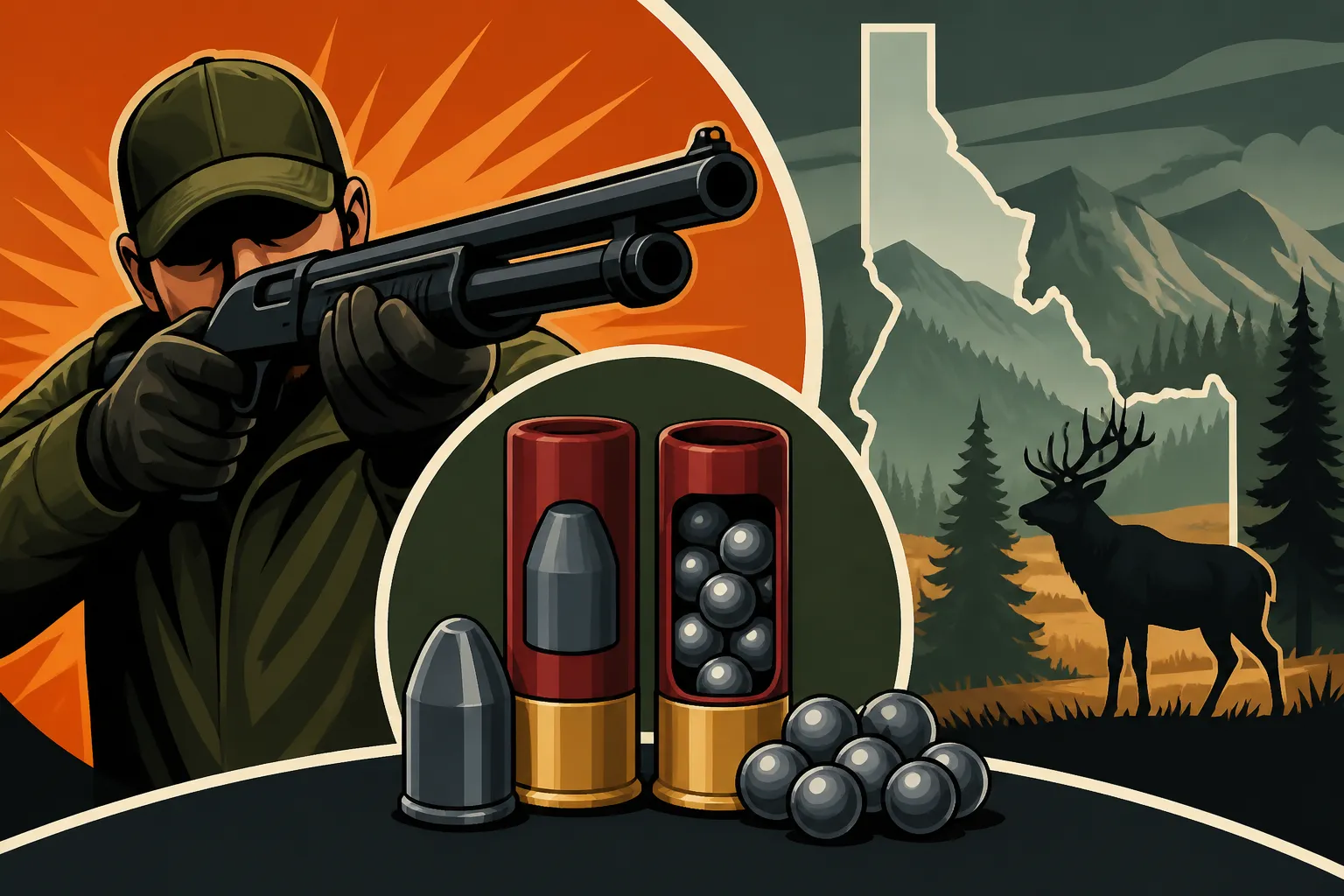
Not all slugs are created equal, and selecting the right one can significantly impact your accuracy and knockdown power. Broadly, slugs fall into two categories: rifled slugs (also known as Foster slugs) and sabot slugs.
- Rifled Slugs (Foster Slugs): These are designed for smoothbore shotgun barrels. They have spiral grooves on their exterior, which are often mistakenly thought to impart spin for accuracy. In reality, these grooves help the slug compress when passing through a choke and reduce friction. Foster slugs are typically made of soft lead and deform easily on impact, transferring a lot of energy to the target. They are generally effective up to about 75-100 yards.
- Sabot Slugs: These are designed for rifled shotgun barrels. A sabot is a plastic sleeve that surrounds a smaller, aerodynamic bullet (often a projectile similar to a rifle bullet). The sabot engages the rifling, imparting spin to the projectile, which dramatically improves accuracy and extends effective range. Once outside the barrel, the sabot separates, allowing the bullet to fly true. Sabot slugs can be effective out to 150 yards or more with the right setup, often rivaling the accuracy of some rifles at shorter ranges. Brands like Hornady SST, Federal Trophy Copper, and Winchester Super X have excellent reputations for sabot slug performance.
When picking your slug, consider your shotgun's barrel type. A smoothbore will perform best with rifled slugs, while a rifled barrel is optimized for sabot slugs. Using the wrong type will lead to poor accuracy and wasted ammunition.
Effective Range and Ballistics for Slugs
While slugs are powerful, they are not long-range projectiles. Their ballistics are vastly different from a high-velocity rifle bullet. A 12-gauge slug might leave the barrel at around 1,500-1,800 feet per second (fps), but it sheds velocity and energy very quickly due to its blunt shape and heavy weight.
- Drop: Slugs experience significant bullet drop past 75 yards. A slug zeroed at 50 yards might drop 6-8 inches at 100 yards, and a foot or more at 125 yards. Knowing your slug's trajectory is paramount.
- Energy: At close range, slugs deliver massive kinetic energy, often exceeding many rifle calibers. This is why they are so effective for big game. However, this energy dissipates rapidly with distance. An ethical shot relies on having enough energy to ensure a quick, humane kill.
- Accuracy: Modern slug guns, especially those with rifled barrels and good optics, can achieve 3-4 inch groups at 100 yards, sometimes better. However, a traditional smoothbore with open sights might struggle to keep all shots on a paper plate at that range.
It's absolutely critical to pattern your shotgun with your chosen slugs before hunting. Shoot at various distances (25, 50, 75, 100 yards) to understand your gun's limitations and your personal maximum effective range. Never assume your slug gun will shoot like a rifle; treat it as a unique system. For hunting elk with a slug gun, aim to keep your shots within 75-100 yards, depending on your setup and proficiency, while for deer, you might stretch that slightly.
00 Buckshot and Its Place in Idaho Hunting
Here's where a lot of confusion often crops up, and it's vital to get this right to avoid any legal issues or unethical hunting practices.
Legality of 00 Buckshot for Big Game in Idaho: A Firm No
Let's be unequivocally clear: 00 buckshot (or any buckshot for that matter) is NOT legal for hunting big game animals like deer, elk, moose, bighorn sheep, or mountain goats in Idaho. This is a critical regulation that every hunter must understand. The state's regulations are designed to ensure humane and ethical harvests, and buckshot, even 00 buck, simply does not possess the energy, penetration, or consistent pattern density required to reliably take down large animals. While it might be legal for some predator hunting in specific situations, using it for deer or elk is both illegal and highly unethical.
The primary reason for this prohibition is the inherent design of buckshot: it disperses. Even at close range, the pattern can be inconsistent, leading to multiple superficial wounds rather than a clean, quick kill. A deer or elk hit by buckshot might escape, only to suffer and die slowly. Idaho Fish and Game prioritizes clean kills, and buckshot falls short of that standard for big game.
Shot Size Regulations for Other Species
While 00 buck is out for big game, shotguns are incredibly versatile tools for other types of hunting in Idaho, particularly small game and upland birds. The legality here hinges on using appropriate, smaller shot sizes.
- Upland Birds: For species like pheasants, chukar, grouse, and quail, shot sizes ranging from #4 to #7.5 lead shot are typically appropriate and legal. The smaller shot pellets create a dense pattern, increasing the likelihood of hitting a fast-flying bird. Steel shot is also often used, especially in areas where lead shot is restricted.
- Small Game: For rabbits and squirrels, similar smaller shot sizes, typically #6 or #7.5, are common.
- Turkeys: For turkeys, which are tougher birds, hunters often step up to #4, #5, or even #6 lead shot, or heavier shot like TSS.
- Predators/Varmints: For animals like coyotes or foxes, you might find some local variations in regulations, but shot sizes like BB or #2 steel shot can be legal in certain situations. However, always double-check the specific unit and season regulations, as they can vary.
The important takeaway is that the size and type of shot must match the species you are pursuing and comply with Idaho's specific regulations for that game animal. Always consult the current Idaho hunting regulations brochure or use a resource like the GoHunt app to verify legality for the specific hunt you're planning.
Ethical Considerations of Buckshot
Beyond legality, there's the ethical responsibility of a hunter. The goal is always a swift and humane harvest. With buckshot, especially on animals as robust as deer or elk, this becomes incredibly difficult.
- Inadequate Penetration: Buckshot pellets, even 00, often lack the individual energy and mass to consistently penetrate deep enough into the vital organs of a large animal for a quick kill. You might get several pellets in the body cavity, but few, if any, might reach the heart or lungs effectively.
- Pattern Density: While a shotgun fires many pellets, the pattern spreads. The farther the target, the wider the spread and the fewer pellets that actually hit. This dramatically reduces the chances of multiple vital hits, even at what seems like close range.
- Increased Wounding Loss: The result of inadequate penetration and poor pattern density is a high likelihood of wounding an animal without recovering it. This is a nightmare scenario for any ethical hunter and is precisely what these regulations aim to prevent.
For anyone serious about hunting and respecting the game, buckshot for big game simply isn't an option. Stick to slugs for big game shotgun hunting in Idaho.
Practical Considerations for Short-Range Shotgun Hunting
So, you've decided to embrace the challenge of short-range shotgun hunting for big game in Idaho. This journey requires specific preparation to ensure success and an ethical hunt.
Optimizing Your Gear Setup for Slug Hunting
A shotgun designed for birds can work, but one optimized for slugs will perform far better.
- Rifled Barrel: If your budget allows, a dedicated rifled slug barrel for your shotgun is a game-changer. The rifling spins the sabot slug, providing rifle-like accuracy out to 150 yards or even a bit further with practice. Many manufacturers offer interchangeable barrels for popular shotgun models like the Remington 870 or Mossberg 500.
- Sights and Optics: Open sights on a smoothbore might get you to 50 yards, but for extended ranges and better accuracy, an optical sight is invaluable.
- Red Dot Sights: These are excellent for quick target acquisition and offer unlimited eye relief. They are perfect for shots under 100 yards in dense cover. A robust red dot like an Aimpoint or Vortex will hold up to the heavy recoil of slugs.
- Low-Power Variable Scopes: A 1-4x or 2-7x scope can be fantastic for slug hunting. The low end provides a wide field of view for close-range work, while the higher magnification aids in precise shot placement at longer distances.
- Choke Selection: If using a smoothbore barrel, some hunters find improved accuracy with specific chokes, though this varies greatly by gun and slug combination. A cylinder or improved cylinder choke is generally recommended for rifled slugs to avoid excessive pressure or slug deformation when passing through tighter chokes. However, it's crucial to experiment.
- Ammunition Consistency: Once you find a slug brand and type that shoots well in your gun, stick with it. Different slugs will perform differently, even from the same manufacturer. Consistency in ammunition leads to consistency in performance.
Remember that a shotgun firing slugs generates significant recoil. Practicing with your chosen setup is key to managing that recoil and placing accurate shots under pressure.
The Importance of Patterning and Practice
You cannot just buy a box of slugs, slap them in your shotgun, and expect to hit your target. Every shotgun, slug, and sight combination is unique.
- Patterning: This is more than just "zeroing." It's understanding how your chosen slug performs at various distances. Set up targets at 25, 50, 75, and 100 yards. Shoot from a stable rest, paying attention to your groups. Document your point of impact at each distance. This will build your confidence and clearly define your ethical range. Many ranges, like those found around Boise, ID, offer facilities suitable for patterning shotguns.
- Recoil Management: Heavy slugs produce noticeable recoil. Practice helps you develop a consistent shooting form to absorb this energy, preventing flinching and improving follow-through. Consider a good recoil pad, a weighted stock, or even shooting from a bench rest with a recoil-absorbing bag to make practice more comfortable and productive.
- Field Positions: Most hunting shots aren't taken from a bench. Practice shooting from kneeling, sitting, and standing positions, ideally using hunting aids like shooting sticks or a bipod. This simulates real-world hunting scenarios and prepares you for the moment of truth.
Navigating Specific Unit Regulations and Tools
Idaho's regulations can vary by game management unit (GMU) and even by specific zones within units. What's legal in one area might be prohibited in another.
- Idaho Hunt Planner: This online tool from the Idaho Department of Fish and Game (IDFG) is an invaluable resource. It allows you to search by GMU, species, and weapon type to see specific season dates and rules. You can find detailed maps, harvest statistics, and specific weapon restrictions for each hunt code. Familiarize yourself with the planner early in your season preparations. The topic "The Idaho Hunt Planner Is the Tool to Start With" explains its functionality in detail.
- GoHunt App: For hunters who prefer digital tools, the GoHunt app is a fantastic resource. It integrates maps, regulations, drawing odds, and unit profiles, making it easy to check rules on the go, even in areas with limited cell service. Many hunters find these modern mapping applications indispensable for navigating complex regulations and terrain.
- Contact IDFG: When in doubt, call the Idaho Department of Fish and Game directly. Their conservation officers and administrative staff are there to help clarify any confusing regulations. It's always better to ask a question than to make an assumption that leads to a violation.
- Reading an Idaho Controlled Hunt Area Boundary: Pay close attention to unit boundaries, as a legal weapon type can change just across a road or natural feature. Digital mapping tools with public land and unit boundary layers are essential for this.
Comparing Shotgun Slugs to Other Short-Range Options
While shotguns with slugs are a viable short-range option, it's helpful to compare them to other common choices to understand their strengths and weaknesses.
Shotguns vs. Muzzleloaders
Muzzleloaders are another classic short-range weapon, and they often share seasons with shotguns.
| Feature | Shotgun with Slugs | Muzzleloader |
|---|---|---|
| Projectile | Single, heavy lead or copper slug | Round ball or conical bullet, typically .45-.54 cal |
| Loading Speed | Quick, magazine-fed or break-action | Slow, single shot, loaded from the muzzle |
| Effective Range | 75-150 yards (depending on setup) | 100-200 yards (depending on load/accuracy) |
| Accuracy | Good with rifled barrel/optics; fair with smoothbore | Excellent with modern inlines; good with traditional |
| Recoil | Significant | Significant to heavy |
| Weather Impact | Minimal | Can be sensitive to moisture/powder issues |
| Scope Legality | Usually allowed | Often prohibited in muzzleloader-only seasons (e.g., "Open and Peep Sights Only in Muzzleloader-Only Hunts") |
Muzzleloaders often offer a bit more effective range than traditional slug guns, especially the modern inline models. However, they are inherently slower to reload and can be more finicky in adverse weather. Shotguns, on the other hand, offer quicker follow-up shots and are generally more robust in wet conditions. The "Minimum Muzzleloader Caliber for Idaho Deer" and "Minimum Muzzleloader Caliber for Idaho Elk" rules also outline specific requirements for black powder hunters.
Shotguns vs. Crossbows
Crossbows have gained popularity, especially for hunters with physical limitations or those seeking a different challenge within short-range seasons.
| Feature | Shotgun with Slugs | Crossbow |
|---|---|---|
| Projectile | Single, heavy slug | Bolt (arrow) |
| Loading Speed | Quick | Moderate (cocking device needed) |
| Effective Range | 75-150 yards | 40-80 yards (depending on skill/bow) |
| Accuracy | Good with proper setup | Excellent, but often limited by projectile speed |
| Recoil | Significant | Minimal |
| Noise | Very loud | Relatively quiet |
| Physical Effort | Moderate | Minimal (after cocking) |
| Hunting Style | Stand/still hunting | Stand/still hunting, ambush |
Crossbows offer incredible accuracy and minimal recoil, making them approachable for many. Their range is significantly shorter than a slug gun, demanding even closer encounters. Shotgun slugs, while louder and with more recoil, extend that effective range considerably. Ultimately, the choice between these weapons often comes down to personal preference, the type of terrain you'll be hunting, and the specific regulations of your chosen hunt. For a deeper dive, consider articles like "Does a Crossbow Count as a Short-Range Weapon?" which elaborates on crossbow legality and usage.
Idaho offers a diverse range of hunting opportunities, and understanding the specific rules for each weapon type is crucial. Whether you're planning a deer hunt in a controlled unit where "Idaho's Motorized Hunting Rule Keeps You on the Road" or an elk expedition in the timber, being knowledgeable about your weapon's limitations and legality ensures a responsible and rewarding experience.
Disclaimer
Please remember that hunting regulations are subject to change. This guide provides general information based on current Idaho hunting laws. Always consult the most recent official Idaho Fish and Game regulations brochure or their website before planning any hunt. It is every hunter's responsibility to know and follow all applicable laws and regulations.