How Idaho Elk Zones Sit on Top of the Units
If you're looking to hunt elk in Idaho, you've probably already dipped a toe into the sometimes bewildering ocean of regulations. One of the biggest head-scratchers for new and even experienced hunters alike is trying to figure out how Idaho's large, overarching elk zones interact with its smaller, more numerous Game Management Units, or GMUs. It's not always a straightforward map overlay, and misunderstanding this crucial relationship can lead to confusion, missed opportunities, or even an accidental violation. This guide is here to untangle that complexity, helping you clearly understand how Idaho's elk zones sit squarely on top of its game units, and what that means for your next hunt.
Deconstructing Idaho's Hunting Map: Units, Zones, and the Overlap
Navigating Idaho's vast and diverse landscapes for elk hunting requires a solid grasp of how the state manages its wildlife. This management isn't a one-size-fits-all approach; it's a meticulously structured system that relies on distinct geographical designations: Game Management Units (GMUs) and Elk Zones. While both are critical, their interaction, particularly how zones overlay units, is where many hunters get tripped up.
Understanding Idaho's Game Management Units (GMUs)
Think of Idaho's Game Management Units as the foundational building blocks of the state's wildlife management strategy. These are distinct, often smaller geographical areas, each assigned a specific number – anywhere from 1 to 99, with some sub-units indicated by letters. These units were established to allow for granular control over local wildlife populations. For example, a biologist might determine that a specific mule deer herd in Unit 45 needs different harvest objectives than a herd just across the ridge in Unit 46.
Their primary purpose is to define specific hunting areas where regulations for various species can be tailored to local conditions, habitat health, and population dynamics. This precision allows the Idaho Department of Fish and Game (IDFG) to manage individual herds or even specific game species within a localized area. You'll find regulations dictating everything from antlerless hunts to specific weapon types within these unit boundaries. Every hunter, regardless of their target species, must be aware of the GMU they are in, as these are the fundamental boundaries for almost all hunting activities.
Introducing Idaho's Elk Zones
While GMUs provide granular control, elk zones operate on a much broader scale. Idaho's elk zones are larger geographical regions specifically designed for the comprehensive management of elk populations. There are over two dozen named elk zones across the state, such as the Lolo Zone, the Middle Fork Zone, or the Owyhee Zone. These zones are not just arbitrary lines on a map; they are drawn to encompass entire elk herds or distinct migratory patterns, allowing wildlife managers to manage these wide-ranging animals more effectively.
The most significant aspect of elk zones for hunters is their direct correlation with Idaho's A Tag and B Tag system. Each zone dictates whether hunters purchase an "A" tag or a "B" tag, which in turn defines the general season structure, weapon choices, and often the timing of the hunt. An A Tag, for instance, might offer an early archery season followed by a short muzzleloader season, while a B Tag in an adjacent zone could provide a more extended general rifle season. These zones simplify the regulatory framework for elk by grouping multiple GMUs under a broader elk management umbrella. Idaho Elk Zones and the A Tag or B Tag Choice is a critical piece of information for any elk hunter to grasp.
The Overlap: When Units and Zones Collide
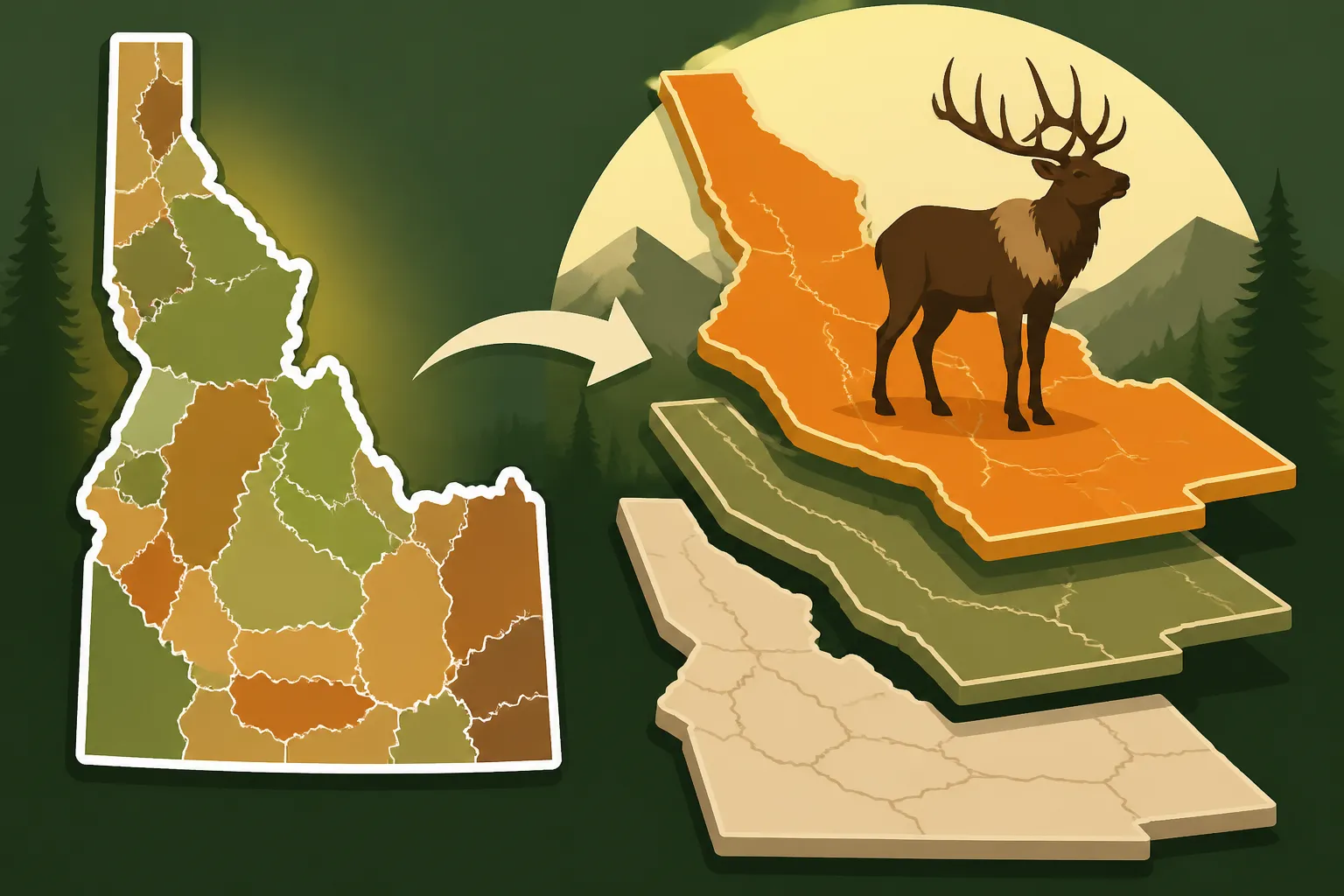
Here's where the rubber meets the road and the potential for confusion arises: elk zones are essentially collections of Game Management Units. This means that an elk zone isn't a separate, parallel map; it's an overlay on top of the existing GMU structure. It's crucial to understand that a single GMU can be entirely contained within one elk zone, which simplifies things. However, a GMU can also be split, with different portions of that same unit falling into two or even three distinct elk zones.
Imagine a single Game Management Unit, say Unit 10, that is geographically large. The northern part of Unit 10 might fall into the "Selway Zone," while the southern part might extend into the "Elk City Zone." This creates a situation where if you're hunting in Unit 10, your specific regulations for elk will depend entirely on which portion of Unit 10 you are physically occupying – the Selway Zone portion or the Elk City Zone portion. This overlap means that while your general hunting license is for Idaho, your specific elk tag dictates which zone you can hunt in, and that zone's rules then apply to the GMUs (or parts of GMUs) it covers. It's a system that demands hunters pay close attention to boundary lines, often requiring the use of sophisticated mapping tools.
Why Idaho Uses Both Units and Elk Zones
The dual system of Game Management Units and Elk Zones isn't designed to make your life harder, even if it feels that way sometimes. Instead, it's a sophisticated approach to wildlife management, allowing Idaho Fish and Game to address the unique needs of different species and local ecosystems while also managing broader, more migratory populations like elk. Understanding the rationale behind this two-tiered system can actually help you anticipate and navigate the regulations more effectively.
Granular Management at the Unit Level
Game Management Units are the workhorses of Idaho's wildlife management. Their relatively smaller size allows for highly specific and localized control over wildlife populations. This granularity is essential for several reasons. Firstly, habitat conditions can vary dramatically even within short distances. A unit might encompass high alpine country, dense timber, and dry sagebrush steppe, each with different carrying capacities and challenges for various species. By delineating these smaller units, biologists can set precise harvest objectives, monitor herd health, and implement regulations that are finely tuned to the local environment and its inhabitants.
For example, if a specific population of mule deer in one unit is struggling due to habitat loss or disease, IDFG can implement stricter tag limits or even close a season within that particular unit without affecting adjacent, healthier populations. Conversely, if a unit has an overabundance of whitetail deer, managers can offer more tags or extended seasons to help balance the ecosystem. These units are also critical for enforcing localized rules, such as those related to motorized travel. For instance, Idaho's Motorized Hunting Rule Runs August Into December is often applied unit-by-unit or within specific areas of units, emphasizing the localized nature of these regulations. This localized approach allows for adaptive and responsive management that simply wouldn't be possible with larger, more general boundaries.
Broader Elk Management at the Zone Level
While GMUs excel at localized management, elk, by their very nature, require a broader management perspective. Elk herds are highly migratory, often moving vast distances between summer and winter ranges, and their home ranges frequently span multiple GMUs. Trying to manage these wide-ranging animals solely through small, individual units would be a logistical nightmare and biologically unsound. This is where elk zones come into play.
Elk zones are designed to encompass these larger migratory corridors and herd ranges. By managing at the zone level, IDFG can set overarching objectives for an entire elk population, even if that population utilizes several different GMUs throughout the year. For example, a zone might cover the summer range in high mountains and the winter range in lower valleys, ensuring a holistic approach to managing that specific herd segment. The zones dictate the general season types (A or B tags), which then dictate the broad season dates and weapon restrictions. This means that a hunter pursuing elk needs to understand the zone they are in, as it defines the fundamental parameters of their hunt. It allows for a more consistent management framework for a species that doesn't neatly stay within the arbitrary lines of a smaller unit.
Balancing Specificity and Scale in Wildlife Management
The co-existence of GMUs and elk zones is a testament to the complexity of modern wildlife management. It represents a careful balancing act between specificity and scale. The GMUs provide the precise, ground-level control needed for detailed population assessments and habitat interventions. They allow managers to react quickly to local changes and tailor regulations to very specific areas. This is crucial for species that might have smaller home ranges or for addressing localized issues.
On the other hand, elk zones provide the necessary framework for managing a highly mobile and wide-ranging species like elk. They allow for consistent, landscape-level management that considers the entire life cycle and migratory patterns of an elk herd, rather than fragmenting their management across dozens of disparate unit regulations. This dual system ensures that IDFG can address both the micro and macro aspects of wildlife conservation and hunting opportunity. For hunters, this means that while you must always know your GMU for general rules, your elk hunt will also be heavily influenced by the larger elk zone you choose. Effectively, the unit is where you are, but the zone defines the rules for elk in that "where."
Navigating the Map: How Zones Encompass Units
Understanding that elk zones are essentially larger geographic regions that contain multiple Game Management Units (GMUs) is the first step. The next is comprehending the practical implications of this arrangement. It's not always a clean, simple overlay, and the nuances of how zones encompass units can significantly impact your hunt planning and execution.
Units Entirely Within a Single Elk Zone
In the simplest scenario, a GMU might be located entirely within the boundaries of a single elk zone. For instance, a small, isolated unit surrounded by private land or distinct geographical features might fall neatly into one of Idaho's numerous elk zones, such as the Weiser Zone or the Pioneer Zone. In these cases, the hunting regulations for elk within that particular unit are straightforward: they are dictated entirely by the rules established for the encompassing elk zone.
This simplifies the hunter's task considerably. If you're looking at Unit 32, and it's fully within the Weiser Zone, you simply consult the Weiser Zone regulations for your A or B tag dates, weapon restrictions, and any other elk-specific rules. There's no need to worry about different rules applying to different parts of the unit. This makes initial scouting and planning much easier, as the entire unit operates under one set of elk-specific guidelines. It's still essential to verify this alignment each year, as regulations and boundaries can occasionally be adjusted, but this is the most hunter-friendly configuration of the overlap.
Units That Cross Elk Zone Boundaries
This is where the real challenge and potential for confusion arises. It's not uncommon for larger or irregularly shaped GMUs to straddle the boundaries of two or more elk zones. Imagine a unit, say Unit 18, that stretches across a significant portion of mountainous terrain. The northern half might fall into the "Selway Zone," while the southern half spills into the "Lolo Zone." This means that within the same Game Management Unit, the elk hunting regulations could be drastically different depending on which side of the invisible zone line you are standing.
For a hunter, this requires extreme vigilance. If you have an A tag for the Selway Zone, you can only legally hunt elk in the portion of Unit 18 that lies within the Selway Zone during the specified A tag seasons. If you were to cross into the Lolo Zone portion of Unit 18, even inadvertently, and hunt with your Selway A tag, you would be hunting illegally if the Lolo Zone had different season dates or tag requirements for that time. This demands the use of precise mapping tools, like onX Hunt, which allows you to overlay all these boundaries on satellite imagery directly. You can literally see the line in the digital map where one elk zone ends and another begins, even within the same GMU. Without such tools, navigating these split units can be a recipe for frustration or, worse, a violation.
Practical Implications for Hunters
The overlap of units and zones has significant practical implications for every elk hunter in Idaho. Firstly, it means your hunt planning can't just stop at identifying a promising GMU. You must then drill down and understand which elk zone that GMU (or your specific hunting spot within it) falls into. This dictates your tag choice (A or B), your season dates, and weapon restrictions. Overlooking this detail is a common mistake that can lead to being in the right unit but the wrong zone for your tag, effectively making your hunt illegal.
Secondly, for those who love to wander and cover ground, especially in expansive, roadless areas, the zone boundaries become just as critical as the unit boundaries. You might be tracking an elk through a large GMU, only to find yourself unwittingly crossing into a different elk zone where your tag is invalid, or the season is closed. Imagine spending days scouting an area in what you thought was a B-tag rifle zone, only to discover a key ridge or basin where you plan to hunt is actually in an A-tag archery-only zone during your rifle season. It completely changes your hunt strategy. Always double-check your intended hunting location against both the GMU and elk zone boundaries on your map and in the official regulations to ensure you're compliant and maximizing your legal opportunities.
The A Tag and B Tag System Through the Lens of Zones
Idaho's "A Tag" and "B Tag" system is a core component of elk hunting in the state, and it is inextricably linked to the elk zones. While units define the physical landscape, the zones, through the A/B tag distinction, truly define the opportunity for elk hunting. Understanding this relationship is paramount for making informed decisions about where and how you'll hunt.
A Tags and Their Zone-Specific Focus
An A Tag in Idaho is generally associated with earlier, often more specialized hunting opportunities, predominantly favoring archery and muzzleloader hunters. When you purchase an A Tag, it's not just an "A Tag" in general; it's an A Tag for a specific elk zone. For example, you might acquire an A Tag for the "Lolo Zone." This means you can only hunt elk within the GMUs (or portions of GMUs) that comprise the Lolo Zone, and only during the seasons designated for A Tag holders in that zone.
The season structures for A Tags are meticulously planned by IDFG within each zone to provide opportunities that typically precede the general rifle seasons. This often translates to prime rut-period archery hunts in September, followed by shorter muzzleloader seasons. The intent is to spread out hunting pressure and provide different types of experiences. So, if your dream is to chase bugling bulls with a bow, you'll be focusing your research on which specific elk zones offer desirable A Tag opportunities during the peak of the rut. A Tags Favor Archery and Muzzleloader Hunters gives more detail on this, highlighting the specific opportunities available.
B Tags and Their Broader Season Structures
In contrast to A Tags, B Tags are often associated with the general rifle seasons and sometimes later archery or muzzleloader opportunities. Like A Tags, a B Tag is zone-specific. If you purchase a B Tag for the "Middle Fork Zone," you are restricted to hunting elk within the GMUs of that zone and only during the seasons prescribed for B Tag holders in the Middle Fork Zone.
B Tag seasons typically run later in the fall, often from mid-October through November, coinciding with the later phases of the rut and colder weather. These seasons are generally longer and allow for centerfire rifles, which appeal to a broader segment of the hunting community. The broader season structures of B Tags within a zone aim to provide accessible opportunities while still managing harvest levels effectively. If you prefer hunting with a rifle, or later in the season when snow might drive elk to lower elevations, a B Tag zone will likely be your focus. Understanding B Tags Favor the Centerfire Rifle Crowd further clarifies how these tags cater to specific hunting preferences and weapon types.
Making Your Choice: Zone First, Then Unit
This intricate system underscores a crucial point for planning your Idaho elk hunt: your primary decision often starts at the zone level, not the unit level. Before you even begin to scout specific ridges or basins within a GMU, you need to decide what type of hunt you're looking for. Do you want an early season archery hunt? That points you towards A Tag zones. Do you prefer a general rifle hunt later in the fall? That steers you towards B Tag zones.
Once you've identified the type of hunt and consequently narrowed down the potential elk zones, then and only then do you dive into the specifics of the individual GMUs contained within those zones. You'll then assess factors like public land access, terrain, past harvest success, and elk distribution within the specific units that your chosen zone encompasses. This zone-first approach ensures that you buy the correct tag for the season type you desire and avoids the frustration of realizing your preferred GMU only offers a season that doesn't align with your weapon or timeline. Learning How to Pick Between an Idaho A Tag and a B Tag is foundational to this decision-making process.
Tools and Resources for Understanding the Overlap
The complexity of Idaho's unit and zone system can feel daunting, but thankfully, there are excellent tools and resources available to help you navigate it. Relying on outdated information or guesswork is a recipe for frustration, so equipping yourself with the right resources is just as important as your rifle or bow.
The Idaho Hunt Planner: Your Starting Point
The official Idaho Fish and Game Hunt Planner website is, without a doubt, your absolute starting point for deciphering Idaho's hunting regulations. This online resource is incredibly powerful, offering a centralized hub of information that can save you countless hours of cross-referencing paper maps and regulation books. You can search by species, unit, or zone to find detailed information on season dates, tag quotas, drawing odds, and specific regulations.
The Hunt Planner allows you to visualize unit and zone boundaries, often with interactive maps that show exactly how elk zones encompass various GMUs. You can click on a unit or zoom into a specific area to see its associated elk zone, as well as the season dates for both A and B tags in that zone. It's an indispensable tool for initial research, helping you identify potential hunting areas and understand the overarching regulatory framework before you commit to a tag. Always start here to get a general lay of the land; The Idaho Hunt Planner Is the Tool to Start With is not just a suggestion, it's a command for serious hunters.
Mapping Applications for Precision: onX Hunt and GoHunt
While the official Hunt Planner provides a great overview, for true precision in the field, you absolutely need a dedicated mapping application. This is where tools like onX Hunt and GoHunt become indispensable. These apps take the static maps of the regulations and bring them to life on your smartphone or GPS device, allowing for real-time navigation and boundary identification.
onX Hunt, for example, is renowned for its ability to overlay various property and regulatory boundaries directly onto satellite imagery. This means you can see the precise lines for GMUs and, critically, elk zones, right on your screen while you're standing in the field. This feature is a game-changer when you're in a unit that straddles two different elk zones. With onX Hunt, you can zoom in and literally see the boundary line, ensuring you know exactly which zone you are in and which regulations apply to your current location. This prevents accidental trespass or hunting with the wrong tag. GoHunt, while also offering mapping features, shines particularly bright with its comprehensive drawing odds, harvest statistics, and unit-by-unit breakdowns. It complements onX Hunt by providing the analytical data needed for strategic decisions, like Checking Idaho Drawing Odds Before You Apply, which informs your initial tag application. Together, these tools provide an unparalleled level of detail and assurance for navigating Idaho's complex hunting landscape.
Reading the Regulations: The Ultimate Authority
Despite the incredible utility of digital maps and online planners, it is absolutely critical to remember that the official Idaho Fish and Game hunting regulations booklet is the ultimate legal authority. Think of the online tools and apps as powerful aids, but the printed (or official PDF) regulations are the law. While mapping applications strive for accuracy, a mislabeled line or an out-of-date overlay, however rare, could lead to serious consequences if you're solely relying on it.
Always cross-reference what you see on your map with the written regulations. The regulations clearly list which GMUs fall into which elk zones and explicitly detail all season dates, weapon restrictions, and tag requirements. Pay particular attention to the language describing units that are split by zone boundaries, as the regulations will specifically outline which rules apply to which portion. This step is non-negotiable for responsible hunting. A quick glance at the official document after using your map to identify potential areas can confirm your understanding and safeguard you against inadvertent violations. The cost of a few minutes reading the rules is infinitely less than the cost of a citation, or worse, losing your hunting privileges.
| Elk Zone | GMUs Partially or Wholly Contained | Typical A Tag Seasons (Example) | Typical B Tag Seasons (Example) |
|---|---|---|---|
| Lolo Zone | 10, 12, 12A, 16, 17 | Early Archery: Mid-Sept to Late Sept | General Rifle: Early Oct to Late Oct |
| Selway Zone | 10, 12, 14, 15, 16A, 17 | Archery: Late Aug to Mid-Sept | General Rifle: Mid-Oct to Mid-Nov |
| Middle Fork Zone | 19, 20, 20A, 26, 27 | Archery: Late Aug to Mid-Sept | General Rifle: Early Oct to Mid-Nov |
| Sawtooth Zone | 33, 34, 35, 36 | Archery: Early Sept to Late Sept | General Rifle: Mid-Oct to Mid-Nov |
| Pioneer Zone | 36A, 49, 50, 50A | Archery: Early Sept to Late Sept | General Rifle: Mid-Oct to Mid-Nov |
This table provides a simplified example for illustrative purposes. Always consult current Idaho Fish and Game regulations for exact dates and details.
Practical Scenarios and Avoiding Common Mistakes
Understanding the theoretical overlap of Idaho's units and zones is one thing; applying that knowledge in the field and avoiding common pitfalls is another. Elk hunting often takes you into remote, rugged country where the lines on a map can easily blur, leading to mistakes if you're not careful. Let's explore some practical scenarios to highlight potential issues and how to steer clear of them.
The "Invisible Line" Scenario
Imagine you've been granted an A Tag for the Lolo Elk Zone. You've scouted a promising basin in Unit 10, which you know is part of the Lolo Zone. You're deep in the timber, bow in hand, during the Lolo Zone's archery-only A Tag season. You hear a bugle, begin a stalk, and quietly move up a drainage. Without realizing it, you cross an almost imperceptible ridge that marks the boundary between the Lolo Zone and the adjacent Selway Zone, which also happens to bisect Unit 10. The Selway Zone's A Tag archery season may have closed a week earlier, or perhaps that specific part of Unit 10 in the Selway Zone is open only to B Tags for a rifle hunt much later.
Suddenly, you're hunting elk illegally. This "invisible line" scenario is incredibly common in areas where zones split units. The consequence could be a costly citation, confiscation of your animal, and loss of hunting privileges. To avoid this, meticulous attention to detail on your mapping app (like onX Hunt) is crucial. Before you even set foot in an area, especially one close to a known zone boundary, spend time studying the map, marking the zone line, and understanding the regulations on both sides of that line. In the field, regularly check your GPS position to ensure you remain within your legal hunting zone.
Planning a Hunt Across Multiple Units and Zones
Another challenge arises when planning a more extensive hunt or scouting trip that naturally spans several GMUs. You might identify a region that looks promising, covering parts of Unit 12, 16, and 17. The complication quickly arises if Unit 12 is entirely in the Lolo Zone, but Unit 16 is partially in the Lolo Zone and partially in the Selway Zone, and Unit 17 is mostly in the Selway Zone. If you have a Lolo Zone A Tag, your hunting opportunities are then restricted to only the portions of those units that fall within the Lolo Zone, during its specific season dates.
This multi-unit, multi-zone scenario demands careful strategizing. You might need to have contingency plans or focus your efforts very narrowly on the legal sections. This level of planning also becomes critical when considering how elk might move in response to pressure or weather. They could easily cross an internal zone boundary within a GMU, moving from an area where you can legally hunt them to an area where you cannot. E-Scouting an Idaho Unit Before the Season is a great way to identify these potential boundary issues from your couch, long before you burn fuel and boot leather. It allows you to visualize potential movements and plan your approach accordingly, ensuring you have a legal hunting plan no matter which side of a boundary the elk are on.
Dealing with Dynamic Information
It's tempting, especially after a successful hunt, to assume that next year's regulations will be identical. However, Idaho's wildlife management is dynamic, and regulations, unit boundaries, or even zone definitions can change from year to year. Habitat conditions, herd health, harvest success rates, and even public feedback can all influence how IDFG structures its seasons. What was legal last year might not be this year.
Therefore, a critical mistake is failing to check the current year's regulations every single season. Never rely on memory or last year's printout. Always visit the Idaho Fish and Game website or pick up the latest regulations booklet before applying for a tag or heading afield. Confirm the exact season dates for your chosen elk zone and the GMUs within it, verify any weapon restrictions, and look for any new rules regarding motorized access or special permit requirements. This ensures you're always operating with the most up-to-date and accurate information, saving you from potential grief and ensuring a responsible, legal hunting experience.
Strategic Considerations for Idaho Elk Hunters
Mastering the unit and zone system isn't just about avoiding violations; it's also about unlocking strategic advantages that can significantly enhance your Idaho elk hunting experience. A deep understanding of how these boundaries interact allows you to make more informed decisions, increase your odds of success, and find the kind of hunt you're truly seeking.
Maximizing Opportunity with Zone Knowledge
The A Tag/B Tag distinction, tied directly to elk zones, creates diverse hunting opportunities across Idaho. By understanding the specific season dates and weapon restrictions for each zone, you can strategically select the tag that aligns best with your hunting style and preferred time of year. For instance, if you're a passionate archer who thrives on bugling bulls, you'll scrutinize zones offering prime early September A Tag archery seasons. Conversely, if you prefer to brave the late-season snows with a rifle, targeting the November B Tag rifle seasons in certain zones will be your focus.
Furthermore, knowing how zones intersect units can help you identify unique pockets of opportunity. Perhaps a particular unit, known for good elk numbers, has a portion that falls into a less-pressured A Tag zone, while the majority of the unit is in a highly popular B Tag zone. This knowledge allows you to pinpoint areas that might offer better solitude or a specific type of hunting experience that aligns with your tag. The power lies in making an informed decision about your tag based on the zone's offerings, rather than just blindly picking a tag and hoping it works for your chosen unit.
Public Land Access and Zone/Unit Boundaries
Idaho boasts vast tracts of public land, including national forests and Bureau of Land Management (BLM) ground, which are critically important for hunters. However, the accessibility and specific hunting rules on these public lands are still governed by the underlying unit and zone boundaries. Understanding how these boundaries lay over public land can be a significant strategic advantage. For example, some elk zones might primarily encompass rugged national forest wilderness areas, while others might include more accessible BLM lands in the sagebrush steppe. Hunting Idaho's National Forests and BLM Ground provides valuable insights into these areas.
Using advanced mapping tools like onX Hunt allows you to overlay public and private land ownership boundaries directly with unit and zone lines. This can help you identify large, contiguous blocks of public land within your chosen elk zone and unit. You might discover that a particularly promising canyon in a desirable elk zone is entirely public, ensuring unimpeded access for your hunt. Conversely, you might see that your target area within a unit is heavily checkerboarded with private land, requiring careful navigation or specific landowner permissions. Knowing Using onX Layers for Idaho Public Land effectively is paramount for maximizing your legal access and avoiding unintended trespass.
Understanding Pressure and Hunter Distribution
Hunter pressure is an undeniable factor in elk hunting, and Idaho's unit and zone system directly influences how that pressure is distributed. Zones with popular B Tag general rifle seasons, especially those with good road access, tend to experience higher hunter densities. This is because rifle seasons are often longer and appeal to a broader demographic. If you're seeking a more solitary backcountry experience, you might strategically target A Tag zones with earlier archery or muzzleloader seasons, which typically draw fewer hunters and offer a different kind of challenge.
Even within a single GMU that is split by zone boundaries, hunter pressure can vary wildly. The portion of the unit in a well-known B Tag zone might be swarming with hunters, while the adjacent portion in a less popular A Tag zone might be relatively quiet. By analyzing harvest statistics, drawing odds (available through resources like GoHunt), and understanding the popularity of various zones, you can make an educated guess about where you might find less crowded conditions. This strategic insight into how zones influence hunter distribution can be the key to finding quieter areas, even in popular units, and ultimately improving your hunting experience.
Disclaimer
This article is for general informational purposes only and does not constitute professional advice. Laws, prices and regulations vary by location and change over time. Consult a qualified professional for guidance on your specific situation.