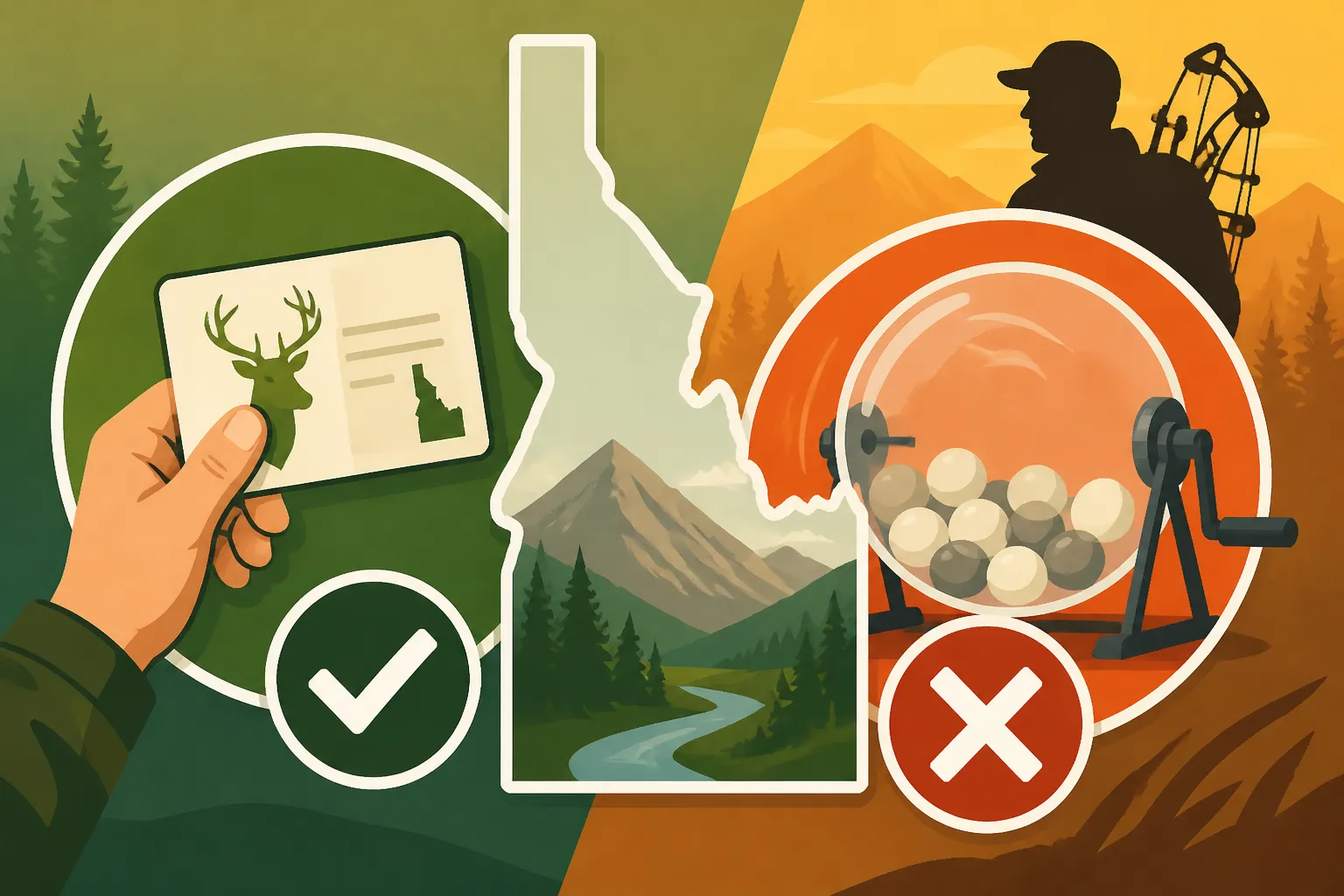
Why You Buy an Idaho License Before Drawing
Trying to navigate the complex world of big game draws can feel like deciphering ancient scrolls, and when states like Idaho ask you to buy a hunting license before you even know if you've drawn a tag, it can be a real head-scratcher. It feels counterintuitive, like paying for a lottery ticket just to enter the lottery. This guide is here to unravel why Idaho has this policy in place, what it means for you as a hunter, and how to plan around it effectively.
The Upfront License Requirement: Understanding Idaho's System
Many hunters, especially those new to Idaho or coming from states with different systems, find themselves scratching their heads when they realize they need to purchase a full hunting license before they can even apply for a coveted controlled hunt tag. It's not just a small application fee; we're talking about the full cost of a resident or nonresident license. This isn't an arbitrary hurdle; it's a foundational part of how Idaho funds its wildlife management and streamlines its drawing process.
The Application Process Rundown
Let's walk through the typical timeline. When the application period for controlled hunts opens – usually in April for deer, elk, and other big game, with an earlier window for trophy species like moose, sheep, and goat – your first step, even before picking your hunt choices, is to secure your annual hunting license. For nonresidents, this also includes purchasing the specific tag application fee for each species you wish to apply for, on top of the base license. This means that if you're hoping for an elk tag, you'll need to buy your hunting license and the nonresident elk tag application fee well before the draw results are announced.
This system is a significant upfront financial commitment, particularly for nonresidents who face higher fees. For instance, a nonresident Idaho elk hunt starts at $836.75, which includes the license and elk tag fee. You’re essentially investing in the opportunity to hunt, rather than a guaranteed tag. It’s a leap of faith for many, hoping their name gets pulled in the draw.
Funding Wildlife Management
At its heart, this upfront license requirement is about cold, hard cash for conservation. The Idaho Department of Fish and Game (IDFG) relies heavily on license and tag sales to fund its extensive wildlife management programs. This includes everything from habitat improvement projects and wildlife research to enforcement and hunter education. By requiring the purchase of a base hunting license before the draw, Idaho ensures a stable and predictable revenue stream.
Think about it this way: if hunters only paid for a license after drawing a tag, the department's budget could fluctuate wildly year to year based on draw success rates and hunter participation. This consistent revenue allows IDFG to plan long-term projects and maintain critical wildlife populations without constant uncertainty. This dedication to funding wildlife ensures that the landscapes and wildlife that draw hunters to Idaho are sustained for generations.
Streamlining the Draw System
Beyond the financial aspect, requiring an upfront license also serves to streamline the administrative process of running the draws. When you purchase your license, you're officially entered into the IDFG system as an active hunter for that year. This minimizes issues with ineligible applicants, incomplete information, or last-minute purchases that could bog down the draw.
Every application needs to be tied to an active hunter profile. If the license wasn't required first, the system would need to verify eligibility for potentially tens of thousands of applicants who might not even purchase a license if they drew. This could lead to a chaotic scramble to collect payments and verify eligibility post-draw, potentially delaying the release of results and the issuance of tags. This way, when the draw runs, it's processing applications from individuals who have already met the fundamental requirement of being licensed to hunt in Idaho for the current year. This approach also helps manage the allocation of tags, especially considering that Idaho Sets Aside 1,846 Deer and 2,975 Elk Tags for Nonresidents each year, which are highly sought after.
Idaho's Unique Draw System: No Preference Points
One of the key things that sets Idaho apart from many other western states is its lack of a preference point system. This policy directly influences the decision to require a hunting license before drawing, creating a unique dynamic for both residents and nonresidents alike.
Equal Opportunity for All Applicants
In many states, if you apply for a controlled hunt and don't draw, you earn a "preference point" that gives you a better chance in subsequent years. This builds seniority and can lead to a guaranteed tag after several years of applying. Idaho, however, operates on a true lottery system: every applicant, every year, has the same odds of drawing a tag, regardless of how many times they've applied in the past. This means that Idaho Has No Preference Points, and What That Changes is a big deal for hunters. A first-time applicant stands just as good a chance as someone who has been applying for twenty years.
This "equal opportunity" philosophy is embraced by many and can be a refreshing change for hunters frustrated by accumulating points in other states. It means you could hit the jackpot on your very first try! However, it also means that without the accumulation of points, there's no inherent advantage for loyalty, which further solidifies the need for that upfront license purchase. The state isn't tracking years of applications to give you a leg up; they just need to know you're legally able to hunt in Idaho for this year's draw.
The Controlled Hunt Calendar
Understanding Idaho's application calendar is absolutely critical, especially with the upfront license requirement. The main controlled hunt application period for deer, elk, and bear typically opens in April and closes in June. For trophy species like moose, bighorn sheep, and mountain goat, applications usually open earlier in April and close at the end of April. The Idaho Controlled Hunt Calendar, April Through August outlines these dates clearly.
It's vital to mark these deadlines on your calendar, as missing them means missing out entirely for the year. This also means you need to budget for the license and any applicable tag fees well in advance of these deadlines. Don't wait until the last minute, because technical glitches or unexpected payment issues can occur, and the IDFG is strict about deadlines. This structured calendar, coupled with the "no points" system, means every year is a fresh start, and that license purchase is your annual entry fee into the draw. This is one area where services like GoHunt become invaluable for keeping track of opening and closing dates across various states.
Practical Implications for Hunters
The requirement to buy an Idaho hunting license before drawing has several important practical implications for hunters, both financially and logistically. Understanding these can help you better prepare for your Idaho hunting adventures.
Financial Commitment Considerations
Let's be blunt: western hunting, especially for nonresidents, isn't cheap. The price of an Idaho nonresident hunting license, combined with the application fees for various species, can quickly add up to several hundred dollars, all before you even know if you've drawn a tag. This is a non-refundable investment in your application, and if you don't draw, that money for the license itself is gone. Only the specific tag application fees might be refunded, depending on the species and state policy. For example, if you apply for an elk tag and don't draw, you won't get your base hunting license fee back, but the elk tag application fee itself usually is.
This means you need to treat the license purchase as a serious financial commitment. Don't apply on a whim if you can't afford to lose that license fee. For those on a tight budget, this might mean prioritizing which state's draws you enter each year, or focusing on over-the-counter opportunities rather than controlled hunts. It’s also important to remember that this fee is just the starting point; if you do draw, then the full cost of the tag itself is due.
Managing Your Application Timeline
Given the upfront costs and the strict deadlines, managing your application timeline becomes paramount. You'll want to ensure you have funds available for the license purchase well before the application period even opens. Many hunters use tools like GoHunt's Insider or the official IDFG website to keep track of critical dates. Knowing exactly when Idaho Nonresident Applications Open in December for the general tags, and when the controlled hunt applications begin in April, allows you to plan your finances accordingly.
My best advice? Set calendar reminders. Multiple reminders. Don't rely on memory for something this important. Check the official Idaho Fish and Game website regularly, or sign up for their email newsletters, to stay informed about any changes to dates or regulations. Getting everything submitted correctly and on time is half the battle.
What Happens If You Don't Draw
This is the question that haunts every hunter who buys a license upfront. So, what happens to unpurchased Idaho tags if you don't draw your primary choices? First, as mentioned, you typically won't get a refund for your base hunting license. That money has already gone into Idaho's conservation efforts for the year. However, if you didn't draw a specific tag that you applied for (like a controlled elk tag), the application fee for that specific tag usually gets refunded. This is an important distinction to grasp.
But don't despair if you don't draw! Your hunting license is still valid for the general season opportunities that Idaho offers. This might include general season deer or elk tags (if available over-the-counter or in a secondary drawing) or other species like upland birds, small game, or predators. You also still hold your hunting license, meaning you're legally able to accompany other hunters, hunt species with general seasons, or simply enjoy Idaho's vast public lands. Sometimes, after the main draws, leftover Idaho tags sold first-come after the second draw become available, offering a second chance at a controlled hunt. Always check the IDFG website for these opportunities, as they go fast!
Strategic Advice for Non-Residents
For non-resident hunters, Idaho's upfront license requirement, coupled with its no-preference-point system, demands a particularly thoughtful strategy. It's a fantastic state with incredible opportunities, but you need to play the game smart.
Researching Draw Odds
Since there are no preference points, everyone starts on an even playing field, but that doesn't mean all hunts have equal odds. Far from it! Some premier controlled hunts in popular units will have abysmal draw odds, while others might offer a much more realistic chance. It is absolutely essential to do your homework and research the draw odds for the specific units and hunt codes you're interested in. A Walkthrough of the Idaho Hunt Planner will show you how to find this information directly from IDFG.
Websites and apps like GoHunt offer incredible tools to quickly analyze past draw results, unit statistics, and public land access. They compile years of data, allowing you to filter by species, weapon choice, and even success rates. Taking the time to pore over these statistics can greatly inform your application strategy. Do you go for the dream hunt with 1% odds, or do you apply for a more accessible unit with, say, 15-20% odds? This is a personal choice, but having the data is crucial.
Considering General Season Opportunities
If the thought of paying for a license upfront and then potentially not drawing a controlled hunt gives you pause, remember that Idaho still offers robust general season hunting opportunities for various species. While these might not be the coveted trophy hunts, they can provide an excellent introduction to hunting in the Gem State and a chance to experience its incredible landscapes.
For instance, general deer and elk tags are often available over-the-counter or through secondary draws for specific zones, especially for "B" tags, which typically favor centerfire rifle hunters. These general seasons often have higher hunting pressure but also offer more flexibility. Even if you apply for a controlled hunt and don't draw, your purchased license still covers these general season hunts, provided you buy the appropriate general season tag. This is a smart backup plan that ensures your initial investment isn't entirely "lost" if the draw doesn't go your way.
Staying Informed with Idaho Fish and Game
The Idaho Department of Fish and Game website (idfg.idaho.gov) is your single most important resource. Seriously, bookmark it and check it often. They publish the official regulations, season dates, draw results, and any important announcements or changes. Relying solely on third-party sites, while helpful for analysis, should never replace checking the official source for the most accurate and up-to-date information.
Sign up for their email newsletters, follow their social media, and download the latest regulations booklet as soon as it's released each year. Staying proactive and informed is the best way to avoid missing deadlines, misunderstanding rules, or making costly mistakes. The more you immerse yourself in the official resources, the better equipped you'll be to navigate Idaho's unique hunting regulations and application process, including understanding why you buy an Idaho license before drawing.
Disclaimer
The information provided in this article is for general guidance and informational purposes only. Hunting regulations and license requirements are subject to change. Always consult the official Idaho Department of Fish and Game regulations and website for the most current and accurate information before planning any hunting activities.